Gestational Diabetes Diet Plan: A Gut-Smart Approach to Blood Sugar
A practical gestational diabetes diet plan that balances blood sugar while supporting your gut microbiome. Evidence-based, SA-friendly guidance from Dr Chuma.
Dr. Chomba Chuma, MD & Founder
MD & Founder, PregBiotics

When you're handed a gestational diabetes diagnosis, the first thing most mothers reach for is a meal plan. And rightly so — a well-structured gestational diabetes diet plan is still the single most powerful tool for keeping your blood sugar steady, protecting your baby's growth, and helping you feel like yourself again during a season that can otherwise feel overwhelming. But there's a piece of this puzzle that rarely makes it into the standard pamphlet: your gut microbiome is quietly involved in how your body processes every meal you eat.
As a doctor who has sat across the table from many South African mothers navigating a new GDM diagnosis, I want to walk you through a diet plan that does double duty — one that stabilises glucose and nurtures the trillions of bacteria working alongside your metabolism.
Why a Gestational Diabetes Diet Plan Is About More Than Just Cutting Sugar
Gestational diabetes mellitus (GDM) develops when pregnancy hormones — particularly those from the placenta — make your cells more resistant to insulin. Your pancreas has to work harder to keep glucose in a healthy range, and for some mothers, it simply can't keep up without support.
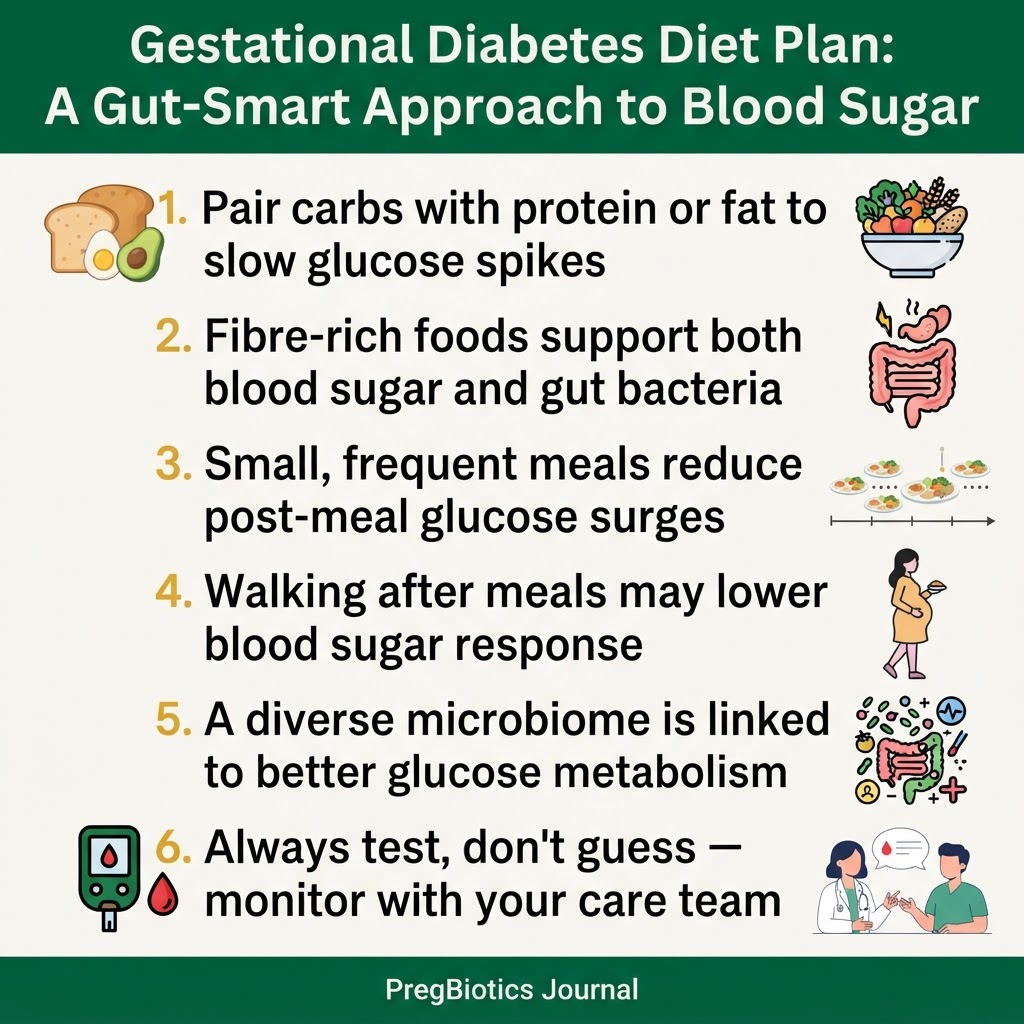
The instinct is to think "just eat less sugar." But a gestational diabetes diet plan is really about carbohydrate quality, timing, and pairing — not deprivation. The goal is a steady, gentle rise and fall of blood glucose rather than sharp spikes and crashes.
"Medical nutrition therapy, delivered by a qualified provider, is the foundation of gestational diabetes management and should be individualised to the patient's needs." — ACOG, Practice Bulletin on Gestational Diabetes Mellitus
This is why generic "low carb" advice can backfire. Cutting carbohydrates too aggressively can leave you under-fuelled, increase ketone production, and — ironically — worsen cravings later in the day.
The Gut-Blood Sugar Connection You Haven't Been Told About
Here's where things get genuinely interesting. Your gut microbiome — the community of bacteria living in your digestive tract — plays a role in how glucose and insulin behave in your body.
Certain bacterial groups help ferment fibre into short-chain fatty acids, compounds that are associated with improved insulin sensitivity. Other imbalances in gut bacteria have been observed more frequently in women who develop gestational diabetes, though researchers are still untangling cause from effect.
"Emerging data point to compositional differences in the gut microbiota of women with gestational diabetes compared to those with normal glucose tolerance, suggesting a potential metabolic link worth further study." — PubMed/NIH, research on gut microbiota and gestational diabetes
What does this mean practically? It means the foods you choose for blood sugar control are often the same foods that feed a diverse, resilient microbiome — fibre, fermented foods, and plant diversity show up on both lists. For a deeper look at how pregnancy reshapes your gut, our piece on why your gut health changes dramatically during pregnancy is a useful companion read.
Building Your Gestational Diabetes Diet Plan: The Plate Method
Rather than counting every gram, many South African clinics now recommend the plate method — simple enough to use at a braai, a work lunch, or your mother-in-law's Sunday table.
- Half your plate: non-starchy vegetables (spinach, broccoli, green beans, peppers)
- A quarter of your plate: lean protein (chicken, fish, eggs, legumes, tofu)
- A quarter of your plate: high-fibre carbohydrate (sweet potato, brown rice, oats, samp)
- A thumb-sized portion of healthy fat: olive oil, avocado, nuts
Carbohydrate Timing and Pairing
The order and combination of food on your plate genuinely changes your glucose response. Eating vegetables and protein first, carbohydrates last, has been associated with gentler post-meal glucose rises in several small studies.
Practical pairing rules:
- Never eat a carbohydrate alone — always add protein or fat
- Favour whole, intact grains (steel-cut oats, brown rice) over refined, processed versions
- Space carbohydrate-containing meals 3 hours apart where possible
Fibre-Rich Foods That Support Both Blood Sugar and Gut Health
Fibre slows glucose absorption and feeds beneficial bacteria — a genuine two-for-one.
- Legumes: lentils, chickpeas, sugar beans
- Vegetables: all leafy greens, cruciferous vegetables, courgette
- Whole grains: oats, barley, brown rice
- Fermented foods: plain unsweetened yoghurt, kefir, sauerkraut (in small, tolerated amounts)
If you're already managing constipation alongside your new diet changes, a sudden jump in fibre needs to be gradual — our guide on natural constipation relief in pregnancy covers how to increase fibre comfortably.
Managing Cravings Without Guilt
Sugar cravings in pregnancy are real, hormonally driven, and nothing to be ashamed of. A rigid gestational diabetes diet plan that bans all sweetness often backfires into bingeing.
Instead, try:
- Pairing a small sweet treat with protein or fat (a square of dark chocolate with almonds, not alone)
- Berries with full-fat yoghurt instead of refined desserts
- Checking in with thirst and sleep first — both mimic sugar cravings
- Never arriving at a meal overly hungry, which increases impulsive choices
"Dietary modification should support psychological wellbeing as much as glycaemic control; restrictive approaches are associated with poorer adherence over time." — NICE, Guideline NG3 on Diabetes in Pregnancy
A Sample Day on a Gestational Diabetes Diet Plan
This is illustrative only — your healthcare provider or dietitian should tailor portions to your individual glucose readings.
Breakfast: Two-egg omelette with spinach and a slice of seed bread
Mid-morning: Plain yoghurt with a few berries and a sprinkle of chia
Lunch: Grilled chicken, large mixed salad, half a cup of brown rice, olive oil dressing
Afternoon: A small handful of almonds and a hard-boiled egg
Supper: Baked fish, roasted vegetables, a small portion of sweet potato
Evening (if needed): A few crackers with peanut butter — a slow-release snack that may support stable overnight glucose
Movement, Sleep, and the Pieces Beyond the Plate
A 10–15 minute walk after meals has been shown in several studies to meaningfully reduce post-meal glucose spikes — it's one of the simplest, most accessible tools you have.
Sleep quality also matters more than most mothers realise. Poor sleep is independently associated with greater insulin resistance, so protecting rest is part of your diet plan too, not separate from it.
When to Loop In Your Healthcare Team
A gestational diabetes diet plan is never a solo project. Your midwife, obstetrician, or dietitian needs your glucose logs to adjust recommendations, and some mothers will need medication alongside diet changes — that is not a failure, simply biology.
"Insulin or metformin may be required in addition to lifestyle measures for a significant proportion of women with gestational diabetes, particularly when fasting glucose remains elevated." — WHO, Fact Sheet on Diabetes
Flag these signs to your provider promptly:
- Fasting or post-meal glucose consistently above your target range
- Excessive thirst, fatigue, or blurred vision
- Reduced foetal movements
- Rapid, unexplained weight changes
Always speak to your healthcare provider before making significant dietary changes, starting a new supplement, or adjusting any prescribed medication.
Your Simplest First Step
If this feels like a lot to hold at once, start small: at your very next meal, simply add a source of protein alongside any carbohydrate. That one shift begins steadying your blood sugar today.
Alongside your diet plan, many mothers find daily gut-focused support helpful during this season — explore PregBiotics Essentials + Omega to see how it may fit into your routine, always alongside your care provider's guidance.
And if you'd like more evidence-based, warmly practical guidance like this landing in your inbox, subscribe to the PregBiotics Journal — we're here for every stage of this journey with you.
Get the PregBiotics Journal in your inbox
Gut-smart guidance for conception, pregnancy and breastfeeding — twice a week, plus member-only offers. Unsubscribe anytime.
You deserve to feel beautifully supported.
Join thousands of mothers on the PregBiotics journey. Receive your free Pregnancy Prep Guide and gentle, science-backed wisdom — tailored to where you are right now.