Why Your Gut Health Changes Dramatically During Pregnancy — And What to Do About It
Picture this: You're twelve weeks pregnant, and suddenly the foods you've always loved make you feel terrible. Bloating, constipation, heartburn, and unpredictable digestion have become your new normal. You mention it to a friend who sailed through pregnancy without a single digestive complaint, and
Dr. Chomba Chuma, MD & Founder
MD & Founder, PregBiotics

Why Your Gut Health Changes Dramatically During Pregnancy — And What to Do About It
By Dr. Chomba Chuma, MD & Founder | PregBiotics Journal
Introduction
Picture this: You're twelve weeks pregnant, and suddenly the foods you've always loved make you feel terrible. Bloating, constipation, heartburn, and unpredictable digestion have become your new normal. You mention it to a friend who sailed through pregnancy without a single digestive complaint, and you wonder — what is happening inside my body?
You are not alone. Studies suggest that more than 70% of pregnant women experience significant gastrointestinal symptoms during pregnancy, yet the deeper reason why — the profound transformation happening in your gut microbiome — is rarely explained in the depth it deserves. Most conversations stop at "it's just hormones" or "eat more fibre." But the truth is far more fascinating, and far more actionable.
Here is what I want you to know before we dive in: the changes happening in your gut during pregnancy are not random. They are purposeful, biological shifts designed to support your growing baby. However, when those shifts go unchecked — when the balance tips too far — they can undermine your comfort, your immunity, your mood, and even your baby's long-term health.
In this article, I'm going to walk you through exactly what happens to your gut health during pregnancy, why it matters more than most people realise, and what evidence-based steps you can take — including smart nutrition and targeted supplementation — to support yourself through every trimester. This is the conversation I wish every pregnant woman could have with her doctor.
The Biology of Your Changing Gut: What Science Tells Us
Pregnancy is one of the most extraordinary physiological events the human body undergoes. And while much attention is rightly given to the growing uterus, the developing placenta, and hormonal surges, there is another transformation happening quietly but powerfully: your gut microbiome is being fundamentally restructured.
Your Microbiome Is a Living Ecosystem
Your gut microbiome consists of trillions of microorganisms — bacteria, fungi, viruses, and archaea — that live within your gastrointestinal tract. This ecosystem influences everything from digestion and immune function to mental health and metabolic regulation. In a healthy state, diverse communities of beneficial bacteria maintain balance, crowding out harmful pathogens and producing essential compounds like short-chain fatty acids, B vitamins, and neurotransmitter precursors.
How Pregnancy Reshapes the Microbiome
A landmark 2012 study published in Cell by Koren et al. made a remarkable discovery: the gut microbiome undergoes significant, reproducible changes across the trimesters of pregnancy. Specifically:
- First trimester: The microbiome resembles a relatively typical healthy adult profile.
- Third trimester: Diversity decreases, populations of certain bacteria including Proteobacteria and Actinobacteria increase, and the overall microbial landscape shifts considerably.
Fascinatingly, when germ-free mice were colonised with third-trimester microbiomes from pregnant women, they developed metabolic changes that would normally be considered pathological — including increased fat storage and mild insulin resistance. Yet in pregnancy, these changes appear to serve a purpose: maximising energy extraction from food to fuel foetal growth.
The Role of Hormones
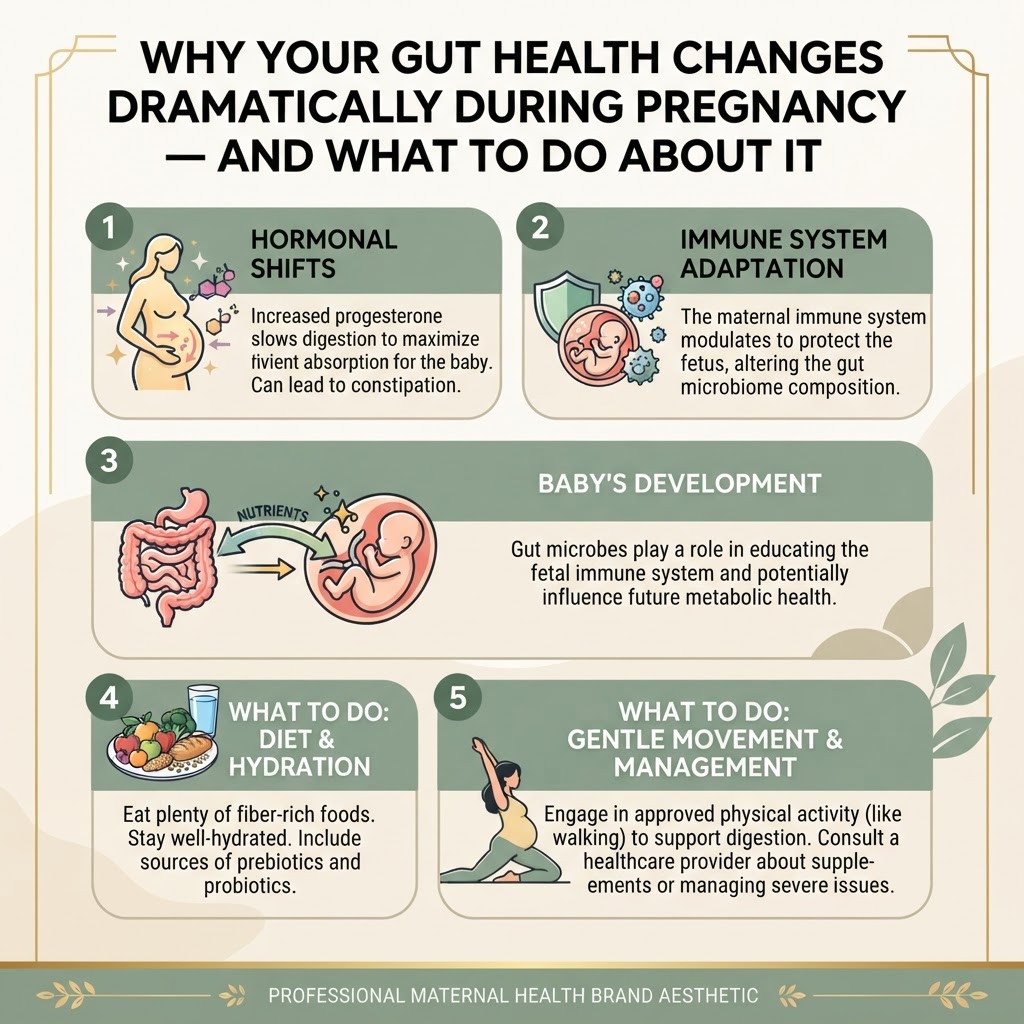
Progesterone — which rises dramatically in pregnancy — relaxes smooth muscle throughout the body, including the gut. This slows intestinal motility (the speed at which food moves through your digestive tract). While this aids nutrient absorption, it also contributes to bloating, constipation, and reflux.
Oestrogen changes alter bile composition and gallbladder function, and the physical pressure of a growing uterus displaces abdominal organs, further affecting gut dynamics.
Gut Dysbiosis in Pregnancy
When the microbial balance tips unfavourably, we call this gut dysbiosis. Gut dysbiosis in pregnancy has been associated with a range of concerning outcomes, including increased risk of gestational diabetes, preterm birth, gestational hypertension, excessive weight gain, and Group B Streptococcus (GBS) colonisation. Emerging research also links maternal gut dysbiosis to infant colic, eczema, and altered immune development in the newborn.
Understanding this science is not meant to alarm you — it is meant to empower you.
What This Means For You: The Practical Reality of Pregnancy Gut Health
Now that we understand the biology, let's talk about what this actually looks and feels like in day-to-day pregnancy life — and why paying attention to your microbiome pregnancy health is one of the most important things you can do.
Common Symptoms Rooted in Gut Changes
Many of the most disruptive pregnancy symptoms have gut microbiome connections that are underappreciated:
- Constipation: Slowed motility combined with reduced microbial diversity means less production of short-chain fatty acids, which normally stimulate bowel movement. Iron supplementation — often prescribed in pregnancy — can further disrupt gut bacteria.
- Bloating and gas: An overgrowth of gas-producing bacteria in the context of dysbiosis worsens what progesterone-related slowing has already started.
- Nausea and morning sickness: While not exclusively a gut microbiome issue, emerging research suggests the composition of gut bacteria influences nausea severity via the gut-brain axis.
- Heartburn and acid reflux: Reduced lower oesophageal sphincter tone combined with altered gut motility creates the perfect conditions for reflux.
- Mood changes and anxiety: The gut-brain axis — the bidirectional communication highway between your gastrointestinal tract and your brain — is profoundly influenced by microbiome composition. Dysbiosis can reduce production of serotonin precursors, contributing to low mood.
The Baby Connection
Perhaps most importantly, your microbiome pregnancy health directly shapes your baby's very first microbial colonisation. Research published by the NHS and multiple academic institutions confirms that babies acquire their founding microbiome during birth — through the vaginal canal, via skin contact, and through breast milk. A mother with a well-balanced, diverse gut microbiome is more likely to pass beneficial bacterial communities to her newborn, laying the groundwork for healthy immunity, reduced allergy risk, and better metabolic health.
This is not a small detail. This is a founding gift.
Signs Your Gut May Need Support
Watch for these indicators that your gut health during pregnancy deserves closer attention:
- Constipation more than three days in a row
- Severe or persistent bloating that interferes with daily life
- Recurrent yeast or bacterial vaginal infections (often linked to gut dysbiosis)
- Extreme fatigue disproportionate to pregnancy stage
- Persistent nausea beyond the first trimester
- Mood disturbances or heightened anxiety
If any of these resonate, continue reading — practical support is available.
The Role of Nutrition and Supplementation in Supporting Your Gut
The good news is that your gut microbiome is highly responsive to what you eat and the targeted support you give it. This is one area of pregnancy health where your daily choices genuinely move the needle.
Dietary Foundations
Before we discuss supplementation, nutrition forms the bedrock of gut health. During pregnancy, prioritise:
- Diverse plant foods: Aim for 30+ different plant foods per week. Variety feeds microbial diversity.
- Prebiotic-rich foods: Garlic, onions, leeks, asparagus, oats, and bananas feed beneficial bacteria.
- Fermented foods: Where tolerated, live-culture yoghurt, kefir, and sauerkraut introduce beneficial microorganisms.
- Adequate hydration: Essential for gut motility and the mucosal lining of the intestine.
- Fibre: Aim for 25–30g daily from whole grains, legumes, fruits, and vegetables.
However, I know from years of clinical practice — and from the lived experience of the thousands of pregnant women I've spoken with — that diet alone often isn't enough. Pregnancy increases nutritional demands substantially, appetite and food aversions make diverse eating genuinely difficult, and the microbial shifts of pregnancy are significant enough to warrant targeted intervention.
The Case for Pregnancy Probiotics
Research consistently demonstrates that specific probiotic strains can help modulate the gut microbiome during pregnancy, reducing dysbiosis and supporting maternal and foetal outcomes. Pregnancy probiotics have been studied in the context of reducing gestational diabetes risk, preventing preterm labour, reducing GBS colonisation, alleviating constipation, and supporting infant immune development.
Not all probiotics are created equal, however. Strain specificity matters enormously. This is precisely why I developed PregBiotics Essentials — a supplement formulated specifically for the needs of the pregnant gut, not adapted from a generic adult formula.
What Makes PregBiotics Essentials Different
PregBiotics Essentials brings together a clinically informed combination of ingredients selected for pregnancy-specific gut health:
- Lactobacillus rhamnosus GG: The most extensively studied probiotic strain in pregnancy; supports vaginal microbiome health and infant immune programming
- Lactobacillus acidophilus: Supports intestinal barrier integrity and competes with pathogenic bacteria
- Bifidobacterium longum: Particularly important for third-trimester gut shifts; supports mood via the gut-brain axis
- Bifidobacterium lactis: Shown to reduce constipation and support immune modulation
- Fructooligosaccharides (FOS): A prebiotic fibre that feeds and sustains probiotic colonies
- Vitamin D3: Critical for immune regulation, foetal bone development, and microbiome diversity
- Folate (methylfolate form): The bioavailable form of folic acid, essential for neural tube development and supported by emerging research linking folate to microbiome health
This is not supplementation for supplementation's sake. Every ingredient in PregBiotics Essentials has a role in the carefully considered ecosystem of your pregnant body.
For a deeper dive into how gut health connects to specific pregnancy concerns like Group B Streptococcus, explore our GBS Shield resource — an area where microbiome support may play a particularly meaningful role.
Expert Tips: Practical Steps to Support Your Gut Health Throughout Pregnancy
Here is what I recommend to pregnant women in my own practice and through the PregBiotics community:
-
Start probiotic support early. The first trimester is an ideal time to begin targeted probiotic supplementation. The microbial changes of pregnancy begin early, and establishing a diverse, resilient microbiome from the outset is far more effective than trying to correct dysbiosis in the third trimester.
-
Rotate your plant foods deliberately. Make a weekly habit of adding two or three new plant foods to your diet. Variety — not volume — is the key driver of microbial diversity.
-
Move your body daily, even gently. Physical activity, even a 20-minute walk, stimulates gut motility and supports the diversity of your microbiome. It also improves mood and reduces constipation.
-
Manage stress with intention. Chronic stress elevates cortisol, which directly suppresses beneficial gut bacteria and increases intestinal permeability (sometimes called "leaky gut"). Breathwork, prenatal yoga, and adequate sleep are not luxuries — they are gut health interventions.
-
Be thoughtful about antibiotic use. Antibiotics are sometimes medically necessary in pregnancy and should always be taken if prescribed. However, they significantly disrupt the microbiome. If you do require antibiotics, discuss probiotic support with your healthcare provider and be diligent about dietary diversity during and after the course.
-
Hydrate consistently, especially if taking iron supplements. Iron can be constipating and disruptive to gut bacteria. Take it with food, maintain hydration, and ensure your fibre intake is adequate.
-
Listen to your gut — literally. Your digestive symptoms are data. Persistent or severe symptoms are worth discussing with your midwife or doctor. Do not dismiss them as just "part of pregnancy."
-
Use the tools available to you. Our Pregnancy Gut Guide is a free, evidence-based resource designed to walk you through trimester-by-trimester gut health support in a practical, accessible format.
When to Seek Medical Advice
While most gut changes in pregnancy are normal and manageable, there are situations where professional medical evaluation is essential. Please contact your midwife, obstetrician, or GP promptly if you experience:
- Severe abdominal pain that is persistent or worsening
- Blood in your stools or rectal bleeding
- Significant, unexplained weight loss
- Persistent diarrhoea lasting more than 48 hours
- Symptoms of dehydration — dark urine, dizziness, rapid heartbeat
- Signs of a urinary tract or vaginal infection that may indicate broader dysbiosis
- Jaundice (yellowing of skin or eyes), which may indicate liver or gallbladder involvement
Supplementation and dietary changes are powerful tools, but they are supportive measures — not substitutes for medical care. Always discuss new supplements, including probiotics, with your healthcare provider before starting, particularly if you have immune compromise, a high-risk pregnancy, or other underlying health conditions. Your care team and your gut-health knowledge are not in competition — they work best together.
Conclusion: Your Gut Is One of Pregnancy's Most Powerful Partners
Your gut is not just a digestive organ. It is an immune regulator, a mood influencer, a nutrient processor, and — during pregnancy — a gift you are passing on to your child. The dramatic changes your microbiome undergoes over nine months are, in many ways, a biological marvel. But they also require your attention and support.
The science is clear: pregnancy gut health matters for your comfort, your immunity, your mental wellbeing, and your baby's foundational health. Gut dysbiosis in pregnancy is not inevitable — it is something you can actively work to prevent and address through smart dietary choices, lifestyle habits, and evidence-based supplementation.
PregBiotics Essentials was born from my desire to give pregnant women a tool that truly meets the complexity of their needs — formulated with the strains and nutrients that matter, in a form that works with the biology of pregnancy rather than against it.
You are doing something extraordinary. Your body deserves support that is as sophisticated as the process it is undertaking.
For more science-backed guidance on maternal gut health across every stage of your journey, I invite you to explore The PregBiotics Journal — where we translate the latest research into practical wisdom for mothers.
Take care of your gut. It is taking care of you — and your baby.
Dr. Chomba Chuma, MD is a medical doctor and the Founder of PregBiotics. She is passionate about the intersection of the gut microbiome and maternal health, and committed to making evidence-based gut health support accessible to every pregnant woman.
Get the PregBiotics Journal in your inbox
Gut-smart guidance for conception, pregnancy and breastfeeding — twice a week, plus member-only offers. Unsubscribe anytime.
You deserve to feel beautifully supported.
Join thousands of mothers on the PregBiotics journey. Receive your free Pregnancy Prep Guide and gentle, science-backed wisdom — tailored to where you are right now.