The Vaginal Microbiome: A Hidden Key to Successful Implantation
Imagine two women undergoing IVF on the same day. Same clinic. Same protocol. Same number of high-quality embryos transferred. One achieves a successful pregnancy. The other does not. The embryos were virtually identical. So what made the difference?
Dr. Chomba Chuma, MD & Founder
MD & Founder, PregBiotics
The Vaginal Microbiome: A Hidden Key to Successful Implantation
By Dr. Chomba Chuma, MD & Founder | PregBiotics Journal
Introduction
Imagine two women undergoing IVF on the same day. Same clinic. Same protocol. Same number of high-quality embryos transferred. One achieves a successful pregnancy. The other does not. The embryos were virtually identical. So what made the difference?
For years, reproductive medicine focused almost exclusively on embryo quality and uterine structure — and rightly so, these matter enormously. But emerging science is pointing us toward a factor that has been hiding in plain sight: the vaginal microbiome. Specifically, the community of microscopic bacteria that reside in the vaginal canal and, critically, in the uterine cavity itself.
Here's a statistic that might surprise you: studies suggest that women with a Lactobacillus-dominant vaginal and uterine microbiome have significantly higher rates of implantation and clinical pregnancy — some research showing success rates more than 2.7 times higher than women with a disrupted or diverse (dysbiotic) microbial environment (Moreno et al., 2016).
This is not fringe science. This is one of the most exciting frontiers in reproductive medicine, and it is changing the way forward-thinking clinicians approach conception — both naturally and through assisted reproduction.
In this article, I want to walk you through what the vaginal microbiome is, why it matters so profoundly for implantation, what disrupts it, and — most importantly — what you can do right now to support it. Whether you are trying to conceive naturally, preparing for IVF, or simply want to give your body the very best foundation, this is for you.
The Science of the Vaginal and Uterine Microbiome
For much of medical history, the uterus was considered a sterile environment. We now know that assumption was wrong. The uterus — and the fluid within it — contains its own microbiome, and that microbiome appears to have a profound influence on whether an embryo successfully implants and develops into a healthy pregnancy.
What Is the Vaginal Microbiome?
The vaginal microbiome is an ecosystem of bacteria that colonises the vaginal canal. Unlike the gut microbiome, which thrives on diversity, a healthy vaginal microbiome is characterised by low diversity and high dominance of a single genus: Lactobacillus.
There are four main Lactobacillus species associated with optimal vaginal health:
- Lactobacillus crispatus — considered the most protective species
- Lactobacillus iners — common but less stable
- Lactobacillus gasseri
- Lactobacillus jensenii
These bacteria produce lactic acid, which keeps the vaginal pH low (typically between 3.8 and 4.5). This acidic environment acts as a protective barrier against pathogens, reduces inflammation, and — crucially — creates conditions that appear to be favourable for embryo implantation.
The Uterine Microbiome and Implantation
Researchers have now identified a distinct uterine microbiome — and its composition mirrors, to a significant degree, that of the vaginal microbiome. This makes biological sense: bacteria can ascend from the vagina into the uterine cavity.
A landmark 2016 study published in the American Journal of Obstetrics and Gynecology by Moreno and colleagues examined the uterine microbiome of women undergoing IVF. They found that women with a non-Lactobacillus-dominant uterine environment had dramatically lower rates of implantation, clinical pregnancy, ongoing pregnancy, and live birth compared to those with Lactobacillus-dominant profiles (Moreno et al., 2016).
Why Does Lactobacillus Dominance Matter for Implantation?
Several mechanisms have been proposed:
1. Reduced Inflammation A dysbiotic (imbalanced) microbiome triggers inflammatory responses in the uterine lining. Chronic low-grade inflammation is hostile to embryo implantation. Lactobacillus species help dampen this inflammatory signalling.
2. Endometrial Receptivity The endometrium — the uterine lining — must be in a specific "receptive" state for implantation to succeed. Researchers believe that a Lactobacillus-dominant microbiome supports the expression of genes associated with endometrial receptivity, including pinopodes (surface structures that help the embryo "grip" the lining).
3. Protection Against Pathogens Bacteria such as Gardnerella vaginalis, Prevotella, and anaerobes associated with bacterial vaginosis (BV) have been found in higher concentrations in women with implantation failure. These organisms promote a pro-inflammatory environment and may physically interfere with the implantation process.
4. Immune Modulation Lactobacillus species interact with local immune cells — particularly uterine natural killer (uNK) cells — helping to create a tolerogenic (accepting) immune environment that allows the semi-foreign embryo to implant without being rejected.
The Gut-Vaginal Axis
Fascinatingly, the gut microbiome also plays a supporting role here. The gut is the primary reservoir of Lactobacillus bacteria, and research suggests that gut dysbiosis can negatively influence the vaginal microbiome through systemic inflammation, oestrogen metabolism, and microbial translocation (NHS — Gut Microbiome). Supporting your gut health is therefore not separate from supporting your vaginal health — the two are deeply interconnected.
What This Means For You: Practical Relevance
Understanding the science is empowering, but what does it actually mean for your fertility journey? Let me translate this research into real-world context.
If You Are Trying to Conceive Naturally
The vaginal microbiome fluctuates throughout your menstrual cycle, influenced by oestrogen levels, sexual activity, hygiene practices, antibiotics, stress, and diet. If your microbiome is consistently dysbiotic — characterised by an overgrowth of non-Lactobacillus bacteria — you may be unknowingly creating a less receptive environment during your implantation window.
Key signs that your vaginal microbiome may be disrupted include:
- Recurrent bacterial vaginosis (BV) or thrush
- Unusual discharge, odour, or irritation
- History of recurrent urinary tract infections (UTIs)
- Previous unexplained implantation failure
- A history of antibiotic use without microbiome restoration
If You Are Undergoing IVF or Assisted Reproduction
The concept of IVF microbiome optimisation is gaining serious traction in reproductive medicine. Several fertility clinics now offer uterine microbiome testing (ERA — Endometrial Receptivity Array, or EMMA — Endometrial Microbiome Metagenomic Analysis) to assess the bacterial environment before embryo transfer.
What this means for you practically:
- Timing matters. The microbiome is dynamic. Optimising it in the weeks before embryo transfer — not just at the point of transfer — is likely to be most beneficial.
- Vaginal probiotics specifically formulated with Lactobacillus strains have been studied as a supportive strategy in women with BV or dysbiosis undergoing IVF (Vitali et al., NCBI).
- Antibiotic use, which is common in IVF protocols, can disrupt both gut and vaginal flora — making microbiome restoration a priority in the treatment window.
Common Disruptors to Be Aware Of
- Antibiotics — frequently used in IVF protocols and for infections
- Hormonal changes — including those induced by fertility medications
- Vaginal douching — disrupts natural flora (avoid entirely)
- Poor diet — high sugar intake feeds pathogenic bacteria
- Chronic stress — elevates cortisol, which negatively influences microbial balance
- Smoking — associated with vaginal dysbiosis
- Unprotected intercourse with new partners — introduces foreign microbes
The Empowering Perspective
The most important thing I want you to take from this section is this: your microbiome is modifiable. You are not passive in this process. With the right nutritional strategy, supplementation, and lifestyle adjustments, you can meaningfully shift your microbial environment in the weeks and months leading up to conception or embryo transfer. That is an extraordinary opportunity — and one that is entirely within your reach.
The Role of Nutrition & Supplementation
No article on the microbiome would be complete without discussing what you can actually do to support it. Nutrition and targeted supplementation are your most accessible and powerful tools.
Dietary Foundations
A microbiome-supportive diet during preconception should emphasise:
- Fermented foods: Live yoghurt, kefir, sauerkraut, kimchi, miso — natural sources of Lactobacillus
- Prebiotic-rich foods: Garlic, onion, leeks, asparagus, chicory, oats — these feed your beneficial bacteria
- Colourful vegetables and polyphenol-rich foods: Berries, dark chocolate, green tea — polyphenols selectively promote Lactobacillus growth
- Omega-3 fatty acids: Found in oily fish, flaxseed, and walnuts — reduce systemic inflammation
- Reducing ultra-processed foods and added sugars: These feed dysbiotic bacteria and drive inflammation
Why Targeted Supplementation Matters
Diet alone is powerful, but it can be difficult to achieve consistent, therapeutic levels of the right Lactobacillus strains through food alone — especially when you are navigating fertility treatment, the demands of daily life, or a gut that needs active restoration.
This is where PregBiotics Conception was formulated with precision and purpose.
As a physician and founder, I designed PregBiotics Conception specifically for women in the preconception window — whether trying naturally or preparing for assisted reproduction. Every ingredient was chosen based on the current body of evidence in reproductive and microbiome science.
Key strains and nutrients in PregBiotics Conception include:
- Lactobacillus crispatus — the most evidence-backed vaginal Lactobacillus species for microbiome protection and implantation support
- Lactobacillus rhamnosus GG — the world's most studied probiotic strain; supports gut integrity and immune balance
- Lactobacillus reuteri — demonstrated benefits in reducing vaginal dysbiosis and supporting immune tolerance
- Inulin (prebiotic fibre) — selectively nourishes Lactobacillus species in both gut and vaginal microbiome
- Folate (as methylfolate) — the bioactive form for optimal absorption, essential for neural tube development from the earliest stages of implantation
- Vitamin D3 — critical for immune modulation and endometrial receptivity
- Zinc — supports healthy ovulation and embryo quality
- Vitamin B6 and B12 — support hormonal balance and early embryonic development
The formulation is designed to work synergistically — supporting both your gut and vaginal microbiome simultaneously, because as we have explored, the two are inseparable.
You can also explore our Pregnancy Gut Guide for a comprehensive, trimester-by-trimester approach to gut and microbiome health throughout your journey.
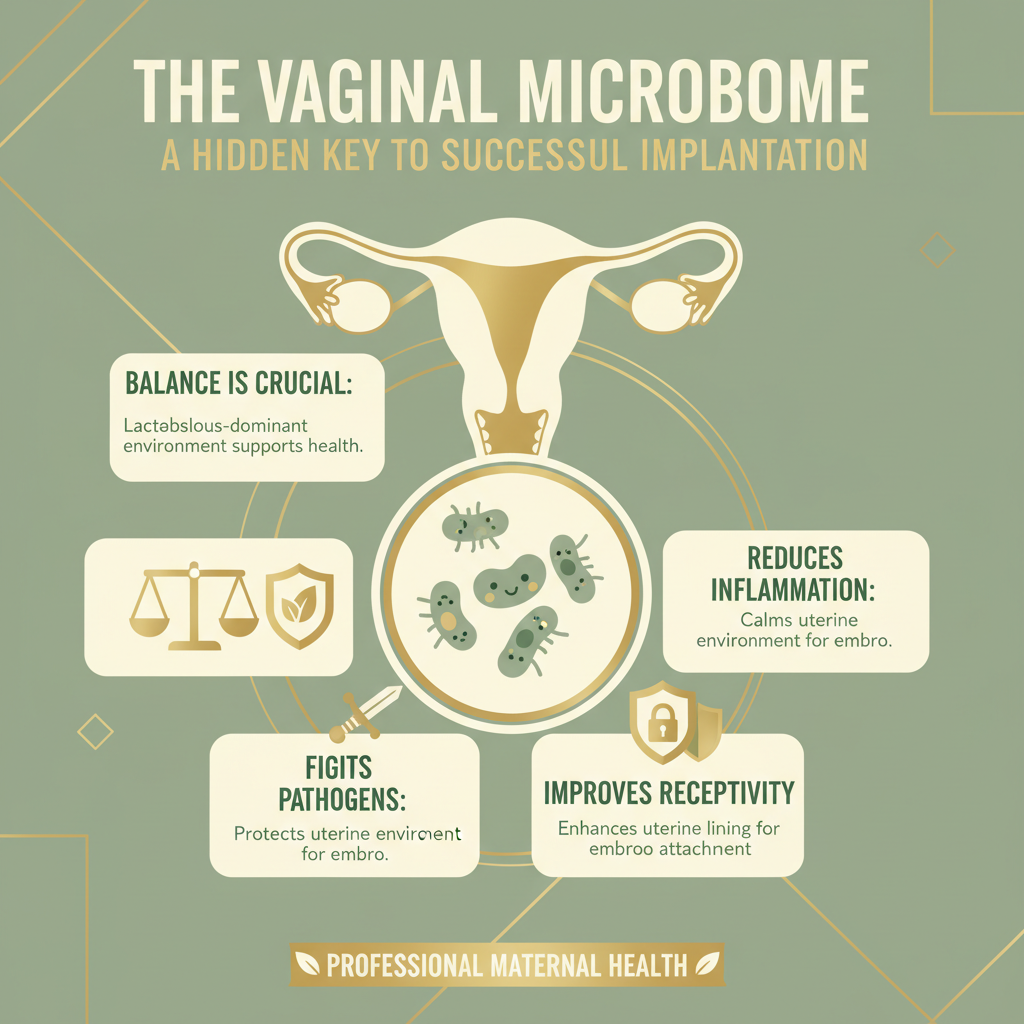
Infographic: "The Journey from Gut to Uterus — How Your Microbiome Shapes Implantation Success"
Expert Tips & Actionable Advice
Based on both the latest research and my clinical experience supporting women on their fertility journeys, here are my top recommendations:
-
Start microbiome support at least 8–12 weeks before conception or embryo transfer. The microbiome takes time to shift. Give yourself the runway to make meaningful change before the critical implantation window.
-
Consider microbiome testing if you have a history of recurrent implantation failure or BV. Tests like EMMA (Endometrial Microbiome Metagenomic Analysis) are now available through many fertility clinics and can give you precise information about your uterine bacterial environment.
-
Avoid vaginal douching and heavily fragranced intimate products. These disrupt the natural acidic pH and remove protective Lactobacillus populations. Use plain warm water for intimate hygiene.
-
Restore your microbiome after antibiotics. If you are prescribed antibiotics as part of your IVF protocol (or for any other reason), prioritise probiotic supplementation during and after the course — with at least 2 hours between the antibiotic dose and your probiotic.
-
Address stress actively. Chronic psychological stress elevates cortisol, disrupts oestrogen balance, and negatively impacts microbial diversity. Mindfulness, yoga, gentle exercise, and adequate sleep are all evidence-supported strategies.
-
Reduce dietary sugar and ultra-processed foods in your preconception period. These directly promote the growth of dysbiotic organisms including Candida (thrush) and pathogenic bacteria.
-
Optimise your gut health as a foundation. Remember the gut-vaginal axis — a healthy gut supports a healthy vaginal microbiome. Prioritise fibre, fermented foods, and a high-quality oral probiotic formulated for the preconception stage.
-
Discuss probiotics with your fertility team. Probiotics IVF strategies are increasingly being discussed in clinical settings. Open a conversation with your reproductive specialist about microbiome optimisation as part of your treatment plan.
-
Be consistent. Microbiome support is not a one-week intervention. Commit to daily supplementation and dietary habits throughout your preconception and conception phase.
-
Track your symptoms. Note any signs of BV or thrush (unusual discharge, odour, itching) and report them to your healthcare provider promptly — these are signals of dysbiosis that can be addressed.
When to Seek Medical Advice
While optimising your vaginal microbiome through nutrition, probiotics, and lifestyle changes is generally safe and beneficial, there are important situations where you should consult your GP, gynaecologist, or fertility specialist without delay.
Please seek medical advice if you experience:
- Unusual vaginal discharge (grey, green, or frothy) with or without odour
- Itching, burning, or significant vaginal irritation
- Pelvic pain or discomfort
- A confirmed or suspected diagnosis of bacterial vaginosis, thrush, or sexually transmitted infection before or during fertility treatment
- Recurrent implantation failure (two or more failed embryo transfers) — discuss uterine microbiome testing with your specialist
- Any concern about introducing supplements if you have underlying health conditions or are on prescription medication
Supplementation with probiotics, including products like PregBiotics Conception, is formulated to be safe for the preconception period. However, I always encourage every woman to discuss new supplements with her healthcare provider, particularly within the context of a fertility treatment protocol. Your care should always be personalised.
Peer-reviewed guidelines and a growing body of evidence — including NCBI research on the reproductive microbiome — continue to shape clinical recommendations in this area, and your clinical team will be best placed to integrate this into your individual care.
Conclusion
The vaginal and uterine microbiome represents one of the most significant — and most underappreciated — factors in conception and implantation success. We have moved well beyond the era of thinking that the uterus is a sterile vault. It is a living, dynamic environment, profoundly shaped by the bacteria that inhabit it — and profoundly shapeable by the choices you make every day.
Whether you are in the early stages of trying to conceive, preparing for IVF, or navigating a difficult history of implantation failure, I want you to leave this article with one clear message: you have more influence over this process than you may have realised. The vaginal microbiome is modifiable. The gut-vaginal axis is responsive to what you eat, how you live, and what you supplement. The science of Lactobacillus implantation and probiotics IVF support is real, it is advancing rapidly, and it is accessible to you.
Optimising your microbiome will not guarantee a pregnancy — nothing can make that promise. But it can meaningfully improve the biological environment in which implantation must occur. And in the extraordinary, tender work of bringing new life into the world, every evidence-based advantage matters.
PregBiotics Conception was built for this exact moment in your journey — formulated by a physician who understands both the science and the deep humanity of trying to conceive.
I am here, walking this path with you.
For more science-led, empowering articles on maternal gut health, fertility, and pregnancy, visit The PregBiotics Journal.
Dr. Chomba Chuma is a medical doctor, women's health advocate, and founder of PregBiotics. This article is intended for informational purposes and does not constitute personalised medical advice. Always consult your healthcare provider regarding your individual circumstances.
Get the PregBiotics Journal in your inbox
Gut-smart guidance for conception, pregnancy and breastfeeding — twice a week, plus member-only offers. Unsubscribe anytime.
You deserve to feel beautifully supported.
Join thousands of mothers on the PregBiotics journey. Receive your free Pregnancy Prep Guide and gentle, science-backed wisdom — tailored to where you are right now.