The Gut Microbiome 101: Everything a Mother Needs to Know
Imagine this: you're newly pregnant, navigating a whirlwind of appointments, advice, and emotions, when your midwife casually mentions that the bacteria living in your gut could influence everything from your baby's immune system to your own risk of gestational diabetes. You nod politely, but inside
Dr. Chomba Chuma, MD & Founder
MD & Founder, PregBiotics

The Gut Microbiome 101: Everything a Mother Needs to Know
By Dr. Chomba Chuma, MD & Founder | PregBiotics Journal
Introduction
Imagine this: you're newly pregnant, navigating a whirlwind of appointments, advice, and emotions, when your midwife casually mentions that the bacteria living in your gut could influence everything from your baby's immune system to your own risk of gestational diabetes. You nod politely, but inside you're thinking — what bacteria? What gut? Nobody told me about this.
You are not alone. Despite the explosion of research into the gut microbiome over the last two decades, most expectant and new mothers receive very little education about one of the most powerful biological systems shaping their health and their baby's future. That gap is exactly why I founded PregBiotics — because I believed, and the science agrees, that mothers deserve better.
Here's a statistic that might stop you in your tracks: your body contains approximately 38 trillion microbial cells — roughly equal to, if not more than, the number of human cells in your entire body. The majority of these microorganisms reside in your gut, forming an ecosystem so complex and so influential that scientists now refer to it as our "second genome."
In this article, I want to walk you through the gut microbiome basics — what it is, how it works, why it matters enormously during pregnancy and motherhood, and what you can practically do to support it. Whether you are trying to conceive, currently pregnant, or navigating postpartum life, understanding your microbiome is one of the most empowering things you can do for yourself and your child.
Let's begin.
What Is the Microbiome? The Science Behind Your Inner Ecosystem
Defining the Microbiome
When we ask what is microbiome, the answer is both simple and astonishing. Your microbiome is the vast community of microorganisms — bacteria, viruses, fungi, and other microbes — that live in and on your body. While microbes colonise your skin, mouth, lungs, and vagina, the largest and most studied community lives in your gastrointestinal tract, particularly in the large intestine (colon).
This community isn't random. Each person's gut microbiome is as unique as their fingerprint, shaped by genetics, birth mode, infant feeding, diet, geography, stress, and medication history. The core of the microbiome consists primarily of bacteria from two major phyla: Firmicutes and Bacteroidetes, with supporting roles played by Actinobacteria, Proteobacteria, and others.
What Does the Gut Microbiome Actually Do?
Far from being passive passengers, your gut microbes are metabolically active partners in your health. Their functions include:
- Digesting dietary fibre and producing short-chain fatty acids (SCFAs) like butyrate, propionate, and acetate — molecules that fuel your gut lining and regulate inflammation
- Training and modulating the immune system — approximately 70% of your immune cells reside in the gut-associated lymphoid tissue (GALT), and microbial signals are essential for immune calibration
- Producing vitamins including B12, folate, and vitamin K
- Regulating mood and cognition via the gut-brain axis — a bidirectional communication highway linking your enteric nervous system to your brain through the vagus nerve
- Protecting against pathogens through competitive exclusion and antimicrobial peptide production
- Influencing hormone metabolism, including oestrogen and progesterone — deeply relevant in pregnancy
The Microbiome in Numbers
According to research published in Cell, the human microbiome encodes over 3 million unique genes — approximately 150 times more genetic material than the human genome itself. This genetic richness underpins the extraordinary functional diversity of your microbiome.
Why Diversity Matters
A diverse microbiome — one containing a rich variety of species — is generally associated with better health outcomes. Loss of microbial diversity, known as dysbiosis, has been linked to conditions ranging from irritable bowel syndrome and allergies to depression and metabolic disease. During pregnancy, dysbiosis takes on even greater significance, as we will explore shortly.
What This Means for You: The Microbiome Through the Lens of Motherhood
Understanding gut microbiome basics is intellectually interesting — but what does it actually mean for you as a mother? Quite a lot, as it turns out. Microbiome motherhood is not a wellness buzzword; it is a rapidly evolving field of medicine with direct, tangible implications for maternal and infant health.
During Pregnancy
Pregnancy itself triggers profound shifts in the gut microbiome. Studies show that the third trimester microbiome is markedly different from the first — with an increase in bacteria that help extract more energy from food (useful for a growing baby, but also implicated in gestational weight gain) and a shift in the immune-modulatory microbial profile.
Key things to know:
- Gestational diabetes risk is associated with specific patterns of microbial imbalance. A 2018 study in EBioMedicine found that dysbiosis in early pregnancy could predict gestational diabetes with considerable accuracy
- Group B Streptococcus (GBS) colonisation — which affects 10–30% of pregnant women — is influenced by the vaginal and gut microbiome. If you want to understand more about managing GBS risk naturally and medically, our GBS Shield guide provides evidence-based guidance
- Preterm birth has been associated with alterations in vaginal microbiome composition, particularly reductions in protective Lactobacillus species
- Mental health — anxiety and depression in pregnancy are increasingly linked to gut-brain axis disruption, making microbiome support a legitimate part of holistic perinatal mental health care
During Birth and Postpartum
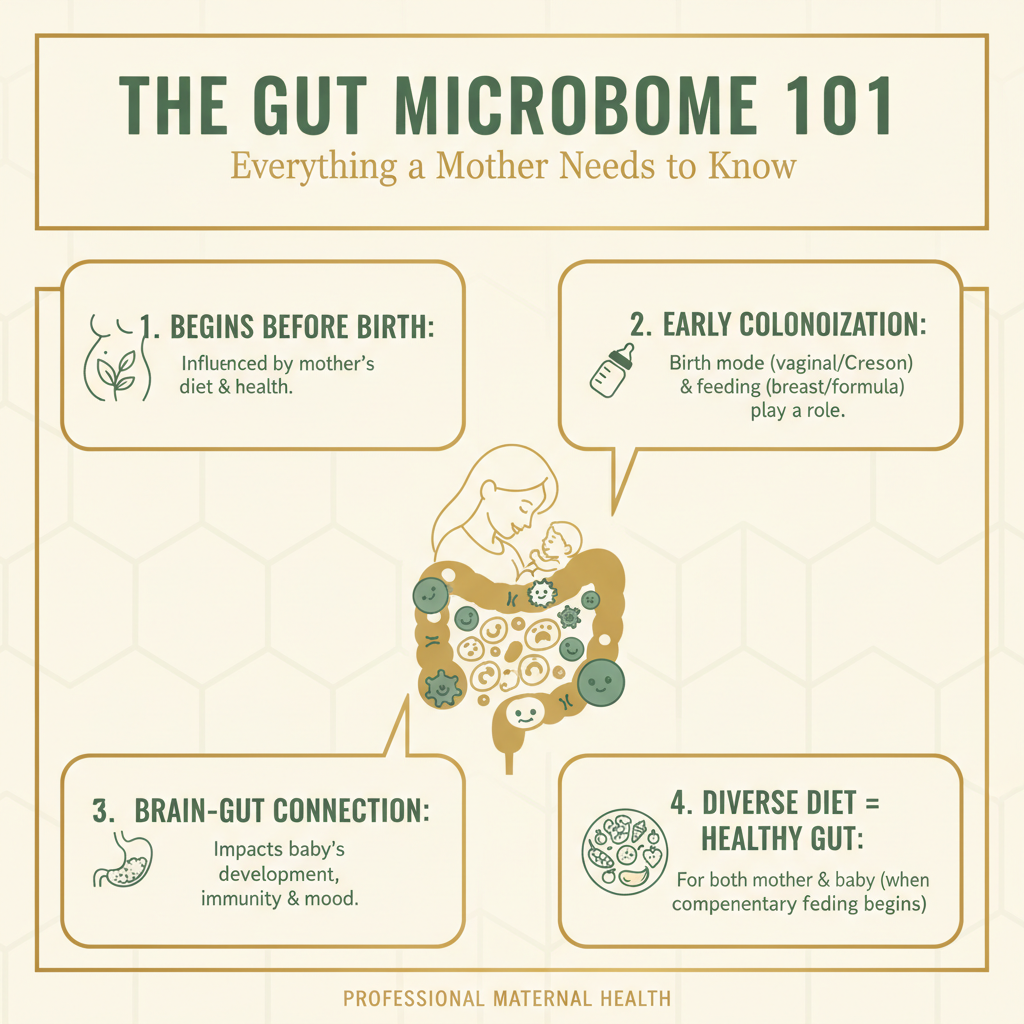
- Mode of delivery matters: Babies born vaginally acquire a microbiome seeded largely from their mother's vaginal and faecal microbiota — rich in Lactobacillus and Bifidobacterium. Caesarean-born babies are primarily colonised by skin and environmental microbes, a difference that can persist for months to years
- Breastfeeding shapes the infant gut: Breast milk contains human milk oligosaccharides (HMOs) — complex sugars that act as food for beneficial Bifidobacterium species in the baby's gut — as well as live bacteria, including Lactobacillus and Bifidobacterium strains
- Postpartum gut health influences energy, immunity, mood recovery, and even milk composition — making maternal microbiome support a postpartum priority, not an afterthought
The Role of Nutrition and Supplementation: How to Actively Support Your Microbiome
Now that we've established the why, let's focus on the how. Supporting your gut microbiome during pregnancy and postpartum is not complicated, but it does require intentionality. Nutrition is your most powerful tool — and targeted supplementation, when evidence-based, can fill critical gaps.
Probiotics vs Prebiotics: Understanding the Difference
One of the most common questions I receive is about probiotics vs prebiotics — and this distinction matters enormously for choosing the right support.
-
Probiotics are live microorganisms that, when consumed in adequate amounts, confer a health benefit to the host. Think of them as reinforcements — beneficial bacteria you introduce into your gut ecosystem. Common strains include Lactobacillus rhamnosus GG, Bifidobacterium longum, and Lactobacillus acidophilus
-
Prebiotics are non-digestible food components — primarily dietary fibres and certain polyphenols — that selectively stimulate the growth and activity of beneficial microbes already in your gut. Think of them as fertiliser. Common prebiotics include inulin, fructooligosaccharides (FOS), galactooligosaccharides (GOS), and lactulose
-
Synbiotics combine probiotics and prebiotics in a single formulation — a synergistic approach that is increasingly supported by the evidence and central to how we formulated the PregBiotics Range
Why Standard Supplements Fall Short
Most prenatal supplements are designed around vitamins and minerals — folate, iron, iodine, vitamin D — which are undeniably important. But they neglect the microbial dimension of maternal health entirely. This is the gap that the PregBiotics Range was created to address.
What to Look for in a Maternal Gut Health Supplement
The PregBiotics Range is formulated specifically for the demands of pregnancy, breastfeeding, and postpartum recovery. Key components include:
- Lactobacillus rhamnosus — one of the most studied probiotic strains in pregnancy; associated with reduced risk of gestational diabetes, eczema prevention in infants, and vaginal health support
- Bifidobacterium longum — dominant in the healthy infant gut; supports immune tolerance and reduces colic risk when passed through breast milk
- Lactobacillus acidophilus — supports vaginal microbiome integrity and GI comfort during pregnancy
- Galactooligosaccharides (GOS) — prebiotic fibres that selectively nourish Bifidobacterium and support immune modulation
- Folate (as methylfolate) — the bioavailable form of B9, essential for neural tube development
- Vitamin D3 — supports immune health, bone development, and increasingly linked to microbiome diversity
You can explore the full PregBiotics Range and find the right formulation for your stage — whether pregnant or breastfeeding — at PregBiotics Breastfeeding.
The World Health Organization recognises the role of nutrition in maternal and infant outcomes, and the evidence base for targeted probiotic use in pregnancy continues to grow rapidly.
Expert Tips and Actionable Advice: 10 Ways to Support Your Gut Microbiome as a Mother
These are the evidence-informed recommendations I give to my patients — and the principles I built PregBiotics around:
-
Eat a wide variety of plants — aim for 30 different plant foods per week. Diversity on your plate drives diversity in your gut. Include vegetables, fruits, legumes, whole grains, nuts, seeds, and herbs
-
Prioritise prebiotic-rich foods — garlic, onions, leeks, asparagus, bananas, oats, and chicory root are excellent natural prebiotic sources
-
Include fermented foods daily — live yoghurt, kefir, sauerkraut, kimchi, miso, and kombucha introduce beneficial microbes naturally (note: opt for pasteurised versions in pregnancy where relevant)
-
Limit ultra-processed foods — emulsifiers, artificial sweeteners (particularly saccharin and sucralose), and excessive sugar have been shown to disrupt microbial balance and gut barrier integrity
-
Stay hydrated — water is essential for gut motility and the function of your mucosal lining, both of which influence microbial habitat quality
-
Manage stress actively — chronic stress elevates cortisol, which directly alters gut permeability and microbial composition via the gut-brain axis. Mindfulness, yoga, and adequate sleep are not luxuries; they are microbiome medicine
-
Avoid unnecessary antibiotic use — antibiotics are sometimes essential and life-saving, but they profoundly disrupt the microbiome. If you must take them, discuss probiotic co-administration with your healthcare provider
-
Consider a targeted probiotic supplement — particularly if your diet is restricted, you've had recent antibiotic exposure, or you're at risk of GBS or gestational diabetes. The PregBiotics Range offers trimester-specific and postpartum formulations
-
Breastfeed if you can — breastfeeding is one of the most powerful acts of microbiome transfer. If breastfeeding is difficult, explore support early — and consider our resources at the Pregnancy Gut Guide
-
Think long-term, not just nine months — your microbiome investment during pregnancy pays dividends for years. A healthy maternal microbiome at birth gives your baby the best possible microbial start. Continue gut health support postpartum, not just prenatally
When to Seek Medical Advice
While supporting your gut microbiome through diet and evidence-based supplementation is generally safe and beneficial, there are important moments when you should always consult your healthcare provider before making changes.
Please speak to your doctor, midwife, or registered dietitian if you:
- Experience persistent digestive symptoms such as severe bloating, abdominal pain, chronic diarrhoea, or constipation — these may indicate an underlying condition requiring investigation
- Have a history of inflammatory bowel disease (IBD), Crohn's disease, or ulcerative colitis, as probiotic recommendations may differ significantly
- Are immunocompromised, as live probiotic organisms carry theoretical risks in severely immunosuppressed individuals
- Receive a positive GBS screening result and want to understand your options — both conventional and supportive
- Are considering high-dose probiotic supplements alongside existing medications
- Experience any symptoms that concern you during pregnancy — always err on the side of caution
The information in this article is educational in nature and is not a substitute for individualised medical advice. At PregBiotics, we always recommend working collaboratively with your healthcare team. The science of the microbiome is evolving — and so is our understanding of how gut health education can be translated safely into clinical practice.
Conclusion: Your Microbiome Is Your Motherhood Superpower
We have covered a great deal of ground in this article — from the fundamentals of gut microbiome basics, to the extraordinary ways in which your inner ecosystem shapes pregnancy, birth, postpartum recovery, and your baby's lifelong health. I hope what you take away is not anxiety, but agency.
Your microbiome is not fixed. It is dynamic, responsive, and — with the right knowledge and support — improvable at every stage of your motherhood journey. Every meal rich in plants, every probiotic capsule taken consistently, every moment of stress managed with intention — these are not small choices. They are investments in a biological legacy you are passing on to your child.
At PregBiotics, our mission is to close the gap between cutting-edge microbiome science and the mothers who need it most. We believe that gut health education is not a niche — it is foundational maternal healthcare. And we are here to walk every step of that journey with you, from preconception to postpartum and beyond.
If this article has sparked your curiosity, I invite you to explore more science-backed resources at The PregBiotics Journal — where we publish regular, evidence-informed content designed specifically for mothers who want to understand and optimise their health from the inside out.
You are not just growing a baby. You are building a microbiome. And that, mama, is extraordinary.
Dr. Chomba Chuma, MD is a physician, maternal health advocate, and the Founder of PregBiotics. She is passionate about translating gut microbiome science into practical, empowering guidance for mothers at every stage of their journey.
References:
- Sender, R. et al. (2016). Revised Estimates for the Number of Human and Bacteria Cells in the Body. Cell, 164(3), 337–340. https://doi.org/10.1016/j.cell.2016.01.013
- Crusell, M.K.W. et al. (2018). Gestational diabetes is associated with change in the gut microbiota composition in third trimester of pregnancy and postpartum. EBioMedicine, 31, 1–11. https://doi.org/10.1016/j.ebiom.2018.05.037
- Marchesi, J.R. et al. (2016). The gut microbiota and host health: a new clinical frontier. Gut. https://www.ncbi.nlm.nih.gov/pmc/articles/PMC5541232/
Get the PregBiotics Journal in your inbox
Gut-smart guidance for conception, pregnancy and breastfeeding — twice a week, plus member-only offers. Unsubscribe anytime.
You deserve to feel beautifully supported.
Join thousands of mothers on the PregBiotics journey. Receive your free Pregnancy Prep Guide and gentle, science-backed wisdom — tailored to where you are right now.