The Gut-Brain Axis: Why Your Microbiome Holds the Key to Postnatal Mood and Mental Health
Imagine this: you've just brought your baby home. You love them fiercely, completely, beyond words — and yet something feels off. You're exhausted in a way sleep doesn't fix. You feel anxious for no clear reason. Some mornings, the weight of it all presses down before you've even had a chance to ope
Dr. Chomba Chuma, MD & Founder
MD & Founder, PregBiotics

The Gut-Brain Axis: Why Your Microbiome Holds the Key to Postnatal Mood and Mental Health
By Dr. Chomba Chuma, MD & Founder | PregBiotics Journal
Introduction: The Connection Nobody Told You About
Imagine this: you've just brought your baby home. You love them fiercely, completely, beyond words — and yet something feels off. You're exhausted in a way sleep doesn't fix. You feel anxious for no clear reason. Some mornings, the weight of it all presses down before you've even had a chance to open your eyes. You wonder if something is wrong with you.
You are not alone. According to the World Health Organization, approximately 1 in 5 women experience a mental health condition during or after pregnancy. Postnatal depression and anxiety are among the most common — and yet, some of the most underdiagnosed — medical conditions affecting new mothers globally.
But here's something that might surprise you: the conversation about postnatal mood has been missing a crucial player. Not your hormones, not your sleep deprivation (though both matter enormously) — but your gut.
Emerging science is revealing a profound, bidirectional communication network between your digestive system and your brain, known as the gut-brain axis. And the trillions of microorganisms living in your gut — your microbiome — appear to play a starring role in regulating mood, stress resilience, and mental wellbeing, particularly in the postnatal period.
In this article, I want to walk you through the science of how your gut and brain speak to each other, why the postnatal and breastfeeding period places unique demands on your microbiome, and — most importantly — what you can practically do about it. Because understanding your body is the first step to supporting it.
The Science: How Your Gut Talks to Your Brain
What Is the Gut-Brain Axis?
The gut-brain axis is not a metaphor — it is a real, measurable, anatomical and biochemical communication system. It connects your enteric nervous system (the vast network of over 500 million neurons lining your gastrointestinal tract, often called the "second brain") with your central nervous system, which includes your brain and spinal cord.
This communication runs in both directions via multiple pathways:
- The vagus nerve — a long, wandering nerve that carries signals directly between the brainstem and the gut
- The immune system — gut bacteria regulate inflammatory signals that travel to the brain and influence mood and cognition
- The endocrine system — gut microbes influence the production of hormones including cortisol and oestrogen
- Neurotransmitter production — this is perhaps the most fascinating pathway of all
The Serotonin Connection
When most people think of serotonin — the neurotransmitter most closely associated with mood, happiness, and emotional stability — they think of the brain. But here is the remarkable truth: approximately 90–95% of the body's serotonin is produced in the gut, not the brain.
The relationship between serotonin and probiotics is an active and exciting area of research. Certain strains of gut bacteria, including Lactobacillus and Bifidobacterium species, have been shown to stimulate enterochromaffin cells in the gut lining to produce serotonin. They also influence the availability of tryptophan — the amino acid precursor to serotonin — through the kynurenine pathway. Dysregulation of this pathway has been directly linked to depression and anxiety in peer-reviewed research.
Additionally, gut microbes produce other key neuroactive molecules, including:
- GABA (gamma-aminobutyric acid) — the brain's primary calming neurotransmitter
- Dopamine precursors — relevant to motivation and reward
- Short-chain fatty acids (SCFAs) — produced through fibre fermentation, these metabolites reduce neuroinflammation and support the integrity of the blood-brain barrier
Why the Postnatal Period Is a Vulnerable Window
Pregnancy and childbirth fundamentally alter the gut microbiome. The hormonal upheaval of the third trimester and the postpartum period — characterised by a sharp drop in oestrogen and progesterone — creates an environment in which microbial diversity can decline significantly. Add to this the physical demands of birth, altered sleep patterns, potential antibiotic exposure, and the nutritional depletion that can occur if dietary intake is inadequate, and you have a perfect storm of microbiome disruption.
Research published in Nutrients has shown that reduced microbial diversity in the postpartum period correlates with increased inflammatory markers — and chronic low-grade inflammation is now considered one of the key biological underpinnings of postnatal depression.
The gut-brain axis during breastfeeding is particularly relevant because your nutritional reserves are being drawn upon to produce milk, potentially leaving your own gut ecosystem undernourished and underserved.
What This Means for You as a Breastfeeding Mother
Understanding the science is one thing — understanding what it means for your daily lived experience as a new mother is quite another. Let me translate this for you.
Signs Your Gut-Brain Axis May Be Under Strain
Postnatal anxiety and gut health are more closely intertwined than most healthcare providers currently discuss. If you are breastfeeding and experiencing any of the following, your gut microbiome may be contributing to how you feel:
- Persistent low mood or emotional flatness that doesn't lift with rest or social connection
- Heightened anxiety or a sense of dread that feels disproportionate to circumstances
- Brain fog or difficulty concentrating — sometimes described as "mumnesia"
- Digestive discomfort — bloating, irregular bowel movements, or increased gut sensitivity
- Cravings for sugar or refined carbohydrates — some gut microbes actually drive these cravings, further disrupting microbial balance
- Fatigue that goes beyond sleep deprivation
- A sense of being emotionally "wired but tired" — a hallmark of dysregulated cortisol, which the gut microbiome helps to regulate via the HPA (hypothalamic-pituitary-adrenal) axis
The Breastfeeding-Microbiome Dynamic
What is often overlooked is that breastfeeding itself has a complex relationship with the gut microbiome — both yours and your baby's. Breast milk contains human milk oligosaccharides (HMOs), which act as prebiotics, nourishing beneficial bacteria in your baby's developing gut. Your microbiome directly influences the immunological and microbial composition of your milk.
But the equation works the other way too: your baby's gut health and your own are metabolically linked during breastfeeding. Supporting your microbiome is not just an act of self-care — it is an act of care for your child.
What Your Microbiome Needs Right Now
To support the gut-brain axis during breastfeeding, your microbiome needs:
- Microbial diversity — a wide variety of beneficial bacterial species
- Adequate prebiotic fibre — to feed and sustain those bacteria
- Key micronutrients — including magnesium, vitamin D, and B vitamins, all of which support both gut integrity and neurological function
- Reduction of dysbiosis triggers — such as high sugar intake, chronic stress, and unnecessary antibiotic use
The Role of Nutrition and Supplementation in Supporting Postnatal Mental Health
Knowing what your microbiome needs is only half the picture. The more pressing question is: how do you meet those needs when you're exhausted, potentially undereating, and caring for a newborn around the clock?
This is where thoughtful, science-backed supplementation becomes genuinely valuable — not as a replacement for a varied diet, but as a reliable, daily foundation of support when life makes optimal eating difficult.
Nutrients That Specifically Support the Gut-Brain Axis During Breastfeeding
The following have the strongest evidence base for supporting microbiome mood regulation and postnatal mental wellbeing:
- Lactobacillus rhamnosus JB-1 — one of the most studied strains for reducing anxiety-like behaviour via the vagus nerve pathway
- Bifidobacterium longum — shown to reduce cortisol levels and self-reported psychological distress
- Lactobacillus acidophilus — supports gut lining integrity and GABA production
- Prebiotic fibres (FOS & inulin) — nourish beneficial bacteria and support SCFA production
- Magnesium glycinate — supports GABA activity and nervous system calm; widely depleted postpartum
- Vitamin D3 — critical for immune modulation and associated with reduced risk of postnatal depression in multiple studies
- Omega-3 fatty acids (DHA/EPA) — reduce neuroinflammation and are heavily drawn upon during breastfeeding
- Folate (methylfolate) — essential for neurotransmitter synthesis and often depleted postpartum
- B6 and B12 — cofactors in serotonin and dopamine metabolism
Why I Created PregBiotics Breastfeeding
When I developed PregBiotics Breastfeeding, the gut-brain axis was central to my thinking. I was frustrated that most postnatal supplements stopped at iron and folic acid — as if the extraordinary demands of breastfeeding, hormonal recalibration, and sleep deprivation were somehow separate from a woman's nutritional needs.
PregBiotics Breastfeeding is formulated to address both the microbiome and the mental health dimensions of postnatal recovery. It contains a clinically informed blend of multi-strain probiotics (including Lactobacillus and Bifidobacterium species), prebiotic fibres, and key micronutrients specifically dosed for breastfeeding mothers. Every ingredient is chosen with one question in mind: does the evidence support this for a mother in this specific season of life?
It is not a magic pill. But it is a meaningful, daily act of support for the gut-brain axis — and by extension, for your mood, your resilience, and your sense of self.
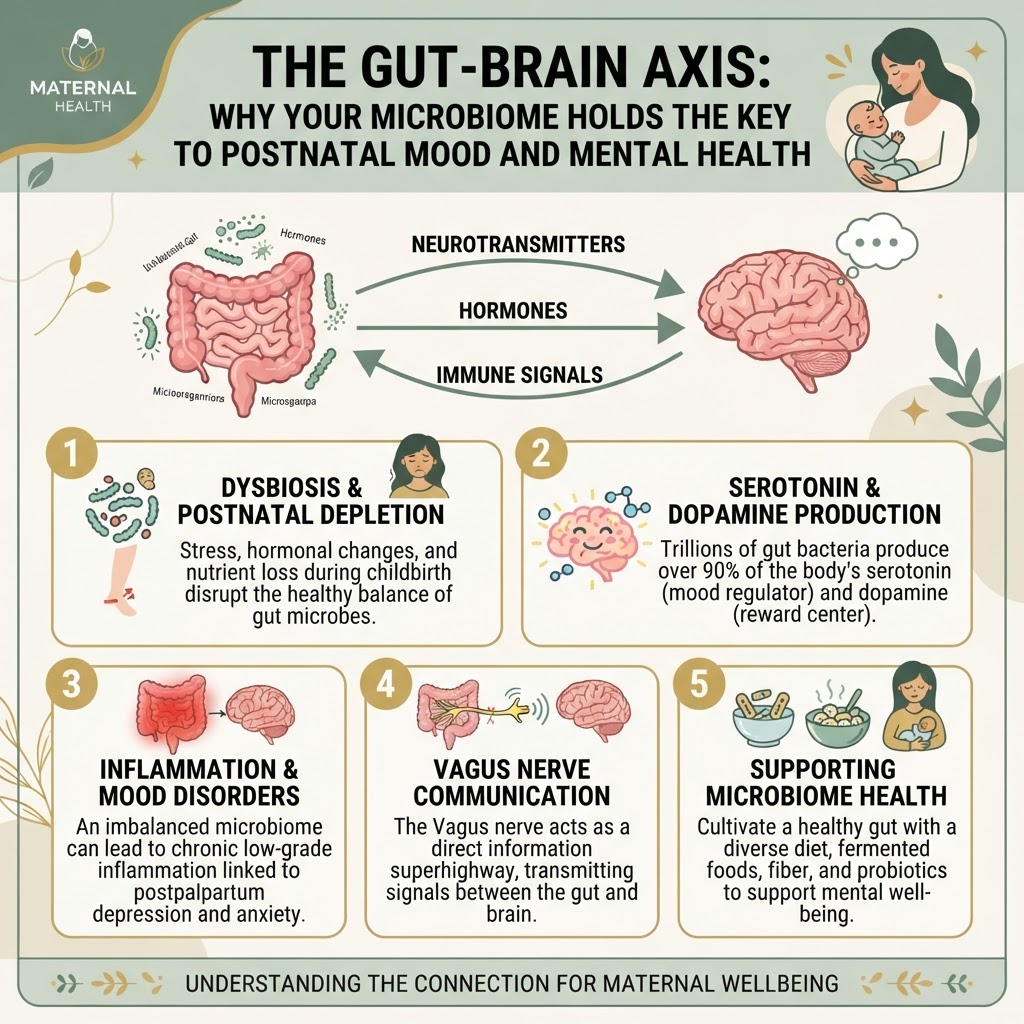
Infographic: The Gut-Brain Axis During Breastfeeding — From Microbiome to Mood
Expert Tips: Practical Steps to Support Your Gut-Brain Axis Postnatally
Here are my clinical recommendations for breastfeeding mothers who want to actively support their microbiome and mental health:
-
Start with a quality postnatal probiotic. Look for multi-strain products with at least 10 billion CFUs containing evidence-backed strains like L. rhamnosus and B. longum. Take it daily and consistently — the gut microbiome responds to routine.
-
Prioritise prebiotic foods alongside your probiotic. Garlic, leeks, onions, asparagus, bananas, and oats all contain prebiotic fibres that feed beneficial bacteria. Even small amounts added regularly to meals make a cumulative difference.
-
Don't undereat. Many breastfeeding mothers are inadvertently in caloric deficit, which stresses the gut ecosystem and depletes neurotransmitter precursors. You need approximately 300–500 additional calories per day while breastfeeding. Nourish yourself with the same intentionality you bring to feeding your baby.
-
Reduce inflammatory triggers where possible. Ultra-processed foods, excessive refined sugar, and alcohol all negatively impact microbial diversity. You don't need perfection — small, consistent shifts matter most.
-
Move your body gently. Even a 20-minute daily walk has been shown to beneficially alter gut microbial composition and reduce cortisol. Movement also stimulates vagal tone, strengthening the gut-brain communication pathway.
-
Tend to sleep quality, not just quantity. Sleep deprivation disrupts the gut microbiome significantly. Where possible, prioritise sleep over other tasks during recovery windows. A supported microbiome also improves sleep quality in return — a virtuous cycle worth initiating.
-
Stay connected. Social isolation amplifies the stress response, elevates cortisol, and negatively impacts gut health. Meaningful human connection — even brief — has measurable benefits for the gut-brain axis.
-
Explore the broader picture. If you're interested in understanding more about how gut health affects your overall wellbeing through pregnancy and beyond, our Pregnancy Gut Guide is a free, comprehensive resource I created specifically for mothers navigating this journey.
-
Be patient and compassionate with yourself. Microbiome restoration is not a one-week project. Meaningful, lasting shifts happen over weeks to months of consistent support. Every day you invest in your gut health is a day you invest in your mental health.
When to Seek Medical Advice
While supporting your gut health is a powerful and evidence-based strategy for postnatal wellbeing, it is not a substitute for professional medical care — and I want to be unequivocal about this.
Please speak to your GP, midwife, or a mental health professional without delay if you are experiencing:
- Persistent low mood lasting more than two weeks that does not lift
- Feelings of hopelessness, worthlessness, or that your baby or family would be better off without you
- Intrusive or distressing thoughts about harming yourself or your baby
- Severe anxiety, panic attacks, or inability to function in daily life
- Symptoms of postpartum psychosis, including confusion, hallucinations, or rapid mood swings
Postnatal depression and postnatal anxiety are medical conditions — not character failings, not signs of weakness, and not something you should manage alone. Effective treatments exist, including talking therapies and medication that are compatible with breastfeeding. The gut-brain axis is one piece of a complex picture, and it works best as part of a holistic approach that includes proper medical support when needed.
The NHS provides clear guidance on recognising and seeking help for postnatal depression. Please use it.
Conclusion: Your Gut Is Your Ally
The postnatal period is one of the most extraordinary — and one of the most demanding — transitions a human body can undergo. The emotional landscape of early motherhood is vast and varied: profound love, deep exhaustion, unexpected grief, fierce joy, and everything in between. Too often, the physiological roots of how we feel during this time are overlooked.
The gut-brain axis is not a fringe theory. It is well-established, peer-reviewed science that is reshaping how we understand postnatal mood and mental health. Your microbiome is not a peripheral concern — it is a central player in how you feel, how you cope, and how you recover.
The good news is that your microbiome is responsive. It is changeable. And the actions you take today — the food you eat, the supplements you choose, the way you move and connect and rest — can meaningfully shift the landscape of your gut and, through it, your mind.
PregBiotics Breastfeeding was created to be part of that shift: a daily, reliable act of support for your gut, your brain, and your whole self during the breastfeeding journey.
You deserve care that sees all of you — not just the mother you are becoming, but the woman you already are.
For more science-backed articles on maternal gut health, mood, and microbiome, visit The PregBiotics Journal.
Dr. Chomba Chuma is a medical doctor, maternal gut health specialist, and Founder of PregBiotics. The information in this article is intended for educational purposes and does not constitute personalised medical advice. Always consult your healthcare provider before making changes to your supplement routine, especially during pregnancy and breastfeeding.
Get the PregBiotics Journal in your inbox
Gut-smart guidance for conception, pregnancy and breastfeeding — twice a week, plus member-only offers. Unsubscribe anytime.
You deserve to feel beautifully supported.
Join thousands of mothers on the PregBiotics journey. Receive your free Pregnancy Prep Guide and gentle, science-backed wisdom — tailored to where you are right now.