The Gut-Brain Axis: Why Your Microbiome Holds the Key to Postnatal Mood and Mental Health
Imagine this: you are six weeks postpartum, cradling your newborn in the quiet hours of the night. You have been told that this should feel magical — and sometimes it does. But other times, there is a heaviness you cannot quite name. A creeping anxiety. A flatness. A voice whispering that you are no
Dr. Chomba Chuma, MD & Founder
MD & Founder, PregBiotics

The Gut-Brain Axis: Why Your Microbiome Holds the Key to Postnatal Mood and Mental Health
By Dr. Chomba Chuma, MD & Founder | PregBiotics Journal
Introduction: The Connection No One Told You About
Imagine this: you are six weeks postpartum, cradling your newborn in the quiet hours of the night. You have been told that this should feel magical — and sometimes it does. But other times, there is a heaviness you cannot quite name. A creeping anxiety. A flatness. A voice whispering that you are not coping as well as you should be. You smile through the health visitor appointments and tell everyone you are fine. But inside, something feels off.
If this resonates, you are far from alone. Postnatal depression affects approximately 1 in 5 women in the UK within the first year after birth, and postnatal anxiety may be even more common — yet both remain significantly underdiagnosed and under-discussed. We tend to frame these struggles as hormonal, situational, or simply a matter of "adjustment." And while those factors absolutely play a role, there is another critical piece of the puzzle that mainstream medicine has been slow to address: your gut.
In this article, I want to take you deep into the fascinating science of the gut-brain axis — the bidirectional communication superhighway between your digestive system and your mind — and explain why the state of your microbiome during the breastfeeding period may have a profound and measurable impact on your postnatal mental health. More importantly, I want to show you that this is not another thing to feel guilty about. It is something you can actively, gently, and powerfully support.
The Gut-Brain Axis: Understanding the Science Behind Your Mood
What Is the Gut-Brain Axis?
The gut-brain axis is a complex, bidirectional communication network linking the enteric nervous system (the intricate web of neurons lining your gastrointestinal tract — sometimes called the "second brain") with your central nervous system, including your brain. This connection operates via multiple channels: the vagus nerve, the immune system, the endocrine system, and an array of microbial metabolites produced by the trillions of bacteria, fungi, and other microorganisms that make up your gut microbiome.
Put simply: what happens in your gut does not stay in your gut. The signals your microbiome sends travel directly to your brain, influencing everything from stress reactivity and sleep quality to emotional regulation and cognitive function.
Serotonin, Probiotics, and the Chemistry of Wellbeing
Here is a statistic that tends to surprise people: approximately 90–95% of your body's serotonin — the neurotransmitter most commonly associated with mood, happiness, and emotional stability — is produced in your gut, not your brain. Specific gut bacteria are directly involved in the synthesis and regulation of serotonin, as well as other key neurotransmitters including GABA (which governs calm and anxiety reduction) and dopamine.
Research published in Nature Reviews Neuroscience has demonstrated that gut microbiota play a critical role in regulating the hypothalamic-pituitary-adrenal (HPA) axis — the system that controls your stress response. When your microbiome is disrupted or depleted, this regulatory function is compromised, leaving you more vulnerable to heightened stress, emotional dysregulation, and mood disorders.
The Postpartum Microbiome: A System Under Pressure
The transition through pregnancy and into the postpartum period is one of the most significant microbiome disruptions a human body can experience. By the third trimester, the gut microbiome has already shifted considerably — and birth, particularly if it involved a caesarean section or antibiotic use, can further alter microbial diversity. Sleep deprivation, dietary changes, physical recovery, and the hormonal cascade following birth all place additional strain on an already-challenged system.
During breastfeeding, the picture becomes even more nuanced. Your body is performing an extraordinary feat — producing nutrient-rich milk for your baby while also trying to restore physiological balance. This demands significant metabolic resources and places unique demands on your gut microbiome, which must simultaneously support immune function, nutrient absorption, inflammation regulation, and — crucially — mood regulation.
What This Means For You: Connecting the Dots Between Your Gut and Your Mind
Understanding that the gut-brain axis exists is one thing. Understanding what it actually means for your lived experience as a breastfeeding mother is another. Here is how a disrupted microbiome may be quietly contributing to how you are feeling:
-
Heightened anxiety: Dysbiosis (an imbalance in gut bacteria) is associated with elevated levels of inflammatory cytokines — signalling proteins that can cross the blood-brain barrier and contribute to anxiety symptoms. If you are experiencing postnatal anxiety and gut health has never been mentioned in your care, this connection may be missing from your recovery.
-
Low mood and postnatal depression: Research on the gut microbiome and postnatal depression suggests that women with lower microbial diversity in the postpartum period report higher rates of depressive symptoms. The depletion of serotonin-producing bacteria may be a contributing mechanism — one that sits squarely at the intersection of postnatal depression and gut health.
-
Brain fog and cognitive fatigue: That "mum fog" many women experience is not purely about sleep deprivation. Gut-derived inflammatory signals and disrupted short-chain fatty acid (SCFA) production can impair cognitive function, memory, and concentration — all of which are essential when you are caring for a newborn around the clock.
-
Emotional dysregulation: Feeling more tearful, reactive, or overwhelmed than you would expect? Your gut microbiome plays a direct role in regulating GABA pathways. When GABA activity is reduced — as can occur with dysbiosis — emotional reactivity tends to increase.
-
Poor sleep quality: Even when you do get the opportunity to sleep, a disrupted microbiome can interfere with melatonin regulation and sleep architecture, meaning the sleep you do get is less restorative.
-
Immune vulnerability: Breastfeeding mothers with compromised gut health may also find themselves more susceptible to infections — further depleting energy and resilience at an already demanding time.
The important takeaway here is this: these experiences are not character flaws, and they are not inevitable. They are, in significant part, physiological — and the microbiome is a physiological system you can meaningfully support.
The Role of Nutrition and Supplementation in Supporting Your Gut-Brain Axis
Rebuilding From the Inside Out
Supporting the gut-brain axis during the breastfeeding period requires a targeted, science-led approach. Diet forms the foundation — but for most new mothers, achieving optimal nutrition through food alone is genuinely challenging. Sleep deprivation, time constraints, and the extraordinary nutritional demands of milk production mean that gaps are almost inevitable.
This is where high-quality, evidence-based supplementation becomes not a luxury, but a genuine act of self-care and clinical wisdom.
Key Nutrients and Strains That Support Postnatal Mood via the Gut
When it comes to supporting microbiome mood connections during breastfeeding, the following have the strongest evidence base:
- Lactobacillus rhamnosus — One of the most studied probiotic strains for mood and anxiety, shown in multiple studies to modulate GABA receptor expression and reduce anxiety-like behaviour via vagal pathways
- Lactobacillus helveticus and Bifidobacterium longum — This combination has demonstrated significant reductions in psychological distress, anxiety, and cortisol levels in clinical trials
- Bifidobacterium infantis — Particularly relevant postpartum, this strain has been shown to reduce inflammatory markers implicated in both postnatal depression and gut permeability
- Prebiotic fibres (FOS/GOS) — Feed beneficial bacteria and support SCFA production, which in turn nourishes the gut lining, regulates inflammation, and influences brain function
- Omega-3 fatty acids (DHA/EPA) — Critical for both maternal brain health and infant neurodevelopment via breast milk; strong evidence links omega-3 deficiency to postnatal depressive symptoms
- Vitamin D3 — Deficiency is extremely common postpartum and strongly associated with mood disorders; Vitamin D receptors are present throughout the brain and immune system
- Magnesium glycinate — Supports GABA function, sleep quality, and stress resilience
- B vitamins (particularly B6, B9, and B12) — Essential cofactors in serotonin and dopamine synthesis; commonly depleted in the postpartum period
This is precisely why I formulated PregBiotics Breastfeeding — a comprehensive, clinically informed supplement designed specifically for the breastfeeding stage. It brings together a synbiotic blend of evidence-backed probiotic strains and prebiotic fibres, alongside the key micronutrients that research identifies as most critical during this period. Every ingredient is chosen with both maternal gut health and the gut-brain axis in mind, because I believe that supporting your microbiome is one of the most powerful things you can do for your mental health right now.
You can also explore our Pregnancy Gut Guide for a deeper understanding of how your gut has evolved through each stage of the perinatal journey and how to continue supporting it.
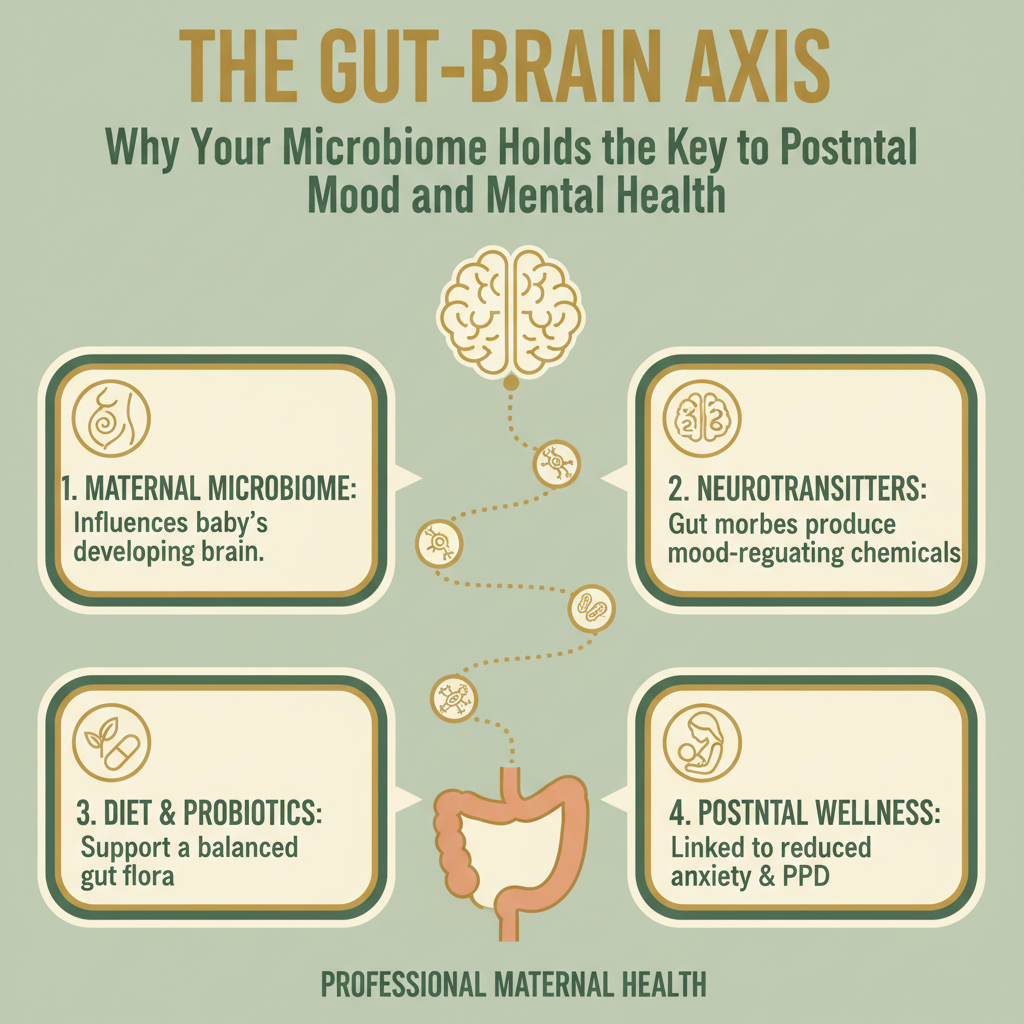
Suggested infographic: "The Gut-Brain Axis in the Breastfeeding Mother" — illustrating the vagus nerve pathway, serotonin production sites, key probiotic strains and their mood targets, and a visual comparison of a balanced vs. disrupted postpartum microbiome.
Expert Tips and Actionable Advice: What You Can Start Doing Today
You do not need a complete lifestyle overhaul — you need sustainable, evidence-informed choices that fit into the reality of new motherhood. Here is what I recommend:
-
Prioritise fermented foods where possible. Yoghurt, kefir, sauerkraut, kimchi, and miso are all rich in naturally occurring probiotics. Even small amounts daily can contribute meaningfully to microbial diversity. If your appetite or access is limited, supplementation fills the gap.
-
Feed your bacteria, not just yourself. Include prebiotic-rich foods in your diet: garlic, onions, leeks, asparagus, bananas, oats, and flaxseed. These fibres fuel your beneficial gut bacteria and support serotonin production.
-
Reduce ultra-processed food intake where you can. High sugar, high-fat processed foods can rapidly disrupt the microbial balance and fuel gut inflammation — which feeds directly into the anxiety-depression cycle.
-
Support your gut-brain axis through movement. Even gentle walking — 20 to 30 minutes — has been shown to positively shift microbiome composition and reduce inflammatory markers associated with postnatal anxiety and gut health disruption. Do not underestimate the power of daily movement, even at a slow pace with your pram.
-
Protect your sleep architecture. We know this is easier said than done. But strategic napping, sharing night feeds where possible, and minimising screen exposure in the hour before sleep can improve sleep quality even when quantity is limited — supporting both gut and brain recovery.
-
Start a science-led postnatal supplement. Begin PregBiotics Breastfeeding as early in the breastfeeding period as possible. Consistency matters more than timing — the microbiome responds to sustained, daily inputs, and the benefits compound over weeks rather than days.
-
Breathe — literally. Diaphragmatic breathing activates the vagus nerve, which is the primary physical channel of the gut-brain axis. Even five minutes of slow, deep breathing daily has measurable effects on gut motility, stress hormones, and emotional regulation.
-
Connect with other mothers. Social connection has its own microbiome benefits — loneliness and social isolation increase inflammatory cytokines, while positive social interaction supports immune and gut health. Find your village, even in small doses.
When to Seek Medical Advice
While supporting your gut-brain axis through nutrition, supplementation, and lifestyle is a powerful and evidence-based strategy, I want to be completely clear: these approaches complement professional care — they do not replace it.
If you are experiencing symptoms of postnatal depression or postnatal anxiety that feel persistent, overwhelming, or distressing — including persistent low mood lasting more than two weeks, intrusive thoughts, difficulty bonding with your baby, panic attacks, or thoughts of self-harm — please reach out to your GP, midwife, or health visitor without delay. Early intervention is effective, and there is no threshold of suffering you need to reach before you deserve support.
In the UK, the NHS provides guidance and signposting for postnatal mental health and you can also contact PANDAS Foundation (Pre and Postnatal Depression Advice and Support) for specialist peer and professional support.
Supplementation and gut health optimisation can play a meaningful supporting role in your overall mental health care plan — but your GP or mental health team should always be part of that conversation.
Conclusion: Your Gut Is an Ally — Not Another Thing to Worry About
The science of the gut-brain axis is one of the most exciting and clinically significant frontiers in modern medicine. For postnatal women, it offers something genuinely hopeful: a new lens through which to understand mood, anxiety, and wellbeing — and a tangible, evidence-based pathway toward feeling better.
You are not failing. You are not weak. And the way you feel is not simply an inevitable consequence of new motherhood. It is, at least in meaningful part, a reflection of a microbiome that has been through enormous change and that — with the right support — can be rebuilt, rebalanced, and restored.
The connection between the gut-brain axis and breastfeeding mothers is not yet widely understood in mainstream perinatal care. But it should be. And it is the reason I built PregBiotics — because every mother deserves access to the science that can help her thrive, not just survive.
Start with your gut. Nourish your microbiome. Trust that small, consistent steps create profound change over time. And know that supporting your own health is one of the most important things you can do — for yourself, and for the baby you are nurturing.
Explore more science-backed guidance for every stage of your perinatal journey at The PregBiotics Journal, and take the first step toward a healthier gut and a clearer mind with PregBiotics Breastfeeding today.
Dr. Chomba Chuma, MD, is a medical doctor and the founder of PregBiotics. She is passionate about integrating microbiome science into maternal healthcare to support the physical and mental wellbeing of mothers at every stage of the perinatal journey. This article is intended for informational purposes and does not constitute personal medical advice.
References & Further Reading:
- Cryan, J.F. et al. (2019). The Microbiota-Gut-Brain Axis. Physiological Reviews, 99(4), 1877–2013.
- NHS (2022). Postnatal Depression — Overview.
- Molina-Torres, G. et al. (2019). Stress and the gut microbiota-brain axis. Behavioural Pharmacology, 30(2–3), 187–200.
Get the PregBiotics Journal in your inbox
Gut-smart guidance for conception, pregnancy and breastfeeding — twice a week, plus member-only offers. Unsubscribe anytime.
You deserve to feel beautifully supported.
Join thousands of mothers on the PregBiotics journey. Receive your free Pregnancy Prep Guide and gentle, science-backed wisdom — tailored to where you are right now.