Postpartum Gut Restoration: Rebuilding Your Microbiome After Birth
You've just brought a new life into the world. You're navigating sleepless nights, tender moments, and a body that feels both unfamiliar and extraordinary. Amidst the feeds, the nappy changes, and the quiet 3am wonder, there's something happening inside you that rarely gets discussed at postnatal ch
Dr. Chomba Chuma, MD & Founder
MD & Founder, PregBiotics

Postpartum Gut Restoration: Rebuilding Your Microbiome After Birth
By Dr. Chomba Chuma, MD & Founder | PregBiotics Journal
Introduction
You've just brought a new life into the world. You're navigating sleepless nights, tender moments, and a body that feels both unfamiliar and extraordinary. Amidst the feeds, the nappy changes, and the quiet 3am wonder, there's something happening inside you that rarely gets discussed at postnatal check-ups — your gut microbiome is in a state of profound transition, and it needs your attention just as much as the rest of your recovery.
Here's a statistic that surprises many of the mothers I speak with: research published in Cell Host & Microbe found that the gut microbiome undergoes some of its most dramatic compositional shifts during and immediately after pregnancy — changes comparable in magnitude to those seen in serious gastrointestinal illness. Yet postpartum gut health almost never makes it onto the discharge checklist.
Whether you had a vaginal birth or a caesarean section, whether labour was swift or long, whether you received antibiotics during delivery or not — your gut is in recovery mode. And if you're breastfeeding, what's happening in your gut directly influences the quality of your milk, your energy levels, your mood, and even your baby's developing microbiome.
In this article, I want to walk you through the science of microbiome recovery after birth, explain what this means for your day-to-day wellbeing, and give you a practical, evidence-informed roadmap for gut healing postnatal. Because restoration isn't just possible — it's something you can actively support, starting today.
The Biology of Birth: What Happens to Your Gut Microbiome
To understand postpartum gut restoration, we first need to appreciate how significantly the microbiome has already been through by the time your baby arrives.
Pregnancy's Lasting Impact on the Gut
Throughout pregnancy, your gut microbiome undergoes a carefully orchestrated transformation. In the third trimester particularly, there is a natural and purposeful shift toward a microbiome that is more metabolically active — extracting more energy from food to support foetal growth — but also one with reduced diversity. What's more, the immune system modulates itself throughout pregnancy to tolerate the "foreign" presence of your baby, and this modulation has downstream effects on the gut's microbial ecosystem.
By the time you reach labour, your gut microbiome is already working hard.
The Disruption of Labour and Delivery
Labour itself introduces several factors that can alter the gut microbiome significantly:
- Prolonged labour and physical stress trigger a cortisol response that can suppress beneficial bacterial populations
- Antibiotic use during labour — administered to approximately 1 in 3 labouring women in high-income countries, often for Group B Streptococcus prophylaxis or caesarean section prevention — substantially reduces microbial diversity in both mother and newborn
- Caesarean section bypasses the vaginal seeding process that normally transfers key maternal microbes to the baby, and is also associated with altered maternal gut recovery patterns
- Opioid analgesia (such as morphine or codeine prescribed postnatally) can slow gastrointestinal motility and disrupt gut-brain axis signalling
The Postpartum Microbiome: A Disrupted Ecosystem
Studies from the University of California have demonstrated that the postpartum period is characterised by significant dysbiosis — an imbalance in the gut microbial community — particularly in women who received intrapartum antibiotics or delivered via caesarean. Dysbiosis at this stage is associated with:
- Increased intestinal permeability ("leaky gut")
- Heightened systemic inflammation
- Disrupted short-chain fatty acid (SCFA) production
- Impaired serotonin synthesis (up to 90% of serotonin is produced in the gut)
- Compromised immune regulation
This last point is critically important. The postpartum period is already a time of significant immune and hormonal recalibration. When gut dysbiosis compounds these shifts, it can contribute to fatigue, brain fog, digestive discomfort, and — crucially — an increased vulnerability to postpartum mood disorders, including postpartum depression and anxiety.
The gut-brain axis, the bidirectional communication pathway between your gut microbiome and your central nervous system, doesn't pause for maternity leave. Supporting it actively during the postnatal period is not a luxury — it is foundational care.
What This Means For You: Reading the Signs and Understanding the Stakes
The science is compelling, but what does postpartum gut disruption actually look like in real life? Many mothers I work with describe symptoms that they've been told are "just normal after having a baby." Some of them are. But some are signs that the gut needs targeted support.
Common Signs of Postpartum Gut Dysbiosis
- Persistent bloating or irregular bowel movements beyond the first 2–3 weeks postpartum
- Unusual fatigue that feels disproportionate even accounting for disrupted sleep
- Mood changes, anxiety, or low mood that feel connected to physical symptoms
- Recurrent thrush or urinary tract infections, which suggest an imbalance in the broader microbiome
- Skin flares such as eczema or acne, which can be an external signal of internal dysbiosis
- Difficulty losing weight despite returning to normal eating patterns
- Low milk supply or fluctuating supply in breastfeeding mothers
Why Breastfeeding Changes the Picture
If you're breastfeeding, the stakes around postpartum gut health are meaningfully higher — and so is the opportunity.
Here's what the research tells us: your gut microbiome directly shapes the microbial content of your breast milk. A landmark study in Genome Biology identified over 700 species of bacteria in human breast milk, many of which originate in the maternal gut and travel via an entero-mammary pathway to the mammary glands. This means that every feed is a microbial transfer — an extraordinary seeding event for your baby's developing gut.
The health of your gut microbiome influences:
- The diversity of beneficial bacteria passed to your baby through milk
- The concentration of immunoglobulins and other immune-protective compounds in your milk
- Your own energy metabolism and nutrient absorption, directly affecting milk quality
- Your emotional resilience through the gut-brain serotonin-dopamine pathway
Supporting your gut isn't just self-care. When you're breastfeeding, it's also one of the most powerful things you can do for your baby.
The Role of Nutrition and Supplementation in Gut Healing Postnatal
Rebuilding a disrupted gut microbiome requires a two-pronged approach: nourishing the gut environment through diet, and replenishing beneficial bacterial populations through targeted supplementation.
Dietary Foundations for Microbiome Recovery
Food remains the bedrock of gut restoration. The following are the most evidence-supported dietary priorities in the postpartum period:
- Fermented foods: Yoghurt, kefir, sauerkraut, kimchi, and miso introduce live cultures directly to the gut. Aim for at least one portion daily.
- Prebiotic-rich foods: These feed your existing beneficial bacteria. Think garlic, onions, leeks, oats, bananas, asparagus, and Jerusalem artichokes.
- Diverse plant intake: Aim for 30 different plant foods per week — an achievable goal that research from the American Gut Project associates with significantly higher microbiome diversity.
- Omega-3 fatty acids: Found in oily fish, flaxseeds, and walnuts, omega-3s have anti-inflammatory effects that support gut lining repair.
- Bone broth: Rich in collagen, glutamine, and glycine, which support the integrity of the gut epithelial lining.
The Case for Postpartum Probiotics
Diet alone, while essential, is often insufficient to fully restore microbiome diversity following the compounded disruptions of pregnancy, labour, antibiotic exposure, and sleep deprivation. This is where postpartum probiotics become genuinely valuable — not as a trend, but as targeted, evidence-based support.
Not all probiotic products are equivalent. Strain specificity matters enormously. Research from the WHO and FAO underscores that probiotic benefits are strain-specific and dose-dependent — generic products may not deliver meaningful clinical outcomes.
This is precisely why I formulated PregBiotics Breastfeeding — a product designed specifically for the postnatal breastfeeding period, not adapted from a generic probiotic formula. Each capsule contains:
- Lactobacillus rhamnosus GG — the most extensively studied probiotic strain for restoring gut barrier integrity and reducing intestinal permeability
- Lactobacillus fermentum CECT5716 — clinically trialled specifically in breastfeeding women, shown to reduce mastitis risk and support mammary microbiome health
- Bifidobacterium longum BB536 — supports immune regulation and has been shown to reduce postpartum inflammatory markers
- Lactobacillus acidophilus NCFM — supports SCFA production and intestinal lining repair
- Inulin (prebiotic fibre) — acts as a food source for the probiotic strains, amplifying their colonisation and efficacy
PregBiotics Breastfeeding is free from artificial additives, tested for heavy metals and contaminants, and safe for use throughout the breastfeeding period. It can also be taken alongside our Pregnancy Gut Guide, which offers personalised dietary and lifestyle support across your entire maternal journey.
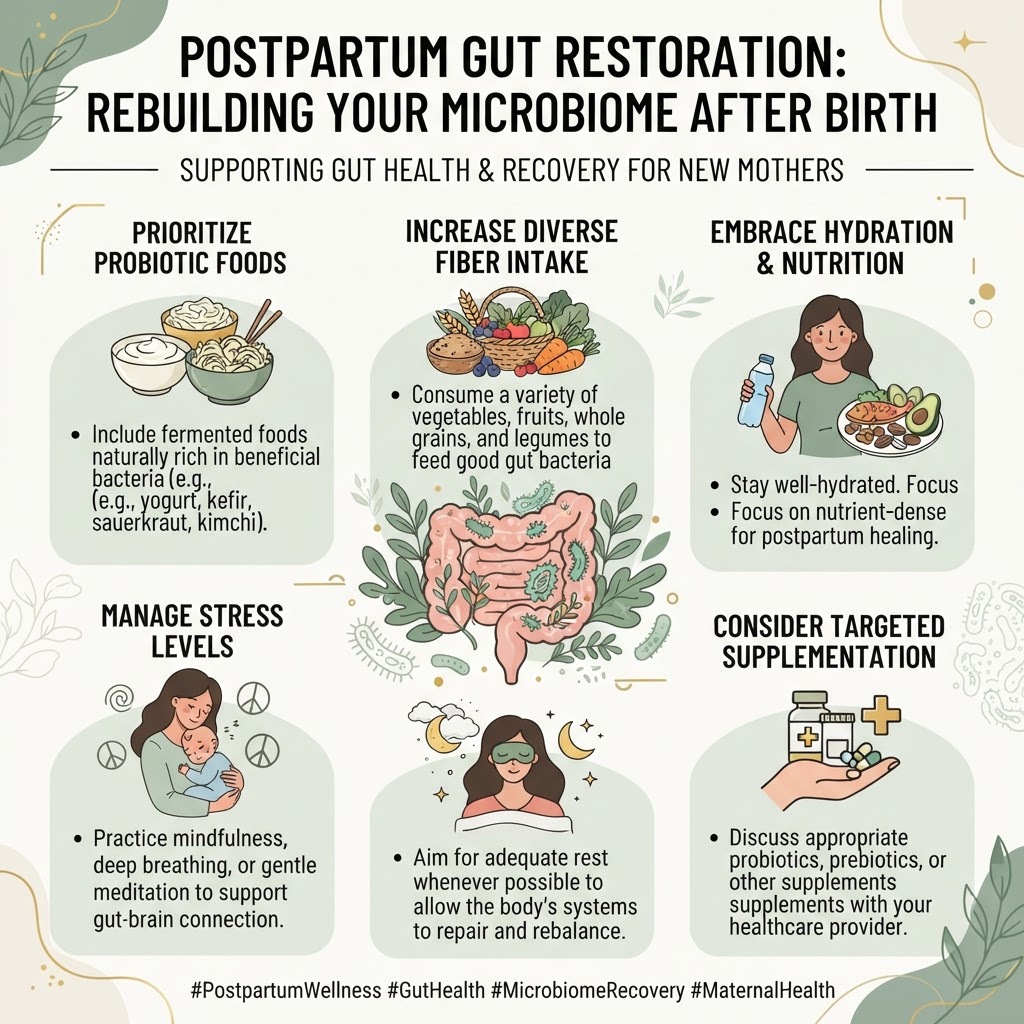
Expert Tips: Your Postpartum Gut Restoration Roadmap
Based on both the research literature and my clinical experience working with postnatal mothers, here is a practical, achievable plan for rebuilding your microbiome after birth:
-
Start your probiotic supplementation early. Ideally within the first week postpartum. The sooner you begin replenishing beneficial bacteria, the more effectively you can reduce the duration of dysbiosis. PregBiotics Breastfeeding is formulated to begin working from the first dose.
-
Prioritise sleep over perfection. I know this feels impossible when you have a newborn, but sleep deprivation directly impairs gut microbiome diversity. Even one extra sleep cycle per day — a nap, a partner taking a feed, a support person stepping in — has measurable biological benefits.
-
Hydrate consistently. Breastfeeding increases your fluid requirements significantly, and dehydration slows gut motility and impairs the mucosal lining. Aim for at least 2–2.5 litres of water daily.
-
Move gently and consistently. You don't need a postnatal fitness programme. Walking for 20–30 minutes daily has been shown to increase microbial diversity and reduce gut inflammation. Start gently and build gradually.
-
Reduce ultra-processed food intake where possible. I say "where possible" because the postnatal period is not the time for dietary perfection — it's the time for nourishment. But ultra-processed foods that are high in emulsifiers and artificial sweeteners have been shown to disrupt the gut lining and reduce microbial diversity. Do your best, and forgive yourself the rest.
-
Manage your stress responses actively. The gut-brain axis is deeply sensitive to psychological stress. Short, regular practices — 5 minutes of box breathing, a brief meditation, time in nature — can meaningfully reduce cortisol-mediated gut disruption.
-
Include fermented foods daily. Even one portion of live yoghurt or a small serving of kefir can make a measurable difference over time. If dairy doesn't agree with you, try water kefir or unpasteurised sauerkraut.
-
Be patient. Full microbiome restoration after a disrupted birth takes time — research suggests that meaningful recovery occurs over 6–12 months when actively supported. This is a long game, and consistency beats intensity every time.
-
Track your symptoms. Keep a simple diary of energy, mood, digestion, and milk supply. Patterns can help you and your healthcare provider identify whether gut-targeted support is making a difference.
-
Don't try to do this alone. Whether it's your GP, a registered dietitian, a lactation consultant, or a postnatal doula — build your village, and include professional support in it.
When to Seek Medical Advice
While the information in this article is grounded in published evidence and clinical experience, it is not a substitute for personalised medical care. Please consult your GP, midwife, or obstetrician if you experience any of the following:
- Persistent or worsening diarrhoea or constipation beyond 4–6 weeks postpartum
- Blood in your stool at any point
- Severe abdominal pain or cramping
- Signs of postpartum depression or anxiety, including persistent low mood, intrusive thoughts, inability to bond with your baby, or feelings of hopelessness — your gut health may be a contributing factor, but these symptoms always warrant professional assessment
- Recurring infections such as thrush, UTIs, or mastitis that are not responding to standard treatment
- Symptoms of severe dehydration, particularly if you are breastfeeding
Always inform your healthcare provider about any supplements you are taking postnatally, including probiotics, so that your care can be fully coordinated. If you are immunocompromised or have a serious underlying health condition, please seek specific medical advice before beginning probiotic supplementation.
Conclusion: Your Gut Recovery Is Part of Your Healing
The fourth trimester — those first 12 weeks after birth — is a period of profound physical, emotional, and microbial transformation. Your body has done something extraordinary, and it deserves extraordinary care in return.
Rebuilding your microbiome after birth is not a marginal concern or a wellness trend. It is a scientifically supported priority with real consequences for your energy, your mood, your immunity, your digestive health, and — if you are breastfeeding — your baby's microbial foundation. The good news is that the gut is remarkably resilient. With the right nutrition, targeted supplementation with postpartum probiotics like PregBiotics Breastfeeding, lifestyle support, and a little patience, meaningful restoration is entirely within reach.
You don't have to accept bloating, exhaustion, brain fog, or a sense that something "just isn't right" as inevitable parts of new motherhood. These are signals from your body worth listening to — and responding to with knowledge and intention.
I created PregBiotics because I believe that every mother deserves science-led, honest, empowering support through every stage of her maternal journey. Postpartum gut healing is one of the most impactful — and most overlooked — parts of that journey.
Be patient with yourself. Nourish yourself with the same tenderness you offer your newborn. And know that every small, consistent step you take toward gut restoration is an investment in your long-term health and your baby's thriving future.
For more evidence-based guidance on maternal gut health at every stage, visit The PregBiotics Journal — where the science is always translated into something you can actually use.
Dr. Chomba Chuma, MD is a maternal health physician and the Founder of PregBiotics. She is passionate about closing the gap between cutting-edge gut microbiome research and accessible, practical care for mothers at every stage of their journey.
Get the PregBiotics Journal in your inbox
Gut-smart guidance for conception, pregnancy and breastfeeding — twice a week, plus member-only offers. Unsubscribe anytime.
You deserve to feel beautifully supported.
Join thousands of mothers on the PregBiotics journey. Receive your free Pregnancy Prep Guide and gentle, science-backed wisdom — tailored to where you are right now.