Postpartum Gut Restoration: Rebuilding Your Microbiome After Birth
You've just brought a new life into the world. You're exhausted, exhilarated, and running on something that feels like a strange combination of love hormones and very little sleep. In the midst of nappy changes, feeding schedules, and the emotional whirlwind of new motherhood, your gut is quietly go
Dr. Chomba Chuma, MD & Founder
MD & Founder, PregBiotics
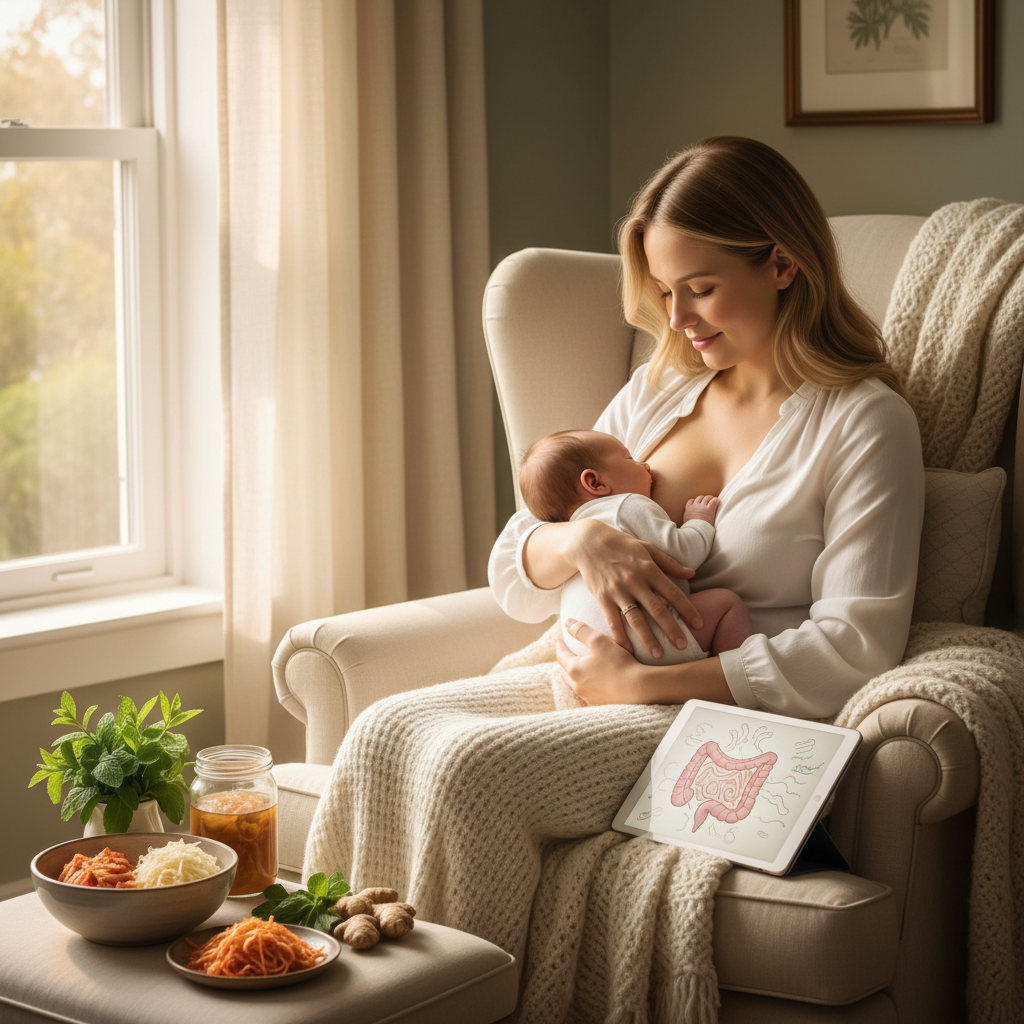
Postpartum Gut Restoration: Rebuilding Your Microbiome After Birth
By Dr. Chomba Chuma, MD & Founder | PregBiotics Journal
Introduction
You've just brought a new life into the world. You're exhausted, exhilarated, and running on something that feels like a strange combination of love hormones and very little sleep. In the midst of nappy changes, feeding schedules, and the emotional whirlwind of new motherhood, your gut is quietly going through one of the most significant transitions of your life — and most women don't even know it's happening.
Here's a statistic that stopped me in my tracks when I first encountered it during my research: studies suggest that the microbial diversity of a woman's gut can remain significantly disrupted for up to 12 months or more after birth, even in women who feel physically well. That's a full year of your immune system, mood regulation, digestion, and even your breast milk composition potentially being influenced by a microbiome that hasn't yet found its footing.
As a physician and a founder who has spent years studying the intersection of maternal health and the gut microbiome, I want to talk honestly about what happens to your gut after you give birth — and, more importantly, what you can do to support its recovery.
This article is written specifically for breastfeeding mothers navigating the postpartum period. We'll explore the science of postpartum gut health, why microbiome recovery after birth matters so much for you and your baby, how nutrition and targeted supplementation can accelerate your recovery, and the practical steps you can take starting today.
You've done the hard part. Now let's make sure your body gets the support it deserves.
The Biology of What Birth Does to Your Gut
To understand gut restoration, we first need to understand what birth — and the entire journey of pregnancy and delivery — actually does to your microbiome.
Your Microbiome Was Already Changing During Pregnancy
Pregnancy is not a neutral event for your gut. Research published in Cell Host & Microbe showed that the gut microbiome undergoes profound shifts across the three trimesters — with decreasing diversity and increasing dominance of certain bacterial strains by the third trimester. While some of these shifts serve important functions (such as supporting immune tolerance and energy extraction), they do mean that by the time you go into labour, your gut is already in a state of flux.
The Impact of Labour and Delivery
Birth itself introduces another wave of disruption:
- Vaginal birth exposes your body to significant physical stress, hormonal surges, and often blood loss — all of which can affect the gut lining and microbiome composition.
- Caesarean section has been particularly well-studied in relation to microbiome disruption. C-section mothers show notably different postpartum gut profiles compared to those who deliver vaginally, partly because of the surgical process itself and partly due to the antibiotic prophylaxis routinely administered during the procedure.
- Intrapartum antibiotics — given for Group B Streptococcus (GBS) prophylaxis, prolonged labour, or infection — are one of the most significant drivers of postpartum gut disruption. Antibiotics are lifesaving and sometimes essential, but their impact on beneficial bacteria is real and deserves to be addressed proactively. (If you'd like to understand more about GBS and antibiotic use in labour, visit our GBS Shield resource.)
The Postpartum Hormonal Shift
After birth, oestrogen and progesterone levels drop sharply. This isn't just relevant to mood — these hormones actively influence the composition of your gut microbiome. Lower oestrogen in particular is associated with reduced microbial diversity. Add postpartum sleep deprivation into the equation, and the stress hormone cortisol — which is notoriously harmful to gut integrity — rises further, compounding the disruption.
Why the Gut Lining Matters
Beyond the bacteria themselves, the physical integrity of your gut lining — the single-cell-thick epithelial barrier that separates your gut contents from your bloodstream — can be compromised during and after birth. This phenomenon, sometimes called increased intestinal permeability or "leaky gut," has been associated with systemic inflammation, immune dysregulation, and even postpartum mood disturbances. Research from Frontiers in Immunology highlights the bidirectional relationship between gut barrier integrity and systemic immune health — a relationship that is acutely relevant in the postpartum period.
Understanding these mechanisms isn't meant to alarm you — it's meant to empower you. Because if we know why the gut is struggling, we can do something about it.
What Microbiome Disruption Means for Breastfeeding Mothers
Science is one thing. But what does all of this actually feel like — and mean — for you, a real woman feeding a baby in the middle of the night?
The gut microbiome doesn't operate in isolation. It is intricately connected to virtually every system in your body, and its disruption can manifest in ways that new mothers too often accept as "just part of having a baby."
Here's what postpartum microbiome imbalance can look like in real life:
- Digestive discomfort — bloating, constipation, loose stools, or alternating between the two are extremely common in the postpartum period and frequently have a microbiome component
- Fatigue beyond what sleep debt explains — your gut microbiome plays a key role in synthesising B vitamins and supporting mitochondrial function; a disrupted gut means less efficient energy production
- Mood changes and postpartum blues — the gut-brain axis is real, and up to 95% of serotonin is produced in the gut; a depleted microbiome can directly affect neurotransmitter production and emotional resilience
- Increased susceptibility to infections — approximately 70% of your immune system resides in your gut; a disrupted microbiome means a less robust immune response at precisely the time your body is most vulnerable
- Skin flares — eczema, acne, and rashes can worsen postpartum, partly due to the gut-skin axis
- Breast milk composition — this is the one that surprises most mothers. Your gut microbiome directly influences the composition of your breast milk, including its immune-active components and its own microbial content. Breastfed babies receive beneficial bacteria through your milk — meaning your microbiome health is not just about you
What about your baby?
Your infant's microbiome is seeded during and after birth — through the birth canal, skin-to-skin contact, and crucially through your breast milk. The World Health Organization recognises breastfeeding as one of the most important contributors to infant health, and part of that benefit is microbiological. When your gut health is optimised, that benefit is amplified.
This is why gut healing postnatal is not a luxury or a wellness trend. It is a fundamental pillar of maternal recovery — and of your baby's early health.
The Role of Nutrition and Supplementation in Postpartum Gut Recovery
The good news — and there is a great deal of good news — is that the gut microbiome is remarkably responsive to targeted nutritional support. The right combination of foods and supplements can meaningfully accelerate your recovery timeline and restore the diversity and resilience your microbiome needs.
Food-First Foundations
Before we talk about supplementation, let me say clearly: food matters enormously. Prioritise:
- Fermented foods — live yoghurt, kefir, sauerkraut, kimchi, and miso all introduce beneficial live cultures into your gut
- Prebiotic-rich foods — garlic, onion, leeks, asparagus, oats, and bananas feed the beneficial bacteria already present in your gut
- Collagen-supportive foods — bone broth, eggs, and vitamin C-rich fruits support gut lining integrity
- Anti-inflammatory fats — oily fish, walnuts, flaxseed, and extra virgin olive oil help reduce systemic inflammation that can impair gut barrier function
- Hydration — fibre and beneficial bacteria both require adequate water to function properly
Why Supplementation Fills the Gaps
Here's the honest truth: postpartum nutrition is extraordinarily difficult to optimise through food alone. You're sleep-deprived, recovering physically, and feeding another human being from your own body. Even with the best intentions, nutritional gaps are inevitable.
This is precisely why I formulated PregBiotics Breastfeeding — a comprehensive supplement specifically designed to support microbiome recovery after birth during the breastfeeding stage.
Key strains and nutrients in PregBiotics Breastfeeding, and why they matter:
- Lactobacillus rhamnosus — one of the most extensively researched probiotic strains for maternal gut health; supports gut barrier integrity, reduces systemic inflammation, and has been shown to pass beneficial compounds into breast milk
- Lactobacillus reuteri — colonises both the maternal gut and breast milk; associated with reduced infant colic and improved immune priming in breastfed babies
- Bifidobacterium longum — critical for restoring microbial diversity after antibiotic exposure; supports the gut-brain axis and mood regulation
- Prebiotics (FOS/GOS blend) — acts as selective food for beneficial bacteria, amplifying the effect of the probiotic strains
- Vitamin D3 — postpartum deficiency is extremely common and deeply impairs both immune function and gut barrier integrity; essential for breastfeeding mothers whose babies depend on breast milk as a vitamin D source
- Omega-3 DHA — supports the gut-brain axis, reduces postpartum inflammation, and is critical for infant brain development via breast milk transfer
- Folate (methylfolate form) — continues to support cellular repair and recovery in the postpartum period
- Iron (bisglycinate form) — highly bioavailable, gentle on the gut, and essential for replenishing stores after birth blood loss
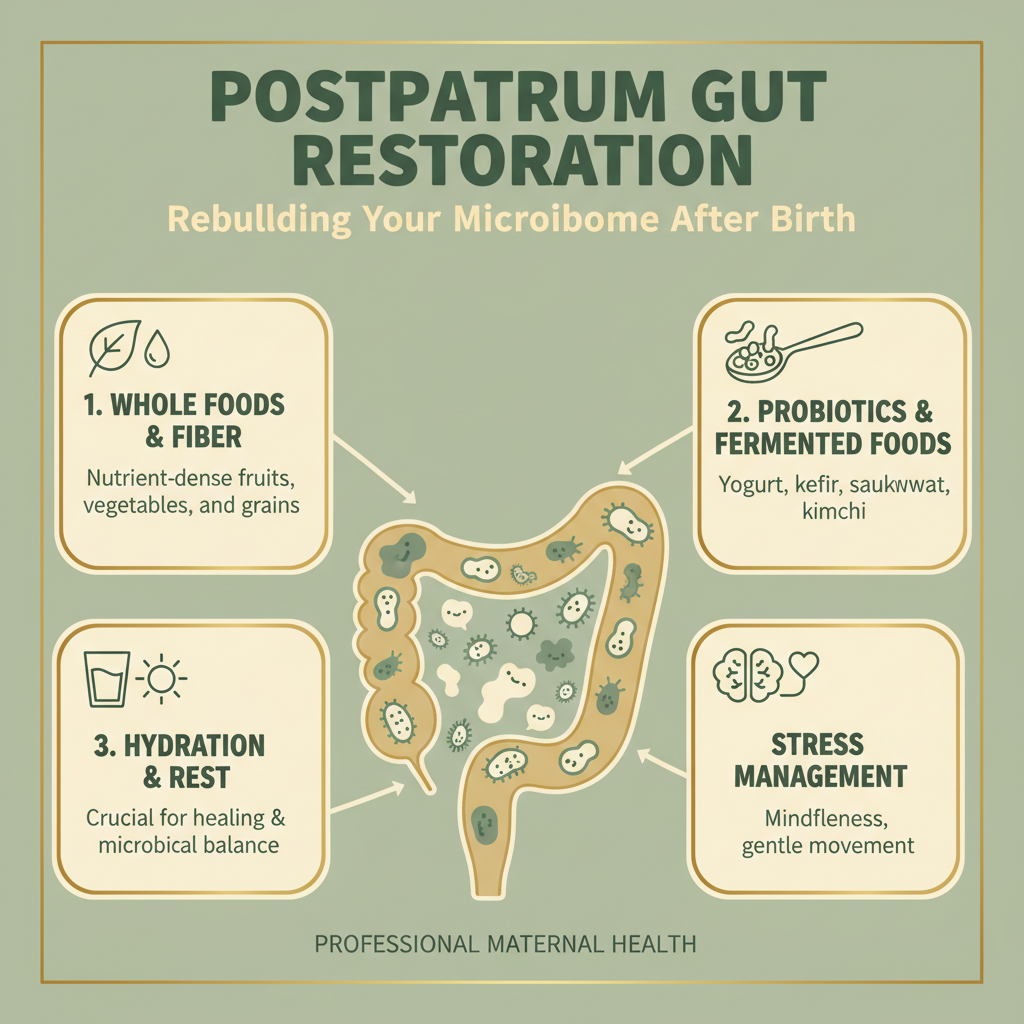
The synergistic combination of live cultures, prebiotics, and targeted micronutrients is what distinguishes a genuinely restorative supplement from a basic postnatal vitamin. Postpartum probiotics work best when they are formulated alongside the nutrients that allow them — and your gut lining — to thrive.
Expert Tips for Restoring Your Gut After Birth
These are the evidence-based recommendations I share with my patients, and the principles I built PregBiotics around:
-
Start early. The sooner you begin actively supporting your gut after birth, the sooner recovery can begin. Don't wait until symptoms become disruptive — begin a postpartum gut protocol within the first week if possible.
-
Be consistent over time. Microbiome restoration is not a 7-day fix. Research suggests meaningful recolonisation takes a minimum of 4–8 weeks of consistent probiotic use. Commit to a 3-month approach for lasting results.
-
Prioritise sleep in whatever form you can access it. I know this feels impossible with a newborn. But even short blocks of consolidated sleep matter enormously for cortisol regulation and gut lining repair. Accept every offer of help that allows you to rest.
-
Move gently. Light physical activity — short walks, postnatal yoga — stimulates gut motility and supports a healthy gut environment. This is not the time for intense exercise, which can actually increase cortisol and worsen gut permeability.
-
Minimise unnecessary antibiotic use. If you or your baby are prescribed antibiotics postpartum, this is a clear signal to double down on probiotic support both during and after the course. Always consult your healthcare provider before adjusting any prescribed medication.
-
Manage stress mindfully. Chronic stress is genuinely toxic to the gut microbiome. Building even small moments of calm into your day — a warm bath, five minutes of deep breathing, a short walk outdoors — has measurable benefits for the gut-brain axis.
-
Review your full supplement stack. Not all postnatal supplements are created equal. Look for a formulation that includes both probiotics and prebiotics alongside core micronutrients, and check that strains are specified at the genus, species, and strain level (e.g., Lactobacillus rhamnosus GG, not just "Lactobacillus").
-
Explore our full gut health resources. Our Pregnancy Gut Guide contains a detailed roadmap for gut health across the entire maternal journey, from conception through postpartum recovery.
-
Nourish your mental health as part of gut health. The gut-brain axis runs in both directions. Seeking support for postpartum mood concerns is not just valid — it may directly support your gut recovery as well.
-
Listen to your body. Your symptoms are data. Persistent bloating, significant mood changes, recurring infections, or prolonged digestive disruption are signals worth investigating, not accepting.
When to Seek Medical Advice
While gut restoration is something you can actively support at home, there are circumstances where professional medical evaluation is essential. Please consult your GP, midwife, or obstetrician if you experience:
- Severe or prolonged digestive symptoms — persistent vomiting, significant diarrhoea lasting more than 48 hours, or signs of blood in your stool
- Symptoms of postpartum depression or anxiety — mood disturbances, persistent low mood, intrusive thoughts, or feeling unable to cope (the gut-brain connection is real, but postpartum mental health conditions require professional support)
- Signs of postpartum infection — fever, unusual discharge, wound site redness or swelling following a C-section or episiotomy
- Symptoms suggesting severe anaemia — extreme fatigue, breathlessness, or palpitations that are disproportionate to sleep deprivation alone
- Any concerns about your baby's growth, feeding, or health
Supplements — including high-quality postpartum probiotics — are supportive tools, not medical treatments. They work best as part of a broader approach to your health that includes regular postnatal check-ups and open, honest conversations with your healthcare team.
If you have been prescribed medication, are managing a chronic health condition, or have had pregnancy complications, always discuss any new supplement with your doctor before starting.
Conclusion
Your postpartum body is not broken. It is rebuilding — from the inside out. The microbiome disruption that so many women experience after birth is not a sign that something has gone wrong; it is a natural consequence of the extraordinary physiological journey you have just completed. But natural does not mean it should be left to resolve on its own without support.
Postpartum gut health is one of the most overlooked pillars of maternal recovery, and it has consequences that extend far beyond your own digestion — reaching into your mood, your immunity, your energy, and the health of the baby you are nourishing every single day.
By understanding the science, eating to support your microbiome, and choosing targeted supplementation like PregBiotics Breastfeeding, you are making a profound investment in yourself and in your child. You are not just surviving this season — you are rebuilding stronger than before.
Give yourself the same care and attention you so generously give your baby. You deserve it. And the science is firmly on your side.
For more evidence-based articles on maternal gut health across every stage of the journey, visit The PregBiotics Journal.
Dr. Chomba Chuma, MD is a physician and the Founder of PregBiotics, a science-led maternal gut health brand. This article is intended for informational purposes only and does not constitute medical advice. Always consult a qualified healthcare professional regarding your individual health needs.
Get the PregBiotics Journal in your inbox
Gut-smart guidance for conception, pregnancy and breastfeeding — twice a week, plus member-only offers. Unsubscribe anytime.
You deserve to feel beautifully supported.
Join thousands of mothers on the PregBiotics journey. Receive your free Pregnancy Prep Guide and gentle, science-backed wisdom — tailored to where you are right now.