Managing Pregnancy Nausea, Constipation and Bloating Naturally With Gut Support
Picture this: it's 7am, and before your feet have even touched the floor, the familiar wave of nausea rolls in. You make it to the kitchen, manage half a cracker, and spend the next hour feeling simultaneously bloated and uncomfortable — even though you've barely eaten a thing. By the evening, you r
Dr. Chomba Chuma, MD & Founder
MD & Founder, PregBiotics

Managing Pregnancy Nausea, Constipation and Bloating Naturally With Gut Support
By Dr. Chomba Chuma, MD & Founder | PregBiotics Journal
Introduction
Picture this: it's 7am, and before your feet have even touched the floor, the familiar wave of nausea rolls in. You make it to the kitchen, manage half a cracker, and spend the next hour feeling simultaneously bloated and uncomfortable — even though you've barely eaten a thing. By the evening, you realise you haven't had a proper bowel movement in four days.
If any of that resonates, you are not alone. Studies suggest that up to 80% of pregnant women experience nausea and vomiting during the first trimester, while constipation affects more than 40% of pregnancies at some point, and bloating is reported as one of the most persistent and frustrating complaints throughout all three trimesters. Together, these symptoms have a profound impact on quality of life, energy, mood, and the simple joy of eating.
But here's what many conventional approaches miss: these three symptoms — nausea, constipation, and bloating — are not random inconveniences. They are deeply connected to what is happening in your gut. Your pregnancy nausea gut health story is intimately linked to the trillions of microorganisms living in your digestive tract, the hormonal cascade of pregnancy, and the physical changes reshaping your body from the inside out.
In this article, I want to take you through the science behind these digestive issues in pregnancy, explain why gut health sits at the centre of the solution, and share practical, evidence-backed strategies — including the right nutritional support — to help you feel more like yourself again.
The Biology Behind the Bloat: Why Pregnancy Disrupts Your Gut
To truly understand why digestive issues in pregnancy are so common, we need to talk about the remarkable — and sometimes uncomfortable — changes happening in your body.
The Hormonal Disruption
From the moment of conception, your body begins producing elevated levels of human chorionic gonadotropin (hCG) — the hormone responsible for triggering the pregnancy nausea gut response. Research published in the American Journal of Obstetrics and Gynecology has found a strong correlation between peak hCG levels (typically around weeks 8–10) and the severity of morning sickness. But hCG doesn't work alone.
Progesterone — which rises significantly throughout pregnancy — acts as a smooth muscle relaxant. While this is vital for preventing premature uterine contractions, it also slows the muscular contractions that propel food through your digestive tract. The result? Food and gas move more slowly, creating the perfect storm for constipation pregnancy probiotics can help address, along with bloating and that perpetual feeling of being uncomfortably full.
Oestrogen additionally contributes to fluid retention and changes in gastric emptying, further compounding the sense of nausea and abdominal discomfort.
The Shifting Gut Microbiome
What makes pregnancy particularly fascinating — and underappreciated — is the dramatic shift in the gut microbiome that occurs across the three trimesters. A landmark study published in Cell (Koren et al., 2012) demonstrated that the gut microbiome in the third trimester is significantly altered compared to the first, with reduced microbial diversity and an increase in certain inflammatory bacterial populations. These microbial shifts are associated with:
- Increased intestinal permeability ("leaky gut")
- Altered gut motility
- Changes in the gut-brain axis communication
- Heightened sensitivity to nausea stimuli
Mechanical Compression
As your baby grows, the uterus physically compresses the stomach and intestines, slowing transit time further and intensifying feelings of fullness, bloating, and reflux — particularly from the second trimester onwards.
The Gut-Brain Axis
The vagus nerve — the primary communication highway between the gut and the brain — is exquisitely sensitive during pregnancy. Disruption to the gut microbiome directly influences vagal signalling, which in turn affects nausea perception. This is why morning sickness gut health is not just about "settling your stomach" — it is about the entire gut-brain communication network.
What This Means For You: Reading Your Body's Signals
Understanding the science is one thing. Translating it into your daily lived experience is another. Here's what these biological changes actually mean in practice — and why generic advice like "eat crackers and rest" often doesn't go far enough.
Your nausea is likely gut-mediated, not just hormonal. Yes, hCG triggers it — but the severity and duration are strongly influenced by the state of your gut microbiome. Women with less diverse microbiomes, or higher levels of gut inflammation, tend to experience more intense morning sickness gut health disruption. This means supporting your gut directly can meaningfully reduce nausea — not just manage it.
Constipation is multifactorial. It's not simply about eating more fibre (though that matters). The slowing of gut motility caused by progesterone, combined with iron supplementation (which many prenatal vitamins contain at high doses), dehydration, reduced physical activity, and a disrupted microbiome all converge to make constipation in pregnancy particularly stubborn. A targeted approach using constipation pregnancy probiotics has shown genuine clinical benefit in moving things along — literally.
Bloating pregnancy remedies need to address root causes. Bloating during pregnancy is frequently misunderstood as simply "gas." In reality, it often reflects:
- Slow intestinal transit allowing excess fermentation
- Dysbiosis (an imbalance of gut bacteria) producing excess gas
- Reduced digestive enzyme production
- Hormonal water retention affecting gut tissue
- Increased intestinal sensitivity
Here's the empowering part: because so much of this connects back to gut health, there is a real, evidence-based pathway to relief that doesn't involve simply white-knuckling through your first trimester. The strategies I outline below are grounded in this biology — not just symptom management.
You can also explore how your gut health connects to other aspects of pregnancy wellbeing in our comprehensive Pregnancy Gut Guide, which walks you through trimester-by-trimester changes and what they mean for you.
The Role of Nutrition and Supplementation in Gut-Centred Pregnancy Wellness
This is where the science becomes genuinely actionable. Supporting your gut during pregnancy is not about taking a one-size-fits-all multivitamin and hoping for the best. It requires targeted, evidence-informed nutritional support — especially when your digestive system is under significant hormonal and physical stress.
Probiotics: The Evidence Is Compelling
The case for probiotics in pregnancy is growing steadily. A systematic review published in Nutrients (2021) found that specific probiotic strains can:
- Reduce the severity of nausea and vomiting in early pregnancy
- Improve bowel regularity and stool consistency in constipation pregnancy management
- Reduce bloating and gas by modulating fermentation patterns in the colon
- Strengthen the intestinal barrier, reducing gut permeability
- Support immune modulation, which is critical during pregnancy
Not all probiotics are equal, and not all strains behave the same way in a pregnant gut. This is why strain selection matters enormously.
Introducing PregBiotics Essentials
PregBiotics Essentials was formulated specifically for the pregnant gut — not adapted from a generic adult probiotic. Every ingredient was selected based on its evidence profile in pregnancy-related gut health and its safety during pregnancy.
Here is what makes the formulation stand apart:
- Lactobacillus rhamnosus GG — one of the most studied probiotic strains globally, shown to reduce intestinal permeability and support gut motility
- Lactobacillus acidophilus — supports the balance of beneficial bacteria, particularly during the microbial shifts of the second and third trimester
- Bifidobacterium longum — demonstrated to reduce constipation frequency and support stool transit time; particularly relevant for addressing digestive issues in pregnancy
- Bifidobacterium lactis BB-12 — linked to reduced bloating and improved gut barrier function
- Prebiotic inulin (from chicory root) — a soluble fibre that nourishes probiotic bacteria and independently supports bowel regularity
- Ginger extract (Zingiber officinale) — a well-documented, pregnancy-safe remedy with clinical evidence for reducing nausea; a natural complement to probiotic support in the pregnancy nausea gut context
- Magnesium (as glycinate) — a gentle, bowel-friendly form of magnesium that supports muscle relaxation and regular bowel movements without the harsh laxative effect of magnesium oxide
- Vitamin B6 (Pyridoxine) — recommended by the NHS for reducing the severity of morning sickness, and included at a clinically meaningful dose
Together, these ingredients work synergistically — not just addressing individual symptoms, but supporting the underlying gut environment that connects nausea, constipation, and bloating pregnancy remedies.
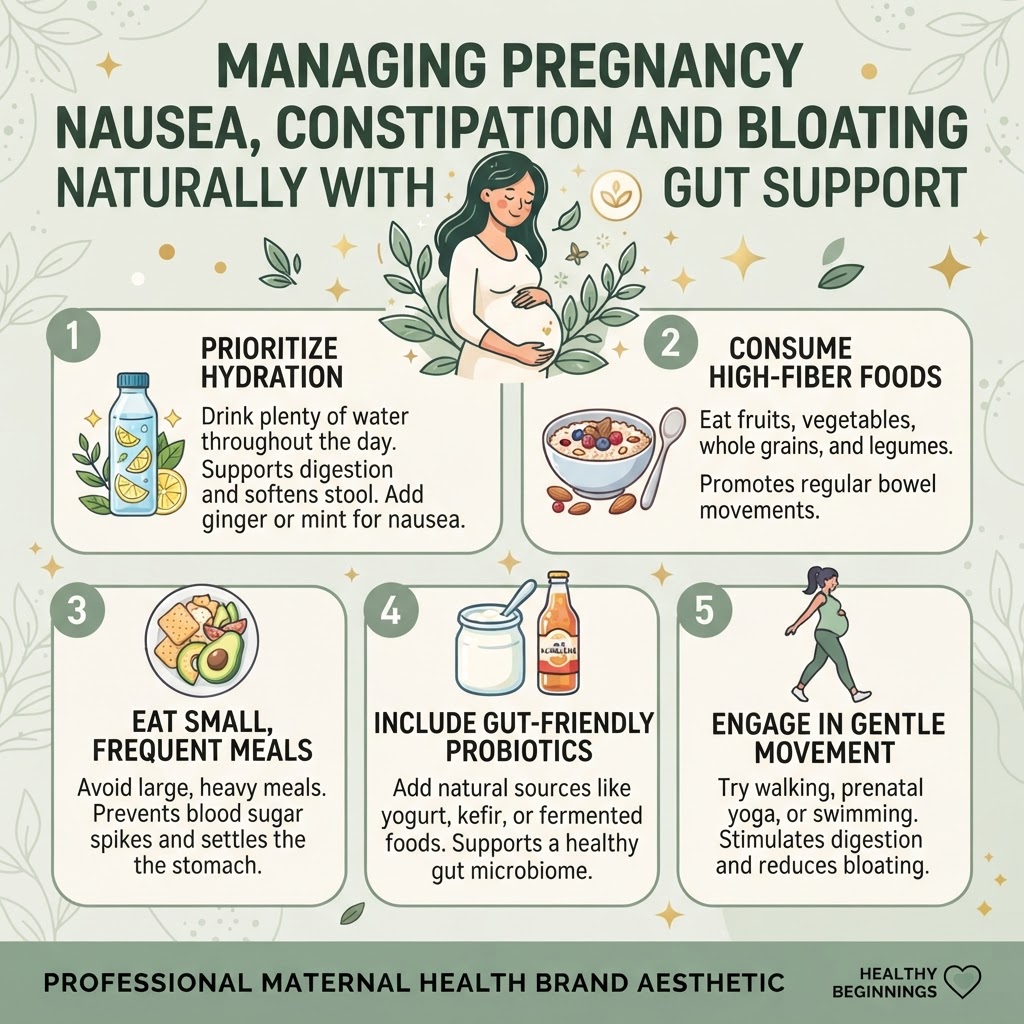
Expert Tips: Practical Steps to Support Your Gut Every Day
Beyond supplementation, daily habits have a significant and cumulative effect on how well your gut copes with the demands of pregnancy. Here are my most clinically relevant recommendations:
-
Eat small, frequent meals. Large meals slow gastric emptying and worsen both nausea and bloating. Aim for 5–6 small meals throughout the day rather than 3 large ones. Include a small source of protein at each sitting to stabilise blood sugar.
-
Prioritise hydration — but time it strategically. Drinking large amounts of fluid with meals can worsen bloating and nausea. Instead, drink most of your fluids between meals. Aim for 8–10 cups of water daily, and consider warm ginger or peppermint tea for dual hydration and digestive support.
-
Move your body gently, every day. Even a 15–20 minute gentle walk after meals significantly improves gut motility. Physical movement is one of the most underrated bloating pregnancy remedies — it stimulates the natural contractions of the digestive tract.
-
Adjust the timing of your prenatal iron. Iron supplementation is a known contributor to constipation. Taking iron with food (even if absorption is slightly reduced) rather than on an empty stomach, and spacing it away from your probiotic, can reduce its constipating effects.
-
Eat fibre thoughtfully. Sudden large increases in dietary fibre can worsen bloating before they help constipation. Gradually increase fibre from sources like oats, flaxseed, cooked vegetables, and peeled fruits. Raw cruciferous vegetables (broccoli, cabbage, cauliflower) can be particularly gas-forming — cook them well.
-
Take your PregBiotics Essentials consistently. The gut microbiome responds to sustained, consistent support. Clinical studies show that probiotic benefits build over 4–8 weeks of regular use. Take your supplement at the same time each day — many women find first thing in the morning or just before bed works best.
-
Elevate your upper body after meals. Particularly relevant from the second trimester, lying flat after eating exacerbates reflux and bloating. Wait at least 30–45 minutes, and try sleeping with your upper body slightly elevated.
-
Manage stress actively. The gut-brain axis means that chronic stress directly worsens gut motility, increases intestinal permeability, and amplifies nausea perception. Daily relaxation practices — whether breathwork, gentle yoga, meditation, or simply time outdoors — are as much a gut health strategy as anything you eat.
-
Keep a symptom diary. Tracking when your nausea, bloating, and constipation are worst in relation to what you've eaten, your stress levels, and your activity can reveal personal triggers that general advice misses entirely.
-
Avoid carbonated drinks. While tempting as a nausea remedy, fizzy drinks introduce excess gas into an already compromised digestive system and consistently worsen bloating pregnancy symptoms.
When to Seek Medical Advice
While nausea, constipation, and bloating are extremely common in pregnancy, they exist on a spectrum — and some presentations require prompt medical attention. Please contact your midwife, obstetrician, or GP if you experience:
- Hyperemesis gravidarum (HG): Severe, persistent vomiting that prevents you from keeping any food or fluid down, leads to weight loss, or causes signs of dehydration (dark urine, dizziness, extreme fatigue). HG affects approximately 1–3% of pregnancies and requires medical treatment beyond gut support.
- No bowel movement for more than 5–7 days, or constipation accompanied by significant abdominal pain, blood in stool, or severe cramping.
- Sudden, severe bloating accompanied by abdominal pain, fever, or vomiting — which may indicate a more serious gastrointestinal issue.
- Signs of preterm labour, which can occasionally be confused with severe gastrointestinal cramping.
As with all supplements, please consult your healthcare provider before starting PregBiotics Essentials or any new supplement regimen during pregnancy. While the ingredients have excellent safety profiles in pregnancy, your provider knows your full medical history and is your most important partner in this journey.
The WHO guidelines on nutrition in pregnancy also provide a valuable framework for understanding safe supplementation during this critical period.
Conclusion
Pregnancy is one of the most extraordinary experiences of a human lifetime — and you deserve to feel well enough to actually enjoy it. The nausea, constipation, and bloating that so many women endure are not simply inevitable crosses to bear. They are your body communicating that its gut ecosystem is under pressure — and that pressure is addressable.
The science is increasingly clear: the gut microbiome is not a passive bystander in pregnancy. It is an active, dynamic participant in your hormonal balance, your immune function, your mood, and yes, the severity of your digestive symptoms. When we support it deliberately and scientifically, the results speak for themselves.
By combining targeted probiotic and prebiotic supplementation with evidence-based nutritional strategies and daily lifestyle habits, you have a genuinely powerful toolkit at your disposal. PregBiotics Essentials was created because I believe every pregnant woman deserves a product formulated with her specific physiology in mind — not a generic capsule rebranded with a pregnancy label.
You are not just managing symptoms. You are building the foundation of a healthy gut environment that will benefit you throughout your pregnancy and support your baby's developing microbiome from the very beginning.
For more evidence-based guidance on pregnancy gut health across every trimester, visit The PregBiotics Journal — your resource for science-led, compassionate support throughout the journey of motherhood.
Dr. Chomba Chuma, MD, is a medical doctor and the Founder of PregBiotics. She is passionate about advancing evidence-based maternal gut health and empowering women with the knowledge to support their bodies during pregnancy and beyond.
This article is intended for informational purposes only and does not constitute medical advice. Always consult a qualified healthcare professional for guidance specific to your pregnancy.
Get the PregBiotics Journal in your inbox
Gut-smart guidance for conception, pregnancy and breastfeeding — twice a week, plus member-only offers. Unsubscribe anytime.
You deserve to feel beautifully supported.
Join thousands of mothers on the PregBiotics journey. Receive your free Pregnancy Prep Guide and gentle, science-backed wisdom — tailored to where you are right now.