Managing Pregnancy Nausea, Constipation and Bloating Naturally With Gut Support
*By Dr. Chomba Chuma, MD & Founder | PregBiotics Journal* --- You are eight weeks pregnant. You have barely slept, the smell of your favourite coffee now turns your stomach, and you have not had a comfortable bowel movement in five days. You feel bloated, sluggish, and quietly wonder whether someth
Dr. Chomba Chuma, MD & Founder
MD & Founder, PregBiotics

Managing Pregnancy Nausea, Constipation and Bloating Naturally With Gut Support
By Dr. Chomba Chuma, MD & Founder | PregBiotics Journal
The Digestive Storm Nobody Warned You About
You are eight weeks pregnant. You have barely slept, the smell of your favourite coffee now turns your stomach, and you have not had a comfortable bowel movement in five days. You feel bloated, sluggish, and quietly wonder whether something is wrong — or whether this is simply what pregnancy feels like.
You are not alone, and nothing is wrong with you. But there is something important happening beneath the surface that most prenatal appointments do not have time to explain.
According to research published by the National Institutes of Health (NIH), up to 80% of pregnant women experience nausea during the first trimester, while constipation affects between 11% and 38% of pregnancies at some point across all three trimesters. Bloating and gas are so common they are often dismissed as trivial — yet for many mothers, these symptoms are relentless, exhausting, and deeply uncomfortable.
Here is what the research is beginning to show us: many of these symptoms are not isolated inconveniences. They are, at least in part, expressions of what is happening inside your gut microbiome — the vast, dynamic ecosystem of bacteria, yeasts, and microorganisms living in your digestive tract.
In this article, I want to walk you through the science of why pregnancy wreaks such havoc on your digestion, what that means practically for how you feel day to day, and how targeted nutritional and probiotic support can genuinely make a difference. We will also look at when symptoms warrant a conversation with your doctor or midwife.
Whether you are in your first trimester battling morning sickness or in your third trimester feeling like you have swallowed a beach ball, this guide is for you.
The Pregnant Gut: Understanding the Biological Roots of Digestive Distress
To understand why digestive symptoms are so common in pregnancy, we need to talk about three interconnected forces: hormones, the gut-brain axis, and the microbiome.
The Hormonal Disruption of Digestion
From the moment of implantation, your body begins producing a cascade of hormones that are essential for sustaining your pregnancy — but deeply disruptive to your digestive system.
Progesterone is perhaps the most significant culprit. Often called the "relaxation hormone" of pregnancy, progesterone causes the smooth muscle throughout your body to relax, including the muscles that line your gastrointestinal tract. This slows the movement of food through your digestive system — a phenomenon called decreased gastric motility. The result? Food sits longer in the stomach and intestines, leading to bloating, gas, and constipation.
Human chorionic gonadotropin (hCG) — the hormone detected in pregnancy tests — peaks between weeks 8 and 11 of the first trimester and is strongly associated with pregnancy nausea. The gut is rich in hCG receptors, and rising hCG levels directly stimulate nausea pathways in the brain via the gut-brain axis.
Oestrogen also plays a role, influencing gut motility and contributing to changes in the composition of the gut microbiome over the course of pregnancy.
The Gut-Brain Axis: Why Nausea Is a Gut Story
The gut-brain axis is the bidirectional communication highway between your gastrointestinal system and your central nervous system. Your gut contains approximately 100 million neurons — more than your spinal cord — and produces around 90% of your body's serotonin, a neurotransmitter intimately involved in nausea signalling.
When the gut microbiome is disrupted (a state called dysbiosis), serotonin metabolism is affected, and the signals travelling up the gut-brain axis become dysregulated. This is one of the emerging scientific explanations for why morning sickness gut health is increasingly recognised as a microbiome issue, not simply a hormonal one.
The Microbiome Shifts of Pregnancy
A landmark study published in Cell (Koren et al., 2012) demonstrated that the composition of the gut microbiome changes significantly across the trimesters of pregnancy. These changes — including reductions in microbial diversity and increases in certain inflammatory bacterial populations — were associated with increased gut permeability, greater caloric extraction from food, and systemic inflammatory responses.
These microbiome shifts have downstream consequences that touch every digestive symptom we discuss in this article: from pregnancy nausea gut responses and bloating to constipation and digestive discomfort.
Why Constipation Compounds Everything
As intestinal transit slows due to progesterone and microbiome changes, the colon reabsorbs more water from stool, making it harder, drier, and more difficult to pass. The longer stool sits in the colon, the more gas-producing bacteria ferment its contents — which is why constipation and bloating in pregnancy are so frequently experienced together.
What This Means For You: Translating the Science Into Daily Life
Understanding the biology is empowering, but what does it actually mean for the way you feel on a Tuesday morning at seven weeks pregnant, or at thirty-two weeks when nothing seems to move properly?
Here is what the science tells us about your lived experience:
-
Your nausea is real, physiological, and not in your head. The gut-brain axis disruption caused by hormonal shifts and microbiome changes means your digestive system is genuinely sending distress signals upward. This is not anxiety. This is not weakness. This is biology.
-
Bloating pregnancy remedies that target only gas are addressing the symptom, not the cause. Peppermint tea, fennel seeds, and antigas medications may offer temporary relief, but unless the underlying gut motility and microbiome imbalance is addressed, the bloating will return.
-
Constipation in pregnancy is not purely about fibre intake. Many mothers increase their fibre consumption and still struggle. That is because the microbiome composition directly influences how fibre is fermented and how gut motility is regulated. Without adequate populations of beneficial bacteria — particularly lactobacillus and bifidobacterium strains — fibre fermentation can actually worsen bloating rather than relieving constipation.
-
The supplements you take matter more than you might think. Certain prenatal vitamins — particularly those containing iron — can significantly worsen constipation pregnancy symptoms. The form of iron (ferrous sulphate versus ferrous bisglycinate, for example), the presence or absence of probiotics, and the overall formulation of your prenatal supplement all interact with your gut.
-
Your gut health affects your baby's developing microbiome. Research has shown that the maternal gut microbiome influences the bacterial colonisation of the baby both in utero and during birth. Supporting your gut health during pregnancy is not just about your comfort — it is about laying the foundation for your child's long-term immune and digestive development.
-
Stress makes everything worse. The gut-brain axis means that psychological stress directly alters gut motility and microbiome composition. Pregnancy anxiety and digestive issues can form a feedback loop that escalates both.
For a deeper dive into how your gut health underpins every aspect of pregnancy wellness, I recommend exploring our Pregnancy Gut Guide, which takes you through microbiome changes trimester by trimester.
The Role of Nutrition and Supplementation: Building Your Gut Defence
Once we understand that digestive issues in pregnancy are substantially rooted in microbiome disruption and gut motility changes, the path forward becomes clearer: support the gut systemically, not just symptomatically.
This is the philosophy behind PregBiotics Essentials — a formulation I developed specifically for the pregnant gut, drawing on the clinical evidence base and the gaps I observed in existing prenatal supplements.
Why Standard Prenatal Vitamins Fall Short
Most prenatal vitamins are designed around the nutritional needs of the growing foetus — folic acid, iron, DHA, iodine. These are critically important. But they do not address the gut ecosystem that determines how well those nutrients are actually absorbed, nor do they support the digestive symptoms that can make pregnancy feel miserable.
A prenatal supplement designed with gut health in mind should address multiple layers simultaneously.
Key Nutrients and Strains in a Gut-Focused Prenatal Supplement
PregBiotics Essentials combines clinically studied probiotic strains with prebiotic fibre and key pregnancy nutrients in a formulation designed to work together:
- Lactobacillus rhamnosus GG — one of the most extensively studied probiotic strains in pregnancy, associated with reduced nausea severity and improved gut barrier function
- Bifidobacterium longum — supports gut motility regulation and has been shown in clinical trials to reduce constipation frequency and improve stool consistency
- Lactobacillus acidophilus — contributes to healthy intestinal flora balance and supports immune function during the immunomodulatory state of pregnancy
- Partially hydrolysed guar gum (PHGG) — a prebiotic fibre that feeds beneficial bacteria, supports regular bowel movements, and has a gentler fermentation profile than inulin (meaning less gas and bloating during adaptation)
- Ginger root extract (250mg) — clinically supported for reducing pregnancy nausea; a Cochrane review found ginger to be effective in reducing nausea and vomiting in early pregnancy
- Magnesium bisglycinate — a highly bioavailable form of magnesium that supports gut motility without the laxative side effects of magnesium oxide
- Ferrous bisglycinate (gentle iron) — provides the iron needed in pregnancy without the constipating effects associated with ferrous sulphate
- Folate (methylfolate form) — the active, bioavailable form of folic acid, which some women cannot properly convert from standard folic acid due to MTHFR gene variants
The goal is not simply to add bacteria to the gut. It is to create the conditions in which a healthy, diverse microbiome can thrive throughout all three trimesters — and support the transition into the postpartum period.
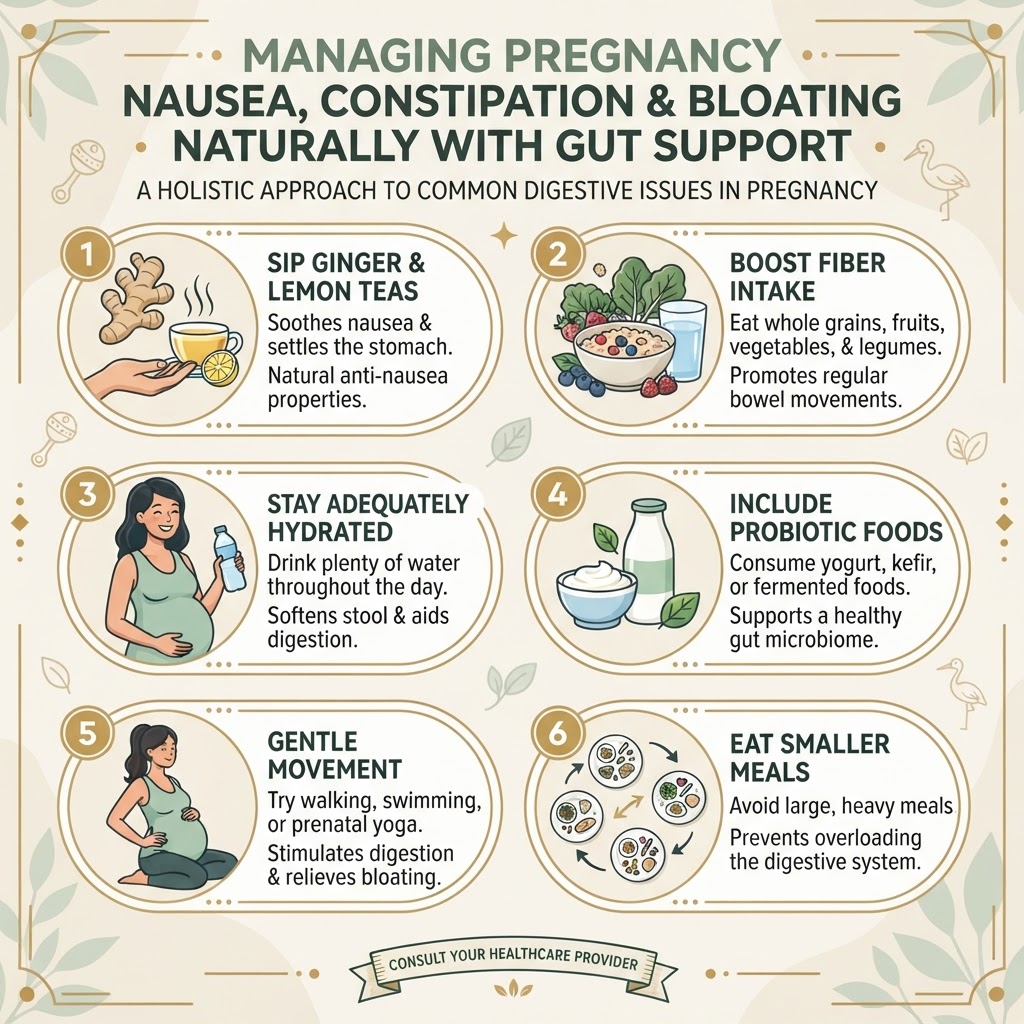
Expert Tips and Actionable Advice: What You Can Do Starting Today
The good news is that alongside targeted supplementation, there are meaningful lifestyle and dietary adjustments that can significantly reduce digestive distress in pregnancy. Here are my evidence-based recommendations:
-
Start your probiotic supplement before symptoms peak. Microbiome support is most effective when started early — ideally in the first trimester or even preconception. If you are already in your second or third trimester, it is not too late, but give it four to six weeks of consistent use before evaluating the impact.
-
Eat smaller, more frequent meals. With slowed gastric emptying, large meals sit heavily in the stomach. Eating every two to three hours in smaller portions reduces nausea and bloating significantly for many women.
-
Stay adequately hydrated — but not during meals. Drinking large amounts of fluid with meals can further slow gastric emptying. Sip water consistently between meals to support bowel regularity and stool softness.
-
Prioritise soluble fibre over insoluble fibre if you are bloated. Foods like oats, bananas, cooked apples, sweet potato, and psyllium husk are gentler on an already-bloated gut than raw vegetables and bran, which can exacerbate gas in some women.
-
Incorporate movement daily, even gently. Walking for twenty to thirty minutes stimulates gut motility and helps counteract the slowing effect of progesterone on the digestive tract. Prenatal yoga has additional benefits via the gut-brain axis, reducing the stress-related component of digestive distress.
-
Avoid lying down immediately after eating. Pregnancy increases the risk of acid reflux due to the relaxation of the lower oesophageal sphincter by progesterone. Remaining upright for at least thirty minutes after eating can reduce reflux and nausea.
-
Be mindful of iron supplement timing and form. If your prenatal supplement contains iron and you are experiencing worsening constipation, ask your healthcare provider whether switching to a formulation containing ferrous bisglycinate (as found in PregBiotics Essentials) might help.
-
Address the gut-brain connection. Mindfulness practices, breathwork, and gentle stress reduction techniques are not just nice extras — they have measurable effects on gut motility and microbiome composition. Even five minutes of diaphragmatic breathing before meals can reduce nausea and bloating for some women.
-
Track your symptoms alongside your diet. Keeping a simple food and symptom diary for one to two weeks can reveal patterns — foods that worsen bloating, times of day when nausea peaks — that allow you to make targeted adjustments.
-
Do not dismiss your symptoms as inevitable. Too many women are told that nausea, constipation, and bloating are simply "part of pregnancy." Whilst they are common, they are not compulsory. With the right gut support, many women experience meaningful and lasting improvement.
When to Seek Medical Advice
Whilst the digestive symptoms described in this article are common and often manageable with the strategies above, there are important circumstances in which you should seek prompt medical attention from your doctor, midwife, or obstetrician.
Please seek medical advice if you experience:
- Nausea and vomiting so severe that you cannot keep food or fluids down for more than 24 hours — this may indicate hyperemesis gravidarum, a serious condition requiring medical management
- Blood in your stool or rectal bleeding
- Severe abdominal pain or cramping that is not related to gas or bloating
- Constipation that has not resolved after more than one week despite dietary changes and hydration
- Unexplained weight loss during pregnancy
- Signs of dehydration, including dark urine, dizziness, or reduced urination
- Any new or worsening symptom that concerns you
It is also important to discuss any new supplement — including probiotics — with your healthcare provider before starting, particularly if you have a compromised immune system, are on anticoagulant therapy, or have a known gastrointestinal condition.
The NHS guidance on nausea and vomiting in pregnancy provides a helpful overview of when symptoms require medical escalation.
Your symptoms deserve to be taken seriously. Please do not hesitate to advocate for yourself with your healthcare team.
You Deserve to Feel Well in Your Pregnancy
Pregnancy is one of the most extraordinary biological experiences a human body can undergo. But it should not mean months of suffering through nausea, struggling with constipation, or feeling perpetually uncomfortable in your own skin.
The evidence is increasingly clear: the gut is central to the pregnancy experience. The microbiome changes that begin in the first trimester ripple outward into how you feel, how you absorb nutrients, how your immune system functions, and even how your baby's gut health begins to take shape. Addressing the gut is not a wellness trend — it is foundational maternal medicine.
By combining targeted probiotic and prebiotic supplementation with evidence-based dietary strategies and lifestyle practices, most women can experience significant improvement in their digestive symptoms — and feel more empowered and comfortable throughout their pregnancy journey.
PregBiotics Essentials was created because I believe pregnant women deserve a supplement that actually addresses how they feel, not just what their baby needs nutritionally. Both matter. You matter.
If you found this article helpful, I invite you to explore more evidence-based resources across The PregBiotics Journal, where we cover everything from gut health in the postpartum period to microbiome-supportive recipes for pregnancy.
You are doing something remarkable. Let us help you feel as well as possible while you do it.
Dr. Chomba Chuma, MD is a medical doctor and founder of PregBiotics, a science-led maternal gut health brand. She is passionate about bridging the gap between emerging microbiome research and practical support for pregnant and postpartum women.
The information in this article is for educational purposes and does not constitute personalised medical advice. Always consult your healthcare provider regarding your individual health needs during pregnancy.
Get the PregBiotics Journal in your inbox
Gut-smart guidance for conception, pregnancy and breastfeeding — twice a week, plus member-only offers. Unsubscribe anytime.
You deserve to feel beautifully supported.
Join thousands of mothers on the PregBiotics journey. Receive your free Pregnancy Prep Guide and gentle, science-backed wisdom — tailored to where you are right now.