Managing Pregnancy Nausea, Constipation and Bloating Naturally With Gut Support
*By Dr. Chomba Chuma, MD & Founder | PregBiotics Journal* --- Picture this: It's 7am. You've barely slept, you haven't eaten yet, and the smell of your partner's morning coffee — something you once loved — sends you sprinting to the bathroom. By 10am, you're bloated and uncomfortable despite eating
Dr. Chomba Chuma, MD & Founder
MD & Founder, PregBiotics

Managing Pregnancy Nausea, Constipation and Bloating Naturally With Gut Support
By Dr. Chomba Chuma, MD & Founder | PregBiotics Journal
When Your Gut Becomes Ground Zero: Understanding Digestive Distress in Pregnancy
Picture this: It's 7am. You've barely slept, you haven't eaten yet, and the smell of your partner's morning coffee — something you once loved — sends you sprinting to the bathroom. By 10am, you're bloated and uncomfortable despite eating almost nothing. By afternoon, you realise you haven't had a proper bowel movement in four days. And someone, somewhere, has the audacity to call this "morning sickness."
If this sounds familiar, you are not alone. Research published in the American Journal of Obstetrics and Gynecology estimates that up to 80% of pregnant women experience nausea and vomiting during pregnancy, while constipation affects between 11–38% of pregnant women at some point across the three trimesters. Bloating and gas? Almost universal.
What most women aren't told — and what I believe every expectant mother deserves to know — is that these symptoms are not simply random inconveniences of pregnancy. They are, in large part, expressions of a deeply disrupted gut ecosystem navigating one of the most physiologically complex events in human biology.
In this article, I want to explore the science behind pregnancy nausea gut disruption, the connection between morning sickness gut health, and why digestive issues in pregnancy so often cluster together. More importantly, I want to offer you real, evidence-informed strategies — including the right nutritional and probiotic support — to help you feel more like yourself again.
The Biology Behind It All: Why Pregnancy Rewires Your Gut
Understanding why your gut behaves so differently during pregnancy requires us to look at what's happening below the surface — hormonally, microbiologically, and neurologically.
The Hormonal Cascade
From the moment of implantation, your body begins producing human chorionic gonadotropin (hCG) — the hormone detected by pregnancy tests. hCG surges dramatically in the first trimester, peaking around weeks 8–10, and its rise correlates almost precisely with when nausea tends to be at its worst. While the exact mechanism isn't fully understood, hCG is thought to act on receptors in the chemoreceptor trigger zone in the brainstem, essentially activating the body's nausea response.
Simultaneously, progesterone — which rises steadily throughout pregnancy to maintain the uterine lining and prevent premature contractions — has a powerful relaxing effect on smooth muscle tissue. This includes the smooth muscle lining your entire gastrointestinal tract. The result? Slower gastric emptying, reduced gut motility, and a digestive system that feels like it's working in slow motion. This is the primary driver of constipation in pregnancy, and it's why standard dietary advice alone often isn't enough.
The Gut Microbiome Shift
Here is where the science becomes particularly fascinating. A landmark 2017 study published in Cell Host & Microbe demonstrated that the composition of the gut microbiome changes significantly and consistently across pregnancy — with a reduction in microbial diversity in the third trimester compared to the first. This shift is thought to be partly adaptive (supporting immune tolerance and energy extraction for the growing foetus), but it also comes with consequences.
A less diverse microbiome is associated with increased intestinal permeability, heightened inflammatory signalling, and altered production of neurotransmitters — including serotonin, over 90% of which is produced in the gut. Disrupted serotonin signalling in the enteric nervous system (your "second brain") may contribute directly to nausea and altered gut motility.
The Gut-Brain Connection
The vagus nerve, the primary communication highway between gut and brain, carries signals bidirectionally. During pregnancy, the gut microbiome's influence on vagal signalling may amplify nausea responses and contribute to the fatigue and mood changes many women experience. This is why the term "morning sickness gut health" is not merely metaphorical — the gut is genuinely, mechanistically central to the experience of pregnancy nausea.
Why These Symptoms Cluster Together
Nausea, constipation, and bloating frequently occur together because they share common upstream causes: hormonal disruption of gut motility, microbiome imbalance, and altered gut-brain signalling. Treating each symptom in isolation misses the bigger picture. Supporting the gut as a whole system is a far more effective strategy.
What This Means For You: Making Sense of Your Symptoms
Understanding the science is empowering, but let's translate this into what it actually means for your daily life — and what signals your body might be sending you.
Your Nausea May Be Your Gut Talking
When women describe pregnancy nausea gut symptoms to me, they often speak about it as something that happens to them. I want to reframe that: your gut is communicating with you. Nausea that is worse on an empty stomach, or that improves slightly after eating certain foods, is a clue that gastric motility and microbiome-influenced serotonin signalling are in play.
- Triggers to watch for: strong smells, fatty or spicy foods, long gaps between eating, iron supplementation (more on this shortly)
- Timing patterns matter: True "morning sickness" is often worse in the morning because blood sugar drops overnight and gastric acid accumulates — both of which the gut microbiome influences
- Emotional stress worsens it: Via the gut-brain axis, anxiety and stress can genuinely amplify nausea — this is not in your head
Constipation Isn't Just Uncomfortable — It Has Downstream Effects
Constipation in pregnancy with probiotics as support is an underutilised strategy. Slow transit time means stools spend longer in the colon, where water is reabsorbed, making them harder and more difficult to pass. Straining during bowel movements increases intra-abdominal pressure and can contribute to haemorrhoids — one of pregnancy's less-discussed miseries. There's also emerging evidence that prolonged transit time allows more opportunity for inflammatory bacterial metabolites to influence gut barrier function.
- Aim for a bowel movement at least every 1–2 days
- Hard, pellet-like stools or significant straining are signs your gut needs support
- Many prenatal iron supplements significantly worsen constipation — this is worth discussing with your provider
Bloating: When Gas Becomes Genuinely Distressing
Bloating pregnancy remedies are among the most searched topics in our PregBiotics community — and for good reason. The combination of slowed motility, dietary changes, and microbiome shifts can cause significant gas accumulation. The growing uterus also physically compresses the bowel, reducing space for normal movement.
- Bloating is often worse after meals high in fermentable carbohydrates (onions, garlic, beans, wheat)
- Eating slowly, chewing thoroughly, and avoiding carbonated drinks can provide immediate relief
- The position in which you eat matters — sitting upright and avoiding lying down immediately after meals supports gastric emptying
The Role of Nutrition and Supplementation in Gut Support
Managing digestive issues in pregnancy through nutrition and targeted supplementation is one of the most impactful interventions available to expectant mothers — and one of the most overlooked.
Food First: Building a Gut-Supportive Diet
Before reaching for any supplement, a gut-supportive dietary foundation is essential:
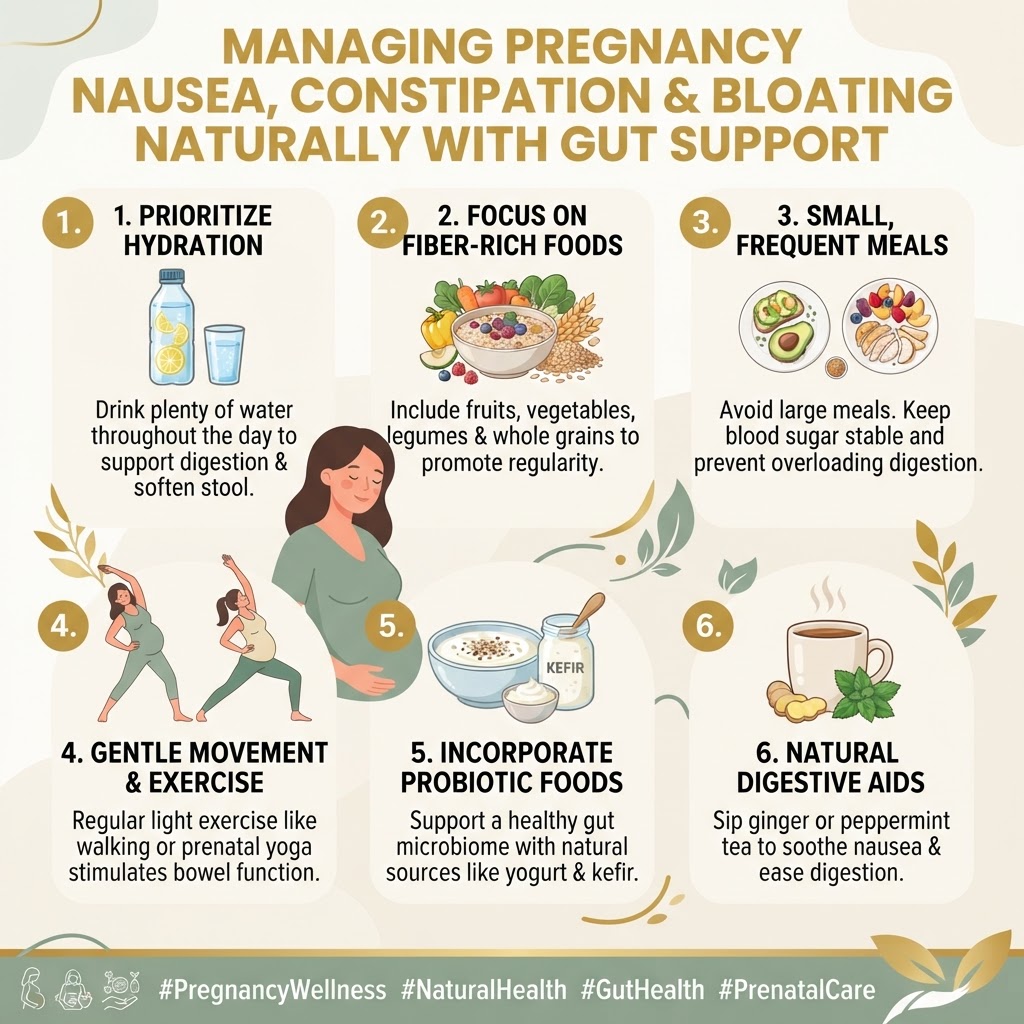
- Fibre — but the right kind: Soluble fibre (oats, flaxseed, stewed apples, psyllium husk) softens stools and feeds beneficial bacteria. Insoluble fibre (bran, raw vegetables) can worsen bloating in sensitive guts — introduce gradually
- Hydration: Aim for 2–2.5 litres of water daily. Dehydration is the single biggest modifiable driver of constipation
- Fermented foods: Natural yoghurt, kefir, sauerkraut, and miso provide live cultures — if well-tolerated, these can meaningfully support microbiome diversity
- Ginger: Clinically validated in multiple randomised controlled trials for reducing nausea in pregnancy — use fresh ginger in hot water, or as a food ingredient
- Small, frequent meals: Keeping the stomach neither empty nor overfull reduces nausea triggers and supports more consistent gastric emptying
The Case for Targeted Probiotic Supplementation
This is where I want to speak to you not just as a physician but as someone who spent years researching why existing prenatal supplements weren't adequately addressing the gut. Constipation pregnancy probiotics research has grown substantially in recent years, with a systematic review in the European Journal of Clinical Nutrition finding that probiotic supplementation significantly improved stool frequency and consistency in pregnant women.
Specific strains matter enormously. Not all probiotics are created equal, and generic products designed for the general population don't account for the unique physiological context of pregnancy.
This is exactly why I developed PregBiotics Essentials — a supplement formulated specifically around the needs of the pregnant gut, with clinically relevant strains at therapeutic doses.
Key active components in PregBiotics Essentials and their roles:
- Lactobacillus rhamnosus GG — the most studied probiotic strain in pregnancy; supports gut barrier integrity and immune modulation
- Lactobacillus acidophilus — supports healthy vaginal microbiome and digestive balance; associated with reduced bloating
- Bifidobacterium longum — promotes bowel regularity and reduces intestinal transit time; important for constipation relief
- Bifidobacterium lactis — well-evidenced for reducing bloating, gas and abdominal discomfort
- Prebiotic FOS (fructooligosaccharides) — feeds and sustains the probiotic strains, enhancing colonisation and effectiveness
- Ginger root extract (250mg) — included at a clinically relevant dose to support nausea reduction
- Magnesium citrate — gentle osmotic support for bowel regularity without the harshness of stimulant laxatives
- Vitamin B6 (Pyridoxine) — WHO-endorsed as a safe and effective intervention for pregnancy-related nausea
For a full breakdown of how gut health connects to pregnancy wellbeing, I'd encourage you to explore our Pregnancy Gut Guide — a free resource I created to support you through every trimester.
Infographic: "The Pregnancy Gut Symptom Triangle — How Nausea, Constipation and Bloating Are Connected Through Your Microbiome"
Expert Tips: What I Recommend to My Patients
After years in clinical practice and working with thousands of pregnant women through PregBiotics, here are the evidence-informed strategies that consistently make the biggest difference:
-
Start your probiotic supplement in the first trimester — ideally at or before 8 weeks. The microbiome shifts I described above begin early. Intervening early offers the greatest benefit for nausea, and establishes gut regularity before constipation becomes entrenched.
-
Take your prenatal iron supplement with food and alongside your probiotic. Iron is notorious for causing nausea and constipation when taken on an empty stomach. Taking it with food slows absorption (slightly) but dramatically reduces GI side effects. Probiotics have been shown to help mitigate iron-induced gut disruption.
-
Eat before you get out of bed. Keep plain crackers, rice cakes, or dry oat biscuits on your bedside table. Eating a small amount before rising helps stabilise blood sugar and blunts the early morning nausea spike that an empty stomach triggers.
-
Move your body — even gently. A 20-minute walk after meals significantly improves gastric motility and reduces bloating. Yoga poses such as child's pose and gentle twists can provide immediate relief from trapped gas.
-
Keep a symptom and food diary for one week. Patterns often become visible that aren't obvious day-to-day. Identify your three biggest bloating or nausea triggers and work to reduce exposure — often just two or three dietary changes make a profound difference.
-
Prioritise sleep and stress management. Via the gut-brain axis, chronic stress measurably worsens gut motility and microbiome composition. Mindfulness, prenatal yoga, and adequate sleep are not luxuries — they are gut health interventions.
-
Don't confuse "eating for two" with eating more. Overeating is one of the most common drivers of pregnancy bloating. Your caloric needs increase by only around 300kcal per day in the second trimester. Quality matters far more than quantity.
-
Stay consistently hydrated — not sporadically. Drinking large amounts of water at once can worsen nausea. Sipping steadily through the day is far more effective for both hydration and gut motility.
When to Seek Medical Advice
While nausea, constipation, and bloating are common and usually manageable with the strategies outlined above, there are circumstances where symptoms require prompt medical evaluation. Please contact your midwife, obstetrician, or GP if you experience any of the following:
- Hyperemesis gravidarum (HG): Severe, persistent vomiting that prevents you from keeping any food or fluids down, causes weight loss of more than 5% of pre-pregnancy body weight, or leads to dehydration. This is a medical condition requiring treatment — not something to manage at home. The NHS provides clear guidance on HG here
- Constipation accompanied by severe abdominal pain, rectal bleeding, or that has not responded to dietary and supplementation changes within two weeks
- Bloating accompanied by significant abdominal pain, fever, or vomiting
- Any sudden change in bowel habits in the third trimester
- Symptoms that are significantly impacting your mental health, ability to eat, or daily functioning
Natural and supplemental support is powerful and effective for the vast majority of women — but it works best as part of a relationship with your healthcare team, not as a substitute for it.
Conclusion: Your Gut Deserves the Same Care You're Giving Your Baby
Pregnancy is extraordinary — a complete physiological reinvention over nine months. Your gut is not a passive bystander in this process. It is an active, responsive, communicative organ that influences how you feel every single day, from the first wave of morning sickness to the uncomfortable bloating of the third trimester.
The good news is that you are not powerless. Understanding that morning sickness gut health is rooted in real biological mechanisms — microbiome shifts, hormonal changes, gut-brain signalling — means you can target those mechanisms with real, evidence-based strategies. Dietary adjustments, mindful movement, stress management, and targeted supplementation with the right probiotic strains and nutrients can meaningfully transform your experience of pregnancy.
PregBiotics Essentials was designed with exactly this purpose: to give your gut the science-led, pregnancy-specific support it needs to function well — so you can feel well.
You deserve to feel as good as possible throughout this journey. Not just survive it — experience it.
For more evidence-based guidance on gut health throughout every stage of pregnancy, visit The PregBiotics Journal — where we publish new research, expert advice, and practical resources every week.
With warmth and clinical care,
Dr. Chomba Chuma, MD Founder, PregBiotics
This article is for informational purposes only and does not constitute individual medical advice. Always consult your healthcare provider before starting any new supplement during pregnancy.
Get the PregBiotics Journal in your inbox
Gut-smart guidance for conception, pregnancy and breastfeeding — twice a week, plus member-only offers. Unsubscribe anytime.
You deserve to feel beautifully supported.
Join thousands of mothers on the PregBiotics journey. Receive your free Pregnancy Prep Guide and gentle, science-backed wisdom — tailored to where you are right now.