Managing Pregnancy Nausea, Constipation and Bloating Naturally With Gut Support
Picture this: It's 7am, and before your feet even touch the floor, a wave of nausea has already stolen your morning. You manage a few sips of water, but your stomach feels like a tight, bloated knot. Later in the day, you realise it has been four days since you last had a comfortable bowel movement.
Dr. Chomba Chuma, MD & Founder
MD & Founder, PregBiotics

Managing Pregnancy Nausea, Constipation and Bloating Naturally With Gut Support
By Dr. Chomba Chuma, MD & Founder | PregBiotics Journal
Introduction
Picture this: It's 7am, and before your feet even touch the floor, a wave of nausea has already stolen your morning. You manage a few sips of water, but your stomach feels like a tight, bloated knot. Later in the day, you realise it has been four days since you last had a comfortable bowel movement. You are not alone — and more importantly, you are not powerless.
Up to 80% of pregnant women experience nausea and vomiting during the first trimester, while constipation affects an estimated 40% of pregnant women at some point across all three trimesters. Bloating and gas? So common that many mothers simply accept them as an unavoidable rite of passage. But here is what I want you to know: these symptoms, while genuinely miserable, are not random. They are deeply connected to what is happening inside your gut — and that means we can address them at the root level, not just mask them.
In this article, I am going to walk you through the science of why pregnancy so dramatically disrupts digestion, what that means for your everyday symptoms, and — most importantly — what you can do about it naturally and safely. We will explore the emerging research on the pregnancy nausea gut connection, the role of constipation pregnancy probiotics, evidence-based bloating pregnancy remedies, and how nurturing your microbiome can transform your experience of pregnancy from the inside out.
Whether you are in the thick of your first trimester or navigating digestive discomfort later in pregnancy, this guide is for you.
The Gut-Pregnancy Connection: What the Science Tells Us
To understand why pregnancy so reliably disrupts your digestion, we need to start with biology — because what is happening in your body right now is genuinely remarkable, even when it doesn't feel that way.
Your Gut Microbiome Shifts Dramatically in Pregnancy
Pregnancy is one of the most profound physiological transformations the human body undergoes. One of the most significant — and least talked about — changes happens in your gut microbiome. Research published in Cell by Koren et al. demonstrated that the gut microbiome undergoes substantial compositional changes across the three trimesters of pregnancy, shifts so significant they actually resemble a metabolic syndrome-like state by the third trimester. These changes appear to serve an evolutionary purpose: supporting energy extraction and fat storage to nourish your growing baby. But they come with a cost — increased susceptibility to bloating, gas, and irregular bowel movements.
Progesterone: The Hormone That Slows Everything Down
In early pregnancy, progesterone rises sharply to support the uterine lining and prevent premature contractions. It does this partly by relaxing smooth muscle tissue — which includes the smooth muscle lining your entire gastrointestinal tract. The result? Slower gastric emptying, reduced peristalsis (the rhythmic contractions that move food through your gut), and a longer transit time in the large intestine, which pulls more water from stool, causing it to harden. This is the primary physiological driver of constipation in pregnancy.
Morning Sickness and the Gut-Brain Axis
The morning sickness gut health link is an active area of research. Nausea and vomiting of pregnancy (NVP) is now understood to involve the gut-brain axis — the bidirectional communication highway between your digestive system and your brain. Disruptions in gut motility, changes in gut bacteria, and elevated levels of the hormone human chorionic gonadotropin (hCG) all converge to trigger nausea signals. Emerging research has also pointed to the role of Helicobacter pylori and dysbiosis (microbial imbalance) in worsening NVP severity.
Bloating, Gas and Slowed Transit
As your uterus expands and progesterone continues to slow gut motility, gas accumulates more readily. Food ferments longer in the intestine, beneficial bacteria may be outnumbered by gas-producing species, and the physical compression of the bowel by the growing uterus compounds the problem. This is why digestive issues in pregnancy often worsen, rather than improve, as gestation progresses.
Understanding these mechanisms is not just academic — it is the foundation of everything we can do to support your gut during this transformative time.
What This Means For You: Connecting the Science to Your Symptoms
Now that we understand the biology, let us make this real and practical. Here is how these gut changes show up in day-to-day pregnancy life — and what they are actually telling you.
Nausea Is Not Just "In Your Head"
If you have ever been told to "just eat crackers and wait it out," you deserve a better answer. Your nausea has real, physiological underpinnings, many of which trace back to gut health. A disturbed microbiome can increase intestinal permeability, alter serotonin signalling (approximately 95% of serotonin is produced in the gut), and impair the regulation of nausea-related pathways. This means supporting your gut is a legitimate, science-backed strategy for managing pregnancy nausea gut symptoms — not a wellness trend.
Constipation Is a Signal, Not a Sentence
Many women accept constipation as inevitable. But chronic constipation in pregnancy is not just uncomfortable — it can increase the risk of haemorrhoids, straining, and in some studies has been associated with increased gut permeability and systemic inflammation. Addressing it proactively matters.
Signs your gut needs support right now:
- Fewer than three bowel movements per week
- Straining or pain during bowel movements
- Hard, dry stools
- A persistent feeling of incomplete emptying
- Bloating that worsens over the course of the day
- Nausea that is more pronounced on an empty stomach
Bloating and Gas Are Often About Bacterial Balance
Not all gas is equal. Some is a normal byproduct of digestion. But excessive, painful bloating — particularly after meals — often reflects dysbiosis: too many gas-producing bacteria and not enough beneficial strains to maintain healthy fermentation and motility. Addressing this imbalance with targeted probiotic strains and dietary support can make a meaningful difference to your daily comfort.
The Emotional Toll Is Real
I want to acknowledge something that often goes unsaid: persistent nausea, bloating and constipation are exhausting. They affect your appetite, your sleep, your mood, and your ability to enjoy this chapter of your life. Supporting your gut is not a vanity exercise — it is self-care with a strong scientific rationale, and you deserve it.
For a broader overview of how to support your gut health throughout all three trimesters, I recommend exploring our Pregnancy Gut Guide, which was designed specifically with pregnant women in mind.
The Role of Nutrition and Supplementation in Gut-Supported Pregnancy
Now we arrive at the part many mothers are most eager to discuss: what can you actually do, and what should you take?
Let me be clear from the outset: no supplement replaces a nutrient-rich, varied diet. But during pregnancy — when nausea reduces your food tolerance, when your requirements for specific nutrients increase, and when your microbiome is in flux — targeted nutritional supplementation can meaningfully bridge the gap.
Diet First: The Foundations
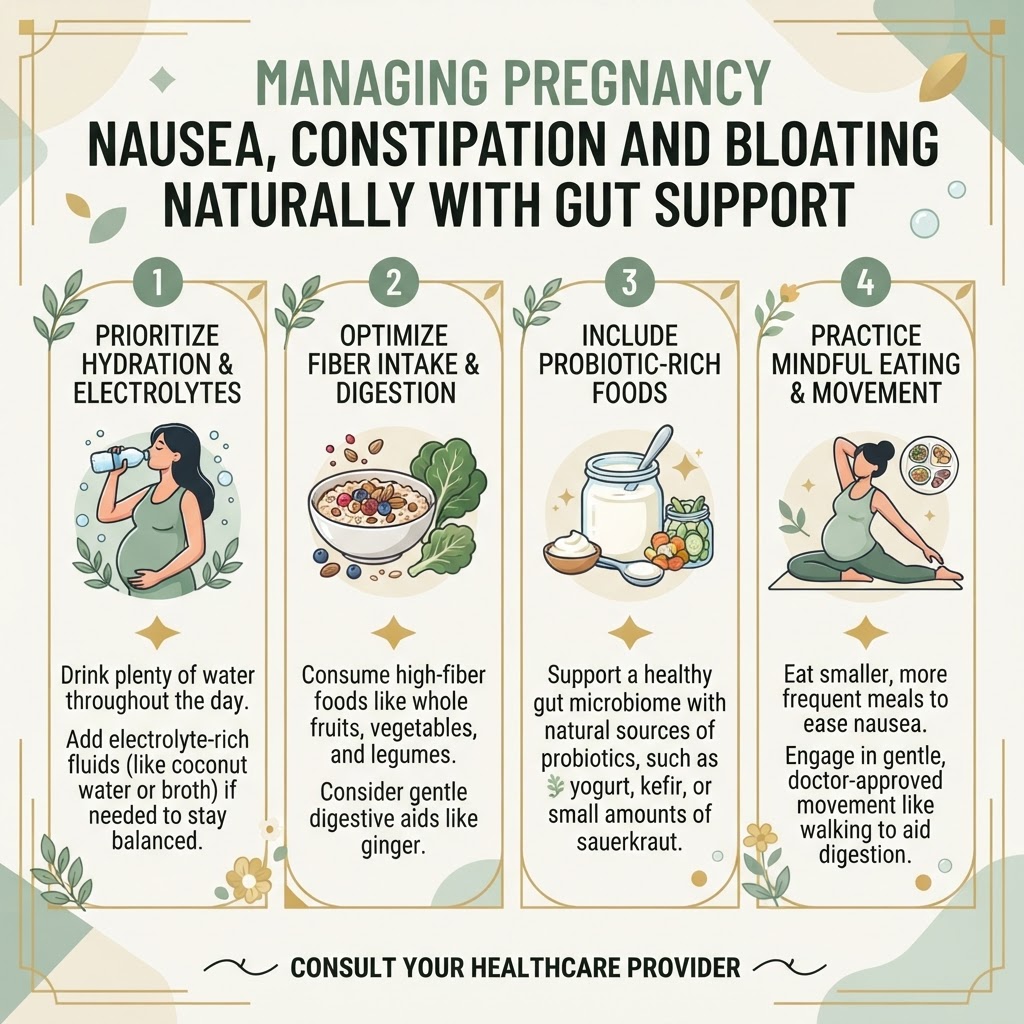
Before we discuss supplements, let us cover the dietary pillars that support gut health in pregnancy:
- Fibre: Aim for 25–30g per day from a variety of sources — oats, flaxseed, legumes, vegetables, and fruit. Fibre feeds beneficial gut bacteria and adds bulk to stool, directly addressing constipation.
- Hydration: This cannot be overstated. Water is essential for softening stool and supporting healthy gut motility. Aim for at least 2 litres per day, more in hot weather or if exercising.
- Fermented foods: If your nausea permits, small amounts of live yoghurt, kefir, or miso can introduce beneficial bacterial strains naturally.
- Ginger: Well-supported by clinical evidence as a safe and effective remedy for nausea in pregnancy. A Cochrane review found ginger to be more effective than placebo in reducing nausea severity.
- Smaller, more frequent meals: Large meals increase gastric pressure and slow transit further. Eating smaller portions every 2–3 hours supports steadier digestion and can reduce nausea.
Where Supplementation Makes the Difference
This is where PregBiotics Essentials was specifically formulated to step in. Designed with the unique physiology of the pregnant gut in mind, it combines evidence-informed probiotic strains with prebiotic fibre and key synergistic nutrients to address the core drivers of pregnancy digestive discomfort.
Key strains and nutrients in PregBiotics Essentials, and why they matter:
- Lactobacillus rhamnosus GG — One of the most extensively studied probiotic strains in pregnancy. Supports microbial balance, reduces intestinal permeability, and has been associated with reduced nausea severity in some studies
- Bifidobacterium longum — A dominant strain in the healthy pregnancy microbiome. Supports bowel regularity, reduces bloating, and helps modulate immune function
- Lactobacillus acidophilus — Supports lactase production, reduces gas and bloating, and contributes to a healthy vaginal microbiome — critical for Group B Strep protection
- Prebiotic FOS (fructooligosaccharides) — Selectively feeds beneficial bacteria, amplifying the effect of the probiotic strains and supporting motility
- Ginger root extract — A natural, evidence-backed remedy for morning sickness gut health support, included at a clinically meaningful dose
- Magnesium — Supports bowel motility and can help soften stool naturally; also widely deficient in pregnancy
- Vitamin B6 (pyridoxine) — Recommended by the NHS as a first-line intervention for nausea and vomiting in pregnancy
Expert Tips and Actionable Advice: What to Do Starting Today
Here are my practical, evidence-informed recommendations for managing pregnancy digestive symptoms naturally:
-
Start your morning gently. Before getting out of bed, eat a few dry crackers or a small piece of wholegrain toast. This stabilises blood sugar and dampens early morning nausea. Never face the first trimester on a completely empty stomach.
-
Take your probiotic consistently. Probiotic benefit is cumulative. Take PregBiotics Essentials at the same time each day — many women find taking it with a small evening meal reduces any initial adjustment discomfort. Consistency over 4–8 weeks yields the most meaningful microbiome shifts.
-
Move your body, gently. Even a 15–20 minute walk after meals can meaningfully stimulate gut motility and reduce constipation and bloating. Gentle prenatal yoga, particularly poses that involve gentle twisting or hip opening, can also support digestive transit.
-
Prioritise fibre variety, not just quantity. Instead of relying on a single fibre source, aim for diversity: oats at breakfast, legumes at lunch, and a variety of vegetables at dinner. Different fibres feed different beneficial bacteria.
-
Stay well hydrated, especially with warm liquids. Warm water with lemon or ginger tea in the morning can stimulate gastric motility and ease nausea. Cold water can sometimes slow digestion further.
-
Eat mindfully and slowly. Rapid eating introduces excess air into the gastrointestinal tract, contributing directly to bloating and gas. Sit down, chew thoroughly, and avoid eating on the go where possible.
-
Consider your iron supplement timing. Iron supplements — often prescribed in pregnancy — are a well-known contributor to constipation. Take them with a small amount of food (not on an empty stomach), and if constipation is significant, discuss alternative iron formulations or dose timing with your midwife or doctor.
-
Track your symptoms. Keep a simple food and symptom diary for one to two weeks. This helps identify specific trigger foods (commonly fatty foods, raw onions, carbonated drinks, and caffeine) and patterns that you and your care provider can address together.
-
Don't ignore the mind-gut connection. Stress activates the sympathetic nervous system, which suppresses digestive function. Short daily mindfulness practices, gentle breathing exercises, or even five minutes of quiet before meals can meaningfully support gut function.
-
Give it time. Microbiome changes take weeks, not days. Be patient with yourself and with the process. The goal is steady, sustainable improvement — not overnight transformation.
When to Seek Medical Advice
While the vast majority of pregnancy nausea, constipation and bloating are normal and manageable with the strategies above, there are situations where medical attention is essential. Please contact your midwife, GP, or obstetrician promptly if you experience any of the following:
- Hyperemesis gravidarum — severe, persistent vomiting that prevents you from keeping any food or fluids down, or causes weight loss of more than 5% of your pre-pregnancy body weight. This requires medical management and is very different from typical morning sickness.
- No bowel movement for more than a week, particularly if accompanied by abdominal pain or cramping.
- Blood in your stool — this requires immediate evaluation.
- Severe or worsening abdominal pain that is not clearly related to gas or constipation.
- Signs of dehydration: dark urine, dizziness, rapid heart rate, or extreme fatigue.
- Sudden or significant changes in symptoms after a period of stability.
As a guiding principle: if something feels wrong, trust your instincts and seek advice. Natural and nutritional support works alongside medical care, not instead of it. Always inform your healthcare provider about any supplements you are taking during pregnancy, including probiotics.
The research on probiotic safety in pregnancy is reassuring — a comprehensive meta-analysis in the Annals of Nutrition and Metabolism found probiotic supplementation during pregnancy to be safe with no increased risk of adverse outcomes — but your individual circumstances matter, and your care team should always be part of your decision-making.
Conclusion: Your Gut Is Your Greatest Ally Right Now
Pregnancy is one of the most extraordinary things the human body can do. But "extraordinary" does not have to mean "miserable." The nausea, constipation and bloating that so many women suffer through silently have real, addressable, biological roots — and the emerging science of the pregnancy gut microbiome gives us genuinely powerful tools to help.
By understanding that morning sickness gut health, digestive issues in pregnancy, and bloating pregnancy remedies are not separate concerns but interconnected expressions of gut dysbiosis and hormonal change, we can take a more targeted, holistic approach. Eating fibre-rich, hydrating well, moving gently, and supporting your microbiome with the right probiotic strains and nutrients is not wishful thinking — it is evidence-based maternal care.
PregBiotics Essentials was born out of my desire to give pregnant women the specific, science-led gut support they deserve — support designed for their unique physiology, not adapted from general adult formulas. I have seen it make a genuine difference for hundreds of women, and I hope it does the same for you.
You do not have to simply endure this. You have options, you have agency, and you have support.
For more evidence-based guidance on gut health throughout pregnancy and beyond, visit The PregBiotics Journal — a resource built by clinicians, for mothers.
Wishing you a healthy, comfortable, and empowered pregnancy.
Dr. Chomba Chuma, MD Founder, PregBiotics
Disclaimer: This article is for informational purposes only and does not constitute medical advice. Always consult your healthcare provider before starting any new supplement during pregnancy.
Get the PregBiotics Journal in your inbox
Gut-smart guidance for conception, pregnancy and breastfeeding — twice a week, plus member-only offers. Unsubscribe anytime.
You deserve to feel beautifully supported.
Join thousands of mothers on the PregBiotics journey. Receive your free Pregnancy Prep Guide and gentle, science-backed wisdom — tailored to where you are right now.