Managing Pregnancy Nausea, Constipation and Bloating Naturally With Gut Support
Picture this: it's 7am, and before your feet have even touched the floor, a wave of nausea rolls through you. You manage a few crackers, but by mid-morning your stomach feels like a balloon about to burst. By evening, you haven't had a comfortable bowel movement in four days. Sound familiar? If you'
Dr. Chomba Chuma, MD & Founder
MD & Founder, PregBiotics

Managing Pregnancy Nausea, Constipation and Bloating Naturally With Gut Support
By Dr. Chomba Chuma, MD & Founder | PregBiotics Journal
Introduction
Picture this: it's 7am, and before your feet have even touched the floor, a wave of nausea rolls through you. You manage a few crackers, but by mid-morning your stomach feels like a balloon about to burst. By evening, you haven't had a comfortable bowel movement in four days. Sound familiar? If you're nodding along, you are absolutely not alone.
Studies suggest that up to 80% of pregnant women experience nausea and vomiting during pregnancy, while more than 40% report significant constipation, and bloating affects the vast majority at some point across all three trimesters. These symptoms are so common that many women are told to simply "push through" — but I want you to know something important: common does not mean inevitable, and suffering is not a requirement of pregnancy.
As a doctor and the founder of PregBiotics, I've spent years exploring the intersection of maternal health and the gut microbiome. What I've come to understand — and what the research continues to confirm — is that your gut is at the centre of nearly every pregnancy symptom you're experiencing. Nausea, constipation, bloating: all roads lead back to the gut.
In this article, I'm going to walk you through the science of why these symptoms happen, what your gut microbiome has to do with them, and — most importantly — what you can actually do about it. This is practical, evidence-based guidance designed to help you feel more like yourself again, even during the most demanding months of your life.
The Gut-Pregnancy Connection: What's Really Happening in Your Body
To truly understand pregnancy nausea, gut health, constipation, and bloating, we need to start where it all begins: the profound physiological transformation happening inside you from the very first weeks of pregnancy.
Your Hormones Are Rewriting the Rules
The moment implantation occurs, your body begins producing human chorionic gonadotropin (hCG) — the hormone detected by pregnancy tests. Rising hCG levels are strongly associated with morning sickness and gut sensitivity. Alongside hCG, progesterone surges dramatically. While progesterone is essential for maintaining pregnancy, it is also a smooth muscle relaxant — meaning it slows the contractions of your intestinal walls that normally move food and waste through your digestive system. The result? Slower gastric emptying, reduced gut motility, and the perfect storm for constipation and bloating.
Oestrogen, too, plays a role. Elevated oestrogen has been shown to influence serotonin pathways — and since approximately 90% of your body's serotonin is produced in the gut, even small disruptions to gut function can trigger the nausea signals sent to your brain via the vagus nerve.
The Microbiome Shifts of Pregnancy
Here's something that may surprise you: your gut microbiome — the trillions of bacteria, fungi, and other microorganisms living in your intestines — actually changes significantly across pregnancy, particularly in the third trimester. A landmark 2012 study published in Cell by Koren et al. found that the microbiome in late pregnancy resembles that of a metabolic syndrome state, with reduced diversity and increased populations of inflammatory bacteria. While some of this shift appears to serve evolutionary purposes (helping extract more calories for the growing baby), it can also contribute to digestive discomfort, gas production, and altered bowel function.
The Gut-Brain Axis and Morning Sickness
The gut and brain are in constant two-way communication via the gut-brain axis — a sophisticated network of neural, hormonal, and immune signals. When the gut microbiome is disrupted or inflamed, these signals become dysregulated. Research published in PLOS ONE suggests that women with severe morning sickness (hyperemesis gravidarum) show distinct differences in gut bacterial composition compared to those with milder symptoms, pointing to a genuine gut-nausea link that goes far beyond hormones alone.
Mechanical Pressure and Digestive Slowdown
As your uterus expands — particularly from the second trimester onward — it physically compresses the stomach, intestines, and surrounding digestive organs. This mechanical pressure slows digestion further, contributes to acid reflux, worsens bloating, and can make constipation significantly more uncomfortable. Understanding these layered causes is the first step toward addressing them intelligently.
What This Means For You: Translating the Science Into Your Daily Reality
The biology I've just described can feel overwhelming, but I want to reframe it: understanding why these symptoms are happening gives you agency. You're not just suffering randomly — your body is navigating one of the most complex biological events in human experience. And there are meaningful, evidence-based ways to support it.
Here's what the science means in practical terms for the most common digestive issues in pregnancy:
On pregnancy nausea and gut health:
- Nausea is not purely psychological or hormonal — it has a measurable gut component. Supporting a healthier gut environment can reduce the inflammatory signals that amplify nausea perception.
- Small, frequent meals reduce gastric pressure and are consistently recommended because they keep blood sugar stable and avoid overwhelming a slower digestive system.
- Ginger (Zingiber officinale) has been studied in multiple clinical trials and shown to reduce nausea frequency and severity in pregnancy, partly through its action on gut motility and serotonin receptors in the gut wall.
On constipation and probiotics in pregnancy:
- Because progesterone has already slowed your gut down, your colon is absorbing more water from stool than usual, making it harder and more difficult to pass.
- Specific probiotic strains — particularly Lactobacillus and Bifidobacterium species — have been shown in randomised controlled trials to significantly improve bowel movement frequency and stool consistency in pregnancy.
- Fibre works with probiotics: prebiotic fibres (found in foods like oats, bananas, onions, and chicory root) feed beneficial bacteria, helping them produce short-chain fatty acids that stimulate healthy gut motility.
On bloating pregnancy remedies:
- Bloating in pregnancy is often caused by a combination of gas-producing bacteria in the gut, slower transit time, and mechanical compression from the uterus.
- Reducing foods that are high in fermentable carbohydrates (FODMAPs) temporarily can help — but this should be done cautiously and ideally with guidance, as many FODMAP-rich foods are also highly nutritious.
- Staying well-hydrated and gently mobile (even a 15-minute walk after meals) can meaningfully improve gas transit and reduce that uncomfortable "full to bursting" sensation.
On digestive issues in pregnancy more broadly:
- Stress directly affects gut function through the gut-brain axis — making stress management not just a mental health tool, but a digestive health intervention.
- Sleep position matters: lying on your left side after meals uses gravity to assist gastric emptying and can reduce acid reflux and bloating.
You can also explore more personalised guidance through our Pregnancy Gut Guide, which walks you through trimester-specific gut support strategies tailored to where you are in your journey.
The Role of Nutrition and Supplementation in Supporting Your Pregnant Gut
Diet is your most powerful daily intervention — but in pregnancy, getting the right nutrients in the right amounts from food alone is genuinely challenging. Nausea makes eating difficult. Food aversions eliminate entire food groups. And the increased nutritional demands of pregnancy mean that even women eating well can have significant gaps.
This is where targeted supplementation, done thoughtfully and scientifically, can make a real difference.
What to Eat for Gut Health in Pregnancy
- Prebiotic-rich foods: Oats, garlic, leeks, asparagus, green bananas, and legumes feed your beneficial gut bacteria and support healthy motility.
- Probiotic-rich foods: Live-culture yoghurt, kefir (pasteurised during pregnancy), miso soup, and sauerkraut introduce beneficial bacterial strains.
- High-fibre vegetables: Broccoli, sweet potato, peas, and leafy greens support bowel regularity without harsh laxative effects.
- Ginger: Ginger tea, ginger biscuits, or fresh ginger in warm water — genuinely evidence-supported for morning sickness gut health.
- Hydration: Aiming for 8–10 glasses of water daily supports stool softness and helps combat the dehydrating effects of nausea.
Where Supplementation Comes In
Even with the best dietary intentions, the reality of morning sickness and pregnancy fatigue means many women need additional support. PregBiotics Essentials was formulated specifically for this gap — combining the key strains and nutrients that research identifies as most relevant to maternal gut health, in doses that are both safe and clinically meaningful.
Key active components in PregBiotics Essentials and their evidence base:
- Lactobacillus rhamnosus GG — One of the most clinically studied probiotic strains in pregnancy, associated with reduced gestational diabetes risk, improved gut barrier integrity, and support for healthy immune modulation
- Bifidobacterium longum — Shown to improve stool frequency and consistency; important for supporting the infant's microbiome via the birth canal
- Lactobacillus acidophilus — Supports vaginal microbiome health (closely linked to gut health) and reduces inflammatory signalling
- Prebiotic FOS (fructooligosaccharides) — Feeds the above strains and independently promotes bowel regularity
- Ginger root extract — Standardised and dosed based on clinical trial data for nausea reduction
- Magnesium citrate — A gentle, highly bioavailable form of magnesium that supports smooth muscle relaxation in the gut and helps ease constipation without harsh stimulant effects
- Vitamin B6 (pyridoxine) — Recommended by the WHO and ACOG for pregnancy nausea management; works synergistically with gut support to reduce symptom severity
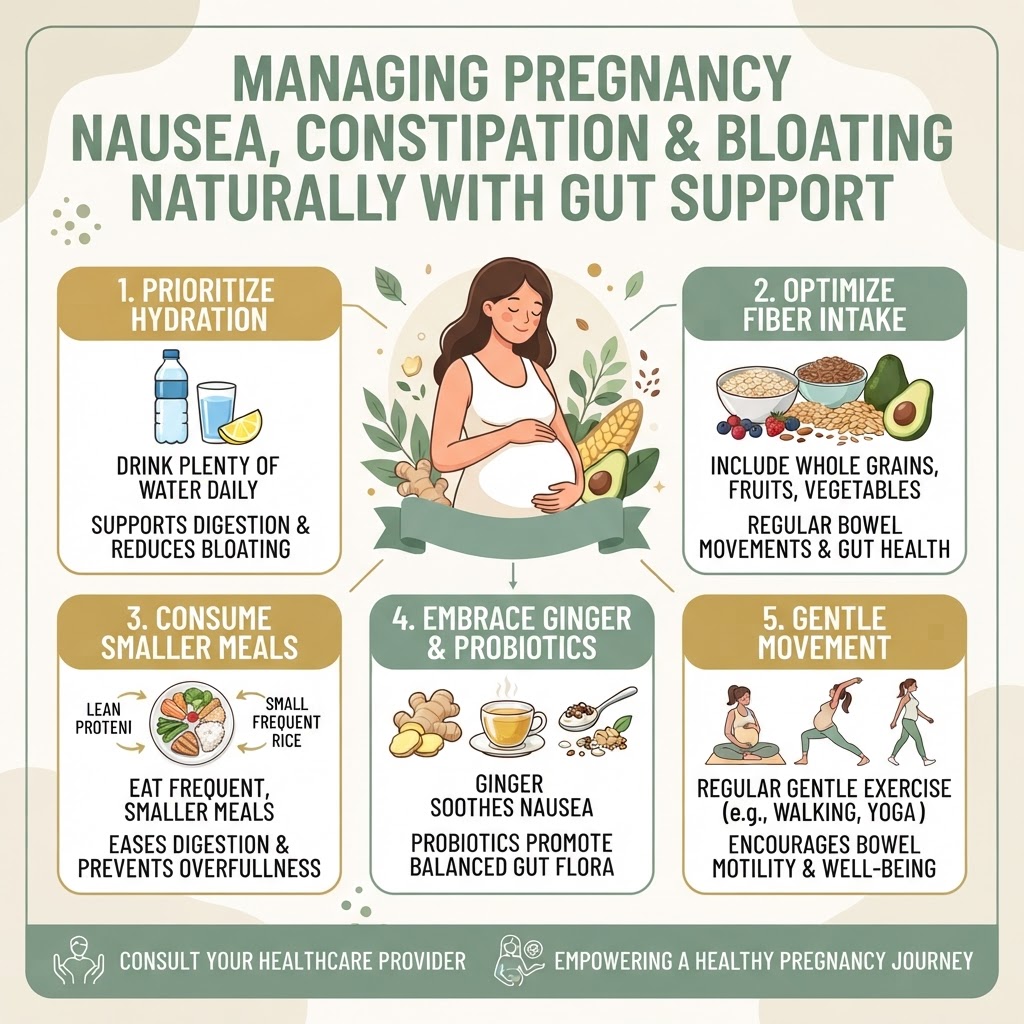
Suggested infographic: "How PregBiotics Essentials Targets the 3 Most Common Pregnancy Digestive Complaints — Nausea, Constipation & Bloating" — showing gut-to-symptom pathway with corresponding ingredients
Expert Tips: Practical Steps to Feel Better Starting Today
You don't have to wait for a supplement to arrive or a doctor's appointment to be scheduled. Here are my top evidence-informed strategies that you can begin implementing immediately:
-
Eat before you get up. Keep plain crackers, oat cakes, or dry cereal on your bedside table. Eating something small before you even sit up can significantly reduce morning nausea by stabilising blood sugar levels before your gut is fully "awake."
-
Never eat to fullness. A stretched stomach triggers nausea and worsens bloating. Eat to about 70–75% capacity and wait 20 minutes before deciding if you need more. Small, frequent meals every 2–3 hours tend to work far better than three large ones.
-
Walk after meals. Even a gentle 10–15 minute walk after eating accelerates gastric emptying, reduces bloating, and stimulates bowel motility. This is one of the simplest and most effective remedies for digestive issues in pregnancy.
-
Prioritise hydration — but time it strategically. Drinking large amounts of liquid during meals can worsen bloating by diluting digestive enzymes. Try drinking most of your fluids between meals rather than with them.
-
Add a daily probiotic supplement consistently. The research on constipation pregnancy probiotics shows that consistency matters — benefits tend to build over 2–4 weeks of regular use rather than appearing immediately. Start early and stick with it.
-
Manage your stress actively. The gut-brain axis is real. Even 10 minutes of diaphragmatic breathing, mindfulness, or gentle prenatal yoga daily can measurably reduce gut inflammation and improve motility. This isn't a "nice to have" — it's a gut health intervention.
-
Elevate your head when sleeping. If acid reflux or nausea is worst at night or in the morning, elevating the head of your bed by 15–20cm uses gravity to keep stomach acid where it belongs.
-
Warm ginger or peppermint tea between meals. Both have peer-reviewed evidence supporting their use for nausea and bloating in pregnancy. Peppermint in particular can relax smooth muscle in the gut and reduce gas discomfort.
-
Check your iron supplement. Many standard prenatal vitamins contain ferrous sulfate — a form of iron that is notoriously constipating. Ask your midwife or doctor about switching to ferrous bisglycinate, which is gentler on the gut, or ensure your probiotic support is robust if you need to stay on your current formulation.
-
Track your triggers. Keep a simple food and symptom diary for one week. Patterns often emerge — certain foods, meal sizes, times of day, or stress events — that once identified, can be addressed directly.
When to Seek Medical Advice
While the strategies and support described in this article can make a meaningful difference for typical pregnancy digestive discomfort, it's vital that you know when symptoms require professional evaluation.
Please contact your midwife, GP, or obstetrician promptly if you experience:
- Vomiting so frequent or severe that you cannot keep any food or fluids down for more than 24 hours (this may indicate hyperemesis gravidarum, which requires medical treatment and can cause dangerous dehydration)
- Signs of dehydration: dark urine, dizziness, rapid heartbeat, or feeling faint
- Constipation accompanied by blood in the stool, severe abdominal pain, or no bowel movement for more than a week despite dietary measures
- Sudden, severe abdominal bloating or pain
- Weight loss of more than 5% of your pre-pregnancy body weight due to nausea and vomiting
- Any symptom that feels sudden, severe, or significantly different from what you've been experiencing
This article provides general educational information and does not replace personalised medical advice. Every pregnancy is unique, and your healthcare team is your most important resource. Please always discuss new supplements — including probiotics — with your healthcare provider before starting them, particularly if you have any underlying health conditions or a high-risk pregnancy.
Conclusion
Your gut is not a bystander in your pregnancy — it is one of the most active and influential systems in your body right now, shaping everything from how you feel each morning to how your baby's own microbiome will begin to form. The nausea, constipation, and bloating you're navigating are real, they have biological explanations, and they deserve real, thoughtful support.
The good news is that with the right foundation — a nutrient-dense diet where possible, targeted probiotic support, practical lifestyle strategies, and a supplement formulated specifically for where you are — you can move through pregnancy with significantly more comfort and confidence than you might have thought possible.
PregBiotics Essentials was created out of my belief that every pregnant woman deserves science-led gut support designed for the specific demands of pregnancy — not a generic supplement with "pregnancy" on the label. The strains, the nutrients, the doses: all chosen because the evidence pointed here.
You are doing something extraordinary. Let's make sure your body has what it needs to do it well.
For more expert articles, trimester-specific guides, and evidence-based resources, explore The PregBiotics Journal — your home for maternal gut health science, made accessible.
Dr. Chomba Chuma, MD, is a medical doctor and the founder of PregBiotics, a science-led maternal gut health brand. She is passionate about closing the gap between cutting-edge microbiome research and practical support for pregnant and postpartum women.
This article is for informational purposes only and does not constitute medical advice. Always consult your healthcare provider before making changes to your diet, lifestyle, or supplementation during pregnancy.
Get the PregBiotics Journal in your inbox
Gut-smart guidance for conception, pregnancy and breastfeeding — twice a week, plus member-only offers. Unsubscribe anytime.
You deserve to feel beautifully supported.
Join thousands of mothers on the PregBiotics journey. Receive your free Pregnancy Prep Guide and gentle, science-backed wisdom — tailored to where you are right now.