Managing Pregnancy Nausea, Constipation and Bloating Naturally With Gut Support
Picture this: It's 7am, and before your feet have even touched the floor, you're already dreading the day ahead. Not because of your to-do list — but because your stomach has launched its daily protest. The wave of nausea hits, and you haven't eaten a thing yet. By mid-morning, despite managing a fe
Dr. Chomba Chuma, MD & Founder
MD & Founder, PregBiotics

Managing Pregnancy Nausea, Constipation and Bloating Naturally With Gut Support
By Dr. Chomba Chuma, MD & Founder | PregBiotics Journal
Introduction
Picture this: It's 7am, and before your feet have even touched the floor, you're already dreading the day ahead. Not because of your to-do list — but because your stomach has launched its daily protest. The wave of nausea hits, and you haven't eaten a thing yet. By mid-morning, despite managing a few crackers, you feel like a balloon — bloated, uncomfortable, and vaguely miserable. And it's been three days since your last bowel movement.
If any part of that scenario sounds familiar, you are absolutely not alone.
Research shows that up to 80% of pregnant women experience nausea and vomiting during the first trimester, while constipation affects approximately 40% of pregnancies, and bloating is reported by the majority of expectant mothers at some point across all three trimesters. These aren't trivial complaints. They are disruptive, exhausting, and — when they occur simultaneously — genuinely overwhelming.
What's less commonly discussed, however, is why these symptoms happen together so frequently, and what that clustering tells us about the health of your gut during pregnancy.
In this article, I want to take you beyond the usual "eat ginger and drink more water" advice (though both have their place). I want to explain the fascinating science connecting pregnancy nausea gut function, morning sickness gut health, and digestive disruptions like constipation and bloating — and show you how thoughtfully supporting your gut microbiome can bring meaningful, natural relief.
By the end, you'll have the science, the strategies, and the confidence to approach your pregnancy digestive health in a whole new way.
The Gut in Pregnancy: Why Everything Feels Different
To understand why so many pregnant women experience digestive issues, we need to start with biology — specifically, what is happening inside your body from the moment of conception.
Hormones Take the Wheel
The two primary hormonal drivers of pregnancy digestive changes are human chorionic gonadotropin (hCG) and progesterone.
hCG — the hormone detected by pregnancy tests — rises sharply in the first trimester and is closely correlated with the onset and severity of morning sickness. Exactly how hCG triggers nausea isn't fully understood, but it is thought to act on receptors in the gut and brainstem, including those that regulate the vomiting reflex. Interestingly, conditions like hyperemesis gravidarum (severe pregnancy vomiting) are associated with particularly elevated hCG levels.
Progesterone, meanwhile, does something far-reaching: it relaxes smooth muscle throughout the body. This is essential for preventing premature uterine contractions — but it has an unintended consequence. The smooth muscle of the gastrointestinal tract slows down too, reducing intestinal motility. Food and waste move more slowly through your digestive system, which is the direct physiological cause of constipation pregnancy symptoms and much of the bloating pregnancy remedies aim to address.
Your Gut Microbiome Is Shifting
What many women — and even many healthcare providers — don't fully appreciate is that pregnancy dramatically alters the composition of the gut microbiome, the vast community of trillions of bacteria, fungi, and other microorganisms living in your digestive tract.
A landmark 2012 study published in Cell by Koren et al. demonstrated that the gut microbiome undergoes significant compositional changes across trimesters, with a shift in the third trimester resembling changes typically associated with metabolic syndrome in non-pregnant individuals — yet these changes are normal and serve important biological functions during pregnancy, including supporting immune tolerance and energy extraction for the growing baby.
These microbial shifts, however, can come at a cost. A less diverse microbiome, or one that is imbalanced — known as dysbiosis — is associated with increased gut permeability, heightened inflammation, altered gut motility, and heightened sensitivity of the gut-brain axis. All of these factors can amplify nausea, worsen constipation, and contribute to bloating.
The Gut-Brain Axis Connection
Your gut and brain are in constant, bidirectional communication via the gut-brain axis — a complex network involving the vagus nerve, enteric nervous system, immune signalling, and microbial metabolites. In pregnancy, this connection becomes particularly significant.
Disruptions in the gut microbiome can influence serotonin production (95% of which is made in the gut), which in turn affects nausea signalling, mood, and intestinal motility. This is part of why morning sickness gut health is such a meaningful concept — nausea in pregnancy is not just a "stomach" issue. It is a whole-system response, deeply connected to the state of your microbiome.
What This Means For You: Connecting the Dots
Understanding the science above isn't just intellectually interesting — it has very real, practical implications for how you can support your body during pregnancy.
Here's what the research tells us about these three common pregnancy digestive complaints, and how they connect to gut health:
On Pregnancy Nausea and the Gut:
- Women with a less diverse gut microbiome may experience more severe nausea symptoms, as dysbiosis can amplify gut hypersensitivity and inflammatory signalling
- The gut produces key neurotransmitters including serotonin and GABA that modulate nausea; a healthy microbiome supports their appropriate production
- Some studies suggest that Lactobacillus strains may help regulate the gut-brain axis and reduce nausea severity in early pregnancy
- Addressing pregnancy nausea gut health holistically — rather than just suppressing symptoms — may offer more sustained relief
On Constipation in Pregnancy:
- Slowed gut motility is inevitable to some degree, but it is significantly worsened by poor hydration, a low-fibre diet, iron supplementation (common in pregnancy), and an imbalanced microbiome
- Specific probiotic strains, particularly Bifidobacterium lactis, have demonstrated effectiveness in reducing constipation severity and improving stool frequency in clinical studies
- Constipation pregnancy probiotics represent an evidence-based, safe approach to improving gut transit time without the risks associated with stimulant laxatives
- Prebiotic fibres feed beneficial bacteria and support the production of short-chain fatty acids (SCFAs), which stimulate peristalsis — the natural movement of your gut
On Bloating in Pregnancy:
- Excess gas production is often a sign of fermentation imbalances in the gut — when the wrong bacteria ferment undigested food, they produce excessive gas
- A healthy, diverse microbiome manages this fermentation process efficiently, reducing the gas and pressure that cause bloating pregnancy discomfort
- Certain probiotic strains help regulate gut pH and reduce overgrowth of gas-producing bacteria
- Slow gut transit (from progesterone relaxation) means food sits longer in the colon, worsening gas production — improving motility through gut support addresses this at its root
The key message here is this: these three symptoms are not separate problems to be managed in isolation. They share a common root in gut health, and supporting your microbiome addresses all three simultaneously.
The Role of Nutrition and Supplementation in Gut Support During Pregnancy
Now that we understand the 'why', let's talk about the 'what' — what you can actually do, starting with what you eat and what you supplement with.
Dietary Foundations
A gut-supportive pregnancy diet doesn't need to be complicated, but it does need to be intentional:
- Fibre-rich foods: Oats, lentils, sweet potato, berries, and chia seeds provide both soluble and insoluble fibre that feeds beneficial gut bacteria and supports bowel regularity
- Fermented foods: Natural yoghurt, kefir, sauerkraut, and miso introduce beneficial bacteria to the gut (when tolerated — nausea can make these tricky in the first trimester)
- Hydration: Adequate water intake is essential for stool softening and motility; aim for at least 8–10 glasses per day
- Small, frequent meals: Eating smaller portions more frequently reduces gastric pressure and nausea triggers, while keeping blood sugar stable
- Ginger: Well-supported by clinical evidence for nausea reduction — ginger tea, ginger biscuits, or ginger capsules are all options worth trying
Why Supplementation Matters
Even with the best dietary intentions, pregnancy is a physiologically demanding state. Nausea makes eating difficult. Food aversions limit variety. And the gut microbiome is undergoing significant change regardless of diet. This is where targeted supplementation becomes genuinely valuable — not as a replacement for good nutrition, but as a meaningful support layer.
This is exactly why I formulated PregBiotics Essentials.
PregBiotics Essentials is a comprehensive maternal gut health supplement designed specifically for the demands of pregnancy. It combines clinically researched probiotic strains with prebiotic support, delivered in a formula that is safe, gentle, and trimester-appropriate.
Key strains and nutrients in PregBiotics Essentials include:
- Lactobacillus rhamnosus GG — one of the most extensively studied probiotic strains; supports gut barrier integrity, reduces intestinal permeability, and has been shown to support nausea and immune function in pregnancy
- Bifidobacterium lactis BB-12 — a well-researched strain with demonstrated efficacy for reducing constipation and improving stool regularity; particularly relevant for constipation pregnancy probiotics support
- Lactobacillus acidophilus — helps maintain healthy vaginal and gut flora balance, reduces dysbiosis-related bloating and fermentation imbalance
- Fructooligosaccharides (FOS) — a prebiotic fibre that selectively feeds beneficial Lactobacillus and Bifidobacterium species, amplifying the effect of the probiotic strains
- Ginger root extract — included at a clinically meaningful dose to support nausea reduction via gut and central nervous system pathways
- Magnesium — supports smooth muscle function and is a gentle, evidence-backed aid for bowel regularity during pregnancy
For a deeper understanding of how gut health connects to your overall pregnancy wellness — including its role in Group B Strep preparation — I encourage you to explore our Pregnancy Gut Guide, which provides trimester-by-trimester guidance tailored to your stage of pregnancy.
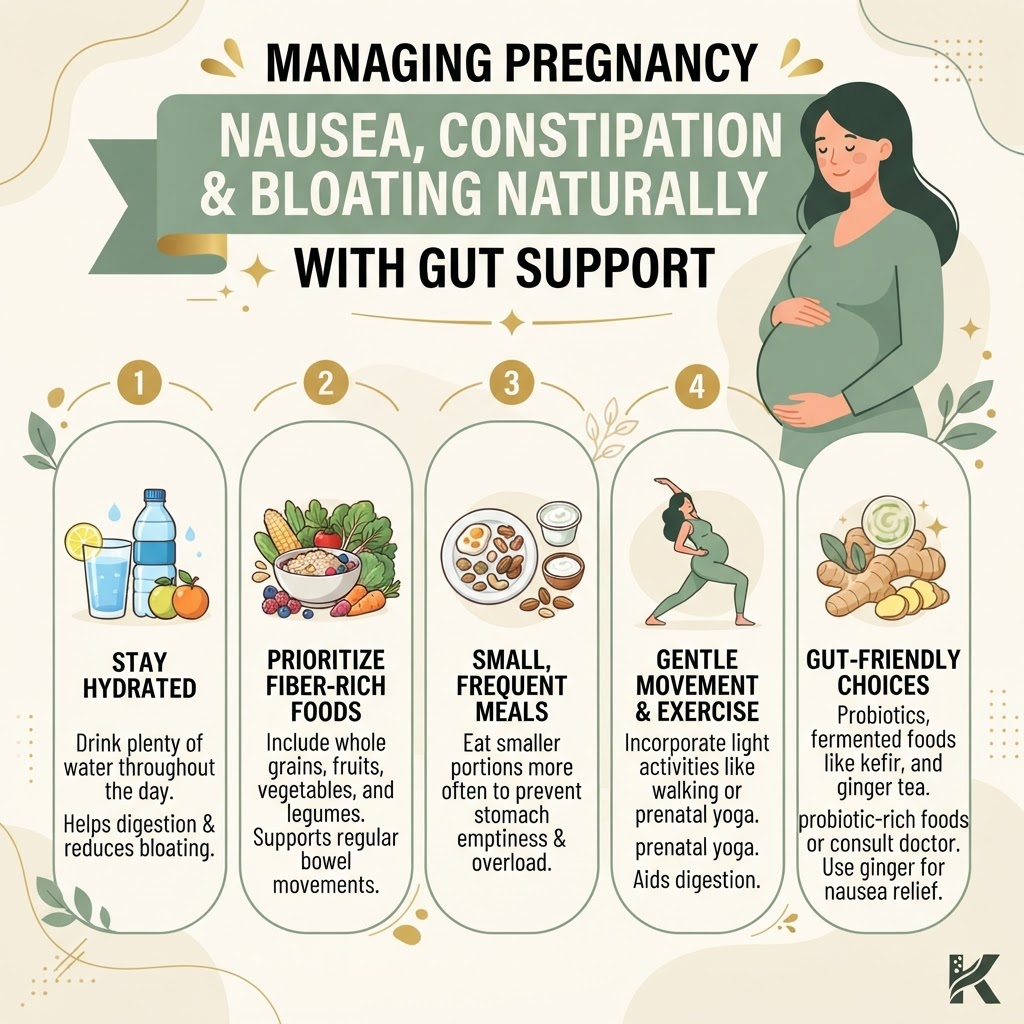
Infographic: "The Pregnancy Gut Symptom Triangle — How Nausea, Constipation & Bloating Share a Common Root in Gut Health"
Expert Tips and Actionable Advice for Managing Digestive Symptoms Naturally
Here are my evidence-informed, practical recommendations for managing pregnancy nausea, constipation, and bloating through gut-centred strategies:
-
Start your probiotic early and be consistent. The microbiome benefits of probiotics accumulate over time. Don't wait until symptoms become severe — ideally begin gut support in the first trimester, or even when planning pregnancy. Consistency is key; take your supplement at the same time daily, ideally with a meal.
-
Manage nausea triggers with a gut-first lens. An empty stomach worsens nausea because stomach acid has nothing to work on. Keep plain crackers by your bed and eat them before rising. Eat every 2–3 hours to prevent gastric emptying episodes that signal nausea.
-
Prioritise prebiotic fibre, not just probiotics. Probiotics without prebiotic fuel are like planting seeds without watering them. Include prebiotic-rich foods daily — garlic, onion, bananas (particularly slightly underripe), oats, and asparagus all nourish your beneficial gut bacteria.
-
Gentle movement supports gut motility. Even a 15–20 minute walk after meals can meaningfully improve intestinal transit time, reducing constipation and bloating. Swimming and pregnancy yoga are also excellent for gut motility and general wellbeing.
-
Position matters for bloating relief. After meals, avoid lying down immediately. A brief walk or sitting upright for 30 minutes allows gravity to support digestion and reduces the pressure and discomfort of gas accumulation.
-
Warm liquids can be your ally. Warm water with lemon in the morning, peppermint tea, or warm ginger tea can help stimulate gut motility, relieve gas, and ease nausea. Avoid very cold drinks, which can temporarily slow gut motility.
-
Reduce known bloating triggers. Common gas-producing foods include beans, lentils, cruciferous vegetables (broccoli, cabbage, Brussels sprouts), and carbonated drinks. This doesn't mean eliminating them — cooking them well, eating smaller portions, and taking your probiotic consistently can help you tolerate them better over time.
-
Mind your iron supplement timing. If you're on iron supplementation (very common in pregnancy), take it separately from your probiotic — ideally in the morning away from your gut supplement. Iron can disrupt gut bacteria balance and worsen constipation; your doctor may also be able to suggest a more gut-friendly form, such as ferrous bisglycinate.
-
Track your symptoms. Keep a simple food and symptom diary for a week. Many women are surprised to identify specific triggers for their worst bloating or nausea episodes — and once identified, these can often be managed without eliminating foods entirely.
-
Hydrate strategically. Drink water between meals rather than with meals, which can dilute digestive enzymes. Aim to sip consistently throughout the day rather than drinking large amounts infrequently.
When to Seek Medical Advice
While nausea, constipation, and bloating are extremely common pregnancy experiences, there are circumstances where symptoms warrant prompt medical evaluation. Please do not rely solely on natural remedies or supplementation if you are experiencing any of the following:
- Severe or persistent vomiting that prevents you from keeping fluids down (potential hyperemesis gravidarum — a serious condition requiring medical management)
- No bowel movement for more than 3–4 days, particularly if accompanied by abdominal pain or cramping
- Severe abdominal pain or distension at any point during pregnancy
- Blood in stools or vomit
- Signs of dehydration: dark urine, dizziness, rapid heartbeat, dry mouth
- Significant unexplained weight loss in the first trimester
As always, I strongly encourage all pregnant women to discuss any new supplements — including probiotics — with their midwife, obstetrician, or GP before starting. While probiotics are widely considered safe in pregnancy, your individual health history and circumstances matter. The information in this article is educational and does not replace personalised medical advice.
If you have concerns about your gut health and its impact on your pregnancy, bring this article to your next appointment and start a conversation. You deserve to be heard.
Conclusion
Pregnancy is extraordinary — but nobody tells you quite how much of the experience happens in your gut. The nausea that greets you in the morning, the constipation that makes you dread the bathroom, the bloating that leaves you reaching for elasticated waistbands at six weeks — these are not just inconveniences. They are your body's signals that your gut is navigating a profound and rapid transformation.
The good news — and I say this as both a physician and someone deeply passionate about maternal gut health — is that you are not powerless. Understanding the connection between morning sickness gut health, microbiome shifts, and digestive disruption opens the door to genuinely effective, natural strategies for relief.
By nourishing your gut with the right probiotic strains, prebiotic fibres, and supportive nutrients — the principles behind PregBiotics Essentials — you are working with your body's biology rather than against it. You are creating the conditions for a healthier gut, a more balanced microbiome, and a more comfortable pregnancy journey.
The research supports this approach. Your body supports this approach. And I am here, through every article in The PregBiotics Journal, to support you too.
You are doing something remarkable. Let's make sure your gut is along for the ride.
Dr. Chomba Chuma, MD, is the founder of PregBiotics and a specialist in maternal gut health. She is dedicated to translating the latest microbiome science into practical, empowering guidance for pregnant and postpartum women.
References:
-
Koren, O. et al. (2012). Host Remodeling of the Gut Microbiome and Metabolic Changes during Pregnancy. Cell, 150(3), 470–480. https://doi.org/10.1016/j.cell.2012.07.008
-
National Health Service UK. (2023). Indigestion and heartburn in pregnancy. https://www.nhs.uk/pregnancy/related-conditions/common-symptoms/indigestion-and-heartburn/
-
Vazquez, J.C. (2010). Constipation, haemorrhoids, and heartburn in pregnancy. BMJ Clinical Evidence. https://www.ncbi.nlm.nih.gov/pmc/articles/PMC3217736/
Get the PregBiotics Journal in your inbox
Gut-smart guidance for conception, pregnancy and breastfeeding — twice a week, plus member-only offers. Unsubscribe anytime.
You deserve to feel beautifully supported.
Join thousands of mothers on the PregBiotics journey. Receive your free Pregnancy Prep Guide and gentle, science-backed wisdom — tailored to where you are right now.