Managing Pregnancy Nausea, Constipation and Bloating Naturally With Gut Support
Picture this: it's 7am, you're eight weeks pregnant, and just the smell of your morning coffee — something you once loved — sends you running to the bathroom. By midday, you're uncomfortably bloated despite barely eating, and it's been three days since your last bowel movement. You're exhausted, you
Dr. Chomba Chuma, MD & Founder
MD & Founder, PregBiotics

Managing Pregnancy Nausea, Constipation and Bloating Naturally With Gut Support
By Dr. Chomba Chuma, MD & Founder | PregBiotics Journal
Introduction
Picture this: it's 7am, you're eight weeks pregnant, and just the smell of your morning coffee — something you once loved — sends you running to the bathroom. By midday, you're uncomfortably bloated despite barely eating, and it's been three days since your last bowel movement. You're exhausted, you feel wretched, and nobody warned you quite how relentlessly physical early pregnancy could be.
If this sounds familiar, you are far from alone. Studies suggest that up to 85% of pregnant women experience nausea or vomiting during pregnancy, with a significant proportion also reporting constipation and bloating as consistent companions throughout the first and second trimesters. These symptoms are so common that many women — and even some healthcare providers — dismiss them as simply "part of being pregnant."
But here's what I want you to know: while these symptoms are common, they are not something you simply have to endure without support. There is a compelling and growing body of science connecting pregnancy digestive issues to the health of your gut microbiome — and that means there are meaningful, natural strategies that can genuinely help.
In this article, I want to walk you through the gut-based science behind pregnancy nausea, constipation and bloating, explain what it means for your day-to-day experience, and share evidence-informed strategies — including nutritional and probiotic support — that you can begin exploring today. My goal, as always, is to leave you feeling informed, empowered, and hopeful.
The Gut-Pregnancy Connection: What's Really Happening Inside
To understand why so many women struggle with digestive symptoms during pregnancy, we need to start where the story actually begins — with the remarkable biological changes unfolding inside your body from the very first weeks.
Your Gut Microbiome Undergoes a Profound Shift
Pregnancy triggers a dramatic restructuring of the gut microbiome — the trillions of bacteria, fungi and other microorganisms that live in your gastrointestinal tract. Research published in Cell demonstrated that the maternal microbiome changes significantly across the three trimesters, with a notable reduction in microbial diversity by the third trimester. While some of these changes are functionally adaptive — helping increase caloric absorption to nourish your growing baby — they can also tip the balance toward digestive discomfort.
Hormones Are Reshaping Your Digestive Landscape
The hormonal surge of pregnancy is extraordinary, and your gut feels every bit of it.
-
Progesterone, which rises sharply in early pregnancy, causes smooth muscle relaxation throughout the body — including the muscles of your gastrointestinal tract. The result is slower gut motility: food and waste move more sluggishly through your intestines, leading directly to constipation in pregnancy and the uncomfortable bloating that follows.
-
Human Chorionic Gonadotropin (hCG), the hormone detected by pregnancy tests, peaks dramatically in the first trimester and is strongly correlated with the intensity of nausea and vomiting. The pregnancy nausea gut connection here is significant — emerging research suggests that hCG may influence gut motility and gastric emptying, compounding the nausea experience.
-
Oestrogen also rises substantially, and some researchers believe elevated oestrogen levels influence gut bacteria populations, further disrupting the microbial balance.
The Gut-Brain Axis: A Two-Way Conversation
There is a sophisticated communication highway between your gut and your brain, known as the gut-brain axis. This involves the vagus nerve, neurotransmitters (including serotonin — of which approximately 95% is produced in the gut), and immune signalling molecules. When your gut microbiome is disrupted, this signalling becomes dysregulated. In the context of pregnancy, this can amplify the perception of nausea, increase sensitivity to smells and tastes, and contribute to the fatigue and mood changes that often accompany morning sickness gut health struggles.
Gastric Emptying Slows, Pressure Increases
As your uterus grows, it physically displaces and compresses the digestive organs. By the second and third trimesters, this mechanical pressure significantly contributes to bloating, heartburn and a persistent sense of fullness — even after small meals.
Understanding these interconnected mechanisms is the foundation for understanding why supporting your gut is not just about digestive comfort — it's about supporting your whole pregnancy experience.
What This Means For You: Translating the Science Into Lived Experience
I work with pregnant women every day, and one of the most powerful things I can offer is context. When you understand why your body is behaving the way it is, the symptoms become less frightening and more manageable. Here is what the science above means in practical terms:
Your nausea is partly a gut story. The connection between morning sickness gut health and microbial imbalance is increasingly well-evidenced. A disrupted gut microbiome can alter serotonin production, affect gastric motility, and heighten the gut-brain axis responses that manifest as nausea. This means that restoring microbial balance — not just treating symptoms superficially — may offer more sustained relief.
Your constipation is not a personal failing — it's progesterone. Many women feel embarrassed or frustrated by constipation in pregnancy, as if they're doing something wrong. You're not. Progesterone-driven slowing of gut motility is physiological and near-universal. That said, constipation pregnancy probiotics research is genuinely encouraging — specific probiotic strains have been shown in clinical studies to improve stool frequency and consistency without any safety concerns in pregnancy.
Your bloating has multiple drivers — and multiple solutions. The combination of slowed motility, microbiome shifts, increased gas production from fermentation in the gut, and physical compression from your growing uterus creates a perfect storm for bloating pregnancy remedies that need to work on several levels simultaneously.
Here are the key practical implications:
- Gut health interventions can target root causes, not just mask symptoms
- Dietary fibre, hydration and gentle movement work synergistically with the microbiome to improve motility
- Probiotic supplementation during pregnancy is considered safe and increasingly recommended by maternal health experts
- What you eat directly shapes your microbiome, meaning food choices have a more profound impact during pregnancy than at most other life stages
- Stress and sleep deprivation (common in early pregnancy) further disrupt gut-brain axis signalling, worsening nausea perception — so gut support works best as part of a holistic approach
You can explore more about how your gut health evolves across each trimester in our Pregnancy Gut Guide, which I developed specifically to support mothers through exactly these challenges.
The Role of Nutrition and Supplementation: Building a Gut-First Strategy
This is where we move from understanding to action — and where the right nutritional support can make a meaningful, measurable difference to your daily comfort and your baby's developing microbiome.
Dietary Foundations
Before we discuss supplementation, diet forms the bedrock of gut health in pregnancy. Key principles include:
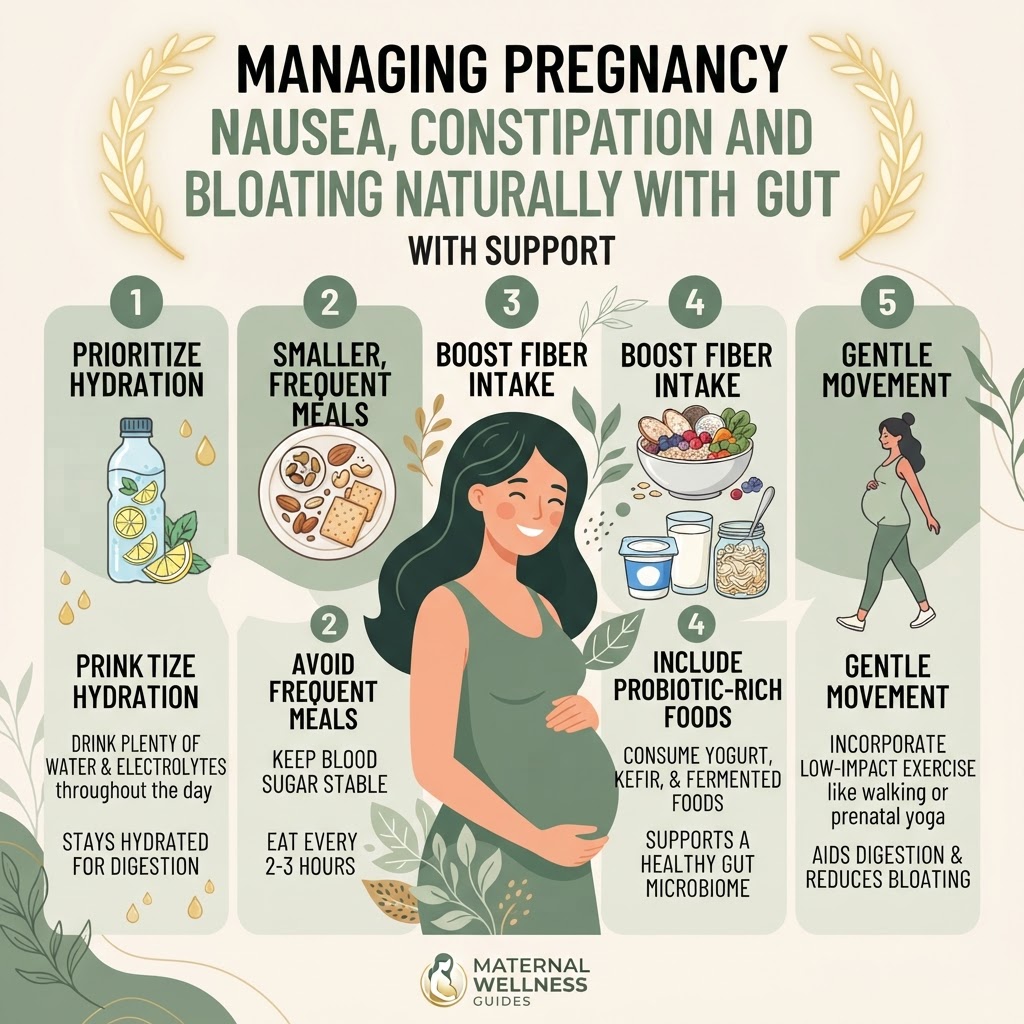
- Prioritise prebiotic fibre: Foods such as oats, bananas, garlic, onions, leeks, asparagus and legumes feed beneficial gut bacteria and support healthy motility.
- Eat small, frequent meals: Large meals worsen bloating and nausea; smaller portions every 2–3 hours maintain blood sugar stability and reduce gastric pressure.
- Stay well hydrated: Dehydration is a primary driver of constipation. Aim for 8–10 glasses of water daily, flavoured with lemon or ginger if plain water triggers nausea.
- Include ginger thoughtfully: Ginger has robust clinical evidence behind it as a bloating pregnancy remedy and nausea reliever. A Cochrane review found ginger to be effective for reducing nausea and vomiting in early pregnancy.
- Limit refined sugars and ultra-processed foods: These feed less beneficial bacterial species and can worsen gut dysbiosis.
The Role of Probiotics in Pregnancy
The evidence base for constipation pregnancy probiotics has grown substantially. A 2018 systematic review published in the British Journal of Nutrition found probiotic supplementation in pregnancy to be safe and associated with improvements in gastrointestinal symptoms, metabolic health and immune function in both mother and infant.
The specific strains matter enormously. Not all probiotics are equivalent, and the pregnancy microbiome has specific requirements.
This is precisely why I developed PregBiotics Essentials — a targeted, clinically informed probiotic and micronutrient blend designed specifically around the needs of the pregnant gut.
What's Inside PregBiotics Essentials
PregBiotics Essentials is formulated to address the key gut-related challenges of pregnancy, including nausea, constipation and bloating, through a multi-strain, evidence-led approach:
- Lactobacillus rhamnosus GG — the most clinically studied probiotic strain in pregnancy; supports gut barrier integrity, reduces gut inflammation, and has been associated with reduced nausea severity
- Lactobacillus acidophilus — supports healthy lactate production, competitive exclusion of harmful bacteria, and improved bowel regularity
- Bifidobacterium longum — particularly important for reducing intestinal gas production and bloating; also supports immune regulation during pregnancy
- Bifidobacterium lactis — well-evidenced for improving stool consistency and frequency in cases of pregnancy-related constipation
- Fructooligosaccharides (FOS) — a prebiotic fibre that nourishes the probiotic strains and independently supports bowel motility
- Vitamin B6 (Pyridoxine) — clinically recommended by the NHS as a first-line support for pregnancy nausea
- Magnesium — supports smooth muscle function in the gut, contributing to regularity and reduced cramping
Expert Tips and Actionable Advice: Your Practical Daily Toolkit
After years of working with pregnant women and dedicating my research to maternal gut health, here are the strategies I recommend most consistently:
-
Start your day with ginger and warm water before getting out of bed. Nausea is often worst on an empty stomach after lying down overnight. A warm ginger drink sipped slowly before rising can calm the gut-brain axis response before it escalates.
-
Take your probiotic consistently, ideally at the same time each day. Consistency is key to microbiome recolonisation. I recommend taking PregBiotics Essentials with a small amount of food in the morning to maximise bacterial survival through stomach acid.
-
Eat before hunger strikes. The nausea-hunger cycle is real — waiting until you feel hungry often means you've already dipped into low blood sugar, which worsens nausea. Set gentle eating reminders if needed.
-
Move your body gently and regularly. A 15–20 minute walk after meals significantly improves gut motility, reduces bloating and supports the gut-brain axis through vagal nerve stimulation. Yoga and swimming are also excellent.
-
Elevate the head of your bed slightly. Particularly helpful from mid-pregnancy onward, this reduces acid reflux and the nausea that often accompanies it overnight.
-
Identify and temporarily avoid your trigger foods. Common culprits include spicy foods, fatty or fried foods, caffeine and carbonated drinks. Keep a simple food and symptom diary for a week — patterns often emerge quickly.
-
Prioritise prebiotic foods daily. Add one prebiotic-rich food to each meal — a banana at breakfast, garlic in your lunch, a side of steamed asparagus at dinner. These small additions compound significantly over weeks.
-
Manage stress as a gut health strategy. Cortisol disrupts gut microbiome diversity directly. Even 5–10 minutes of mindful breathing or meditation daily can measurably benefit gut-brain axis regulation.
-
Stay hydrated between meals rather than during. Drinking large amounts of water with food can dilute digestive enzymes and worsen bloating. Sip water consistently between meals instead.
-
Be patient with your body. Microbiome restoration takes time — typically 4–8 weeks of consistent probiotic use before full benefits are realised. Trust the process.
When to Seek Medical Advice
While the strategies in this article are evidence-informed and broadly safe for healthy pregnancies, it is essential to recognise when your symptoms require direct medical attention. Please contact your midwife, obstetrician or GP promptly if you experience any of the following:
- Severe, persistent vomiting that prevents you from keeping any fluids or food down — this may indicate Hyperemesis Gravidarum (HG), a serious condition requiring medical management
- Signs of dehydration: dark urine, dizziness, rapid heartbeat, confusion or significantly reduced urinary output
- Constipation lasting more than one week despite dietary and lifestyle changes, or constipation accompanied by abdominal pain, rectal bleeding, or severe cramping
- Significant, sudden abdominal distension not explained by eating, particularly if accompanied by pain or fever
- Any new symptom that feels severe, unusual or frightening
Natural and nutritional approaches to digestive issues in pregnancy are powerful tools — but they work alongside professional obstetric care, never instead of it. Always discuss new supplements, including probiotics, with your healthcare provider before beginning them, particularly if you have any underlying health conditions or pregnancy complications.
As the WHO emphasises, comprehensive antenatal care remains the cornerstone of maternal wellbeing.
Conclusion: Your Gut Health Is a Gift to Yourself and Your Baby
Pregnancy is one of the most extraordinary physiological experiences a human body can undertake. The nausea, constipation and bloating that so many women endure are not simply unfortunate side effects to be tolerated — they are signals from a gut microbiome and digestive system undergoing profound transformation. When we listen to those signals and respond with the right support, we don't just feel better in the short term; we actively shape the microbial environment that our babies will inherit.
The science is clear: the gut health of a pregnant mother has lasting implications for both maternal wellbeing and infant microbiome development. That means investing in your gut health right now is one of the most meaningful things you can do for your child's long-term health — not just your own comfort.
I created PregBiotics Essentials because I believe every pregnant woman deserves access to the best possible evidence-based support — presented clearly, compassionately, and without overwhelm. Combined with the dietary strategies, lifestyle habits and practical tips outlined in this article, it offers a genuinely comprehensive approach to managing the most common digestive challenges of pregnancy, naturally.
You are not just surviving this pregnancy — you are building the foundations for a healthy new life. Let your gut health be part of that story.
For more evidence-based articles on pregnancy gut health, visit The PregBiotics Journal — your science-led companion for every stage of the journey.
Dr. Chomba Chuma, MD is a maternal health physician and the Founder of PregBiotics. Her work focuses on the intersection of the gut microbiome, maternal nutrition and infant health outcomes. This article is for informational purposes only and does not constitute medical advice. Always consult a qualified healthcare professional regarding your individual pregnancy care.
Get the PregBiotics Journal in your inbox
Gut-smart guidance for conception, pregnancy and breastfeeding — twice a week, plus member-only offers. Unsubscribe anytime.
You deserve to feel beautifully supported.
Join thousands of mothers on the PregBiotics journey. Receive your free Pregnancy Prep Guide and gentle, science-backed wisdom — tailored to where you are right now.