Managing Pregnancy Nausea, Constipation and Bloating Naturally With Gut Support
*By Dr. Chomba Chuma, MD & Founder | PregBiotics Journal* --- Picture this: You're eight weeks pregnant, exhausted before the day has even started, and the smell of your morning coffee — something you once loved — sends you running to the bathroom. By mid-morning, you're bloated and uncomfortable.
Dr. Chomba Chuma, MD & Founder
MD & Founder, PregBiotics

Managing Pregnancy Nausea, Constipation and Bloating Naturally With Gut Support
By Dr. Chomba Chuma, MD & Founder | PregBiotics Journal
The Hidden Connection Between Your Gut and Your Pregnancy Symptoms
Picture this: You're eight weeks pregnant, exhausted before the day has even started, and the smell of your morning coffee — something you once loved — sends you running to the bathroom. By mid-morning, you're bloated and uncomfortable. By evening, you haven't had a bowel movement in three days. You're not unwell. You're not doing anything wrong. You're growing a human being, and your gut is feeling every bit of it.
If this sounds familiar, you're in extraordinarily good company. Studies suggest that up to 80% of pregnant women experience nausea and vomiting during the first trimester, while constipation affects between 11–38% of pregnancies at some point. Bloating and gas? A near-universal experience that few people talk about openly enough.
Here's what most conventional pregnancy advice misses: these symptoms are not just inconvenient side effects to be white-knuckled through. They are, in large part, gut symptoms — rooted in the sweeping physiological changes happening in your digestive system right now.
In this article, I want to walk you through the science of why pregnancy affects your gut so profoundly, what it means for your day-to-day comfort, and — most importantly — how targeted gut support, nutrition, and the right supplementation can make a genuine, meaningful difference. You deserve to feel better, and the tools to do so are closer than you might think.
The Pregnant Gut: What's Actually Happening Inside You
To understand why digestive issues pregnancy are so common, we need to start with biology — because what's happening inside your body right now is nothing short of remarkable, even when it doesn't feel that way.
Hormones Are Rewriting Your Digestive Rules
From the moment of conception, your body begins producing a surge of hormones that are essential for a healthy pregnancy — but that also have a direct, measurable impact on your gut function.
Progesterone is the primary culprit behind many early digestive complaints. This hormone, which rises dramatically in the first trimester to support uterine relaxation and prevent premature contractions, also relaxes the smooth muscle throughout your entire gastrointestinal tract. The result? Slower gut motility — meaning food and waste move through your digestive system more slowly than usual. This is a direct driver of constipation during pregnancy, and it contributes to the bloating and discomfort that follow.
Human Chorionic Gonadotropin (hCG), the hormone detected in pregnancy tests, has been strongly implicated in morning sickness gut health disruption. Research published in Frontiers in Endocrinology suggests that rapidly rising hCG levels correlate closely with the onset and severity of nausea and vomiting in early pregnancy.
Your Gut Microbiome Is Shifting — Significantly
What many people don't realise is that pregnancy triggers a measurable, significant remodelling of the gut microbiome — the trillions of bacteria, fungi, and other microorganisms living in your digestive tract.
A landmark study published in Cell Host & Microbe found that the gut microbiome undergoes substantial changes across the three trimesters of pregnancy, with reduced microbial diversity by the third trimester being associated with metabolic and inflammatory shifts. Changes in bacterial populations — including reductions in beneficial Lactobacillus and Bifidobacterium strains — directly influence:
- Gut motility (how quickly things move through)
- Gas production (bloating pregnancy remedies often overlook this mechanism)
- Nausea signalling via the gut-brain axis
- Immune regulation, which is critically important for both mother and baby
The Gut-Brain Axis: Why Nausea Lives in Your Gut
The pregnancy nausea gut connection is more literal than most people appreciate. Your gut contains its own nervous system — the enteric nervous system — and communicates bidirectionally with your brain via the vagus nerve. This is the gut-brain axis. When your gut microbiome is disrupted and gut motility slows, these signals become dysregulated, amplifying nausea and contributing to the fatigue and food aversions so characteristic of the first trimester.
Physical Pressure as the Pregnancy Progresses
Beyond hormones and microbiome, as your baby grows, the physical displacement of your digestive organs adds another layer of digestive challenge. Your stomach empties more slowly, acid reflux becomes more common, and constipation pregnancy probiotics and dietary interventions become increasingly important tools to maintain comfort.
What This Means For You: Translating the Science Into Real Life
Understanding the biology is empowering — but what does it actually mean for the woman trying to get through her Tuesday?
Here's how these mechanisms translate into the symptoms you may be experiencing right now, and why addressing gut health at its root matters far more than symptom-masking approaches:
-
Your nausea is, at least in part, a gut signal. When your gut microbiome is disrupted and motility slows, nausea-triggering signals along the gut-brain axis are amplified. Supporting the gut with the right bacterial strains has been shown in clinical research to reduce the severity of nausea and vomiting in pregnancy. A Cochrane Review on interventions for nausea in pregnancy acknowledges the growing evidence for dietary and microbiome-targeted strategies alongside conventional approaches.
-
Your constipation is not about fibre alone. Yes, fibre matters — but if your gut microbiome lacks the diversity to ferment that fibre properly, and if progesterone has slowed your gut motility, fibre alone will not be sufficient. You need the right bacterial strains working with the fibre you eat. This is why constipation pregnancy probiotics approaches are gaining substantial clinical attention.
-
Bloating is often about fermentation imbalance. When gas-producing bacteria proliferate and beneficial bacteria decline, the fermentation of undigested foods becomes chaotic and excessive. This is why bloating pregnancy remedies that focus purely on avoiding gassy foods often provide only partial relief.
-
The second trimester is not guaranteed relief. While nausea often eases, many women find that bloating and constipation worsen in the second and third trimesters as physical pressure increases and microbiome diversity continues to shift.
-
What you do now matters for your baby too. The bacteria colonising your gut during pregnancy influence the microbial environment your baby will encounter at birth. Supporting a diverse, healthy maternal microbiome is one of the most meaningful things you can do for your child's early immune development. You can explore this further in our Pregnancy Gut Guide, which covers the full arc of gut health from conception through the fourth trimester.
The Role of Nutrition and Supplementation in Pregnancy Gut Support
Managing digestive issues in pregnancy is not about restriction or suffering through it. It's about giving your gut the specific, evidence-based support it needs during one of the most physiologically demanding periods of your life.
Food First: The Dietary Foundation
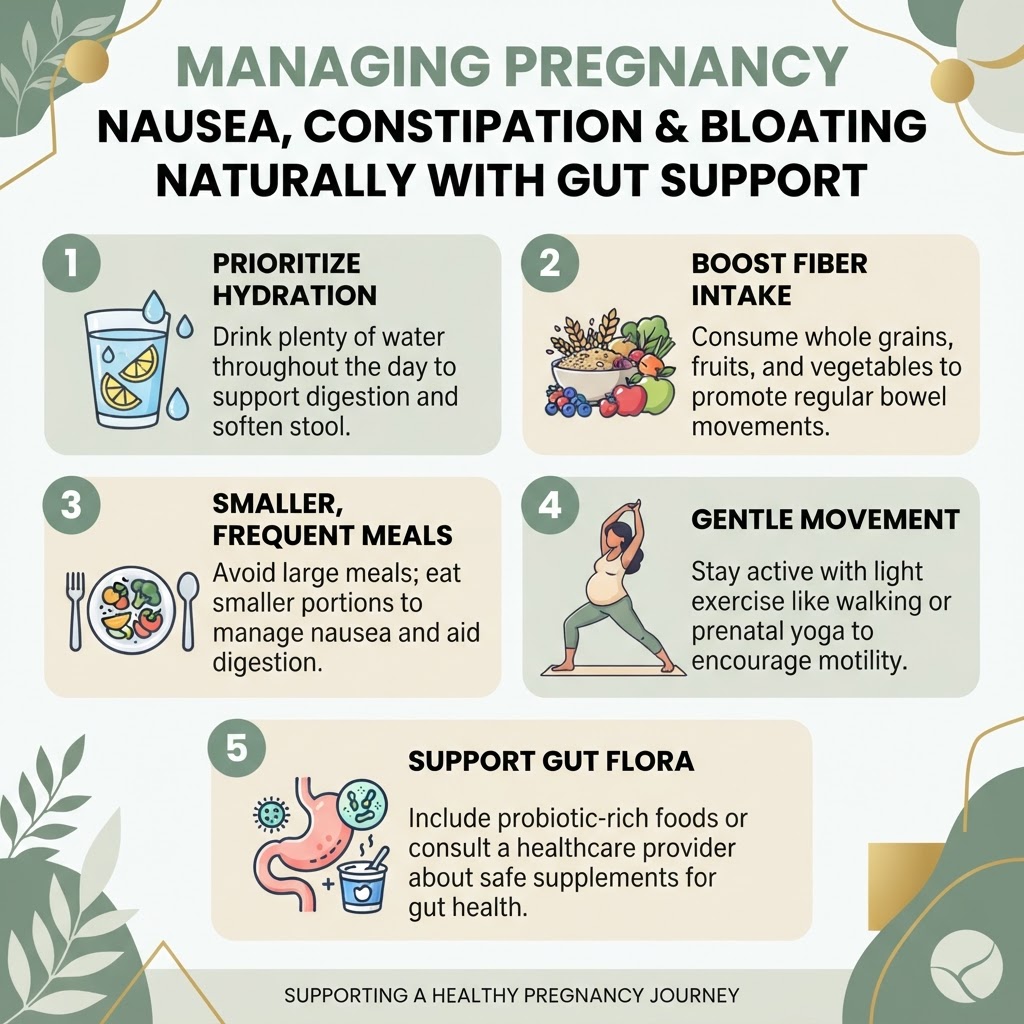
Before supplements, dietary choices form the foundation of gut support during pregnancy:
- Diverse, fibre-rich plant foods feed beneficial bacteria and support motility — aim for a wide range of vegetables, legumes, oats, and fruits
- Fermented foods such as natural yoghurt, kefir, sauerkraut, and kimchi introduce beneficial bacteria (when safe food handling is followed during pregnancy)
- Adequate hydration is essential for softening stool and supporting motility — aim for 8–10 glasses of water daily
- Ginger has well-established evidence for reducing pregnancy nausea gut symptoms — fresh ginger tea, ginger shots, or ginger-containing foods can be genuinely helpful
- Smaller, more frequent meals reduce the burden on a slowed digestive system and help manage both nausea and bloating
- Limiting ultra-processed, high-sugar foods reduces proliferation of gas-producing, inflammatory bacterial species
Where PregBiotics Essentials Comes In
Diet alone, however, often isn't enough — particularly when microbiome diversity has already shifted, nausea limits food variety, and pregnancy-specific bacterial changes are already underway.
This is exactly why I developed PregBiotics Essentials — a clinically formulated supplement designed specifically for the pregnant gut, at the stages when it needs support most.
Here's what's inside, and why each ingredient was chosen with precision:
-
Lactobacillus rhamnosus GG — One of the most extensively studied probiotic strains in pregnancy. Evidence supports its role in reducing nausea severity, improving bowel regularity, and supporting immune modulation. Its safety profile in pregnancy is well-established across multiple clinical trials.
-
Bifidobacterium longum — A key strain for managing constipation and reducing intestinal transit time in pregnancy. Also plays a crucial role in reducing inflammatory signalling in the gut — directly relevant to bloating and discomfort.
-
Lactobacillus acidophilus — Supports vaginal and gut microbiome balance, reduces gas-producing fermentation imbalances, and contributes to the healthy bacterial environment that will colonise your newborn at delivery.
-
Prebiotic Fructooligosaccharides (FOS) — These non-digestible fibres selectively feed the beneficial bacteria above, amplifying their effect and creating a synbiotic formulation rather than simply depositing bacteria into an unsupported environment.
-
Ginger Root Extract (standardised) — Included for its clinically evidenced anti-nausea action and additional motility-supporting properties.
-
Magnesium Citrate — A highly bioavailable form of magnesium that gently supports bowel motility and is commonly deficient in pregnant women.
-
Vitamin B6 (Pyridoxine) — A WHO-recognised first-line recommendation for pregnancy nausea management, included at a pregnancy-safe, evidence-based dose.
Expert Tips and Actionable Advice: What You Can Do Starting Today
As a physician, I know that information is most valuable when it's actionable. Here are my evidence-based recommendations for managing digestive issues in pregnancy, grounded in both the clinical literature and the realities of daily pregnant life:
-
Start gut support early — ideally before symptoms peak. Microbiome shifts begin in the first trimester. Beginning a targeted probiotic supplement like PregBiotics Essentials before or early in pregnancy, rather than waiting until symptoms are severe, allows the beneficial bacteria to establish and creates a more resilient gut environment from the outset.
-
Time your supplement and meals strategically. Taking your probiotic with a small meal (rather than on an empty stomach during a nausea episode) protects the live cultures and is better tolerated. If morning sickness gut health is a particular challenge, evening dosing may suit you better.
-
Move gently, regularly. Even a 15–20 minute gentle walk after meals has been shown to meaningfully improve gut motility and reduce constipation and bloating. Yoga, swimming, and prenatal Pilates also support digestive function and reduce the stress hormones that compound gut dysregulation.
-
Practise mindful eating. Eating slowly, chewing thoroughly, and sitting upright during and after meals all support digestive function when gut motility is already sluggish. Eating in a relaxed state activates the parasympathetic nervous system — your "rest and digest" mode — and meaningfully improves digestion.
-
Prioritise sleep and stress management. Chronic stress and sleep deprivation directly disrupt the gut microbiome through elevated cortisol. This worsens morning sickness gut health, exacerbates bloating, and slows motility. Sleep is gut medicine.
-
Keep a simple symptom diary. Note which foods, times of day, and activities correlate with symptom flares. Patterns often emerge that allow for highly targeted, personalised adjustments — and this information is invaluable when discussing your symptoms with your healthcare provider.
-
Don't dismiss your symptoms as 'just pregnancy.' Severe, persistent constipation, pain, or nausea that prevents adequate nutrition are all symptoms that warrant medical review. You do not need to simply endure.
-
Stay hydrated with warm fluids. Warm water with lemon, herbal ginger teas, and peppermint teas (cleared with your midwife or doctor) can soothe an irritated digestive tract, support motility, and calm nausea without any side effects.
When to Seek Medical Advice
While the vast majority of pregnancy-related digestive symptoms are manageable with the strategies above, there are situations where prompt medical attention is essential. Please always consult your midwife, obstetrician, or GP if you experience:
- Hyperemesis gravidarum — severe nausea and vomiting leading to dehydration, weight loss, or inability to keep any fluids down. This is a medical condition requiring treatment, not a more intense version of normal morning sickness.
- No bowel movement for more than five days, or constipation accompanied by significant abdominal pain, rectal bleeding, or fever
- Severe or worsening abdominal pain that is not clearly related to digestive function
- Blood in stools or very dark, tarry stools
- Signs of dehydration — dark urine, dizziness, rapid heartbeat, or extreme fatigue
- Significant unintentional weight loss in the first trimester
I cannot stress this enough: supplements and dietary strategies are powerful tools for supporting wellbeing in pregnancy, but they are complements to — not replacements for — proper obstetric care. Please always discuss new supplements, including probiotics, with your healthcare provider before starting, particularly if you have any underlying health conditions or pregnancy complications.
You Were Not Designed to Just Endure Pregnancy — You Were Designed to Thrive In It
The nausea, constipation, and bloating you may be experiencing right now are real, they are common, and they are — at least in significant part — rooted in your gut. That is not a counsel of helplessness. Quite the opposite.
It means there is a target. There is a system we can support. There are evidence-based tools that address these symptoms at their biological root, rather than simply masking them or asking you to push through.
The combination of a diverse, nourishing diet, gentle movement, stress reduction, and targeted gut supplementation with a product like PregBiotics Essentials — formulated specifically for the pregnant microbiome — represents a genuinely powerful approach to digestive issues in pregnancy. One grounded in science, designed for the realities of daily pregnant life, and built around the truth that your comfort, health, and vitality matter.
Your gut is doing extraordinary work right now. Give it the support it deserves.
For more evidence-based guidance on pregnancy gut health, explore the full library of articles at The PregBiotics Journal, where we cover everything from microbiome changes in each trimester to gut health after birth.
Dr. Chomba Chuma, MD, is a physician and the founder of PregBiotics, a science-led maternal gut health supplement brand dedicated to supporting women through pregnancy and beyond with evidence-based gut health solutions. The information in this article is intended for educational purposes and does not constitute individualised medical advice. Always consult your healthcare provider for guidance specific to your pregnancy.
Get the PregBiotics Journal in your inbox
Gut-smart guidance for conception, pregnancy and breastfeeding — twice a week, plus member-only offers. Unsubscribe anytime.
You deserve to feel beautifully supported.
Join thousands of mothers on the PregBiotics journey. Receive your free Pregnancy Prep Guide and gentle, science-backed wisdom — tailored to where you are right now.