Managing Pregnancy Nausea, Constipation and Bloating Naturally With Gut Support
Picture this: it's 7am, and before your feet have even touched the bedroom floor, that familiar wave of nausea hits. You shuffle to the bathroom, wondering how something as miraculous as growing a baby can feel so relentlessly uncomfortable. Later in the day, your jeans feel impossibly tight — not f
Dr. Chomba Chuma, MD & Founder
MD & Founder, PregBiotics

Managing Pregnancy Nausea, Constipation and Bloating Naturally With Gut Support
By Dr. Chomba Chuma, MD & Founder | PregBiotics Journal
Introduction
Picture this: it's 7am, and before your feet have even touched the bedroom floor, that familiar wave of nausea hits. You shuffle to the bathroom, wondering how something as miraculous as growing a baby can feel so relentlessly uncomfortable. Later in the day, your jeans feel impossibly tight — not from your bump, but from the bloating that's been your unwelcome companion since your positive test. And it's been three days since you last had a comfortable trip to the bathroom.
If this sounds like your pregnancy, you are far from alone.
Studies suggest that up to 80% of pregnant women experience nausea, while constipation affects between 11–38% of pregnancies, and bloating is so widespread that most women simply accept it as an unavoidable rite of passage. But here's what I want you to know, both as a physician and as someone deeply invested in maternal health: these symptoms are common, but they are not something you simply have to suffer through.
What most conventional advice misses is the central role your gut health plays in all three of these experiences. In this article, I'm going to take you through the science connecting your digestive microbiome to pregnancy nausea gut disturbances, constipation, and bloating — and, more importantly, show you practical, evidence-informed strategies to find real relief, naturally.
By the end, you'll understand why supporting your gut isn't just about comfort. It's about laying the foundation for a healthier pregnancy, from the inside out.
The Biology Behind Pregnancy Digestive Symptoms
To understand why your gut feels so dramatically different during pregnancy, we need to start with what's actually happening at a physiological level. The changes are profound — and they begin almost immediately after conception.
Hormones Are Running the Show
The surge in progesterone that defines early pregnancy is essential for maintaining the uterine lining and supporting your growing baby. However, progesterone is also a smooth muscle relaxant — and your entire gastrointestinal tract is made of smooth muscle. This means peristalsis, the rhythmic muscular contractions that move food through your digestive system, slows down significantly. The clinical term is reduced gastrointestinal motility, and it is the primary driver of constipation and bloating in pregnancy.
Meanwhile, human chorionic gonadotropin (hCG) — the hormone detected by pregnancy tests — rises sharply in the first trimester, peaking around weeks 8–10. Research published in the American Journal of Obstetrics and Gynecology has long linked elevated hCG levels to the severity of nausea and vomiting in pregnancy. The gut-brain axis, a bidirectional communication highway between your digestive system and your brain, is exquisitely sensitive to these hormonal signals.
The Gut Microbiome Shifts Dramatically
What's less commonly discussed — but increasingly well-understood by researchers — is how pregnancy fundamentally reshapes your gut microbiome. A landmark 2012 study by Koren et al. published in Cell demonstrated that the gut microbiota changes significantly between the first and third trimesters, with a notable reduction in microbial diversity by the third trimester. These shifts are partly adaptive — helping to increase caloric extraction from food to support fetal growth — but they can also amplify digestive discomfort.
A less diverse, less balanced microbiome means:
- Increased gas production from fermentation of undigested food particles
- Slower transit time, worsening constipation
- Heightened gut sensitivity to nausea-triggering signals
- Potential increases in gut permeability, sometimes called "leaky gut"
The Vagus Nerve Connection
Your vagus nerve is the superhighway of the gut-brain axis, transmitting signals between your digestive system and your brain. During pregnancy, gut disturbances — particularly dysbiosis (microbial imbalance) — can over-stimulate vagal pathways, contributing directly to the sensation of nausea. This is why morning sickness gut health is not a metaphor; it's a genuine physiological relationship. Your nausea is, in part, a gut signal.
Iron Supplementation and Constipation
There's one more layer worth mentioning: many pregnant women are prescribed iron supplements, which are critically important for preventing anaemia. However, iron — particularly in ferrous sulfate form — is a well-known contributor to constipation and nausea. Understanding this interaction helps us build a smarter supplementation strategy, one that supports the gut rather than compromises it.
What This Means For You: Connecting the Science to Your Symptoms
Understanding the biology is empowering because it shifts the narrative. Your nausea, bloating, and constipation are not random inconveniences — they are the predictable consequences of real physiological changes. And that means they are, to a meaningful degree, addressable.
Here's how the science translates to your daily experience:
-
Your constipation isn't about willpower or hydration alone. Slow gut motility driven by progesterone means your colon is absorbing more water from stool, making it harder to pass. This is structural, not personal — and it responds well to targeted gut support.
-
Your bloating is driven by gas accumulation. When transit time slows and microbial balance is disrupted, bacteria ferment food for longer, producing excess gas. This is why bloating pregnancy remedies that focus solely on diet often only partially work — without addressing the underlying microbial environment, you're treating the symptom rather than the cause.
-
Your morning sickness has a gut component. The gut-brain axis means that an unsettled microbiome can amplify nausea signals. Many women find that as they support their gut health — with probiotics, fibre, and targeted nutrition — the intensity and duration of pregnancy nausea decreases.
-
Microbial diversity matters more during pregnancy than at almost any other time. A thriving, diverse gut microbiome helps regulate motility, reduce inflammation, support immune function, and even influence your baby's microbiome development in utero and during birth.
-
Your gut health affects your baby's health. Emerging research suggests that maternal microbiome composition influences fetal immune programming, the risk of allergies, and even neurological development. This is one of the most compelling reasons to take your gut seriously during pregnancy — it's not just about your comfort, it's about your child's long-term health.
This is why I designed PregBiotics Essentials not as a generic probiotic, but as a targeted formulation built around the specific demands of the pregnant gut. And it's why our Pregnancy Gut Guide exists — to give you a personalised, evidence-based roadmap through every trimester.
The Role of Nutrition and Supplementation in Gut-Supported Pregnancy
Diet is the foundation of gut health, and during pregnancy, your nutritional choices have a direct and measurable impact on your microbiome — and therefore on your symptoms. But getting the right nutrients in adequate amounts from food alone is genuinely challenging during pregnancy, particularly when nausea makes eating feel like a chore.
Dietary Strategies That Support Your Gut
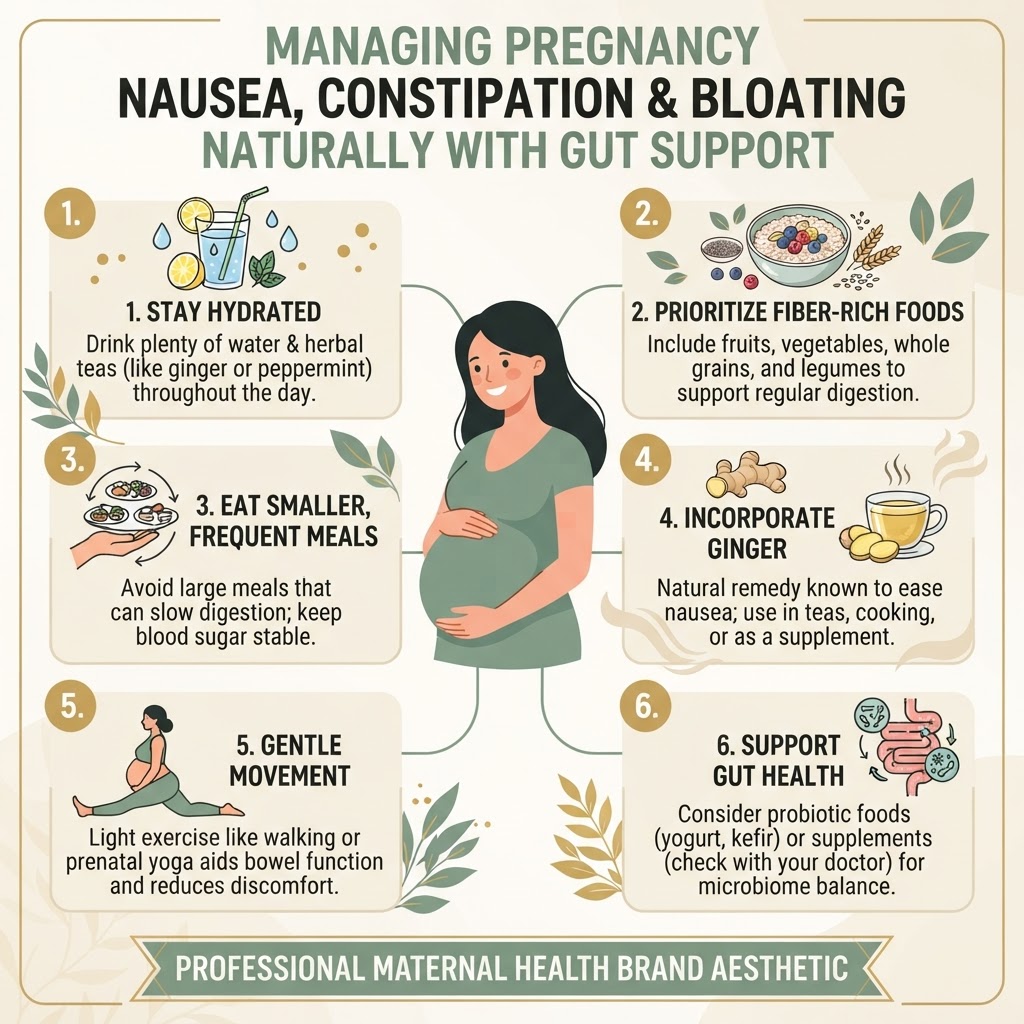
Fibre is your best friend for constipation. Aim for 25–30g daily, incorporating both soluble fibre (oats, flaxseed, apple, psyllium husk) and insoluble fibre (leafy greens, wholegrains, carrots). Soluble fibre feeds beneficial gut bacteria and softens stool, while insoluble fibre adds bulk and stimulates motility.
Fermented foods introduce beneficial bacteria. Natural yoghurt with live cultures, kefir, sauerkraut, and kimchi all contribute to microbial diversity. Even small, regular amounts can be meaningful.
Ginger is genuinely evidence-based for nausea. A systematic review published in the British Journal of Anaesthesia confirmed ginger's efficacy in reducing nausea, and it works in part through gut-mediated pathways. Fresh ginger tea, ginger biscuits, or ginger in cooking are all valuable tools.
Hydration is non-negotiable. Dehydration dramatically worsens constipation. Warm water with lemon first thing in the morning can gently stimulate gut motility.
Eat little and often. Large meals overwhelm a sluggish digestive system. Smaller, more frequent meals reduce the burden on your gut and can significantly reduce nausea episodes.
Why Supplementation Matters
Even with the best dietary intentions, pregnancy is a state of increased nutritional demand that food often cannot fully meet — particularly when nausea, food aversions, and fatigue are real barriers. This is where targeted, science-formulated supplementation becomes genuinely valuable.
PregBiotics Essentials was specifically formulated to address the gut health needs of pregnancy, combining clinically studied probiotic strains with complementary nutrients in a single, pregnancy-safe supplement. Key components include:
- Lactobacillus rhamnosus GG — one of the most extensively studied probiotic strains in pregnancy; shown to reduce gut permeability and support immune balance
- Lactobacillus reuteri — demonstrated benefits in reducing gut discomfort and supporting intestinal motility
- Bifidobacterium longum — important for microbial diversity and reducing gut inflammation; levels naturally decline in pregnancy
- Bifidobacterium lactis — supports bowel regularity and has been studied for its role in reducing bloating
- Prebiotic fibre (FOS/Inulin) — feeds and sustains the probiotic strains, amplifying their efficacy
- Ginger extract — standardised to active gingerols, providing consistent anti-nausea support
- Magnesium — gently supports gut motility and helps counteract the constipating effects of iron supplementation
- Vitamin D3 — supports gut-immune crosstalk and microbiome diversity
Expert Tips and Actionable Advice: What You Can Do Starting Today
As a clinician, I understand that abstract science only helps when it translates into things you can actually do. Here are my top evidence-informed recommendations:
-
Start your day with warm water before anything else. A glass of warm (not cold) water, optionally with a slice of fresh lemon or ginger, helps gently stimulate your digestive system and kick-starts motility before you've eaten.
-
Take your probiotic consistently, ideally with food. Consistency is what builds lasting microbial change. Taking PregBiotics Essentials with a meal — particularly breakfast or lunch — improves bacterial survival through the stomach acid environment.
-
Move your body every day. Even a 15–20 minute gentle walk can meaningfully stimulate gut motility. Yoga poses like child's pose and supine twists are particularly effective for relieving bloating. Always check with your midwife or obstetrician about exercise suitability.
-
Try eating cold or room-temperature foods during nausea peaks. Hot food releases more aromas, which can trigger nausea. Cold foods — plain crackers, cold fruit, chilled yoghurt — are often better tolerated.
-
Increase fibre gradually. If you're not used to a high-fibre diet, adding too much too quickly will worsen bloating. Increase by one or two servings per week, always alongside increased fluid intake.
-
Elevate the head of your bed slightly. If reflux is accompanying your bloating and nausea, a slight elevation (15–20cm) can reduce nighttime discomfort significantly.
-
Keep a simple symptom diary. Tracking what you eat and how you feel can reveal personal triggers. Some women find that cruciferous vegetables, beans, or carbonated drinks significantly worsen their bloating — even if these foods are nutritious. Timing matters, and so does individuality.
-
Don't skip meals, even when nausea is bad. An empty stomach often worsens nausea because stomach acid has nothing to act on. A few plain crackers or a small portion of something bland can take the edge off significantly.
-
Be cautious with iron timing. If you're prescribed iron supplements, try taking them with food and ask your doctor about switching to a gentler form (such as ferrous gluconate or liquid iron) if constipation is severe.
-
Lean into the community. Pregnancy can feel isolating when you're unwell. Our Pregnancy Gut Guide offers personalised symptom tracking and trimester-specific guidance to help you feel less alone and more in control.
When to Seek Medical Advice
While the strategies in this article are safe and evidence-based, there are situations where digestive symptoms during pregnancy require prompt medical attention. As always, I encourage every mother to maintain open communication with her obstetrician, midwife, or GP.
Please seek medical advice promptly if you experience:
- Nausea and vomiting so severe that you cannot keep fluids down for 24 hours or more (this may indicate hyperemesis gravidarum, a serious condition requiring medical treatment)
- Signs of dehydration: dark urine, dizziness, rapid heartbeat, or feeling faint
- Blood in your stool or black, tarry stools
- Constipation lasting more than one week despite dietary changes
- Severe abdominal pain or cramping that is not relieved by position changes
- Significant unexplained weight loss during pregnancy
- Any new or worsening symptoms that concern you
The NHS guidance on vomiting in pregnancy provides a helpful overview of when symptoms cross from common discomfort into clinical concern. There is never a threshold too low for reaching out to your healthcare provider during pregnancy — your instincts matter, and your symptoms deserve to be taken seriously.
Conclusion
Pregnancy is one of the most profound experiences of a woman's life, and it deserves to be supported with the best that science and compassionate care have to offer. The nausea, constipation, and bloating that affect so many pregnant women are not signs of weakness or something to simply push through — they are physiological signals from a gut that is under enormous, hormonally-driven pressure.
The emerging science is clear: your gut microbiome is central to your pregnancy wellbeing. Nurturing it with the right probiotic strains, prebiotic fibre, nausea-targeted botanicals, and smart dietary habits can meaningfully reduce the burden of these symptoms — and in doing so, support not just your comfort, but your baby's long-term health as well.
What gives me the greatest hope, both as a doctor and as someone who has sat across from countless women who felt unheard about their digestive symptoms, is that these are not intractable problems. With the right knowledge and the right tools, most women experience genuine, lasting improvement.
PregBiotics Essentials was created with exactly this in mind — to give you a safe, science-backed, trimester-appropriate gut health foundation, formulated by someone who understands pregnancy from both the clinical and the human perspective.
You deserve to feel as well as possible during this extraordinary chapter. Start with your gut. It will take you further than you think.
For more evidence-based guidance on maternal health, gut wellbeing, and the science behind what your body is doing during pregnancy, explore The PregBiotics Journal — where every article is written with the same commitment to your health, your intelligence, and your experience as a mother.
With warmth and clinical commitment, Dr. Chomba Chuma, MD Founder, PregBiotics
This article is intended for informational purposes only and does not constitute medical advice. Always consult your healthcare provider before making changes to your supplementation or healthcare routine during pregnancy.
Get the PregBiotics Journal in your inbox
Gut-smart guidance for conception, pregnancy and breastfeeding — twice a week, plus member-only offers. Unsubscribe anytime.
You deserve to feel beautifully supported.
Join thousands of mothers on the PregBiotics journey. Receive your free Pregnancy Prep Guide and gentle, science-backed wisdom — tailored to where you are right now.