Managing Pregnancy Nausea, Constipation and Bloating Naturally With Gut Support
*By Dr. Chomba Chuma, MD & Founder | PregBiotics Journal* --- Picture this: It's 7am. You haven't even made it to the kitchen yet, and the smell of your partner's coffee — the same coffee you used to love — sends you sprinting to the bathroom. By 10am, you're bloated enough to have loosened your wa
Dr. Chomba Chuma, MD & Founder
MD & Founder, PregBiotics

Managing Pregnancy Nausea, Constipation and Bloating Naturally With Gut Support
By Dr. Chomba Chuma, MD & Founder | PregBiotics Journal
When Your Body Feels Like a Stranger: The Digestive Reality of Pregnancy
Picture this: It's 7am. You haven't even made it to the kitchen yet, and the smell of your partner's coffee — the same coffee you used to love — sends you sprinting to the bathroom. By 10am, you're bloated enough to have loosened your waistband. By afternoon, you realise you haven't had a proper bowel movement in four days. And somehow, you're still expected to be glowing.
If any of that sounds familiar, you are not alone. Studies suggest that up to 80% of pregnant women experience nausea or vomiting, particularly in the first trimester, while constipation affects approximately 40% of pregnancies and bloating is reported by the vast majority of expectant mothers at some stage. These aren't just minor inconveniences — for many women, they are daily struggles that affect sleep, nutrition, work, and emotional wellbeing.
What surprises many of my patients is that these three very different-seeming symptoms often share a common root: the gut. More specifically, changes in the gut microbiome — the trillions of bacteria, fungi, and other microorganisms living in your digestive tract — play a central and underappreciated role in how your body responds to pregnancy.
In this article, I want to walk you through the science behind pregnancy nausea gut changes, constipation, and bloating, explain why your digestive system behaves so differently during pregnancy, and show you how supporting your gut naturally — through diet, lifestyle, and targeted supplementation — can make a meaningful difference. This is the conversation I wish more pregnant women were having with their care teams from day one.
The Biology Behind the Discomfort: What's Really Happening in Your Gut
To understand why digestive symptoms are so common in pregnancy, we need to look at what is simultaneously happening hormonally, neurologically, and microbially.
The Hormone Effect
From the moment of implantation, your body begins producing significantly elevated levels of human chorionic gonadotropin (hCG) — the hormone detected by pregnancy tests. Research published in the American Journal of Obstetrics and Gynecology has associated peak hCG levels with peak nausea severity, which is why morning sickness is worst in weeks 6–12 and typically improves as hCG levels plateau.
Rising progesterone — the hormone responsible for maintaining the uterine lining — acts as a smooth muscle relaxant throughout the body. While this is essential for preventing premature uterine contractions, it also slows motility in the entire gastrointestinal tract. The result? Food moves through your intestines more slowly, which increases water absorption from stool, leading to constipation pregnancy symptoms, and allows more time for gas to accumulate — contributing directly to bloating.
The Gut-Brain Axis: More Connected Than You Think
The gut is often called the "second brain" because it contains over 500 million neurons forming the enteric nervous system. During pregnancy, hormonal surges disrupt the delicate signalling between the gut and the central nervous system — a pathway known as the gut-brain axis. This disruption affects the release of serotonin (approximately 90% of which is produced in the gut), nausea regulation, and appetite control, all contributing to the misery of morning sickness gut health disruption.
Your Microbiome Is Changing — Intentionally
Here is something that genuinely fascinates me as both a physician and a researcher: your gut microbiome undergoes significant, documented shifts during a healthy pregnancy. A landmark study published in Cell found that the diversity and composition of the maternal microbiome change considerably across trimesters, with an increase in certain bacteria that support energy extraction and immune tolerance — traits that are beneficial for the growing baby but can worsen digestive symptoms for the mother.
These microbial shifts affect:
- Gut transit time — how quickly food moves through the intestine
- Gas production — certain bacterial populations produce more hydrogen and methane
- Intestinal permeability — often called "leaky gut," this can heighten inflammatory responses and nausea sensitivity
- Immune regulation — critical for tolerance of the foetus but also linked to inflammatory gut symptoms
Understanding this biology is not about alarm — it is about empowerment. When you know why your body is behaving this way, you can work with it rather than against it.
What This Means For You: Connecting the Science to Your Daily Experience
So what does all of this actually look like in real life? Let me translate the research into something more tangible.
Nausea Is Not "Just in Your Head"
The morning sickness gut health connection is real and physiological. When the microbiome shifts and gut motility slows, the stomach empties more slowly — a condition called gastric delay. This means food sits in your stomach longer, increasing the likelihood of nausea, reflux, and that permanent feeling of fullness. The connection between gut dysbiosis (an imbalance in gut bacteria) and nausea severity is an active area of research, with some studies suggesting that women with greater microbiome diversity experience less severe nausea.
Why Bloating Feels So Much Worse
Bloating pregnancy remedies need to address the root cause, not just the symptom. Elevated progesterone slows the entire GI tract, giving bacteria more time to ferment undigested food — producing gas. Meanwhile, the growing uterus physically compresses the intestines, reducing the space available for normal digestive movement. Some key contributors to bloating that I see in my patients include:
- Eating too quickly — swallowing excess air during meals
- High-FODMAP foods — fermentable carbohydrates like onions, beans, and wheat that feed gas-producing bacteria
- Iron supplementation — many standard prenatal vitamins contain poorly absorbed forms of iron that cause significant GI distress
- Reduced physical activity — common in the first trimester due to fatigue, which further slows gut motility
Constipation Is More Than Uncomfortable
Infrequent bowel movements during pregnancy are not just unpleasant — they can have real consequences. Chronic straining increases the risk of haemorrhoids, which affect up to 35% of pregnant women. Impacted stool can also worsen bloating and nausea by creating a backlog of fermentation and gas in the intestinal tract. Constipation pregnancy probiotics are one tool I frequently discuss with my patients precisely because addressing the microbiome can improve motility naturally, without the risks associated with some laxatives.
Signs your digestive symptoms may have a gut microbiome component:
- Nausea that is worse in the morning before eating
- Bloating that begins within 30 minutes of a meal
- Constipation alternating with loose stools
- Persistent food aversions, even to previously enjoyed foods
- Fatigue that is disproportionate even for pregnancy
For a deeper understanding of how the gut microbiome affects your pregnancy journey, I encourage you to explore our Pregnancy Gut Guide — a free, evidence-based resource I created specifically for expectant mothers.
The Role of Nutrition and Supplementation: Building a Gut-Friendly Pregnancy
This is where we move from understanding to action. Gut support during pregnancy is not about restrictive diets or complicated protocols. It is about giving your microbiome — and your body — what they need to function well under genuinely demanding circumstances.
Food First: The Foundation of Gut Health
Before we talk about supplements, let us talk about diet. A few principles I recommend to every patient:
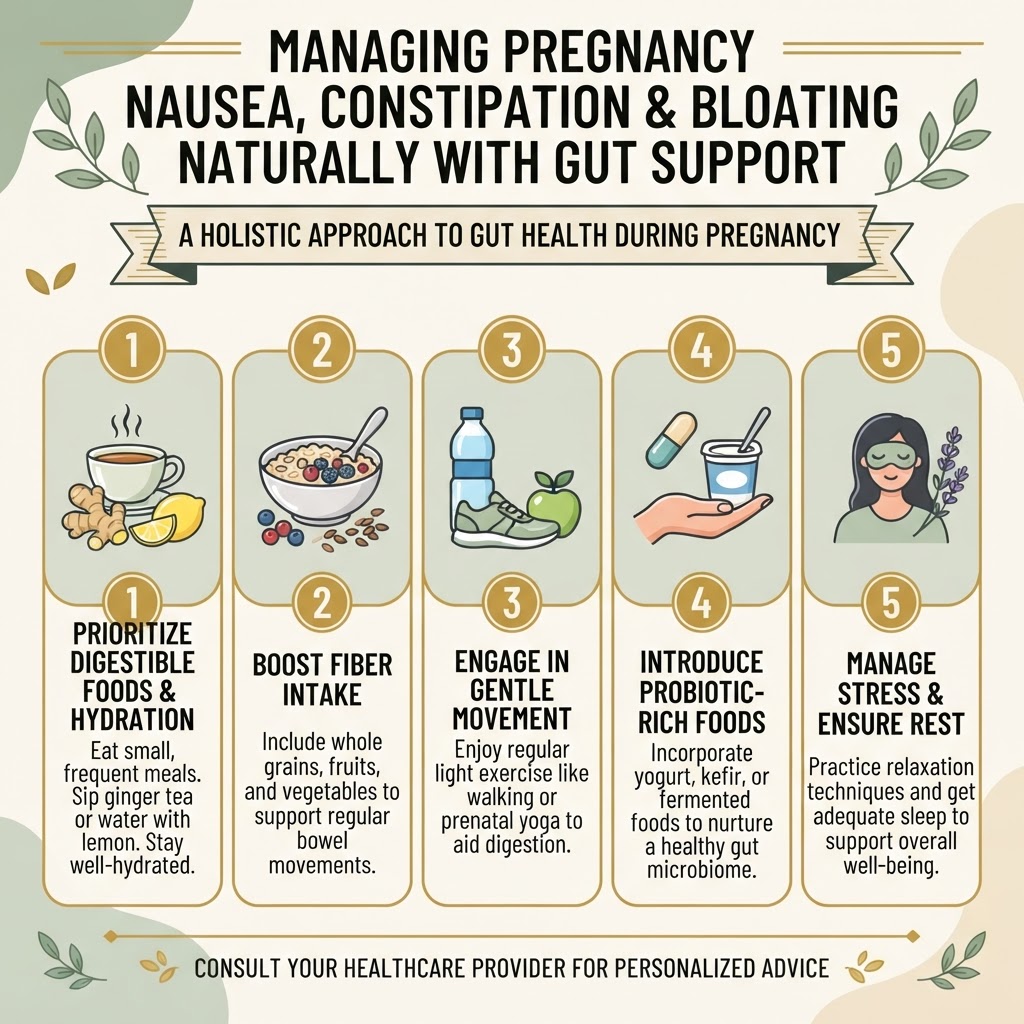
- Eat smaller, more frequent meals — this helps with both gastric delay and nausea, keeping blood sugar stable and reducing the pressure on a slowed digestive system
- Prioritise soluble fibre — oats, sweet potato, bananas, and flaxseeds feed beneficial gut bacteria and soften stool, directly addressing digestive issues pregnancy symptoms
- Stay consistently hydrated — dehydration is one of the biggest drivers of constipation; aim for 2–2.5 litres of water daily
- Include fermented foods — live yoghurt, kefir, and miso introduce beneficial bacteria, supporting microbiome diversity
- Limit ultra-processed foods — these disrupt the microbiome and contribute to inflammation and dysbiosis
Where Supplementation Becomes Essential
Diet alone, while critical, often cannot fully correct the microbiome disruption of pregnancy — particularly when food aversions, nausea, and fatigue make eating well a genuine challenge. This is where a scientifically formulated maternal supplement becomes not a luxury but a genuine clinical tool.
PregBiotics Essentials was formulated specifically to address the microbiome needs of pregnant women, combining clinically studied probiotic strains with prebiotic support and key micronutrients — all in forms that are gentle on an already sensitive digestive system.
Key components and their roles:
- Lactobacillus rhamnosus GG — one of the most extensively studied probiotic strains in pregnancy; supports gut barrier integrity, reduces constipation, and has been shown to reduce nausea severity in some studies
- Bifidobacterium longum — helps regulate bowel transit time and reduce intestinal gas production, directly addressing bloating pregnancy remedies
- Lactobacillus acidophilus — supports the vaginal and gut microbiome, with emerging evidence for reducing pregnancy nausea gut symptoms
- Prebiotic inulin (FOS) — feeds beneficial bacteria already present in the gut, amplifying the effect of probiotics without stimulating gas-producing bacterial strains
- Gentle, chelated iron — unlike ferrous sulphate found in many standard prenatals, chelated iron has significantly lower rates of GI side effects including constipation and nausea
- Vitamin B6 (pyridoxine) — well-established in the clinical literature for reducing nausea severity; the NHS recommends B6 as a first-line dietary approach to morning sickness management
- Magnesium — supports smooth muscle function in the bowel, helping counteract the constipating effects of progesterone
The combination of these ingredients is what differentiates PregBiotics Essentials from a standard prenatal multivitamin — it is designed to work with the gut microbiome, not just alongside it.
Expert Tips and Actionable Advice: What You Can Start Today
I want to give you practical, evidence-informed strategies that you can implement immediately — regardless of where you are in your pregnancy.
-
Take your probiotic supplement consistently, not sporadically. Microbiome support requires regularity. I recommend taking PregBiotics Essentials with a small amount of food in the morning to improve tolerability and consistency.
-
Eat ginger intentionally. Ginger has genuine clinical evidence behind it for nausea — a Cochrane review found it to be more effective than placebo for pregnancy-related nausea. Fresh ginger tea, ginger chews, or adding it to smoothies are all effective delivery methods.
-
Move your body, even gently. A 15–20 minute walk after meals stimulates gut motility, reduces bloating, and improves constipation more effectively than many people realise. You do not need a workout — you need movement.
-
Elevate the head of your bed by 15–20cm. If reflux and nausea are waking you at night, gravity is your friend. This simple adjustment can significantly reduce overnight symptoms.
-
Avoid lying down immediately after eating. Give yourself at least 45–60 minutes upright after meals to allow gravity to assist gastric emptying.
-
Identify your personal trigger foods. Keep a brief food and symptom diary for one week. Common triggers include fatty foods, spicy foods, caffeine, carbonated drinks, and high-FODMAP vegetables. The pattern will often become obvious quickly.
-
Opt for warm rather than cold water. Warm or room-temperature water is easier on a sluggish gut than cold water, and many of my patients find it significantly less nauseating first thing in the morning.
-
Do not skip meals to avoid nausea — do the opposite. An empty stomach is often more nauseating than a gently filled one. Keep plain crackers, oat cakes, or a banana by the bed and eat something small before you even sit up in the morning.
-
Consider your probiotic strain specificity. Not all probiotics are equivalent. Constipation pregnancy probiotics need to include strains with evidence for motility — particularly Bifidobacterium species and Lactobacillus rhamnosus.
-
Reduce stress where possible — and take it seriously. Chronic stress raises cortisol, which directly disrupts the gut-brain axis and can worsen all three symptoms. Even brief mindfulness practices, gentle yoga, or adequate sleep make a measurable difference to gut function.
When to Seek Medical Advice: Knowing the Boundaries
While the strategies in this article are safe and evidence-based, it is essential to know when your symptoms require medical evaluation. Natural gut support is a complement to antenatal care — never a replacement.
Please contact your midwife, GP, or obstetrician promptly if you experience:
- Hyperemesis gravidarum — severe, persistent vomiting that prevents you from keeping any food or liquid down, or causes significant weight loss
- Signs of dehydration — dark urine, dizziness, rapid heartbeat, or decreased urination
- Constipation lasting more than one week despite dietary changes
- Blood in the stool — which may indicate haemorrhoids but should always be assessed
- Severe abdominal pain — particularly if it is localised, sharp, or accompanied by fever
- Bloating with significant pain — which may indicate conditions unrelated to pregnancy that require investigation
The WHO guidance on nutrition during pregnancy and your individual antenatal team should always be your primary point of guidance. I encourage all mothers using PregBiotics Essentials to inform their healthcare provider, particularly if they are under investigation for GI conditions or are taking other medications.
You Deserve to Feel Well in Your Pregnancy: A Closing Word From Me
Pregnancy is extraordinary. It is also, for many women, genuinely hard — and the physical discomforts of nausea, constipation, and bloating can cast a long shadow over what should be a meaningful and joyful time. My deepest hope, both as a physician and as someone who has dedicated my career to maternal gut health, is that more pregnant women will come to understand that these symptoms are not inevitable, and that they are not something to simply push through.
Your gut microbiome is one of the most powerful systems in your body. It communicates with your immune system, your brain, your hormones, and your baby. Supporting it with the right nutrition, habits, and supplementation is not a trend — it is science-led, compassionate maternal care.
The key takeaways from this article are simple: digestive issues in pregnancy have real biological roots in hormonal change and microbiome disruption; diet and lifestyle form the foundation of gut support; and targeted supplementation with PregBiotics Essentials can provide the specific probiotic strains, prebiotic support, and micronutrients that make a clinically meaningful difference to how you feel day to day.
You deserve to feel as well as possible while growing a new life. That is not asking too much — it is asking for exactly the right thing.
To explore more evidence-based guidance on pregnancy gut health, visit The PregBiotics Journal — where every article is written with the same care and scientific rigour I would bring to a consultation.
Wishing you a well-supported, well-nourished pregnancy.
Dr. Chomba Chuma, MD Founder, PregBiotics
The information in this article is intended for educational purposes only and does not constitute medical advice. Always consult your healthcare provider before starting any new supplement during pregnancy.
Get the PregBiotics Journal in your inbox
Gut-smart guidance for conception, pregnancy and breastfeeding — twice a week, plus member-only offers. Unsubscribe anytime.
You deserve to feel beautifully supported.
Join thousands of mothers on the PregBiotics journey. Receive your free Pregnancy Prep Guide and gentle, science-backed wisdom — tailored to where you are right now.