Managing Pregnancy Nausea, Constipation and Bloating Naturally With Gut Support
*By Dr. Chomba Chuma, MD & Founder | PregBiotics Journal* --- Picture this: It's 7am, and before your feet have even touched the floor, a wave of nausea washes over you. You drag yourself to the kitchen, manage half a cracker, and spend the next hour feeling like your stomach has declared war on th
Dr. Chomba Chuma, MD & Founder
MD & Founder, PregBiotics

Managing Pregnancy Nausea, Constipation and Bloating Naturally With Gut Support
By Dr. Chomba Chuma, MD & Founder | PregBiotics Journal
When Your Gut Takes Over: Understanding Digestive Discomfort in Pregnancy
Picture this: It's 7am, and before your feet have even touched the floor, a wave of nausea washes over you. You drag yourself to the kitchen, manage half a cracker, and spend the next hour feeling like your stomach has declared war on the rest of your body. By afternoon, the bloating has set in — that tight, uncomfortable pressure that makes your maternity waistband feel like a vice. And somewhere in the background, you realise you haven't had a proper bowel movement in four days.
If this sounds familiar, you are not alone. Studies estimate that up to 80% of pregnant women experience nausea and vomiting, particularly in the first trimester, while constipation affects approximately 40% of pregnancies and bloating is reported by the vast majority of expectant mothers at some point across all three trimesters. These are not minor inconveniences — they are daily challenges that affect your mood, your nutrition, your sleep, and your overall quality of life during one of the most important seasons of your life.
What many women don't realise is that these three symptoms — nausea, constipation, and bloating — are deeply interconnected, and much of that connection runs through your gut. More specifically, the health of your gut microbiome plays a far more significant role in pregnancy digestive issues than most conventional pregnancy advice acknowledges.
In this article, I want to walk you through the science of what's actually happening in your digestive system during pregnancy, why your gut health is at the centre of it all, and — most importantly — what you can do about it naturally and safely. Because you deserve to feel better, and the tools to help you do that are more accessible than you might think.
The Biology Behind the Discomfort: What Pregnancy Does to Your Gut
To truly understand pregnancy digestive discomfort, we need to go beneath the surface symptoms and look at what is biologically unfolding inside your body.
Hormones: The Primary Drivers
From the moment of implantation, your body begins a hormonal revolution. Human chorionic gonadotropin (hCG) — the hormone detected by pregnancy tests — rises sharply in the first trimester and is strongly associated with the onset of morning sickness. Researchers believe hCG acts on the chemoreceptor trigger zone in the brain, which controls nausea and vomiting, though the precise mechanism is still being studied. Importantly, elevated hCG levels also signal a viable, hormonally active pregnancy, which is why severe morning sickness, while miserable, is often an indicator of a thriving pregnancy.
Meanwhile, progesterone — your body's pregnancy-sustaining hormone — has a profound relaxing effect on smooth muscle tissue throughout the body. This is essential for preventing uterine contractions, but it comes at a cost: the smooth muscle of your entire gastrointestinal tract slows down too. The result is reduced gut motility, meaning food and waste move through your digestive system far more slowly than usual. This slowing is a primary driver of both constipation and bloating in pregnancy.
As your pregnancy progresses into the second and third trimesters, the growing uterus physically compresses the intestines and stomach, adding mechanical pressure to an already sluggish gut.
The Gut-Brain Axis and Morning Sickness
The connection between pregnancy nausea and gut health runs deeper than most people appreciate. Your gut and brain are in constant two-way communication via the gut-brain axis — a bidirectional highway involving the vagus nerve, the enteric nervous system (often called the "second brain"), and a cascade of neurotransmitters and immune signals. A significant proportion of the body's serotonin, which regulates nausea pathways, is produced in the gut.
When your gut microbiome is disrupted — as it frequently is during pregnancy due to hormonal changes, dietary shifts, and increased stress — this communication network becomes dysregulated. Research published in Cell Host & Microbe has demonstrated that the gut microbiome undergoes significant compositional changes across the trimesters of pregnancy, with a notable reduction in microbial diversity. This dysbiosis (imbalance of gut bacteria) can amplify nausea signals, worsen gut transit time, and increase intestinal gas production — contributing directly to all three of the digestive issues we're discussing.
The Microbiome Shift
What's particularly compelling from a scientific standpoint is that pregnancy-associated microbiome changes are not random. There is an increase in bacteria associated with inflammation and a decrease in beneficial strains like Lactobacillus and Bifidobacterium — the very bacteria responsible for maintaining gut barrier integrity, modulating immunity, and supporting healthy digestion. This creates a domino effect: lower beneficial bacteria means poorer fermentation of dietary fibre, increased gas production, slower transit time, and a less resilient gut lining — all of which make constipation, bloating, and nausea worse.
Understanding this gives us a clear, science-backed target for intervention: supporting and restoring the gut microbiome.
What This Means For You: Connecting the Science to Your Daily Experience
So what does all of this actually look like in your day-to-day pregnancy experience? Let's bring the biology down to earth.
When you're dealing with pregnancy nausea and gut disruption in the early weeks, it's not just about hCG triggering your brain's nausea centre in isolation. Your slowed gut transit means that stomach contents linger longer, increasing acid reflux and the sensation of fullness that triggers nausea. A compromised gut microbiome produces more gas and metabolic by-products that can further irritate the gut lining and worsen nausea signals via the gut-brain axis.
When it comes to constipation in pregnancy, the experience is layered:
- Progesterone slows your entire GI tract, meaning stool spends more time in the colon, where water is reabsorbed — making it harder and more difficult to pass
- Iron supplementation (commonly recommended in pregnancy) is a well-known contributor to constipation and can further disrupt gut bacteria composition
- Reduced physical activity, which is common particularly in the first trimester when fatigue is overwhelming, removes one of the natural stimulants of gut motility
- Inadequate fluid intake — often because drinking water triggers nausea — compounds the problem significantly
- Dysbiosis means fewer beneficial bacteria are available to produce the short-chain fatty acids (SCFAs) that help regulate colon contraction and stool consistency
For bloating pregnancy remedies, it's important to understand that much of the gas and distension you feel is a direct consequence of fermentation happening in an imbalanced gut. When beneficial bacteria decline, opportunistic bacteria proliferate and produce excess hydrogen and methane gas as they ferment undigested food. Add to this the mechanical compression of the growing uterus, and bloating can feel constant and relentless.
The good news — and I say this as both a doctor and someone who has spoken with hundreds of pregnant women — is that because these symptoms share a common root in gut disruption, supporting your gut health holistically can address all three simultaneously. This is not about masking symptoms. It's about addressing the underlying imbalance.
For a comprehensive overview of how your gut changes throughout pregnancy and what to do about it, I'd encourage you to explore our Pregnancy Gut Guide, which covers these changes trimester by trimester.
The Role of Nutrition and Supplementation in Gut-Supported Pregnancy
This is where we move from understanding to action. Supporting your gut during pregnancy is one of the most impactful things you can do for your digestive comfort — and the evidence base for doing so is growing rapidly.
Dietary Foundations
Before we talk supplementation, nutrition matters enormously. A few foundational principles:
- Fibre diversity: Aim for a wide variety of plant foods — fruits, vegetables, legumes, wholegrains — to feed beneficial gut bacteria. However, introduce high-fibre foods gradually if your gut is already irritated, as sudden increases can worsen bloating
- Fermented foods: Foods like plain yoghurt, kefir, sauerkraut, and kimchi naturally introduce beneficial bacteria into the gut, though many women find strong-flavoured fermented foods difficult to tolerate during the first trimester
- Hydration: Adequate water intake is essential for preventing and relieving constipation. Small, frequent sips are often better tolerated than large amounts, particularly when nausea is present
- Small, frequent meals: Large meals slow gastric emptying and worsen nausea. Eating every two to three hours keeps blood sugar stable and reduces the likelihood of nausea spikes
- Ginger: Well-supported by clinical evidence as a safe and effective remedy for pregnancy nausea — ginger tea, ginger biscuits, or ginger supplements can provide meaningful relief
The Case for Targeted Supplementation
Diet alone is often insufficient during pregnancy, particularly given the significant microbiome disruption, the nutritional demands of the developing baby, and the very real limitations that nausea itself places on food intake. This is where targeted supplementation becomes genuinely valuable.
PregBiotics Essentials was specifically formulated to address exactly this gap. Unlike generic probiotics or standard prenatal vitamins, PregBiotics Essentials is built around the specific microbiome and nutritional needs of pregnancy — combining clinically studied probiotic strains with targeted prebiotics and key micronutrients.
Key components and their roles include:
- Lactobacillus rhamnosus GG — one of the most studied probiotic strains in pregnancy, shown to support gut barrier function and reduce intestinal permeability
- Bifidobacterium longum — helps restore the pregnancy-associated decline in Bifidobacterium, supports healthy bowel transit time, and reduces bloating
- Lactobacillus acidophilus — supports a healthy gut pH, reduces gas-producing bacteria, and has been associated with reduced digestive discomfort in pregnancy
- Prebiotic inulin/FOS (fructooligosaccharides) — selectively feeds beneficial bacteria, supporting SCFA production and improving stool consistency naturally
- Ginger root extract — included at a clinically meaningful dose to directly address morning sickness gut discomfort
- Magnesium — supports smooth muscle relaxation in the gut and has a gentle osmotic effect that supports healthy bowel motility, reducing constipation
- Folate (5-MTHF) — the bioactive form of folate, essential for foetal neural tube development and well-tolerated even when nausea is present
The WHO guidelines on nutrition in pregnancy consistently highlight the importance of micronutrient support during pregnancy, and an increasing body of evidence supports the role of probiotics in reducing gastrointestinal symptoms specifically.
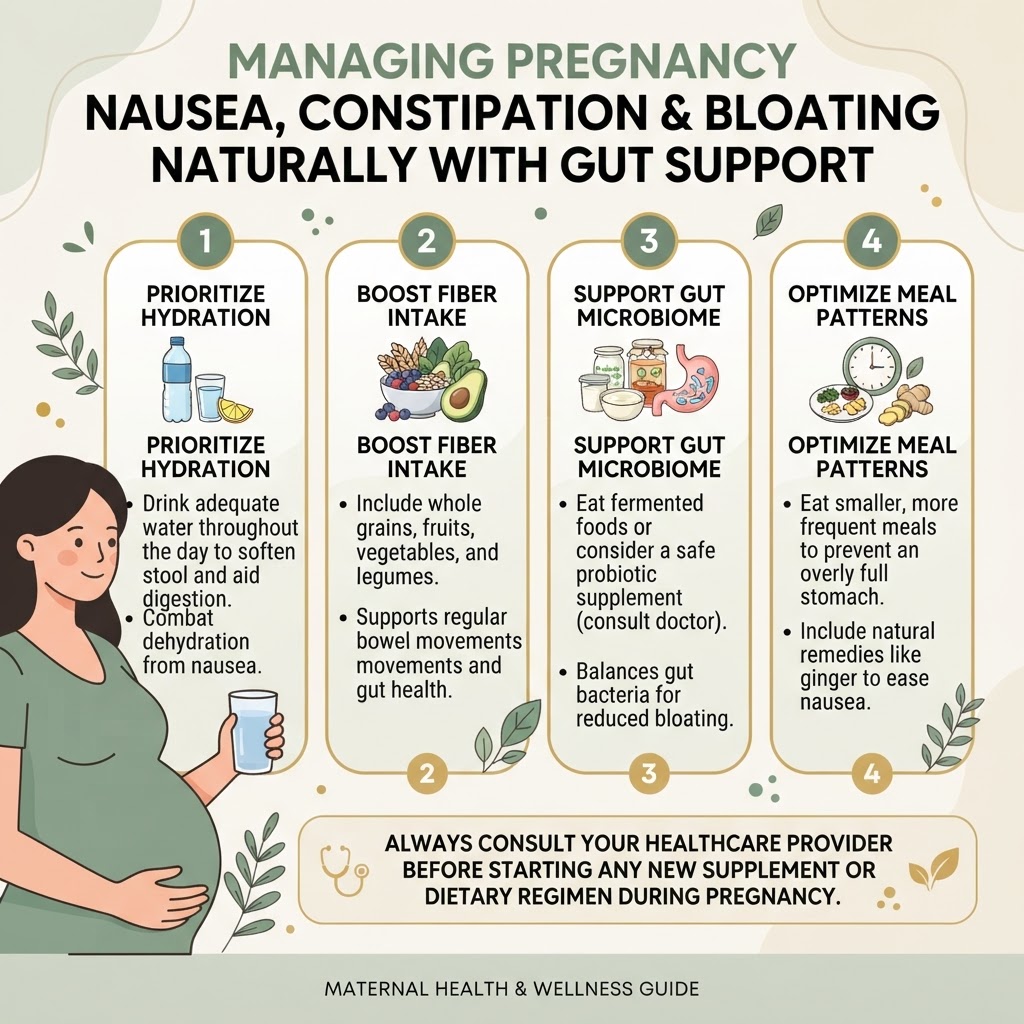
Infographic: "The Pregnancy Gut Triangle — How Nausea, Constipation & Bloating Are Connected Through Your Microbiome" — showing the three symptoms, their shared root causes, and the targeted interventions that address all three
Expert Tips: Practical Strategies for Everyday Relief
Here are the strategies I recommend most consistently to the pregnant women I work with — evidence-informed, practical, and safe:
-
Start your morning before the nausea starts. Keep plain crackers or a small, dry snack on your bedside table and eat something small before you even sit up in the morning. Rising on an empty stomach dramatically worsens nausea.
-
Take your PregBiotics Essentials consistently, preferably with a meal. Consistency matters enormously with probiotics — the benefits are cumulative, and it typically takes two to four weeks of daily use to see meaningful microbiome shifts.
-
Move your body gently every day. Even a 15–20 minute gentle walk stimulates gut motility and can meaningfully reduce both constipation and bloating. Swimming and prenatal yoga are also excellent choices that are gentle on the changing body.
-
Use positioning to your advantage. After meals, avoid lying down flat for at least 30 minutes. Sitting upright or taking a short walk helps move food through the digestive tract and reduces reflux, which worsens nausea.
-
Prioritise hydration between meals rather than with meals. Drinking large amounts of fluid during meals dilutes digestive enzymes and can worsen bloating and slow gastric emptying. Drink water consistently between meals instead.
-
Identify and temporarily limit your personal bloating triggers. Common culprits include carbonated drinks, raw cruciferous vegetables (broccoli, cauliflower, cabbage), beans and lentils in large quantities, and high-fructose fruits. Cooking vegetables rather than eating them raw can significantly reduce their gas-producing potential.
-
Consider warm liquids in the morning. Warm water with lemon or ginger tea can gently stimulate gut motility and ease morning nausea — a simple, accessible, and evidence-supported strategy.
-
Address constipation proactively, not reactively. Don't wait until you're uncomfortable to act. Daily prebiotic fibre, adequate hydration, movement, and a consistent probiotic protocol are far more effective as prevention than as emergency measures.
-
Rest, but don't become sedentary. Fatigue in early pregnancy is real and significant — honour it — but complete inactivity worsens constipation and bloating. Finding the balance between rest and gentle movement is key.
-
Track your symptoms. A simple daily note of what you ate, your movement, your water intake, and your symptoms can reveal patterns that help you make more targeted adjustments. Many women are surprised to discover clear correlations once they start paying attention.
When to Seek Medical Advice
While the vast majority of pregnancy nausea, constipation, and bloating is normal and manageable with the approaches outlined above, there are situations where these symptoms warrant prompt medical attention. Please contact your midwife, obstetrician, or GP if you experience any of the following:
- Hyperemesis gravidarum: Severe, persistent vomiting that prevents you from keeping any food or fluid down, leads to weight loss greater than 5% of pre-pregnancy body weight, or results in signs of dehydration (dark urine, dizziness, extreme weakness). This condition affects approximately 1–3% of pregnancies and requires medical management
- No bowel movement for more than one week despite dietary and lifestyle measures
- Blood in your stool or significant rectal pain
- Severe abdominal pain or cramping — particularly if localised or accompanied by fever
- Sudden worsening of bloating with abdominal rigidity
- Signs of dehydration including reduced urination, extreme thirst, or dizziness
Always consult your healthcare provider before starting any new supplement regimen during pregnancy, including probiotics. While probiotics have an excellent safety profile in pregnancy, your individual health circumstances matter.
You Have More Power Over This Than You Think
Pregnancy is a time of extraordinary biological transformation — and with that transformation comes very real physical challenge. Nausea, constipation, and bloating are among the most common and most underestimated discomforts of pregnancy, yet they are far from inevitable or unmanageable.
What I hope you take from this article is a sense of genuine, science-backed empowerment. These symptoms are not random. They have biological roots — in hormonal shifts, in microbiome disruption, in the profound physiological changes your body is navigating to grow a new life. And because they have roots, they respond to targeted, thoughtful intervention.
Supporting your gut microbiome through nourishing food, consistent hydration, gentle movement, and carefully formulated supplementation like PregBiotics Essentials is not a wellness trend or a luxury. It is a clinically meaningful strategy that can make a real difference in how you feel, day to day, throughout your pregnancy.
You deserve to feel as well as possible during this season. Your baby benefits from your wellbeing. And the steps to get there are often more accessible and more natural than you might have imagined.
For more evidence-based guidance on pregnancy gut health, digestive symptoms, and microbiome support, explore the full range of articles at The PregBiotics Journal — written by clinicians, for the mothers who deserve better answers.
Dr. Chomba Chuma, MD, is a physician and the founder of PregBiotics. She is passionate about bridging the gap between cutting-edge gut microbiome science and practical, accessible care for pregnant and postpartum women. The information in this article is intended for educational purposes and does not constitute individual medical advice. Always consult your healthcare provider with specific concerns about your pregnancy.
Get the PregBiotics Journal in your inbox
Gut-smart guidance for conception, pregnancy and breastfeeding — twice a week, plus member-only offers. Unsubscribe anytime.
You deserve to feel beautifully supported.
Join thousands of mothers on the PregBiotics journey. Receive your free Pregnancy Prep Guide and gentle, science-backed wisdom — tailored to where you are right now.