Managing Pregnancy Nausea, Constipation and Bloating Naturally With Gut Support
Picture this: It's 7am and you've barely made it out of bed before the wave of nausea hits. You haven't had a proper bowel movement in four days. Your belly feels so bloated that your maternity jeans — the ones you bought specifically because they were supposed to be comfortable — are already feelin
Dr. Chomba Chuma, MD & Founder
MD & Founder, PregBiotics

Managing Pregnancy Nausea, Constipation and Bloating Naturally With Gut Support
By Dr. Chomba Chuma, MD & Founder | PregBiotics Journal
Introduction
Picture this: It's 7am and you've barely made it out of bed before the wave of nausea hits. You haven't had a proper bowel movement in four days. Your belly feels so bloated that your maternity jeans — the ones you bought specifically because they were supposed to be comfortable — are already feeling tight. And someone, probably with the best of intentions, tells you to "just eat some crackers."
If any of this sounds familiar, you are far from alone. Studies suggest that up to 85% of pregnant women experience nausea and vomiting during the first trimester, while constipation affects approximately 40% of pregnancies, and bloating remains one of the most persistently underreported complaints across all three trimesters. These aren't minor inconveniences — they can significantly affect your quality of life, your nutrition, your sleep, and your emotional wellbeing during one of the most important seasons of your life.
Here's what most people don't tell you: these symptoms are deeply connected to what is happening inside your gut.
In this article, I want to take you beyond the crackers-and-ginger-tea advice and into the real science of why pregnancy disrupts your digestive system so profoundly — and what you can actually do about it. We'll explore the gut-hormone connection, the role of your microbiome, evidence-based strategies for managing pregnancy nausea gut discomfort, and how targeted nutrition and supplementation can make a genuine, meaningful difference.
You deserve more than "it's normal, just get through it." You deserve to understand your body and feel empowered to support it.
The Biology Behind Pregnancy Digestive Symptoms
To understand why so many women struggle with digestive issues in pregnancy, we need to start with the remarkable — and somewhat chaotic — physiological changes that pregnancy sets in motion.
The Hormonal Cascade
From the moment of implantation, your body begins producing human chorionic gonadotropin (hCG), the hormone detected by pregnancy tests. hCG levels peak around weeks 8–10, which is precisely when nausea tends to be at its worst. This is not a coincidence. Research published in the American Journal of Obstetrics and Gynecology has shown a strong correlation between rising hCG levels and the severity of morning sickness gut symptoms, suggesting that hCG directly acts on receptors in the digestive tract and the brain's chemoreceptor trigger zone.
Simultaneously, progesterone — the "pregnancy-maintenance hormone" — rises sharply and stays elevated throughout gestation. Progesterone is a smooth muscle relaxant, which is exactly what the uterus needs to remain relaxed and not contract prematurely. However, your gut is also made of smooth muscle. The result? Slowed gastric emptying, reduced intestinal motility, and a sluggish bowel — the trifecta that underpins both constipation and bloating in pregnancy.
The Gut-Brain Axis in Pregnancy
Your gut and brain are in constant communication via the vagus nerve and a sophisticated network of neurotransmitters — a system scientists call the gut-brain axis. During pregnancy, this bidirectional communication becomes hypersensitive. Serotonin, approximately 95% of which is produced in the gut, plays a critical role in regulating both mood and nausea. Disruptions to the gut microbiome can alter serotonin signalling, potentially amplifying the sensation of morning sickness.
Microbiome Shifts During Pregnancy
Perhaps the most fascinating area of emerging research relates to how profoundly the gut microbiome changes during pregnancy. A landmark study published in Cell Host & Microbe found that the microbial composition of pregnant women shifts dramatically from the first to the third trimester, with a notable reduction in microbial diversity and an increase in certain pro-inflammatory bacterial strains. These changes, while partly adaptive, can contribute to increased intestinal permeability (sometimes called "leaky gut"), heightened gut inflammation, and worsened digestive symptoms.
Iron Supplementation: A Necessary Complicator
It's also worth acknowledging that prenatal iron supplements — which most pregnant women rightly take to prevent anaemia — are a well-known contributor to constipation pregnancy probiotics practitioners frequently need to address. Iron is constipating by nature, and without adequate gut support, supplementation can make an already sluggish bowel considerably worse.
Understanding these interconnected mechanisms is the foundation of everything that follows — because when we treat digestive symptoms in pregnancy, we need to treat the whole system, not just the individual complaint.
What This Means For You: Making the Science Personal
The biology I've just described might feel abstract, but it has very real, daily implications for how you feel in your body during pregnancy. Let me translate this science into something you can actually use.
Your nausea is not "just in your head." The gut-brain axis disruption, the hCG surge, and the microbiome shifts are all real, measurable, biological events. This matters because it means that approaches targeting the gut — not just the brain or the stomach alone — can have a genuine impact on pregnancy nausea gut symptoms.
Your constipation is structural, not a failure. Progesterone-driven gut slowdown is happening to your smooth muscle whether you drink more water or not (though hydration does help). This means that fibre and fluids alone, while important, may not be sufficient — you may need active support to restore motility and microbial balance.
Bloating pregnancy remedies that work address root causes. Most bloating in pregnancy stems from slowed transit time (food sitting in the gut longer, producing more gas) and an imbalanced microbiome that ferments food inefficiently. Treating bloating means improving both.
Here are the key practical implications to carry with you:
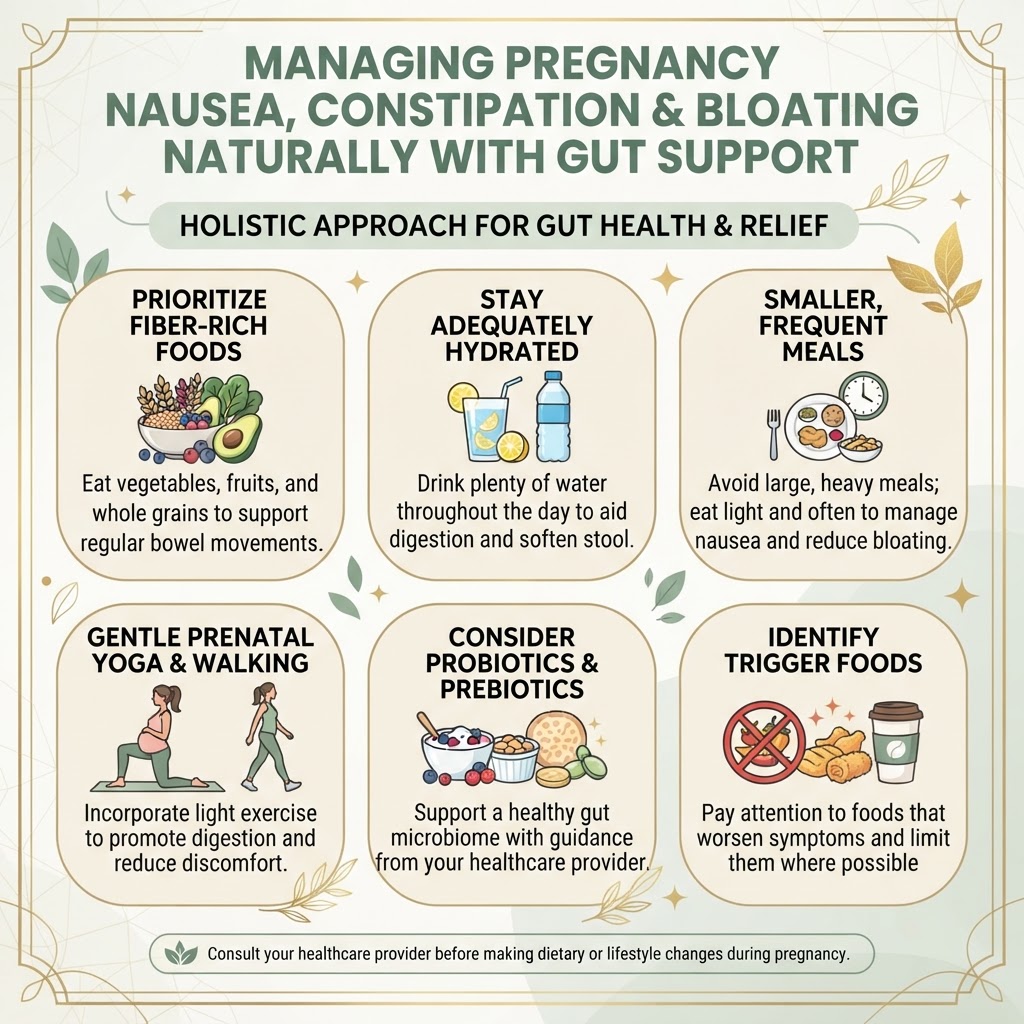
- Timing matters: Nausea is often worst on an empty stomach. Small, frequent meals every 2–3 hours help maintain stable blood sugar and avoid the gastric emptying delays that worsen symptoms.
- Your microbiome needs active replenishment: The natural shift toward reduced microbial diversity during pregnancy means you can't rely on your pre-pregnancy gut alone. Probiotic support becomes increasingly relevant from the first trimester onward.
- Constipation increases toxin recirculation: When stool sits in the colon longer, bacterial byproducts can be reabsorbed — contributing to fatigue, headaches, and worsening nausea. A healthy bowel habit is not just about comfort; it's about systemic wellbeing.
- Bloating and gas affect nutrient absorption: A bloated, inflamed gut is a less efficient gut. This has real implications for how well you absorb the iron, folate, calcium, and omega-3s that your baby urgently needs.
- Stress worsens everything: Cortisol further disrupts the gut-brain axis and can worsen intestinal permeability. Gentle stress-management practices aren't luxuries during pregnancy — they're gut medicine.
If you want to go deeper into understanding your gut during pregnancy, I recommend exploring our Pregnancy Gut Guide, which provides personalised guidance based on your trimester and symptoms.
The Role of Nutrition and Supplementation
Diet is always the foundation, and there are specific nutritional strategies that can meaningfully reduce digestive symptoms during pregnancy. But I want to be honest with you: food alone often isn't enough, particularly when the gut microbiome itself has shifted and the hormonal environment is working against normal digestive function. This is where thoughtful, evidence-based supplementation plays a critical supporting role.
Nutritional Strategies That Help
For nausea:
- Ginger (Zingiber officinale) has clinical evidence supporting its use in reducing pregnancy nausea. 1–1.5g of ginger per day in food or supplement form is considered safe and effective.
- Vitamin B6 (pyridoxine) is recommended by the NHS as a first-line supplement for morning sickness and is included in quality prenatal formulations.
- Protein-rich snacks before bed and upon waking can stabilise blood sugar overnight and reduce morning sickness gut symptoms upon rising.
For constipation:
- Soluble fibre from oats, flaxseed, and legumes softens stool and feeds beneficial gut bacteria.
- Adequate hydration — at minimum 8–10 glasses of water daily in pregnancy — is non-negotiable.
- Magnesium (particularly magnesium citrate or glycinate) gently supports bowel motility without harsh laxative effects.
For bloating:
- Smaller, more frequent meals reduce the volume of food entering a slow-moving gut at any one time.
- Cooked vegetables are generally better tolerated than raw during periods of heightened gut sensitivity.
- Peppermint (in tea or enteric-coated capsule form) has antispasmodic properties that can relieve intestinal cramping and bloating.
The Case for Probiotic and Prebiotic Support
This is where I want to speak directly about what I formulated PregBiotics Essentials to do.
Given what we know about microbiome shifts in pregnancy, the evidence strongly supports the use of specifically selected probiotic strains and prebiotic fibres to:
- Restore and maintain microbial diversity
- Reduce gut transit time (addressing constipation pregnancy probiotics needs)
- Modulate the gut-immune interface, reducing inflammation
- Support serotonin production and the gut-brain axis
- Alleviate bloating pregnancy remedies seekers often overlook at the root level
Key strains and nutrients in PregBiotics Essentials and why they matter:
- Lactobacillus rhamnosus GG — one of the most studied probiotic strains in pregnancy; supports gut barrier integrity and reduces inflammatory markers
- Lactobacillus acidophilus — helps restore vaginal and gut microbiome balance; supports lactate production that inhibits pathogenic bacterial overgrowth
- Bifidobacterium longum — particularly beneficial for reducing constipation and supporting immune modulation during pregnancy
- Bifidobacterium lactis BB-12 — clinical evidence for reducing gut transit time and improving stool consistency
- Prebiotic fructooligosaccharides (FOS) — selectively feed the beneficial strains above, amplifying their effect without causing bloating
- Vitamin B6 (pyridoxine HCl) — addresses morning sickness gut health at the neurological level
- Ginger root extract — standardised for gingerols, the active anti-nausea compounds
- Magnesium citrate — gentle bowel motility support without stimulant laxative effects
Every ingredient in PregBiotics Essentials was chosen because the evidence supports it in the specific context of pregnancy — not adapted from a general supplement but designed from the ground up for the pregnant gut.
Expert Tips and Actionable Advice
After years of clinical practice and working with thousands of pregnant women, here are the strategies I recommend most consistently. Think of these as your daily toolkit for digestive wellbeing during pregnancy.
-
Start your morning with intention, not emptiness. Keep a small snack — plain crackers, a few almonds, or a piece of dry toast — on your bedside table. Eating before you even get up can significantly reduce morning sickness gut symptoms by preventing the blood sugar dip that worsens nausea.
-
Eat small and often. Rather than three large meals, aim for 5–6 small meals or snacks throughout the day. A full stomach takes longer to empty and increases the likelihood of reflux and nausea. Smaller volumes move through a progesterone-slowed gut more efficiently.
-
Hydrate between meals, not during. Drinking large amounts of fluid with meals can dilute digestive enzymes and slow gastric emptying. Try sipping water consistently between meals rather than with them.
-
Take your prenatal iron with vitamin C and away from your probiotic. Vitamin C enhances iron absorption (meaning you need less of it), and spacing iron from your probiotic supplement by a few hours prevents iron from disrupting the bacterial cultures.
-
Move gently after meals. A 10–15 minute gentle walk after eating significantly improves gut motility and reduces bloating. You don't need intense exercise — just movement.
-
Prioritise sleep position. Lying on your left side after meals and during sleep uses gravity to support gastric emptying and reduces reflux. From mid-pregnancy, left-side sleeping also optimises blood flow to the placenta.
-
Track your bowel habits. You should be aiming for at least one soft, comfortable bowel movement every 1–2 days. If you're going less frequently than every 3 days consistently, it's worth discussing constipation pregnancy probiotics options and dietary adjustments with your midwife or doctor.
-
Take your PregBiotics Essentials consistently. Probiotics work cumulatively. The strains need time to colonise and establish a presence in your gut. Daily, consistent use — ideally at the same time each day — yields far better results than intermittent supplementation.
-
Minimise ultra-processed foods. These disrupt the microbiome rapidly and can worsen bloating and inflammatory gut symptoms. Whole foods, even in small amounts, are always preferable.
-
Be gentle with yourself. Digestive symptoms in pregnancy are not a reflection of how well you're doing as a mother. They are biology. Give yourself grace, and seek support early rather than waiting until symptoms become severe.
When to Seek Medical Advice
While the digestive symptoms discussed in this article are common and largely manageable with the strategies above, there are important situations that warrant prompt medical attention. Please do not delay seeking care if you experience any of the following:
- Hyperemesis gravidarum (HG): Severe, persistent vomiting that prevents you from keeping any food or fluids down, results in significant weight loss (more than 5% of pre-pregnancy body weight), or causes signs of dehydration (dark urine, dizziness, rapid heartbeat). HG is a serious medical condition requiring medical management, not a self-care fix.
- No bowel movement for more than 5 days, especially if accompanied by abdominal pain, cramping, or distension.
- Blood in stool — this should always be evaluated promptly.
- Severe abdominal pain that is sudden, worsening, or localised.
- Vomiting that begins or worsens after the first trimester — this can occasionally indicate conditions unrelated to normal morning sickness.
- Signs of dehydration: significantly reduced urination, extreme thirst, or dizziness.
Always discuss any new supplement — including probiotics — with your obstetrician, midwife, or GP before starting, particularly if you have any underlying health conditions or are receiving specialist care. The information in this article is educational and not a substitute for personalised medical advice.
Conclusion
Pregnancy is one of the most extraordinary things the human body can do — and it is also one of the most demanding. The nausea, constipation, and bloating that affect so many pregnant women are not simply inconveniences to be endured. They are signals from a gut that is working harder than ever, navigating a hormonal revolution, a shifting microbiome, and the extraordinary task of supporting new life.
The good news — and I genuinely mean this — is that understanding the gut science behind these symptoms opens up real, evidence-based pathways to relief. You don't have to white-knuckle your way through the first trimester on crackers and hope. You can nourish your gut microbiome with the right probiotic strains. You can address the root causes of morning sickness gut disruption through targeted B6 and ginger support. You can restore bowel regularity with gentle, safe, pregnancy-appropriate tools. You can reduce bloating pregnancy remedies that actually work — from the inside out.
PregBiotics Essentials was created because I saw too many women accepting avoidable suffering as "just part of pregnancy." Every woman deserves to feel as well as possible during this season — and that starts with a supported, balanced gut.
For more evidence-based guidance on pregnancy gut health, explore the full archive at The PregBiotics Journal, where we publish new research, expert insights, and practical guidance every week.
You are doing something remarkable. Let's make sure your gut is along for the journey.
Dr. Chomba Chuma, MD is a medical doctor and the founder of PregBiotics, a science-led maternal gut health brand. She is passionate about closing the gap between emerging gut microbiome research and the everyday experience of pregnant women.
This article is for educational purposes only and does not constitute medical advice. Always consult your healthcare provider before making changes to your supplement regimen during pregnancy.
Get the PregBiotics Journal in your inbox
Gut-smart guidance for conception, pregnancy and breastfeeding — twice a week, plus member-only offers. Unsubscribe anytime.
You deserve to feel beautifully supported.
Join thousands of mothers on the PregBiotics journey. Receive your free Pregnancy Prep Guide and gentle, science-backed wisdom — tailored to where you are right now.