Managing Pregnancy Nausea, Constipation and Bloating Naturally With Gut Support
Picture this: It's 7am, you've barely slept, and the smell of your partner's morning coffee — something you once loved — sends you running to the bathroom. Later, you're uncomfortable, bloated, and wondering when you last had a normal bowel movement. You're exhausted, you're growing a human being, a
Dr. Chomba Chuma, MD & Founder
MD & Founder, PregBiotics

Managing Pregnancy Nausea, Constipation and Bloating Naturally With Gut Support
By Dr. Chomba Chuma, MD & Founder | PregBiotics Journal
Introduction
Picture this: It's 7am, you've barely slept, and the smell of your partner's morning coffee — something you once loved — sends you running to the bathroom. Later, you're uncomfortable, bloated, and wondering when you last had a normal bowel movement. You're exhausted, you're growing a human being, and nobody warned you it would feel quite like this.
If that sounds familiar, you are not alone. Studies suggest that up to 80% of pregnant women experience nausea and vomiting during pregnancy, most commonly in the first trimester, while constipation affects somewhere between 11% and 38% of women at some point during their pregnancy. Bloating, that relentless feeling of pressure and fullness, is arguably even more universal. These symptoms are so common they are often dismissed as "just part of pregnancy" — but that dismissal does a disservice to the millions of mothers who find them genuinely debilitating.
Here is what most people don't talk about: these symptoms are deeply connected to what is happening in your gut. The microbiome — the vast, dynamic community of microorganisms living in your digestive tract — undergoes significant changes during pregnancy, and those changes influence everything from nausea intensity to bowel regularity to how distended and uncomfortable you feel after eating.
In this article, I want to walk you through the science behind pregnancy's most common digestive complaints, explain why gut health sits at the centre of it all, and give you practical, evidence-informed tools to feel better. We will also explore how targeted nutritional support, including probiotics and prebiotics designed specifically for pregnancy, can make a meaningful difference to your daily comfort and wellbeing.
The Gut-Pregnancy Connection: What Science Tells Us
To understand why so many pregnant women experience digestive distress, we need to start with biology — specifically, the remarkable and sometimes uncomfortable ways pregnancy reshapes your body from the inside out.
Hormonal Changes and Gut Motility
From the moment of conception, progesterone levels begin to rise — and they keep rising throughout pregnancy. Progesterone is essential for maintaining the pregnancy; it relaxes the smooth muscle of the uterus to prevent premature contractions. But here is the problem: it relaxes all smooth muscle, including the muscle that lines your gastrointestinal tract. This slowing of gut motility — the rhythmic contractions that move food through your digestive system — is the primary reason constipation in pregnancy is so prevalent.
Slower transit time means food and waste sit in the intestines for longer, allowing more water to be absorbed and producing harder, drier stools that are difficult to pass. It also means gas is produced and trapped more easily, contributing significantly to that uncomfortable bloating during pregnancy.
The Microbiome Shifts
Emerging research published in Cell Host & Microbe has shown that the gut microbiome undergoes dramatic compositional changes across the trimesters of pregnancy. In the first trimester, the microbiome resembles a relatively balanced community. By the third trimester, however, there is a measurable increase in inflammatory microbes and a decrease in beneficial bacteria — changes that, in any other adult, might signal metabolic disease.
These shifts are not entirely negative; some are thought to support energy storage for the growing foetus. But they do have consequences for digestion, immune regulation, and even mood.
Morning Sickness and the Gut-Brain Axis
The relationship between morning sickness and gut health is one of the most fascinating and underexplored areas of maternal medicine. The gut and the brain are in constant two-way communication via the vagus nerve and a network of neurotransmitters — a pathway known as the gut-brain axis. Serotonin, the neurotransmitter most associated with mood, is produced predominantly in the gut, not the brain. Disruptions to the gut microbiome can influence serotonin production and signalling, which in turn affects nausea pathways.
Additionally, the rise in human chorionic gonadotropin (hCG) — the hormone detected by pregnancy tests — is strongly correlated with nausea severity. hCG peaks between weeks 8 and 12, which aligns precisely with when pregnancy nausea is typically at its worst. Researchers believe this hormonal surge interacts with the gut environment, and a compromised microbiome may amplify these signals.
Increased Nutrient Demands
Pregnancy dramatically increases your body's demand for nutrients — folate, iron, calcium, iodine, and omega-3 fatty acids, among others. Iron supplementation, while essential, is one of the most common contributors to constipation in pregnancy. Many prenatal vitamins contain forms of iron that are poorly absorbed and highly constipating, creating a frustrating paradox where protecting your baby's health comes at the cost of your own digestive comfort.
What This Means For You: Recognising the Patterns
Understanding the science is empowering, but what does it look like in everyday pregnancy life? Here is how these mechanisms translate into the symptoms you may be experiencing:
If you are experiencing nausea:
- It is likely worst in the morning or after long gaps between eating, when blood sugar drops and the gut is empty
- Certain smells and textures may trigger it, a sensitivity that may be linked to heightened gut-brain signalling
- It tends to improve after the first trimester as hCG levels stabilise, though for some women it persists — a condition called hyperemesis gravidarum, which requires medical management
- Your gut microbiome composition may be influencing its severity
If you are experiencing constipation:
- Progesterone-driven slowdown of gut motility is almost certainly playing a role
- Iron supplementation in your prenatal vitamin may be contributing
- Dehydration — common in the first trimester when nausea makes drinking fluids difficult — compounds the problem
- A lack of dietary fibre, particularly prebiotic fibre that feeds beneficial gut bacteria, worsens transit time
If you are experiencing bloating:
- Slow gut motility means gas accumulates rather than being passed efficiently
- Changes in gut bacteria composition can lead to increased gas production from fermentation
- As your uterus grows, it places physical pressure on the digestive organs, reducing the space available and slowing movement further
- Certain foods — even healthy ones like cruciferous vegetables and legumes — may be harder to tolerate during pregnancy
The common thread running through all of these experiences is gut function. This is why a gut-centred approach to managing these symptoms is not just logical — it is supported by an increasing body of clinical evidence. For a deeper dive into how your gut influences every stage of your pregnancy journey, I encourage you to explore our comprehensive Pregnancy Gut Guide, which I developed specifically for mothers navigating these challenges.
The Role of Nutrition and Supplementation
Now we arrive at the part I find most exciting as both a doctor and a founder: what you can actually do about it. Because the good news is that the gut is remarkably responsive to targeted nutritional support.
Prebiotic Fibre: Feeding the Right Bacteria
Prebiotics are specialised plant fibres that serve as food for beneficial gut bacteria. Unlike probiotics (which introduce new bacterial strains), prebiotics nourish the microorganisms already living in your gut, helping them thrive and maintain a healthy community balance. Increasing prebiotic intake during pregnancy supports more regular bowel movements, reduces gas-producing dysbiosis, and helps maintain the gut lining that acts as a barrier against harmful substances.
Good dietary sources include oats, bananas, garlic, asparagus, and chicory root. However, food sources alone are often insufficient — particularly when nausea makes eating challenging or when dietary variety is limited by aversions.
Probiotics: Restoring Microbial Balance
The evidence for probiotics in pregnancy is growing impressively. A 2020 review published in Nutrients found that probiotic supplementation during pregnancy was associated with reduced constipation, improved stool consistency, and better overall gastrointestinal comfort. Specific strains show particular promise:
- Lactobacillus rhamnosus GG — one of the most studied strains in pregnancy; supports gut lining integrity and immune modulation
- Bifidobacterium longum — supports a healthy microbiome composition and has been associated with reduced inflammation
- Lactobacillus acidophilus — supports lactose digestion and healthy bowel regularity
- Bifidobacterium lactis BB-12 — evidence suggests benefits for constipation relief and stool frequency
Magnesium
Magnesium is a mineral with well-established benefits for muscle relaxation and bowel regularity. It draws water into the intestines, softening stools and supporting peristalsis — the wave-like contractions that move waste along. Many pregnant women are deficient in magnesium, and supplementing appropriately can offer gentle, effective relief from constipation without the harsh effects of stimulant laxatives.
Ginger
Ginger (Zingiber officinale) has one of the strongest evidence bases among natural remedies for pregnancy nausea. The NHS acknowledges ginger as a safe option for managing morning sickness, and multiple clinical trials have demonstrated its efficacy compared to placebo. It works partly through its action on serotonin receptors in the gut — another reminder that nausea and gut health are inseparable.
PregBiotics Essentials: Designed for This Exact Moment
This is precisely why I created PregBiotics Essentials. I wanted a formulation that addressed the real, interconnected digestive challenges of pregnancy with evidence-based ingredients at clinically meaningful doses — not a generic prenatal supplement with a token probiotic added as an afterthought.
PregBiotics Essentials contains:
- A targeted blend of clinically studied probiotic strains including L. rhamnosus, B. longum, and B. lactis
- Prebiotic fibre (FOS/GOS blend) to nourish and sustain those beneficial bacteria
- Ginger root extract at a standardised, pregnancy-safe dose
- Magnesium bisglycinate — a highly bioavailable, gentle form of magnesium
- Key co-nutrients to support overall maternal and foetal health
Every ingredient is chosen with both safety and efficacy in mind. Because you deserve a supplement that actually works — and that you can trust completely during one of the most important seasons of your life.
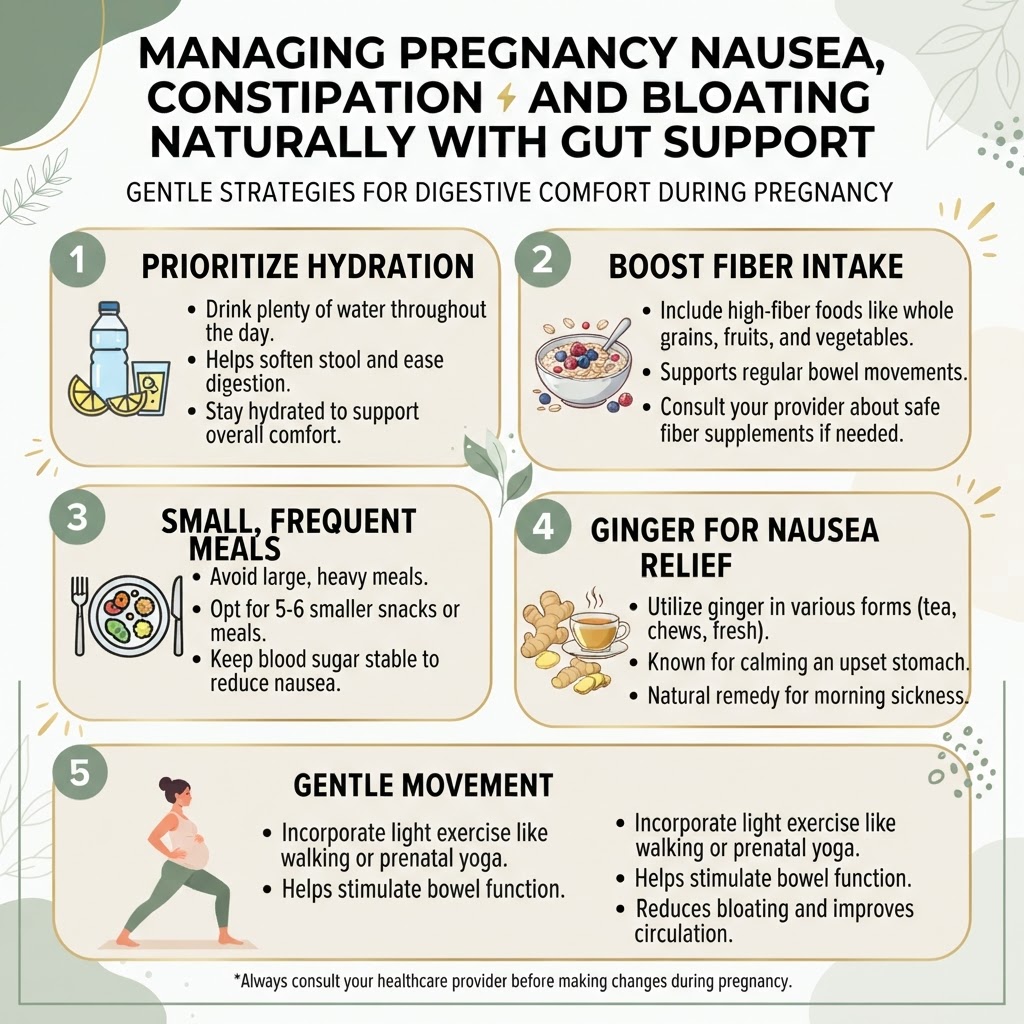
Suggested infographic: "The Pregnancy Gut Cycle — How Hormones, Microbiome Changes & Digestive Symptoms Are Connected" — showing hCG/progesterone curves alongside key symptom windows and gut microbiome shift timelines.
Expert Tips: Practical Steps to Feel Better Every Day
As a doctor, I always want to give my patients tools they can use today. Here are my evidence-informed recommendations for managing pregnancy digestive symptoms naturally:
-
Eat small, frequent meals. Large meals overwhelm a slowed digestive system. Aim for 5–6 smaller meals throughout the day rather than 3 large ones. This also helps stabilise blood sugar, which can reduce nausea frequency and intensity.
-
Start your morning with something bland and dry. Keeping plain crackers or oat cakes by your bed and eating a small amount before sitting up can significantly reduce morning nausea. An empty stomach is nausea's best friend — keep yours gently occupied.
-
Hydrate between meals, not during. Drinking large amounts during meals can dilute digestive enzymes and add to bloating. Sip water consistently throughout the day, aiming for at least 8–10 glasses, but keep intake lighter at mealtimes.
-
Prioritise gentle movement. A 20-minute walk after meals stimulates peristalsis and can meaningfully improve both bloating and constipation. Yoga poses like child's pose and gentle twists can also encourage gas movement through the digestive tract. Always check with your midwife or obstetrician before starting new exercise.
-
Increase fibre gradually. Jumping from a low-fibre to high-fibre diet too quickly can worsen bloating. Introduce fibre-rich foods incrementally — think oats for breakfast, an extra serving of vegetables at lunch, a small handful of seeds on your yoghurt.
-
Keep a symptom and food diary. Identifying your personal trigger foods for nausea and bloating can be transformative. Common culprits include fatty or fried foods, spicy dishes, carbonated drinks, and raw alliums like onion and garlic. What triggers one woman may be perfectly tolerated by another.
-
Time your prenatal supplement wisely. If iron in your prenatal vitamin is contributing to constipation, try taking it with food (though not with dairy or calcium, which inhibit absorption). Some women find taking it at night, rather than in the morning, reduces gastrointestinal side effects.
-
Support your gut with a targeted probiotic from early in your pregnancy. Starting probiotic supplementation in the first trimester — when gut microbiome shifts begin and digestive symptoms are often at their most intense — gives beneficial bacteria the best chance to establish and protect your gut environment throughout pregnancy.
-
Don't ignore your mental health. Chronic nausea and digestive discomfort are exhausting and can significantly affect mood. The gut-brain axis works in both directions: chronic stress and anxiety worsen digestive symptoms, which worsen stress and anxiety. Practices like mindfulness, gentle breathwork, and adequate sleep all support gut health indirectly but meaningfully.
-
Lean on your support network. You are not meant to navigate this alone. Talk to your midwife, your GP, and trusted communities of mothers who understand what you are going through.
When to Seek Medical Advice
While nausea, constipation, and bloating are common features of pregnancy, there are circumstances where these symptoms warrant prompt medical attention. Please do not hesitate to contact your healthcare provider if you experience:
- Severe, persistent vomiting that prevents you from keeping food or fluids down for more than 24 hours — this may indicate hyperemesis gravidarum, which requires medical management to protect both you and your baby
- Significant weight loss (more than 5% of your body weight) during the first trimester
- Blood in your stool or black, tarry stools, which may indicate gastrointestinal bleeding
- Severe abdominal pain that is localised, cramping, or accompanied by fever
- No bowel movement for more than 3–4 days despite dietary and hydration measures
- Sudden, severe bloating or abdominal distension, particularly in the third trimester
The WHO's guidance on complications in pregnancy emphasises the importance of early recognition of warning signs. Your instincts matter — if something feels wrong, please seek care. Natural and nutritional support is a powerful complement to medical care, but it is never a replacement for it.
Conclusion: Your Gut Health Is Your Pregnancy Superpower
The digestive discomforts of pregnancy — nausea, constipation, bloating — are not simply inconveniences to be endured. They are signals from your body, windows into the remarkable biological transformation taking place within you. And when you understand that these symptoms are rooted in gut biology — in microbiome shifts, hormonal changes, and altered gut motility — you gain something invaluable: the ability to respond strategically rather than simply suffer.
Supporting your gut during pregnancy is one of the most impactful investments you can make in your own health and in your baby's. A balanced, thriving gut microbiome does not just ease your digestive discomfort — it supports your immune system, influences your mood, and helps lay the foundations for your baby's own microbiome, which begins to develop before they are even born.
Start with the fundamentals: eat mindfully, move gently, stay hydrated, and nourish your gut bacteria with both prebiotic fibre and clinically supported probiotic strains. Let PregBiotics Essentials be a trusted part of that foundation — formulated by a doctor who has walked alongside pregnant mothers and who understands that you need science, not shortcuts.
You deserve to feel as well as possible during this extraordinary chapter of your life. Not just surviving pregnancy — but truly, meaningfully thriving through it.
For more evidence-based articles on maternal gut health, visit The PregBiotics Journal.
Dr. Chomba Chuma is an MD and the Founder of PregBiotics. She is passionate about transforming maternal health outcomes through gut science, and writes regularly on the intersection of the microbiome, pregnancy, and women's wellbeing.
This article is for informational purposes only and does not constitute medical advice. Always consult your healthcare provider before starting any new supplement during pregnancy.
Get the PregBiotics Journal in your inbox
Gut-smart guidance for conception, pregnancy and breastfeeding — twice a week, plus member-only offers. Unsubscribe anytime.
You deserve to feel beautifully supported.
Join thousands of mothers on the PregBiotics journey. Receive your free Pregnancy Prep Guide and gentle, science-backed wisdom — tailored to where you are right now.