Managing Pregnancy Nausea, Constipation and Bloating Naturally With Gut Support
Imagine this: It's 7am, and before your feet even hit the floor, the nausea hits. You drag yourself to the kitchen, determined to eat something — anything — only to remember that you haven't had a proper bowel movement in four days. By mid-morning, your belly is so bloated you look six months furthe
Dr. Chomba Chuma, MD & Founder
MD & Founder, PregBiotics

Managing Pregnancy Nausea, Constipation and Bloating Naturally With Gut Support
By Dr. Chomba Chuma, MD & Founder | PregBiotics Journal
Introduction
Imagine this: It's 7am, and before your feet even hit the floor, the nausea hits. You drag yourself to the kitchen, determined to eat something — anything — only to remember that you haven't had a proper bowel movement in four days. By mid-morning, your belly is so bloated you look six months further along than you actually are. Sound familiar?
If you're nodding along, you are far from alone. Studies suggest that up to 80% of pregnant women experience nausea or vomiting during the first trimester, while constipation affects between 11–38% of pregnancies, and bloating is reported by the vast majority of expectant mothers at some point along their journey. These symptoms are often brushed off as "just part of pregnancy" — but I want to offer you a different perspective, and more importantly, a different path forward.
What if I told you that many of the most distressing digestive symptoms of pregnancy share a common root cause — your gut? And that by supporting your gut health intelligently and naturally, you can meaningfully reduce their severity and reclaim your wellbeing during this extraordinary time?
In this article, I'll walk you through the science behind pregnancy nausea, gut health, constipation, and bloating, explain why they are so deeply interconnected, and share evidence-based, practical strategies — including the targeted role of nutrition and supplementation — to help you feel more like yourself again.
Let's start at the beginning.
The Gut-Pregnancy Connection: What's Really Happening Inside You
To understand why your digestive system seems to turn against you during pregnancy, we need to talk about biology — specifically, the remarkable (and sometimes uncomfortable) changes your body undergoes from the moment conception occurs.
Hormones and Their Gut Consequences
Within days of implantation, progesterone surges dramatically. Progesterone is essential — it relaxes the smooth muscle of the uterus to prevent early contractions and protect your growing baby. But here's the problem: your gut is also lined with smooth muscle. When progesterone relaxes it, peristalsis — the rhythmic contractions that move food through your digestive tract — slows down significantly. The result? Food sits longer in the gut, water is reabsorbed more aggressively, and constipation and bloating become almost inevitable.
At the same time, rising levels of human chorionic gonadotropin (hCG) — the hormone produced by the developing placenta — are strongly associated with morning sickness gut health disruption. Research published in BJOG: An International Journal of Obstetrics and Gynaecology suggests a direct correlation between peak hCG levels (typically around weeks 8–10) and the severity of nausea and vomiting.
The Gut-Brain Axis and Nausea
But hormones alone don't tell the whole story. There's a sophisticated communication superhighway running between your gut and your brain called the gut-brain axis — and it plays a central role in pregnancy nausea. Your gut contains over 100 million neurons (sometimes called the "second brain") and produces approximately 95% of your body's serotonin. Disruptions to the gut microbiome — the trillions of bacteria that live in your intestines — can impair serotonin signalling, heighten sensitivity to nausea triggers, and amplify symptoms.
During pregnancy, the gut microbiome undergoes profound shifts. A landmark 2012 study published in Cell (Koren et al.) demonstrated that the composition of the gut microbiome changes significantly from the first to the third trimester, with an increase in certain bacteria and a reduction in overall diversity. These changes serve some evolutionary purposes — extracting more energy from food for the baby's growth — but they can also contribute to bloating, gas, constipation, and an irritable gut environment.
Why Bloating Feels So Extreme
Bloating in pregnancy isn't just about the growing uterus taking up space (though that certainly contributes later on). In early pregnancy especially, slowed gut motility means that gases produced by bacterial fermentation of food linger much longer than usual. The result is visible distension, discomfort, and that frustrating sensation of feeling "full" even when you've barely eaten — a cruel irony when nausea is already limiting your appetite.
Understanding these interconnected mechanisms is the first step toward addressing them — not just treating symptoms in isolation, but supporting the entire gut ecosystem that underpins your comfort and health.
What This Means For You: Practical Realities of Pregnancy Gut Health
Now that we understand what's happening beneath the surface, let's make this science tangible and useful for your daily life.
The key takeaway from the biology above is this: many of the most common pregnancy digestive complaints are not random or inevitable — they are driven by identifiable, modifiable factors. That means you have more agency than you might think.
Here's what the research tells us about how these changes manifest — and what they signal about your gut's needs:
-
Morning sickness and gut health are inseparable. An imbalanced gut microbiome can worsen nausea triggers and reduce your tolerance for foods and smells. Women with lower microbiome diversity have been observed to report more severe nausea symptoms. Supporting your gut flora may not eliminate nausea entirely, but it can meaningfully reduce its intensity.
-
Constipation in pregnancy is rarely just about "not drinking enough water." While hydration matters, the underlying hormonal and motility changes mean that constipation pregnancy probiotics and fibre support are often necessary tools — not optional extras. Straining during constipation can also worsen haemorrhoids, a common and distressing pregnancy complaint.
-
Bloating pregnancy remedies work best when they address the root cause. Simethicone drops may offer temporary relief, but if the underlying issue is dysbiosis (an imbalanced gut microbiome) or poor gut motility, you'll be fighting the same battle every day. Dietary adjustments and probiotic support offer a more sustainable approach.
-
Your gut health directly influences your immune system — critically important during pregnancy, when your immune function is naturally modulated. A healthy, balanced microbiome supports your immune resilience and, emerging research suggests, may even influence your baby's developing gut flora. You can learn more about how gut health connects to immunity in pregnancy in our Pregnancy Gut Guide.
-
Stress worsens everything. Via the gut-brain axis, elevated cortisol from pregnancy anxiety can exacerbate gut motility issues, increase gut permeability ("leaky gut"), and amplify nausea sensitivity. This is not your fault — it is physiology. But it does mean that stress management is a genuine gut health strategy, not a luxury.
The bottom line: your gut is not a passive bystander in your pregnancy experience. It is an active participant, and giving it targeted support can transform how you feel day to day.
The Role of Nutrition and Supplementation in Gut-Supported Pregnancy
Knowing that the gut is central to managing these symptoms, the natural question becomes: what can I actually do to support it?
Nutrition is your most powerful lever. And it's not just about what you eat — it's about feeding and nurturing the right communities of bacteria in your gut, reducing inflammation, supporting gut motility, and ensuring your microbiome has the tools it needs to keep your digestive system balanced.
Dietary Foundations
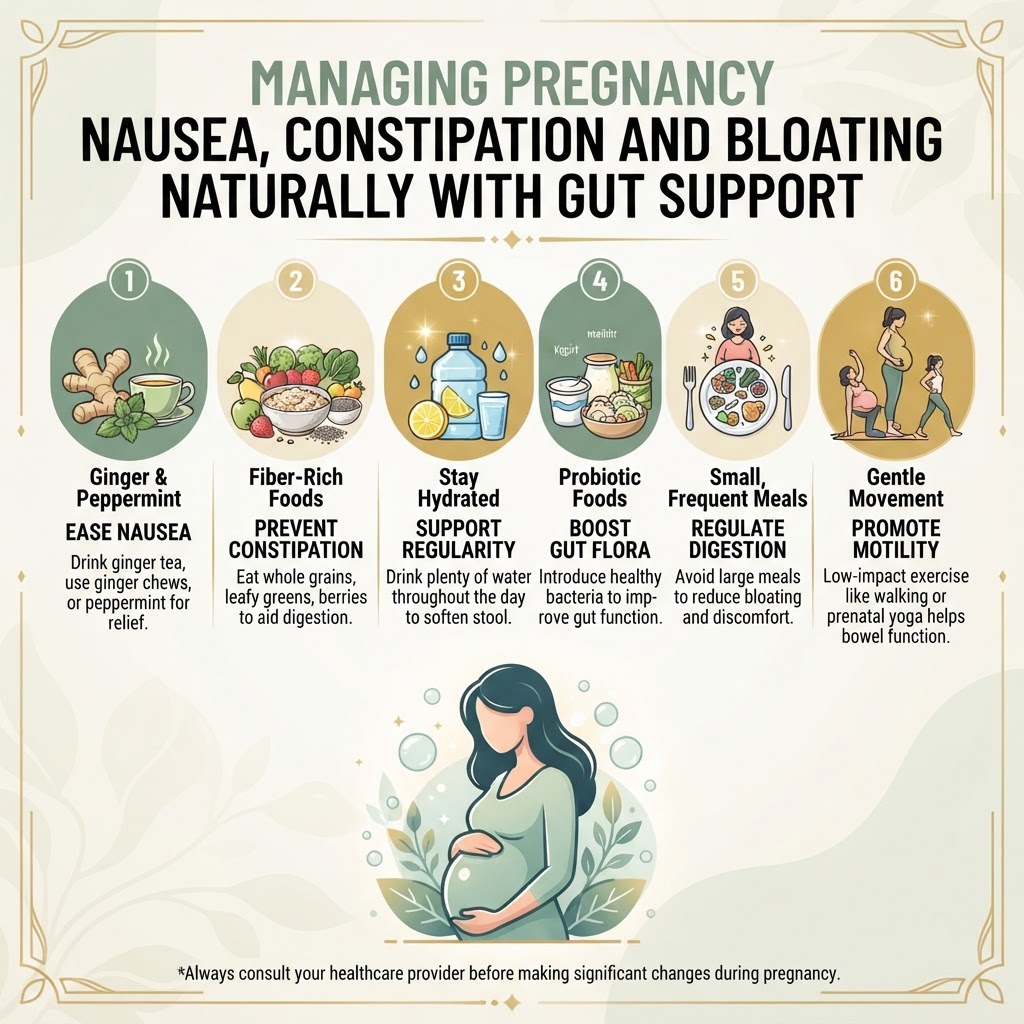
- Prebiotic fibre (found in oats, bananas, garlic, onions, leeks, and Jerusalem artichokes) feeds beneficial bacteria and supports regular bowel movements — a natural and gentle approach to constipation relief.
- Fermented foods such as plain kefir, live yoghurt, kimchi (if well-tolerated), and miso introduce beneficial bacterial strains directly into the gut.
- Ginger has robust clinical evidence behind it for reducing pregnancy nausea gut symptoms. A Cochrane Review on interventions for nausea in early pregnancy found ginger to be safe and moderately effective for reducing nausea severity.
- Small, frequent meals prevent the stomach from becoming either too empty (which worsens nausea) or too full (which worsens bloating and reflux).
- Adequate hydration supports stool softening and gut motility — aim for 2–2.5 litres daily, preferably between rather than with meals.
Why Supplementation Matters
During pregnancy, dietary intake alone — even the most carefully planned — is often insufficient to maintain optimal gut health. Nausea itself limits food variety; aversions make it difficult to eat fermented foods; and the sheer volume of changes happening internally mean that the gut needs additional, targeted support.
This is precisely why I developed PregBiotics Essentials — a supplement formulated specifically around the documented gut health needs of pregnant women, grounded in the latest microbiome research.
Key strains and nutrients in PregBiotics Essentials include:
- Lactobacillus rhamnosus GG — one of the most extensively studied probiotic strains globally, with evidence supporting reduced nausea, improved gut barrier function, and immune modulation during pregnancy
- Lactobacillus acidophilus — supports vaginal microbiome health (important for Group B Strep risk reduction) and digestive balance
- Bifidobacterium longum — shown to reduce gut inflammation and improve bowel regularity, directly targeting pregnancy constipation
- Bifidobacterium lactis — supports motility and reduces bloating symptoms through gas metabolism
- Prebiotic FOS (fructooligosaccharides) — feeds and sustains the probiotic strains for lasting effect
- Ginger root extract (250mg) — standardised for gingerols, supporting nausea reduction safely throughout pregnancy
- Magnesium citrate — supports bowel regularity and smooth muscle function, working with — rather than against — the gut's natural processes
- Vitamin B6 (Pyridoxine) — clinically validated for reducing nausea severity in pregnancy, and safely dosed within recommended guidelines
Every ingredient in PregBiotics Essentials is chosen because the evidence supports it specifically in the context of pregnancy — not adapted from a generic probiotic formula, but designed from the ground up for the unique physiology of an expectant mother.
Expert Tips: Practical Daily Strategies for Managing Digestive Symptoms
Beyond supplementation, here are my top evidence-informed recommendations for managing pregnancy nausea, constipation, and bloating day to day:
-
Take your probiotic consistently. Gut microbiome support requires consistency — not occasional doses. Take PregBiotics Essentials at the same time each day, ideally with breakfast, to establish routine and maximise absorption.
-
Start the morning gently. Keep plain crackers or oat biscuits on your bedside table. Eating a small amount before getting up can prevent the blood sugar drop that worsens morning sickness gut sensitivity.
-
Try cold or room-temperature foods when nausea is high. Hot foods produce more aromatic vapours, which can trigger nausea. Cold options like yoghurt, fruit smoothies, or chilled rice are often better tolerated.
-
Eat every 2–3 hours. An empty stomach produces excess stomach acid and amplifies nausea. Frequent small meals keep the stomach buffered without causing the overfull bloating that large meals trigger.
-
Prioritise soluble fibre over insoluble fibre when constipated. Soluble fibre (oats, linseeds, peeled apples) forms a gel that softens stools gently. Excessive insoluble fibre (bran, raw vegetables) can worsen bloating and gas — counterproductive when you're already uncomfortable.
-
Move your body gently every day. Even a 20-minute walk stimulates gut motility significantly. Yoga postures like Cat-Cow and gentle twists can relieve gas and bloating safely in pregnancy.
-
Eat mindfully and chew thoroughly. Slowed gut motility means your digestive system needs more help from the start. Thorough chewing reduces the fermentation burden in the large intestine, directly reducing gas production and bloating.
-
Stay upright after eating. Lying down within an hour of eating worsens reflux and slows gastric emptying. A short, gentle walk or sitting upright for 30–60 minutes after meals makes a meaningful difference.
-
Limit carbonated drinks and high-FODMAP foods. Sparkling water, onions in large quantities, legumes, and certain fruits can significantly worsen gas and bloating pregnancy symptoms — particularly in the first and second trimesters.
-
Address stress as a gut strategy. Mindfulness, breathing exercises, and adequate sleep are not indulgences — they directly influence gut motility and nausea sensitivity via the gut-brain axis.
When to Seek Medical Advice
While the strategies above are safe and evidence-based, I want to be clear: there are circumstances in which digestive symptoms during pregnancy require prompt medical attention. Please consult your midwife, obstetrician, or GP if you experience any of the following:
- Hyperemesis gravidarum (HG) — severe, persistent vomiting that prevents you from keeping food or fluids down, causes weight loss, or leads to signs of dehydration (dark urine, dizziness, rapid heartbeat). HG affects approximately 1–3% of pregnancies and requires medical management. The NHS provides guidance on HG here.
- No bowel movement for more than a week, or stools accompanied by significant pain, bleeding, or mucus
- Severe abdominal pain or cramping — always warrant urgent evaluation in pregnancy
- Sudden worsening of symptoms after they had previously been well-controlled
- Signs of dehydration in the context of ongoing nausea and vomiting
Natural gut support is a powerful complement to medical care — but it is not a replacement. Always work alongside your healthcare team, and always disclose any supplements you are taking. PregBiotics Essentials is formulated to be safe during pregnancy, but your individual circumstances matter, and your doctor's guidance is paramount.
Conclusion
Pregnancy is one of the most profound journeys a human body can undertake — and the digestive challenges that come with it are not a reflection of weakness or something to simply endure. They are the result of extraordinary biological orchestration that deserves to be met with equally thoughtful, targeted care.
The connection between pregnancy nausea gut disruption, constipation pregnancy probiotics, and bloating pregnancy remedies is not coincidental — it is rooted in the same gut ecosystem, and that means addressing them holistically, from the inside out, is both possible and powerful.
By understanding the science, nourishing your microbiome with the right foods and supplements, and applying practical daily strategies, you can meaningfully reclaim your comfort and vitality during pregnancy. You don't have to choose between being a devoted mother-to-be and feeling well. You can be both.
PregBiotics Essentials was created for exactly this moment — to give your gut the intelligent, pregnancy-specific support it needs, so you can focus on the extraordinary thing your body is doing.
For more science-backed guidance on pregnancy gut health, I warmly invite you to explore The PregBiotics Journal — where we go deep on the topics that matter most to expecting mothers, every week.
You've got this. And your gut has got you.
Dr. Chomba Chuma, MD Founder, PregBiotics Specialist in Maternal Microbiome Medicine
This article is for informational and educational purposes only and does not constitute medical advice. Always consult your healthcare provider before starting any supplement during pregnancy.
Get the PregBiotics Journal in your inbox
Gut-smart guidance for conception, pregnancy and breastfeeding — twice a week, plus member-only offers. Unsubscribe anytime.
You deserve to feel beautifully supported.
Join thousands of mothers on the PregBiotics journey. Receive your free Pregnancy Prep Guide and gentle, science-backed wisdom — tailored to where you are right now.