Managing Pregnancy Nausea, Constipation and Bloating Naturally With Gut Support
Picture this: it's 7am, and before your feet even touch the floor, a wave of nausea rolls over you. You manage to get up, but your stomach feels tight and bloated, and you realise — for the third day in a row — that you haven't had a proper bowel movement. You're exhausted, uncomfortable, and wonder
Dr. Chomba Chuma, MD & Founder
MD & Founder, PregBiotics

Managing Pregnancy Nausea, Constipation and Bloating Naturally With Gut Support
By Dr. Chomba Chuma, MD & Founder | PregBiotics Journal
Introduction
Picture this: it's 7am, and before your feet even touch the floor, a wave of nausea rolls over you. You manage to get up, but your stomach feels tight and bloated, and you realise — for the third day in a row — that you haven't had a proper bowel movement. You're exhausted, uncomfortable, and wondering if this is just the price of pregnancy.
You are not alone. Studies suggest that up to 80% of pregnant women experience nausea and vomiting, particularly in the first trimester, while constipation affects between 11–38% of pregnant women at some point during their pregnancy. Bloating, that uncomfortable fullness and pressure in the abdomen, is equally common and can persist well into the second trimester for many mothers.
What most women — and even some clinicians — don't realise is that these three symptoms share a common thread: the gut. Your digestive system undergoes profound changes during pregnancy, and understanding those changes is the first step toward finding real, lasting relief.
In this article, I want to walk you through the science behind why these symptoms happen, what they mean for your body and your baby, and — most importantly — what you can do about them naturally and safely. We'll cover dietary strategies, lifestyle tips, and how targeted gut support through probiotics and key nutrients can make a meaningful difference to your daily comfort and overall pregnancy wellbeing.
Let's start at the root.
The Pregnant Gut: What's Really Going On Inside
To understand why nausea, constipation, and bloating are so prevalent in pregnancy, we need to look at what is happening biologically — because these aren't random inconveniences. They are, in many ways, byproducts of a body working extraordinarily hard to support new life.
The Hormonal Shift and Its Gut Consequences
From the moment of implantation, your body begins producing elevated levels of human chorionic gonadotropin (hCG) and progesterone. While progesterone is essential for maintaining the uterine lining and preventing premature contractions, it has a well-documented relaxing effect on smooth muscle tissue throughout the body — including the muscles of your gastrointestinal tract.
This slowing of intestinal motility, often referred to as gastrointestinal dysmotility, means that food and waste move more slowly through your digestive system. The result? Constipation, bloating, and a general sense of digestive sluggishness that many mothers describe as feeling "stuck."
The Gut-Brain-Nausea Connection
The relationship between the pregnancy nausea gut axis is more complex than most people appreciate. Your gut is home to the enteric nervous system — sometimes called the "second brain" — which communicates bidirectionally with your central nervous system via the vagus nerve. This gut-brain axis is exquisitely sensitive to hormonal fluctuations.
Rising hCG levels are strongly associated with nausea and vomiting in early pregnancy, but emerging research suggests that gut microbiome disruption may amplify these symptoms. A 2020 study published in Cell Host & Microbe found that changes in gut microbiota composition during pregnancy are more dramatic than in almost any other physiological state — comparable in magnitude to those seen in metabolic disease. This dysbiosis can impair gut motility, increase intestinal permeability, and heighten sensitivity to nausea-triggering signals.
Morning Sickness and Gut Health: A Deeper Link
The term morning sickness gut health is increasingly appearing in scientific literature, and rightly so. Serotonin — a neurotransmitter strongly implicated in nausea — is produced predominantly in the gut (approximately 90–95% of the body's serotonin originates in enterochromaffin cells of the GI tract). When the gut microbiome is imbalanced, serotonin regulation can be disrupted, potentially worsening nausea.
What Happens to Your Microbiome During Pregnancy
Research consistently shows that the gut microbiome shifts significantly across the three trimesters. By the third trimester, there is a notable increase in pro-inflammatory bacteria and a reduction in microbial diversity. While some of these changes are adaptive — helping to store energy for both mother and baby — they also contribute to the bloating, gas, and discomfort so many women experience.
Understanding this biology is empowering: these symptoms have a cause, and that cause can be supported.
What This Means For You: Making the Science Personal
Knowing the science is one thing — but what does it actually mean for your day-to-day pregnancy experience? Let me translate this into something practical and reassuring.
Your Symptoms Are Not "Just Pregnancy"
One of the most common things I hear from mothers is that they've been told to simply "push through" nausea and constipation because it's a normal part of pregnancy. And while these symptoms are common, common does not mean inevitable or untreatable. Your digestive discomfort is a signal from your body, and it deserves a thoughtful, targeted response.
The Interconnected Nature of These Three Symptoms
It's important to understand that digestive issues in pregnancy rarely exist in isolation:
- Constipation leads to slower gut transit, which increases fermentation of undigested food — producing excess gas and contributing to bloating
- Bloating creates abdominal pressure that can worsen feelings of nausea and reduce appetite
- Nausea may cause you to avoid certain foods, potentially reducing fibre and fluid intake — which then worsens constipation
- This creates a cycle that becomes progressively harder to break without targeted intervention
Signs Your Gut Is Struggling More Than Usual
Here are some signals worth paying attention to:
- Fewer than three bowel movements per week (a clinical marker of constipation)
- Stools that are hard, lumpy, or difficult to pass
- Persistent bloating that doesn't improve after bowel movements
- Nausea that extends well beyond the first trimester, or is accompanied by significant weight loss
- Excessive belching or flatulence that is disruptive to daily life
- Heartburn or acid reflux occurring frequently alongside the above symptoms
The Good News
The gut microbiome is highly responsive to targeted intervention. Research supports that probiotic supplementation, dietary adjustments, and hydration strategies can meaningfully improve all three of these conditions in pregnant women. This isn't about suffering in silence — it's about giving your gut the support it genuinely needs during one of the most demanding periods of your life.
For a deeper dive into how your gut health affects your entire pregnancy journey, I'd encourage you to explore our Pregnancy Gut Guide, which we've developed specifically for expectant mothers looking for evidence-based guidance.
The Role of Nutrition and Supplementation in Gut-Led Relief
This is where we move from understanding the problem to actively addressing it — and where the right nutritional support can make a significant difference.
Dietary Foundations
Before we talk supplements, let's cover the dietary foundations that support a healthier gut during pregnancy:
- Fibre-rich foods: Aim for 25–35g of dietary fibre daily from sources such as oats, lentils, leafy greens, pears, and flaxseed. Fibre bulks stool and feeds beneficial gut bacteria
- Hydration: At least 2–2.5 litres of water daily is essential, particularly if you're increasing fibre intake. Dehydration is a leading driver of constipation
- Fermented foods: Where tolerated, small amounts of live yoghurt, kefir, or sauerkraut can support microbial diversity
- Ginger: Well-supported in clinical literature for reducing nausea — a small piece of fresh ginger in hot water or as a supplement can be genuinely helpful
- Small, frequent meals: Eating every 2–3 hours keeps blood sugar stable and reduces the intensity of nausea episodes
The Case for Probiotics in Pregnancy
The evidence base for constipation pregnancy probiotics is growing robustly. A 2018 systematic review in the European Journal of Clinical Nutrition found that probiotic supplementation significantly improved stool frequency and consistency in pregnant women, with a particularly strong effect from Lactobacillus and Bifidobacterium strains. Crucially, the safety profile of these strains in pregnancy is well established.
Beyond constipation, specific probiotic strains have been shown to:
- Reduce intestinal transit time (helping move things along)
- Modulate the gut-brain axis to support more balanced nausea responses
- Reduce intestinal gas production and bloating through competitive inhibition of gas-producing bacteria
- Support immune regulation and reduce systemic inflammation
How PregBiotics Essentials Addresses This
This is precisely why I formulated PregBiotics Essentials. As a clinician who has worked with pregnant women for years, I was frustrated by the lack of a truly comprehensive, pregnancy-specific gut health supplement that addressed multiple symptoms with real scientific rigour.
PregBiotics Essentials contains a carefully selected combination of:
- Lactobacillus rhamnosus GG — one of the most well-studied probiotic strains for gut motility and nausea reduction
- Bifidobacterium longum — supports healthy bowel transit and reduces fermentation-driven bloating
- Lactobacillus acidophilus — promotes a balanced vaginal and gut microbiome environment
- Prebiotic FOS (fructooligosaccharides) — feeds and amplifies the beneficial bacteria already in your gut
- Magnesium citrate — a gentle, bioavailable form of magnesium that supports bowel regularity without harsh laxative effects
- Vitamin B6 (pyridoxine) — clinically validated for the management of pregnancy nausea and vomiting
- Ginger extract (standardised) — included at a therapeutically relevant dose for additional nausea support
Every ingredient in PregBiotics Essentials has been selected based on its evidence profile in pregnant women specifically, with safety and efficacy as non-negotiable criteria.
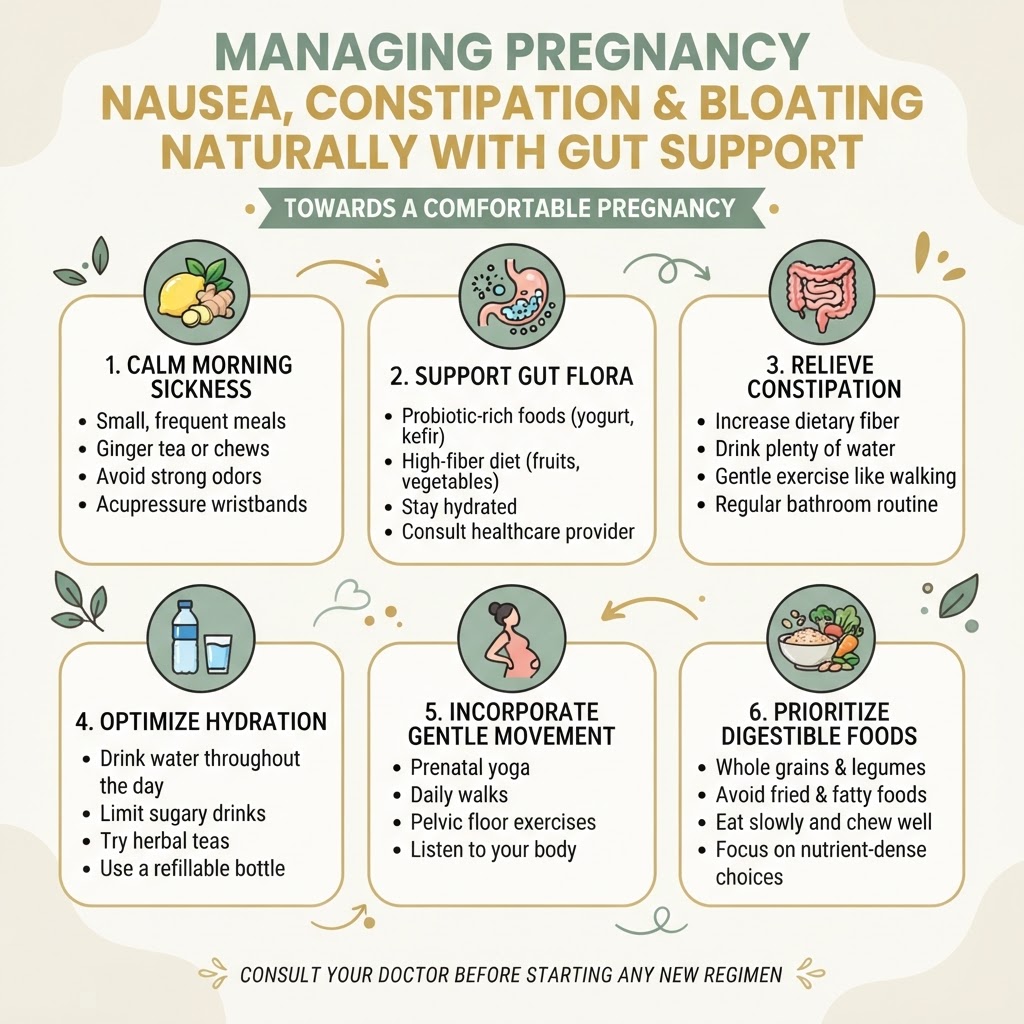
Expert Tips and Actionable Advice: What You Can Start Today
Here are my practical, evidence-informed recommendations for managing these symptoms naturally:
-
Start your morning with a glass of warm lemon water before eating. This gently stimulates digestive motility and can reduce morning nausea intensity for many women.
-
Never lie down immediately after eating. Wait at least 30–45 minutes. Gravity is your friend when it comes to reducing reflux and bloating.
-
Eat smaller meals more frequently — five to six small meals rather than three large ones. Large meals overwhelm a sluggish pregnant digestive system.
-
Move your body gently every day. A 20–30 minute walk after meals has been shown to significantly improve gastric emptying and reduce constipation. You don't need intense exercise — gentle movement is enough.
-
Add ground flaxseed to your breakfast. One to two tablespoons provides a combination of soluble and insoluble fibre, as well as omega-3 fatty acids. Stir it into porridge, yoghurt, or a smoothie.
-
Try the "left side" sleeping position. Lying on your left side improves gut transit and can reduce overnight bloating by utilising the natural anatomical position of the intestinal tract.
-
Take your probiotic supplement consistently. Gut microbiome changes respond to sustained intervention — don't expect overnight results. Most women report meaningful improvement within 2–4 weeks of consistent use.
-
Avoid carbonated drinks and sugar alcohols (such as sorbitol and xylitol found in some "sugar-free" products). These are significant drivers of gas and bloating.
-
Track your symptoms in a simple diary. Note what you ate, how much water you drank, your bowel movement frequency, and nausea intensity. Patterns will emerge that allow you to make targeted adjustments.
-
Consider acupressure for nausea. The P6 (Neiguan) pressure point on the inner wrist has good evidence support for reducing nausea — wristbands such as Sea-Bands can be used safely throughout pregnancy.
-
Discuss your bloating pregnancy remedies with your midwife or GP if bloating is severe, especially if accompanied by pain. Gentle abdominal massage and specific yoga poses (such as a supported child's pose) can also provide relief.
When to Seek Medical Advice
While the symptoms discussed in this article are common and often manageable with natural support, there are situations where you must seek prompt medical attention. Please do not rely solely on dietary changes or supplements if you experience any of the following:
- Severe or persistent vomiting that prevents you from keeping fluids down — this may indicate hyperemesis gravidarum, a serious condition requiring medical treatment
- Signs of dehydration, including dark urine, dizziness, or very infrequent urination
- Constipation accompanied by abdominal pain, rectal bleeding, or fever
- Bloating that is sudden, severe, or associated with significant abdominal pain
- Nausea that begins or significantly worsens after the first trimester, which may warrant investigation for other causes
- Any symptom that concerns you, regardless of how "minor" it may seem
The NHS guidance on vomiting and morning sickness in pregnancy provides a useful reference for when symptoms require clinical escalation.
Always inform your healthcare provider of any supplements you are taking, including probiotics, so that they can be considered as part of your overall care plan. Your safety and your baby's safety are always the priority.
Conclusion: Your Gut Deserves Support During This Season
Pregnancy is one of the most extraordinary journeys the human body undertakes — but that doesn't mean you have to white-knuckle your way through nausea, constipation, and bloating without support. These symptoms are real, they have clear biological explanations, and they are genuinely responsive to the right interventions.
By understanding the role that hormonal change and gut microbiome disruption play in driving these symptoms, you can move from passive suffering to active, informed management. The combination of dietary foundations — adequate fibre, hydration, small and frequent meals — with targeted probiotic support and key nutrients creates a genuinely meaningful difference to daily comfort and quality of life during pregnancy.
PregBiotics Essentials was formulated with exactly this in mind: a science-led, pregnancy-specific supplement that addresses the root gut drivers of nausea, constipation, and bloating in one carefully designed formula. Thousands of mothers have found it to be a meaningful part of their pregnancy wellness routine, and I am proud to stand behind every ingredient with both my clinical expertise and my passion as a founder.
You deserve to feel as well as possible during this season. Your gut health matters — not just for your comfort, but for the long-term health of your baby too.
For more evidence-based articles on pregnancy gut health, nutrition, and microbiome science, visit The PregBiotics Journal — your resource for honest, expert-led information throughout your pregnancy journey.
Here's to a healthier, more comfortable pregnancy — from my gut to yours.
Dr. Chomba Chuma, MD is a medical doctor, maternal gut health specialist, and Founder of PregBiotics. The information in this article is for educational purposes and does not constitute individual medical advice. Always consult your healthcare provider before starting any new supplement during pregnancy.
Get the PregBiotics Journal in your inbox
Gut-smart guidance for conception, pregnancy and breastfeeding — twice a week, plus member-only offers. Unsubscribe anytime.
You deserve to feel beautifully supported.
Join thousands of mothers on the PregBiotics journey. Receive your free Pregnancy Prep Guide and gentle, science-backed wisdom — tailored to where you are right now.