Managing Pregnancy Nausea, Constipation and Bloating Naturally With Gut Support
Picture this: It's 7am, and before your feet have even touched the floor, the wave hits. That nauseating roll in your stomach that announces itself with merciless regularity. You shuffle to the kitchen, trying to find something — anything — that will stay down. Later in the day, you're bloated and u
Dr. Chomba Chuma, MD & Founder
MD & Founder, PregBiotics

Managing Pregnancy Nausea, Constipation and Bloating Naturally With Gut Support
By Dr. Chomba Chuma, MD & Founder | PregBiotics Journal
Introduction
Picture this: It's 7am, and before your feet have even touched the floor, the wave hits. That nauseating roll in your stomach that announces itself with merciless regularity. You shuffle to the kitchen, trying to find something — anything — that will stay down. Later in the day, you're bloated and uncomfortable, your digestive system seemingly at war with your own body. And constipation? It has been four days. You love this pregnancy, you truly do, but nobody quite prepared you for this.
If this sounds familiar, you are not alone. Studies suggest that up to 80% of pregnant women experience nausea and vomiting, most commonly in the first trimester, while constipation affects an estimated 11–38% of pregnant women at some point throughout their pregnancy. Bloating is so commonplace it is practically considered a rite of passage.
Here is what most people do not tell you, though: these three uncomfortable — and often distressing — symptoms share a common root cause. They are deeply connected to the state of your gut microbiome.
In this article, I want to walk you through the science behind why your digestive system behaves so differently during pregnancy, how your gut health is at the centre of it all, and — most importantly — what you can do naturally and practically to feel better. Because managing your symptoms well is not just about your comfort. It is about supporting the foundation of your and your baby's long-term health.
The Gut in Pregnancy: Why Everything Changes
To understand why pregnancy nausea gut disturbances, bloating, and constipation are so common, we need to start with the biology — and it is genuinely fascinating.
Hormones Take the Wheel
From the moment conception occurs, your body undergoes a hormonal revolution. Rising levels of human chorionic gonadotropin (hCG) — the hormone responsible for those double lines on your test — are strongly associated with nausea and vomiting in early pregnancy. Research published in the American Journal of Obstetrics and Gynecology has shown a dose-dependent relationship between hCG levels and nausea severity, which explains why symptoms peak in the first trimester when hCG is at its highest.
Meanwhile, progesterone rises significantly to support your pregnancy, and one of its key actions is to relax smooth muscle tissue throughout the body — including the smooth muscle lining your entire gastrointestinal tract. This relaxation slows down gut motility, meaning food moves through your system more slowly. The result? Constipation, bloating, and gas.
Your Microbiome Shifts — Dramatically
What is less commonly discussed is that pregnancy fundamentally alters the composition of your gut microbiome. A landmark study published in Cell by Koren et al. demonstrated that the gut microbiome undergoes significant restructuring across trimesters, with diversity generally decreasing and certain bacterial populations shifting in ways that resemble metabolic states like insulin resistance. While some of these shifts appear to serve the pregnancy, they can also contribute to digestive discomfort.
The Gut-Brain Axis and Morning Sickness
There is also a compelling connection between morning sickness and gut health through the gut-brain axis — the bidirectional communication network linking your gastrointestinal system and your central nervous system. An imbalanced gut microbiome can amplify nausea signals through this pathway. Emerging research suggests that women with morning sickness gut dysbiosis (an imbalance of gut bacteria) may experience more severe or prolonged symptoms than those with a healthier, more diverse microbiome.
Physical Pressure and the Third Trimester
As your uterus grows, it exerts increasing physical pressure on your stomach and intestines, further slowing transit time and contributing to that heavy, uncomfortable bloating — particularly in the second and third trimesters.
Understanding these mechanisms is empowering. It tells us that these symptoms are not arbitrary. They are predictable consequences of specific biological changes — and that means we can address them strategically.
What This Means for You: Connecting Science to Symptoms
Now let us bring this out of the textbook and into your daily life.
Knowing that your gut microbiome is shifting, your gut motility is slowing, and your gut-brain axis is firing differently during pregnancy gives us a clear framework for action. Here is what it means practically:
-
Nausea is not just hormonal. While hCG certainly plays a role, the state of your gut microbiome can significantly influence how intensely and how long you experience nausea. Women with a more balanced gut flora often report more manageable symptoms. Supporting your gut with the right strains of beneficial bacteria can help modulate the gut-brain signalling that amplifies nausea.
-
Constipation in pregnancy is largely a motility problem. The progesterone-driven slowdown of your digestive tract is the primary driver. But a depleted microbiome — with insufficient fermentative bacteria — means less short-chain fatty acid (SCFA) production, which in turn means reduced stimulation of gut motility. Constipation pregnancy probiotics work in part by restoring these beneficial bacterial populations and improving SCFA output. Research published by the NHS also highlights dietary fibre and hydration as essential tools — both of which gut-healthy strains can help you better utilise.
-
Bloating is often a sign of fermentation imbalance. When dysbiotic (harmful) bacteria ferment undigested food in your gut, the byproduct is excessive gas. Restoring a healthier microbial balance can significantly reduce this unwanted fermentation and the bloating that comes with it.
-
Your baby's microbiome is already being shaped. What happens in your gut during pregnancy does not stay in your gut. There is compelling evidence that maternal gut health influences fetal immune programming and even contributes to the early colonisation of the infant's microbiome. This means addressing your digestive symptoms is not just self-care — it is foundational maternal-fetal medicine.
-
Stress compounds everything. The gut-brain axis runs in both directions. Anxiety about your symptoms — or about pregnancy in general — can further disrupt gut motility and microbiome balance. Gentle stress management is part of gut support, not separate from it.
The good news — and there is genuinely good news here — is that targeted, evidence-informed gut support can address all three of these symptom clusters simultaneously, because they all share that common microbiome root.
The Role of Nutrition and Supplementation in Managing Pregnancy Digestive Symptoms
Diet is always the foundation. But in pregnancy, when food aversions are real, nausea makes eating a challenge, and your nutritional needs are higher than ever, getting everything you need from food alone is both difficult and unrealistic for most women. This is where thoughtful supplementation becomes genuinely powerful.
Nutritional Strategies to Support Your Gut
Fibre-rich whole foods are your first line of defence against constipation and bloating pregnancy symptoms. Oats, lentils, sweet potatoes, and berries provide both soluble fibre (which feeds beneficial bacteria and softens stool) and insoluble fibre (which adds bulk and speeds transit). Aim for 25–30g of fibre daily.
Hydration is non-negotiable. Fibre without adequate water can actually worsen constipation. Aim for at least 8–10 glasses of water daily, and consider warm lemon water in the morning to gently stimulate digestion.
Ginger has robust evidence behind it as a bloating pregnancy remedy and natural nausea reliever. A systematic review published on NCBI confirmed ginger's efficacy in reducing nausea and vomiting in pregnancy with a favourable safety profile.
Fermented foods — live yoghurt, kefir (if tolerated), miso, sauerkraut — can provide a natural source of beneficial bacteria, though achieving therapeutic doses through diet alone is challenging during pregnancy.
Where PregBiotics Essentials Comes In
This is precisely why I formulated PregBiotics Essentials — to bridge the gap between what you need and what pregnancy reality allows.
PregBiotics Essentials is a science-led prenatal supplement designed specifically around the gut health needs of pregnant women. It combines clinically studied probiotic strains, prebiotic fibre, and key micronutrients to address the root causes of nausea, constipation, and bloating during pregnancy. Key ingredients include:
- Lactobacillus rhamnosus GG — one of the most extensively studied probiotic strains for gut barrier integrity, reducing pregnancy-related digestive discomfort, and modulating the gut-brain axis to support nausea relief
- Bifidobacterium longum — shown to improve bowel regularity, reduce bloating, and support immune function — critical during pregnancy
- Lactobacillus acidophilus — supports healthy gut flora balance, helps reduce gas and bloating, and aids lactose digestion
- Inulin (prebiotic fibre) — acts as food for your beneficial bacteria, amplifying the effectiveness of the probiotic strains and contributing to improved gut motility
- Ginger root extract — included at a clinically meaningful dose to provide direct morning sickness gut relief
- Magnesium — supports natural muscle relaxation in the gut wall, gently promoting bowel regularity without laxative effects
- Folate (methylated) — in the bioavailable 5-MTHF form, ensuring optimal absorption and utilisation for neural tube protection
Every ingredient in PregBiotics Essentials is selected based on peer-reviewed evidence, formulated at doses that matter, and rigorously tested for safety in pregnancy.
For a deeper understanding of how gut health connects to your overall pregnancy wellness, I encourage you to explore our comprehensive Pregnancy Gut Guide, which walks you through every trimester with evidence-based guidance tailored specifically for you.
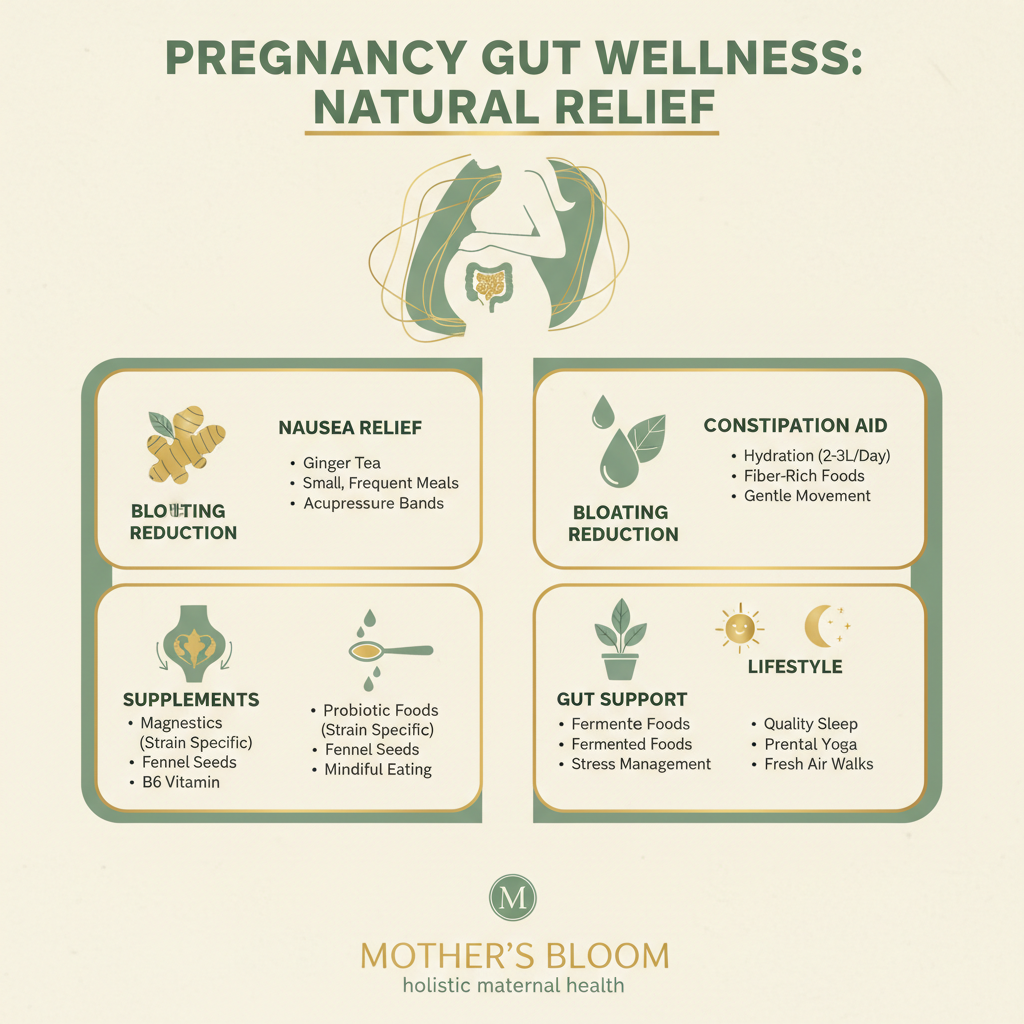
Infographic: "The Pregnancy Gut Cycle — How Hormones, Microbiome Shifts and Digestive Symptoms Connect" — showing the relationships between hCG, progesterone, gut motility, microbiome diversity, and the three core symptoms: nausea, constipation, and bloating.
Expert Tips and Actionable Advice for Managing Digestive Symptoms in Pregnancy
Here are my top recommendations — clinically informed, practically tested, and gentle enough for pregnancy:
-
Start your day slowly. Before getting out of bed, eat a few plain crackers or a small piece of dry toast. Having something in your stomach before you stand upright can significantly reduce morning sickness gut triggers related to stomach acid moving when you shift positions.
-
Eat small, frequent meals. Rather than three large meals, aim for 5–6 smaller ones throughout the day. Large meals overwhelm a slowed digestive system and can exacerbate both nausea and bloating. Think of it as continuous gentle fuelling rather than sporadic loading.
-
Separate liquids from solids. Drinking large amounts of fluid with meals dilutes digestive enzymes and can worsen bloating. Try drinking primarily between meals, not during them.
-
Move your body gently and consistently. Even a 15–20 minute walk after meals stimulates gut motility and can meaningfully reduce constipation and gas. Prenatal yoga poses that involve gentle twists and forward folds are particularly helpful for bloating pregnancy remedies.
-
Take your PregBiotics Essentials consistently. Probiotics are not fast-acting pain relievers — they work by reshaping your gut ecosystem over time. Consistency over 4–8 weeks tends to yield the most significant improvements in all three symptom areas.
-
Manage stress as a gut health priority. Gentle breathing exercises, mindfulness, and adequate sleep all positively influence your gut-brain axis. A calm nervous system supports a calmer gut.
-
Identify your personal trigger foods. Common culprits that worsen bloating and nausea include fatty foods, spicy foods, carbonated drinks, raw onion, garlic, and cruciferous vegetables (like broccoli and cauliflower). Keep a simple food and symptom diary for a week to identify your specific triggers.
-
Elevate the head of your bed slightly. If nausea is worst at night or when lying down, raising the head of your bed by 15–20cm can reduce acid reflux contributing to your discomfort.
-
Stay on top of iron supplementation management. Iron supplements — often prescribed in pregnancy — are a significant driver of constipation. If you are taking iron, speak to your midwife or doctor about the form you are taking (ferrous bisglycinate is generally better tolerated) and ensure you are supporting your gut accordingly.
-
Trust the process. Many of these symptoms do improve — particularly nausea — as you progress beyond the first trimester. In the meantime, know that what you are doing to support your gut health is genuinely beneficial for both you and your baby.
When to Seek Medical Advice
While nausea, constipation, and bloating are common and usually manageable with the strategies above, there are situations that require prompt medical attention. Please contact your midwife, obstetrician, or GP if you experience:
- Severe, persistent vomiting that prevents you from keeping food or fluids down — this may indicate hyperemesis gravidarum, a condition requiring medical treatment and, in some cases, hospitalisation
- Signs of dehydration, including dark urine, dizziness, or significantly reduced urine output
- Constipation lasting longer than one week despite dietary changes, or constipation accompanied by abdominal pain or bleeding
- Severe or sudden abdominal pain at any point in pregnancy
- Blood in your stool or significant changes in stool colour
- Fever alongside digestive symptoms
Natural gut support is a powerful complement to your prenatal care — but it is not a substitute for it. Always keep your healthcare provider informed about any supplements you are taking, including probiotics, and work collaboratively with your medical team. The WHO guidelines on antenatal care reinforce the importance of integrated care during pregnancy, and I fully support that approach.
Conclusion
Pregnancy is one of the most extraordinary things the human body does. And yes — it can also be profoundly uncomfortable. But nausea, constipation, and bloating are not experiences you simply have to white-knuckle your way through. They are physiologically predictable, they are connected to your gut health, and they are — to a meaningful degree — manageable.
By understanding the hormonal and microbiome drivers behind your symptoms, nourishing your gut with fibre-rich foods and targeted probiotic support, making simple practical changes to how and when you eat, and moving your body gently and consistently, you can significantly reduce your digestive burden during pregnancy. And in doing so, you are also investing in your baby's developing immune system and microbiome — a gift that begins before birth.
PregBiotics Essentials was created precisely for this journey — to give you science-backed, pregnancy-specific gut support that works with your body's remarkable changes, not against them.
You deserve to feel well in your pregnancy. Not just to survive it, but to be genuinely present in it.
For more evidence-based guidance on pregnancy wellness, gut health, and everything in between, visit The PregBiotics Journal — written by clinicians, for the mothers who deserve nothing less than the best information available.
With warmth and science, Dr. Chomba Chuma, MD Founder, PregBiotics
Disclaimer: This article is for informational purposes only and does not constitute medical advice. Always consult your healthcare provider before starting any new supplement during pregnancy.
Get the PregBiotics Journal in your inbox
Gut-smart guidance for conception, pregnancy and breastfeeding — twice a week, plus member-only offers. Unsubscribe anytime.
You deserve to feel beautifully supported.
Join thousands of mothers on the PregBiotics journey. Receive your free Pregnancy Prep Guide and gentle, science-backed wisdom — tailored to where you are right now.