How Your Gut Microbiome Shapes Your Breast Milk — And Your Baby's Lifelong Health
Imagine holding your newborn for the very first time — that tiny, perfect face pressed against your chest, trusting you completely. What you may not realise in that tender moment is that the milk your body is producing is far more than nutrition. It is, in the most literal sense, a living ecosystem.
Dr. Chomba Chuma, MD & Founder
MD & Founder, PregBiotics

How Your Gut Microbiome Shapes Your Breast Milk — And Your Baby's Lifelong Health
By Dr. Chomba Chuma, MD & Founder | PregBiotics Journal
Introduction
Imagine holding your newborn for the very first time — that tiny, perfect face pressed against your chest, trusting you completely. What you may not realise in that tender moment is that the milk your body is producing is far more than nutrition. It is, in the most literal sense, a living ecosystem. A personalised biological gift shaped, in part, by the health of your own gut.
Here is something that surprises many of the mothers I work with: research published in Frontiers in Microbiology estimates that a breastfeeding infant receives between 800,000 and one million bacterial cells per day through breast milk alone. One million. Every single day. These microbes are not contaminants — they are architects, quietly building the foundation of your baby's immune system, metabolism, and long-term health.
What determines the richness and diversity of those microbial passengers? Increasingly, the science points to one pivotal factor: your gut microbiome.
In this article, I want to walk you through what we know about the extraordinary connection between the breastfeeding microbiome, the composition of your breast milk, and your baby's future wellbeing. I will explain the science in plain language, show you what it means practically for your daily choices, and share how targeted nutrition and supplementation — including the right probiotic support — can help you give your baby the very best start.
Because you deserve to understand just how powerful you already are.
The Science Behind Breast Milk and the Maternal Microbiome
Breast Milk Is Not Sterile — And That Is a Good Thing
For decades, medical textbooks described breast milk as a sterile fluid. We now know that is completely wrong. Breast milk is home to a complex, dynamic microbial community — including Lactobacillus, Staphylococcus, Streptococcus, Bifidobacterium, and many other genera — that vary between women, change as lactation progresses, and are profoundly influenced by the mother's own gut health.
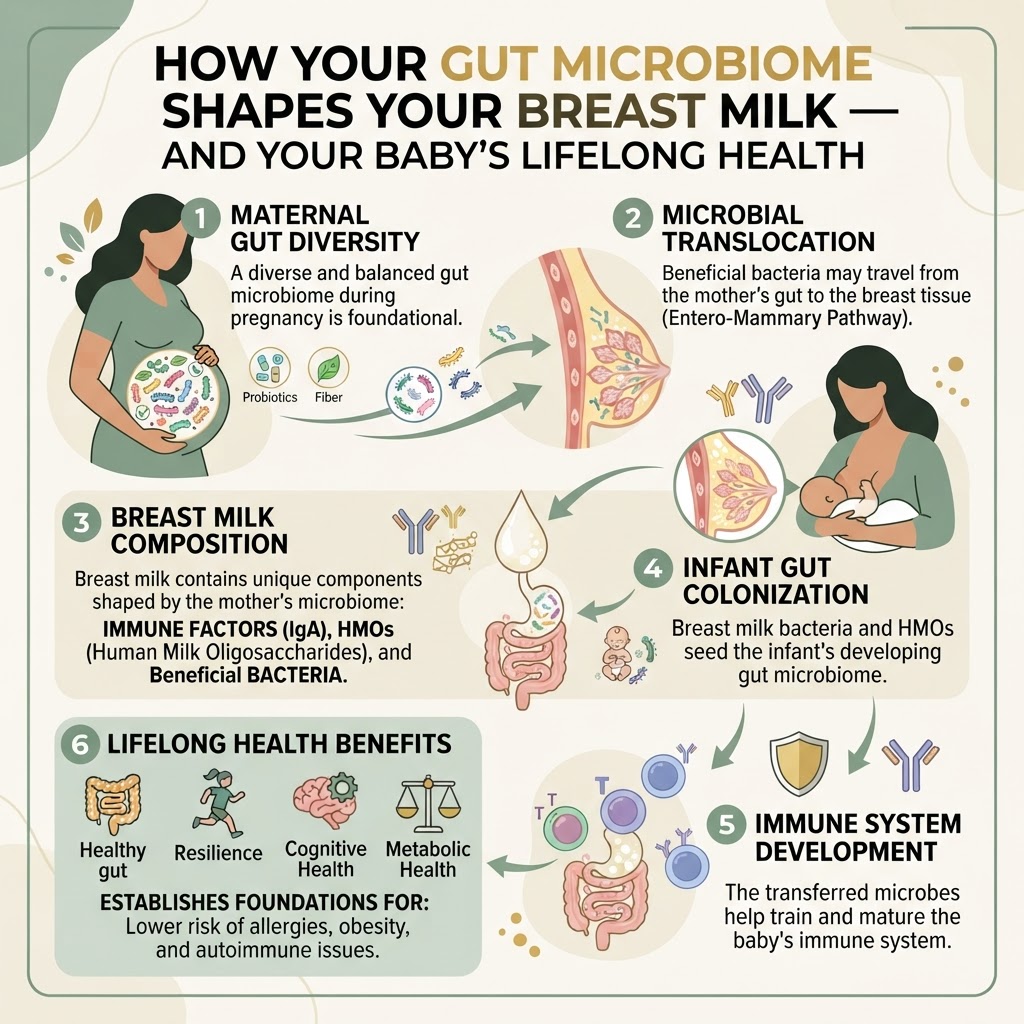
This discovery prompted an important question: how do bacteria from your gut end up in your breast milk? The answer lies in a remarkable biological pathway known as the entero-mammary axis.
The Entero-Mammary Axis: Nature's Secret Courier System
The entero-mammary axis describes the route by which immune cells in your gut — particularly dendritic cells and macrophages — can transport bacteria from the intestinal lining, carry them through your lymphatic and circulatory systems, and deposit them into the mammary gland tissue. It is, in essence, a biological courier network that allows your gut microbiome to directly seed your breast milk with beneficial microorganisms.
This means that the diversity and balance of your gut bacteria during pregnancy and breastfeeding has a direct influence on which microbes your baby receives. A depleted or dysbiotic maternal gut microbiome may result in less microbially diverse breast milk — with downstream consequences for the infant.
Human Milk Oligosaccharides: The Prebiotic Powerhouses
Alongside live bacteria, breast milk contains another extraordinary class of compounds: Human Milk Oligosaccharides (HMOs). HMOs are complex carbohydrates that your baby cannot actually digest — but the bacteria in your baby's gut absolutely can. They serve as selective fuel for beneficial microbes, particularly Bifidobacterium infantis, helping to establish a healthy, protective microbiota in the infant gut.
According to research from UC Davis Human Foods Program, there are over 200 structurally distinct HMOs in human breast milk, making them the third most abundant solid component after fat and lactose. Their primary biological purpose appears to be feeding the baby's gut microbiome rather than the baby directly.
The composition of HMOs in breast milk is influenced by maternal genetics, diet, and — you guessed it — the health of the maternal microbiome. Mothers with greater gut microbial diversity tend to produce breast milk with a richer HMO profile.
Baby Gut Colonisation: The First 1,000 Days
The microbes your baby receives through breast milk play a critical role in baby gut colonisation — the process by which a newborn's initially sparse intestinal microbiome becomes populated with a diverse, functional community. This colonisation process is not merely an interesting biological curiosity; it is a clinical determinant of long-term health outcomes.
Early microbial exposures shape the maturation of the infant immune system, influence the risk of allergies, asthma, and eczema, and even affect metabolic programming linked to later risk of obesity and type 2 diabetes. As the World Health Organization notes, breastfeeding is associated with reduced risk of many of these conditions — and the microbiome is a central mechanism through which this protection is conferred.
What This Means For You as a Breastfeeding Mother
Understanding the science is one thing. Understanding what it means for your daily life is where the real empowerment begins. Here is what the evidence tells us practically:
Your gut health directly influences your baby's gut health. The breastfeeding microbiome is not fixed or predetermined — it is responsive to your lifestyle, diet, stress levels, antibiotic exposure, and supplement choices. This means you have meaningful agency over what your baby receives.
-
Antibiotic use affects milk microbiome diversity. If you need antibiotics during breastfeeding — sometimes unavoidable and important — this can temporarily reduce the microbial richness of your breast milk. Probiotic support during and after antibiotic courses can help restore balance.
-
Stress depletes gut diversity. Chronic stress disrupts the gut-brain axis and alters microbial composition. Even the well-intentioned pressure many mothers put on themselves can have biological consequences. Rest and nervous system support matter — not just emotionally, but microbiologically.
-
Dietary fibre feeds the bacteria that seed your milk. A fibre-rich diet supports the proliferation of beneficial gut bacteria, which in turn increases the likelihood of a diverse breastfeeding microbiome. Aim for a wide variety of plant foods — vegetables, legumes, wholegrains, fruits — to feed your internal ecosystem.
-
Your baby's microbial exposure goes beyond milk. Skin-to-skin contact, the birth canal (for vaginal births), your oral microbiome when kissing your baby, and the household environment all contribute to colonisation. But breast milk remains one of the most consistent and potent microbial sources throughout the breastfeeding period.
-
Breastfeeding duration matters. The longer you breastfeed, the longer your baby continues to receive breast milk probiotics, HMOs, and immunological factors. Even partial breastfeeding — combining with formula — still confers significant microbial benefit.
-
C-section births and the microbiome. Babies born by caesarean section miss initial colonisation from the birth canal microbiome and may have less diverse early gut communities. This makes the microbial contribution of breast milk even more important for these infants — and makes maternal gut health an even higher priority.
It is worth noting that no mother should feel guilt or shame about her birth or feeding choices. The purpose of this information is to empower, not to judge. Every body and every family situation is unique.
If you are looking for broader guidance on building gut health from the earliest stages of pregnancy through to the postpartum period, our Pregnancy Gut Guide is an excellent free resource to explore alongside this article.
The Role of Nutrition and Supplementation in Supporting the Breastfeeding Microbiome
You cannot talk about optimising the breastfeeding microbiome without talking about what you put into your body. The research is increasingly clear: maternal nutrition during lactation directly influences both the nutritional and microbial composition of breast milk.
Why a Targeted Supplement Matters
Even the most health-conscious mother can face nutritional gaps during breastfeeding. Caloric demands increase, sleep deprivation disrupts the gut-brain axis, and the sheer physical output of producing milk for another human being is considerable. A well-designed breastfeeding supplement is not a luxury — for many women, it is a meaningful tool for supporting both their own health and their baby's.
This is precisely why I developed PregBiotics Breastfeeding. It was born from both the clinical evidence and the conversations I have had with hundreds of mothers who wanted to do everything they could for their babies but weren't sure where to start.
PregBiotics Breastfeeding is formulated to support the maternal gut microbiome during lactation, with evidence-based strains and nutrients selected specifically for this stage of motherhood. Here is what makes it stand out:
- Lactobacillus rhamnosus GG — one of the most extensively studied probiotic strains in maternal and infant health, associated with reduced infant colic, eczema risk reduction, and improved gut colonisation outcomes
- Lactobacillus reuteri DSM 17938 — shown in clinical trials to reduce infant crying time and support a healthy infant gut microbiome via breast milk transfer
- Bifidobacterium longum BB536 — supports maternal immune resilience and has been detected in breast milk following maternal supplementation
- Vitamin D3 — essential for both maternal immune function and infant bone development; frequently deficient in breastfeeding mothers in the UK and northern latitudes
- Iodine — critical for infant thyroid development and neurological growth; often overlooked in standard postnatal supplements
- Omega-3 DHA — vital for infant brain and retinal development; concentrations in breast milk are directly influenced by maternal intake
- Choline — emerging evidence highlights its role in infant brain development and epigenetic programming; many mothers are significantly under-consuming this nutrient
- Folate (methylfolate form) — continues to play a role in postpartum cellular repair and is the bioavailable form for women with MTHFR variants
The science behind probiotic supplementation during breastfeeding is compelling. A 2019 systematic review in Nutrients found that maternal probiotic supplementation during lactation can meaningfully influence both breast milk microbiome composition and infant gut colonisation — with potential long-term implications for allergy and immune development.
This is not about replacing a healthy diet. It is about filling the gaps that even the best intentions cannot always cover, and actively supporting the biological processes that make your breast milk the extraordinary substance it is.
Expert Tips: Practical Ways to Nourish Your Breastfeeding Microbiome
Here are my evidence-informed recommendations for mothers who want to actively support their gut health during breastfeeding:
-
Prioritise prebiotic fibre daily. Aim for 25–30g of dietary fibre per day from diverse plant sources — oats, flaxseed, garlic, onion, leeks, asparagus, bananas, and legumes are excellent choices. Prebiotics feed the beneficial bacteria in your gut, which ultimately seed your milk.
-
Include fermented foods where tolerated. Natural yoghurt, kefir, sauerkraut, kimchi, and miso all contribute live cultures to your gut ecosystem. Even small, regular amounts make a cumulative difference.
-
Take a targeted probiotic supplement. Not all probiotics are equal, and general supplements are not designed with the breastfeeding microbiome in mind. Choose one formulated for this specific stage — like PregBiotics Breastfeeding — with clinically studied strains at meaningful doses.
-
Reduce ultra-processed food intake. Emulsifiers, artificial sweeteners, and preservatives found in highly processed foods have been shown to negatively alter gut microbial diversity. You don't need to be perfect — but being mindful matters.
-
Stay hydrated — more than you think you need. Breast milk is approximately 87% water. Dehydration not only affects milk supply but can compromise the gut mucosal lining, which plays a key role in the entero-mammary axis.
-
Manage stress with intention. Chronic psychological stress is one of the most potent disruptors of gut microbial balance. Prioritise whatever calms your nervous system — walking, breathwork, peer support, therapy. This is not indulgence; it is biological necessity.
-
Continue skin-to-skin contact. Regular skin-to-skin transfers microorganisms from your skin microbiome to your baby and vice versa, enriching the overall microbial environment your baby is colonised by.
-
Avoid unnecessary antibiotic use — but take them when you need them. If you do need antibiotics, follow up with a probiotic course during and after treatment, and discuss this with your healthcare provider.
-
Be cautious with alcohol. Even moderate alcohol intake can disrupt the gut microbiome and pass through to breast milk. If you do choose to drink, the guidance remains to pump and discard milk produced during that window.
-
Sleep when you can. I know — easier said than done with a newborn. But sleep deprivation measurably alters gut microbiome composition. Every restorative hour your body gets supports the ecosystem you're building for your baby.
When to Seek Medical Advice
While supporting your gut health through nutrition, lifestyle, and supplementation is generally safe and beneficial, there are circumstances where you should always seek professional guidance.
Speak to your GP, midwife, or a registered dietitian if:
- You have a history of inflammatory bowel disease (IBD), irritable bowel syndrome (IBS), or other gastrointestinal conditions that may affect nutrient absorption or microbial balance
- You are experiencing persistent digestive symptoms such as severe bloating, diarrhoea, constipation, or pain during breastfeeding
- Your baby shows signs of colic, blood in stools, poor weight gain, or persistent distress that may indicate a gut-related issue
- You are immunocompromised or managing any chronic health condition, as probiotic supplementation may require additional clinical oversight
- You are unsure whether a supplement is appropriate alongside any medication you are taking
As always, no supplement — including PregBiotics Breastfeeding — is a substitute for personalised medical advice. I encourage every mother to work collaboratively with her healthcare team, using evidence-based tools as part of a broader care plan.
Your health matters as much as your baby's, and you deserve care that honours that.
Conclusion
Your breast milk is one of the most complex, dynamic, and biologically intelligent substances on earth. It is not simply food — it is a living communication between your body and your baby's, shaped profoundly by the health of your gut microbiome. Every beneficial bacteria transferred through the breastfeeding microbiome, every HMO molecule that feeds your baby's developing gut flora, every immune signal carried in a single feed — these are the quiet building blocks of a lifetime of health.
The research is telling us something deeply empowering: you are not a passive participant in your baby's biological development. The choices you make about your diet, your stress management, your sleep, and your supplementation have measurable effects on the microbial world your baby is being introduced to. That is not pressure — that is possibility.
You do not need to be perfect. You need to be informed, supported, and cared for. And that is exactly what we are here for.
If you found this article helpful, explore more science-backed guidance across all stages of maternal gut health at The PregBiotics Journal. And if you are ready to take the next step in supporting your breastfeeding microbiome, I invite you to learn more about PregBiotics Breastfeeding — designed by a doctor who believes that every mother and every baby deserves the very best science has to offer.
With warmth and evidence,
Dr. Chomba Chuma, MD Founder, PregBiotics
This article is for informational purposes only and does not constitute medical advice. Always consult your healthcare provider before starting any new supplement during breastfeeding.
Get the PregBiotics Journal in your inbox
Gut-smart guidance for conception, pregnancy and breastfeeding — twice a week, plus member-only offers. Unsubscribe anytime.
You deserve to feel beautifully supported.
Join thousands of mothers on the PregBiotics journey. Receive your free Pregnancy Prep Guide and gentle, science-backed wisdom — tailored to where you are right now.