How Your Gut Microbiome Affects Fertility and Your Ability to Conceive
Imagine you've been doing everything "right." You're tracking your cycle, eating well, taking your folic acid, and yet month after month, conception feels just out of reach. It's one of the most emotionally exhausting experiences a person can go through — and if this resonates with you, I want you t
Dr. Chomba Chuma, MD & Founder
MD & Founder, PregBiotics

How Your Gut Microbiome Affects Fertility and Your Ability to Conceive
By Dr. Chomba Chuma, MD & Founder | PregBiotics Journal
Introduction
Imagine you've been doing everything "right." You're tracking your cycle, eating well, taking your folic acid, and yet month after month, conception feels just out of reach. It's one of the most emotionally exhausting experiences a person can go through — and if this resonates with you, I want you to know that you are not alone, and more importantly, there may be a piece of the puzzle that nobody has talked to you about yet.
Here's a statistic that might surprise you: approximately 1 in 6 couples worldwide experience difficulty conceiving, according to the World Health Organisation. What's even more remarkable is how rarely the conversation around fertility includes one of the most powerful systems in your body — your gut microbiome.
Your gut is home to trillions of microorganisms — bacteria, fungi, and viruses — that collectively influence everything from your immune system to your hormone levels. And as the research increasingly shows, these microscopic communities may play a surprisingly significant role in your ability to conceive.
In this article, I want to walk you through the fascinating science of how gut health and fertility are connected, what this means practically for women who are trying to conceive, and how targeted nutritional support — including the right probiotics — can help create the optimal internal environment for conception. This is the information I wish every one of my patients had before they started their fertility journey.
The Science Behind Your Gut and Reproductive Health
Your Microbiome: A Living Ecosystem
The human gut microbiome is one of the most complex ecosystems on earth. Comprising over 100 trillion microorganisms and approximately 1,000 different bacterial species, it functions almost like a second organ — influencing digestion, immunity, inflammation, and, crucially, hormonal regulation. When this ecosystem is balanced and diverse, your body thrives. When it's disrupted — a state scientists call dysbiosis — the ripple effects can reach far beyond your digestive system.
What does this have to do with fertility? Quite a lot, as it turns out.
The Gut-Hormone Axis
One of the most important — and underappreciated — connections between gut health and fertility lies in the so-called estrobolome: the collection of gut bacteria responsible for metabolising oestrogen. Yes, your gut microbiome directly regulates how oestrogen is processed, circulated, and eliminated from your body.
Here's how it works: after oestrogen is used by the body, it travels to the liver where it is deactivated and sent to the gut for excretion. Specific gut bacteria produce an enzyme called beta-glucuronidase that can reactivate this oestrogen, allowing it to be reabsorbed into the bloodstream. When the estrobolome is healthy and balanced, this process is carefully regulated. When it's disrupted, oestrogen levels can become either too high or too low — both of which are associated with conditions that impair fertility, including endometriosis, polycystic ovary syndrome (PCOS), and irregular ovulation.
Gut Dysbiosis and Systemic Inflammation
A disrupted gut microbiome is also a major driver of chronic low-grade inflammation — a state in which the immune system is persistently activated at a low level. This type of inflammation has been directly linked to impaired implantation, poor egg quality, and disrupted menstrual cycles. The gut lining, when compromised (sometimes referred to as "leaky gut"), allows bacterial products called lipopolysaccharides (LPS) to enter the bloodstream, triggering an inflammatory response that can interfere with reproductive function.
The Vaginal Microbiome Connection
The gut doesn't work in isolation from the reproductive tract. Research published in peer-reviewed journals has found a direct microbial connection between the gut and the vaginal microbiome. A gut dominated by beneficial Lactobacillus species tends to support a healthy, Lactobacillus-dominant vaginal environment — which is associated with better reproductive outcomes, including higher IVF success rates and reduced risk of miscarriage. In contrast, gut dysbiosis can disturb the vaginal microbiome, increasing susceptibility to infections and creating a less hospitable environment for conception.
The Uterine Microbiome: A New Frontier
Emerging research is also beginning to explore the uterine microbiome — the microbial communities within the uterus itself. Contrary to the long-held belief that the uterus is sterile, scientists have now identified resident microbial populations in the endometrium, and their composition appears to influence implantation success. A 2019 study published in American Journal of Reproductive Immunology found that women with a non-Lactobacillus-dominant uterine microbiome had significantly lower rates of successful implantation and live birth compared to those with a Lactobacillus-dominant environment. While research in this area is still evolving, it points compellingly toward the microbiome as a central player in reproductive success.
What This Means For You: The Practical Reality
I know what it feels like to present complex science to a woman sitting across from me in a consultation room, desperate for answers. So let me translate all of this into what it actually means for you and your fertility journey.
Signs That Your Gut Microbiome May Be Affecting Your Fertility
Many women who struggle to conceive have gut imbalances they aren't even aware of. Some signs to be mindful of include:
- Bloating, gas, or irregular bowel movements — common indicators of gut dysbiosis
- A history of frequent antibiotic use — antibiotics, while sometimes necessary, can significantly deplete beneficial gut bacteria
- A diagnosed condition like PCOS, endometriosis, or unexplained infertility — all of which have documented links to gut and hormonal imbalances
- Hormonal irregularities — including irregular periods, severe PMS, or anovulatory cycles, which may be influenced by estrobolome disruption
- Recurrent vaginal infections (thrush or BV) — a potential sign that the gut-vaginal microbial axis is out of balance
- Chronic stress or poor sleep — both of which negatively affect the gut microbiome and can suppress reproductive hormone production
- A highly processed, low-fibre diet — one of the fastest ways to deplete microbial diversity
The Connection to Key Fertility Conditions
- PCOS: Research suggests that women with PCOS often have reduced gut microbial diversity and altered estrobolome activity, contributing to elevated androgen levels and disrupted ovulation.
- Endometriosis: Gut dysbiosis is increasingly implicated in endometriosis, potentially by driving systemic inflammation and impairing oestrogen clearance.
- Unexplained infertility: A healthy-appearing reproductive system on paper doesn't rule out microscopic imbalances — including in the microbiome — that may be affecting the conditions needed for conception.
The Empowering Takeaway
The most important thing I want you to understand is this: the microbiome is modifiable. Unlike some fertility factors that are out of our control, the gut microbiome responds — often remarkably quickly — to targeted dietary, lifestyle, and supplementation strategies. This means that taking action to support your gut health is one of the most proactive, evidence-informed things you can do when you are trying to conceive.
The Role of Nutrition and Supplementation in Supporting Microbiome Conception
Creating the right microbial environment for conception is not about perfection — it's about consistent, science-backed support. Here's what the evidence tells us about nutrition and supplementation on this journey.
Dietary Foundations
A diverse, fibre-rich diet is the single most effective way to nourish your gut microbiome. Aim to include:
- Prebiotic-rich foods: Garlic, onions, leeks, asparagus, oats, and bananas feed beneficial bacteria
- Fermented foods: Live yoghurt, kefir, kimchi, sauerkraut, and miso introduce beneficial microorganisms
- Colourful vegetables and fruits: Rich in polyphenols, which act as fuel for beneficial gut bacteria
- Omega-3 fatty acids: Found in oily fish, flaxseeds, and walnuts — shown to support both the microbiome and reproductive hormones
- Minimising ultra-processed foods, excess sugar, and alcohol, which deplete microbial diversity and drive inflammation
The Case for Targeted Supplementation
Diet alone, while foundational, may not be sufficient to restore or optimise the microbiome — particularly if you have a history of antibiotic use, stress, or an underlying reproductive condition. This is where clinically formulated supplementation plays a meaningful supporting role.
PregBiotics Conception was developed specifically with this in mind. As a clinician and founder, I wanted to create a product grounded in the science of microbiome conception — one that supports hormonal balance, gut integrity, and the vaginal-uterine microbiome environment in the months leading up to conception.
Key ingredients and strains to look for — and that form part of the PregBiotics Conception formulation — include:
- Lactobacillus rhamnosus (LGG): One of the most extensively studied probiotic strains; supports gut barrier integrity and immune regulation, and is associated with improved vaginal Lactobacillus colonisation — making it a critical Lactobacillus fertility strain
- Lactobacillus reuteri: Shown to support oestrogen metabolism and reduce systemic inflammation, directly relevant to the estrobolome-fertility connection
- Lactobacillus acidophilus: Supports a healthy gut and vaginal pH, creating a more hospitable environment for conception
- Bifidobacterium longum: A key strain for reducing gut inflammation and supporting immune modulation
- Folate (methylated form — 5-MTHF): Critical for neural tube development and cell division in early pregnancy; the methylated form is better absorbed by women with MTHFR gene variants
- Vitamin D3: Emerging research links vitamin D sufficiency to improved fertility outcomes and microbiome diversity
- Inulin (prebiotic fibre): Feeds and sustains the beneficial bacterial strains introduced through probiotic supplementation
- Zinc: Essential for egg maturation, ovulation, and progesterone production
When used consistently as part of a comprehensive preconception routine, fertility supplements like PregBiotics Conception are designed to work synergistically with your diet and lifestyle — not replace them.
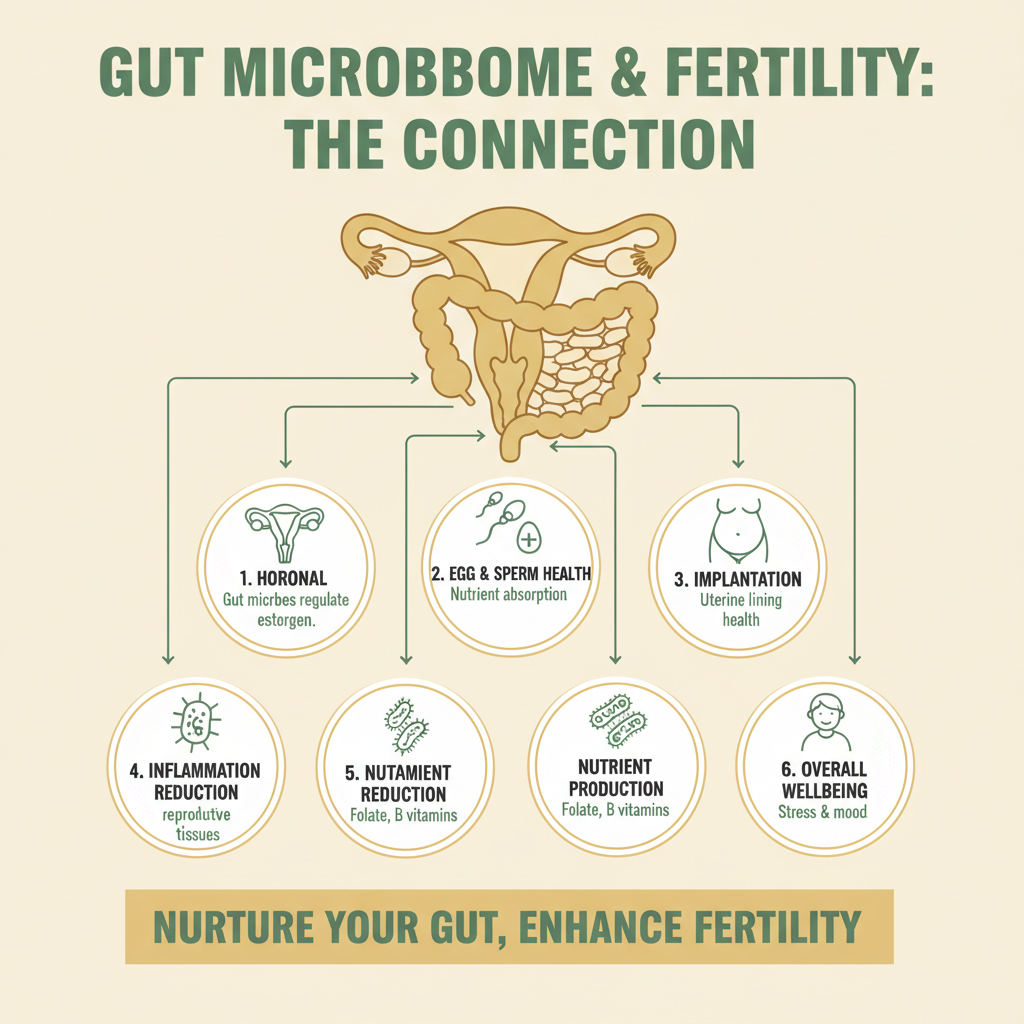
Suggested infographic: "The Gut-Fertility Connection at a Glance" — illustrating the estrobolome, gut-vaginal microbiome axis, and key strains in PregBiotics Conception
Expert Tips and Actionable Advice for Optimising Your Gut for Conception
These are the practical, evidence-informed steps I recommend to my patients in the preconception window — ideally starting at least three months before you begin actively trying to conceive:
-
Start probiotic supplementation early. The microbiome takes time to shift. Beginning probiotics trying to conceive at least 90 days before your target conception window gives beneficial bacteria time to colonise and exert meaningful effects. PregBiotics Conception is designed for exactly this preconception phase.
-
Increase your dietary fibre intake. Aim for 25–30g of fibre per day from a variety of plant-based sources. Fibre feeds your gut bacteria — without it, even the best probiotic supplement will have limited lasting effect.
-
Limit antibiotic use where safely possible. If antibiotics are genuinely necessary, always follow a course with a high-quality probiotic for at least four weeks after to help restore your microbial community.
-
Manage stress actively. The gut-brain axis means that chronic stress directly disrupts gut microbial balance. Incorporate daily stress management practices — whether that's walking, yoga, breathwork, or simply protecting adequate sleep. Your microbiome will thank you.
-
Reduce alcohol and ultra-processed food intake. Both are well-documented disruptors of gut microbial diversity. Even a modest reduction can create meaningful improvements in microbiome composition.
-
Get your vitamin D levels checked. Vitamin D deficiency is extremely common — particularly in the UK — and has been associated with both gut dysbiosis and reduced fertility. Supplementation is often warranted; speak to your GP.
-
Track your cycle alongside your gut symptoms. You may begin to notice patterns — bloating or digestive disturbances correlating with certain hormonal phases. This can be a valuable signal of estrobolome activity worth discussing with your healthcare provider.
-
Download our Pregnancy Gut Guide for a deeper dive into gut health across every stage of conception and pregnancy, with practical meal planning and supplement guidance developed by our clinical team.
When to Seek Medical Advice
While supporting your gut microbiome is a safe, proactive step that most women can take independently, there are situations where I would always encourage you to seek professional medical input before making changes to your supplementation or health regimen.
Please speak with your GP, gynaecologist, or fertility specialist if:
- You have been trying to conceive for 12 months or more without success (or 6 months if you are over 35)
- You have a diagnosed condition such as PCOS, endometriosis, thyroid dysfunction, or recurrent miscarriage
- You are currently undergoing or considering fertility treatment such as IVF or IUI
- You have a history of significant gut conditions, including Crohn's disease, ulcerative colitis, or IBS requiring medical management
- You are taking prescription medications — particularly immunosuppressants or hormone therapies — as some probiotic strains may require evaluation in these contexts
- You experience sudden or severe changes in digestive symptoms
PregBiotics products are designed to complement, not replace, medical care. Always work collaboratively with your healthcare team, and feel empowered to bring the conversation about gut health and fertility to your next appointment. The science is there — and you deserve a provider who takes it seriously.
Conclusion
Your gut microbiome is far more than a digestive organ. It is a dynamic, responsive ecosystem that communicates with your hormones, your immune system, your reproductive tract, and ultimately, your fertility. The science connecting gut health fertility is no longer fringe — it is a rapidly advancing field with deeply important implications for women who are trying to conceive.
The empowering truth in all of this is that your microbiome is malleable. Through consistent, science-backed nutrition, lifestyle adjustments, and targeted supplementation — including high-quality probiotics trying to conceive — you have a genuine opportunity to shape your internal environment in ways that support conception.
Whether you are just beginning to think about starting a family, or you are already deep in the journey and looking for answers, I hope this article has given you a new lens through which to look — one that centres your gut as a foundational pillar of reproductive health.
If you're ready to take the next step, I invite you to explore PregBiotics Conception — formulated with the specific strains, nutrients, and prebiotic support that the science tells us matter most in the preconception window.
And for more evidence-based reading across every stage of pregnancy, visit The PregBiotics Journal — our ongoing commitment to science-led, empowering maternal health education.
You are not navigating this alone. The answers you're looking for may begin — quite literally — in your gut.
Dr. Chomba Chuma, MD, is the founder of PregBiotics and a specialist in maternal gut health. All content published in The PregBiotics Journal is for informational purposes and does not constitute personalised medical advice. Always consult a qualified healthcare professional regarding your individual health needs.
Get the PregBiotics Journal in your inbox
Gut-smart guidance for conception, pregnancy and breastfeeding — twice a week, plus member-only offers. Unsubscribe anytime.
You deserve to feel beautifully supported.
Join thousands of mothers on the PregBiotics journey. Receive your free Pregnancy Prep Guide and gentle, science-backed wisdom — tailored to where you are right now.