Group B Streptococcus in Pregnancy: What Every Mother Needs to Know About GBS, Screening & Natural Prevention
Imagine this: you're 36 weeks pregnant, feeling strong, healthy, and ready to meet your baby. Then, at a routine prenatal appointment, your midwife mentions a swab test for something called Group B Streptococcus — GBS. You've never heard of it, and suddenly you're flooded with questions. What is it?
Dr. Chomba Chuma, MD & Founder
MD & Founder, PregBiotics

Group B Streptococcus in Pregnancy: What Every Mother Needs to Know About GBS, Screening & Natural Prevention
By Dr. Chomba Chuma, MD & Founder | PregBiotics Journal
Introduction
Imagine this: you're 36 weeks pregnant, feeling strong, healthy, and ready to meet your baby. Then, at a routine prenatal appointment, your midwife mentions a swab test for something called Group B Streptococcus — GBS. You've never heard of it, and suddenly you're flooded with questions. What is it? Is my baby at risk? What can I do?
If that scenario resonates with you, you are not alone. Group B Streptococcus — commonly known as GBS — is one of the most talked-about, yet least understood, topics in maternal health. Here's the statistic that stops most mothers in their tracks: approximately 1 in 5 pregnant women carries GBS bacteria in their gut or vaginal tract, and the vast majority have absolutely no idea, because it causes no symptoms whatsoever.
GBS in pregnancy is a subject that sits at the intersection of microbiology, obstetric care, and maternal wellbeing — and it deserves far more open, accessible conversation than it typically receives in the clinical setting. In this article, I want to walk you through exactly what GBS is, why it matters during pregnancy and birth, what the screening process involves, and — crucially — what you can do proactively to support your body's natural defences, including the emerging science on how probiotics may play a meaningful role.
This is not an article designed to frighten you. Quite the opposite. My goal is to empower you with knowledge, because informed mothers make the most confident, prepared decisions for themselves and their babies. Let's begin.
Understanding Group B Streptococcus: The Science Behind the Bacteria
What Exactly Is GBS?
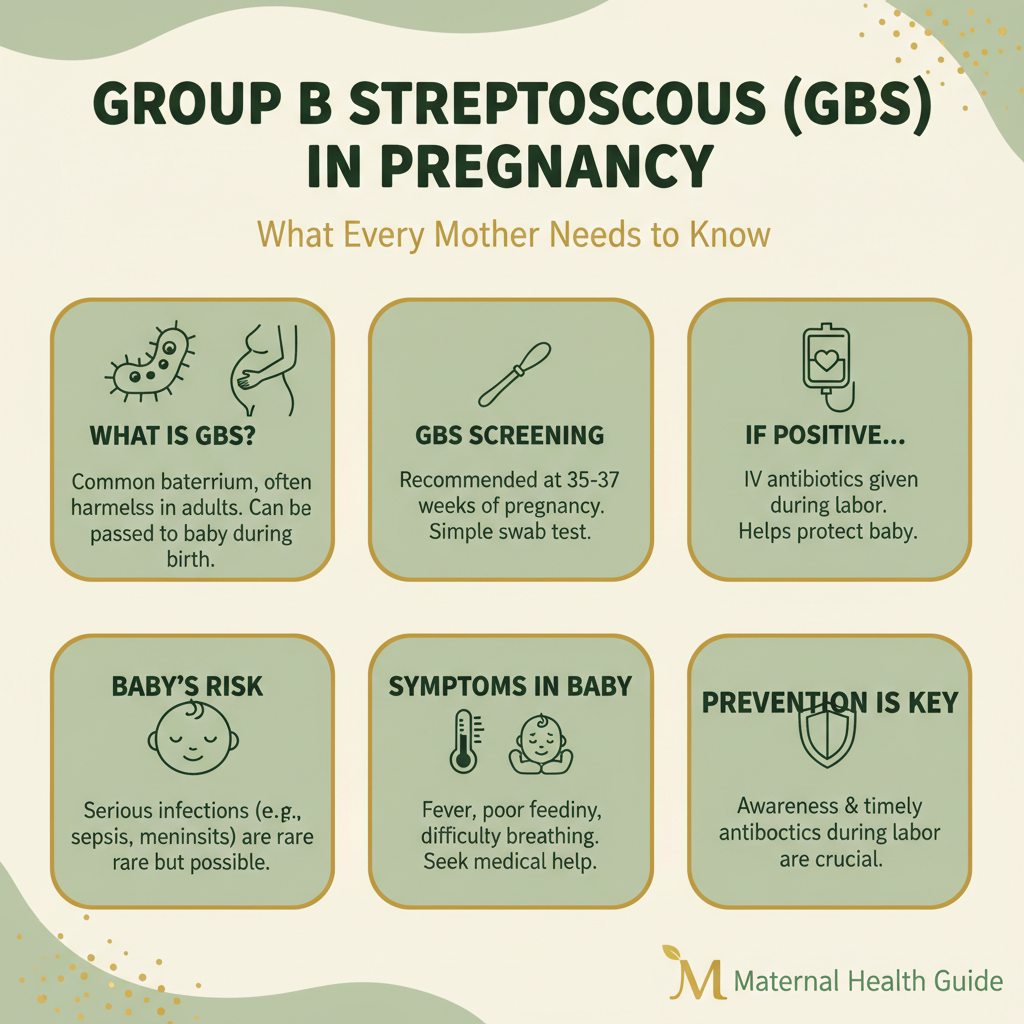
Group B Streptococcus (Streptococcus agalactiae) is a gram-positive bacterium that naturally colonises the gastrointestinal and genitourinary tracts of many healthy adults. It is distinct from Group A Streptococcus — the bacteria responsible for strep throat — and in the majority of adults, GBS colonisation is entirely asymptomatic and harmless.
However, the picture changes significantly during pregnancy and childbirth. GBS is considered the leading cause of serious bacterial infections in newborns in high-income countries, including neonatal sepsis, pneumonia, and meningitis. According to data published in The Lancet Infectious Diseases, GBS causes an estimated 319,000 infant infections annually worldwide, making it a genuine public health priority.
How Does GBS Affect Pregnancy and Birth?
For the mother, GBS colonisation during pregnancy is generally without symptoms, but it can occasionally be associated with urinary tract infections (UTIs), chorioamnionitis (infection of the membranes surrounding the baby), and postpartum uterine infections.
The primary concern, however, is vertical transmission — the passing of GBS from mother to baby during labour and vaginal delivery. As a baby passes through the birth canal, they can be exposed to GBS bacteria. For most babies, this exposure causes no harm. But for a subset — particularly preterm infants, those with prolonged rupture of membranes, or babies born to mothers with GBS bacteriuria — the consequences can be serious.
Neonatal GBS disease is classified into two categories:
- Early-onset GBS disease (EOGBS): Occurs within the first 7 days of life, typically within 24–48 hours of birth. Symptoms include breathing difficulties, fever, and in severe cases, sepsis or meningitis.
- Late-onset GBS disease (LOGBS): Occurs between 7 days and 3 months of age. The baby may acquire GBS postnatally through breast milk or environmental exposure.
The Gut-Vaginal Microbiome Connection
This is where the science becomes particularly fascinating — and relevant to what we do at PregBiotics. GBS is primarily a gut-dwelling organism. The gastrointestinal tract serves as the main reservoir, from which bacteria can migrate to colonise the vaginal tract. This means that the health of the gut microbiome during pregnancy is directly connected to GBS colonisation risk.
Research published in Frontiers in Microbiology has shown that a Lactobacillus-dominant vaginal microbiome is associated with significantly lower rates of GBS colonisation. This understanding forms the scientific foundation for probiotic-based approaches to GBS prevention — a topic I'll expand on shortly.
What GBS Pregnancy Screening Means For You
Understanding the science is one thing — knowing how it applies to your prenatal care is another. Let me make this as practical and clear as possible.
When and How Is GBS Screening Done?
In most countries, including the United Kingdom, United States, Canada, and Australia, GBS screening in pregnancy is recommended between 35 and 37 weeks of gestation. The test itself is straightforward and non-invasive: a swab is taken from both the lower vagina and the rectum, and the sample is sent to a laboratory to check for the presence of GBS bacteria.
In the UK, it is worth noting that GBS screening is not currently part of the routine NHS antenatal programme — though it is available privately and recommended by organisations such as Group B Strep Support (GBSS). Many UK mothers choose to seek private screening, particularly if they have risk factors.
Understanding Your Results
- GBS negative: GBS was not detected at the time of testing. This does not guarantee that GBS won't be present at delivery, as colonisation can be transient, but it significantly reduces risk.
- GBS positive: GBS was detected. This does not mean your baby will be infected — it simply means a conversation about intrapartum antibiotic prophylaxis (IAP) is needed.
Risk Factors That Increase Concern
Even without a positive swab, certain clinical factors increase GBS-related risk and may prompt preventive treatment:
- Previous baby affected by GBS disease
- GBS detected in urine during this pregnancy (GBS bacteriuria)
- Labour beginning before 37 weeks
- Fever during labour
- Prolonged rupture of membranes (more than 18 hours before delivery)
The Role of Intrapartum Antibiotics
If you test positive or have significant risk factors, your care team will likely recommend intrapartum antibiotic prophylaxis (IAP) — typically intravenous penicillin given during labour. This approach is highly effective at reducing early-onset GBS disease in newborns. It is important to understand that IAP is given during labour, not antenatally, because GBS colonisation can change over time.
While IAP is a well-established and evidence-based intervention, many mothers also want to know what they can do before labour — and that is where supportive nutrition, gut health, and supplementation strategies come into their own.
The Role of Nutrition, Gut Health & Supplementation in GBS Prevention
This is the area I am most passionate about as the founder of PregBiotics — and it is also, fortunately, the area where the science is rapidly catching up with what many of us in integrative maternal medicine have long suspected.
Why Your Gut Microbiome Matters
As I mentioned earlier, the gut is the primary reservoir of GBS. A diverse, well-balanced gut microbiome creates a less hospitable environment for pathogenic bacteria to proliferate. Conversely, a disrupted microbiome — caused by poor diet, antibiotic use, stress, or lack of dietary fibre — can create conditions that allow GBS to colonise more readily.
This is not just theory. A 2019 study in the American Journal of Obstetrics & Gynecology found that women with lower gut microbial diversity were at greater risk of GBS colonisation and adverse pregnancy outcomes. The gut-vaginal axis — the microbial communication between the gut and the reproductive tract — is now a well-recognised concept in women's health research.
Probiotics and GBS: What Does the Evidence Say?
The most compelling research involves Lactobacillus species, particularly Lactobacillus rhamnosus GR-1 and Lactobacillus reuteri RC-14, which have been shown in clinical studies to colonise the vaginal tract, lower vaginal pH, and competitively inhibit the growth of GBS bacteria.
These strains work through several mechanisms:
- Production of lactic acid: Lowers vaginal pH, making the environment less favourable for GBS
- Competitive exclusion: Occupy receptor sites that GBS would otherwise use to adhere and colonise
- Bacteriocin production: Natural antimicrobial peptides that directly inhibit GBS growth
- Immune modulation: Support the mucosal immune response in the gut and vaginal tract
Introducing the GBS Shield Protocol
At PregBiotics, we developed the GBS Shield Protocol specifically to address this gap in maternal care — the space between a positive GBS screening result and labour, and the proactive support mothers can offer their bodies throughout pregnancy.
The GBS Shield Protocol is a structured, evidence-based supplementation and lifestyle programme that combines targeted probiotic strains with supportive nutrients. The core components include:
- Lactobacillus rhamnosus GR-1 & Lactobacillus reuteri RC-14 — the most clinically researched vaginal health probiotic strains
- Lactobacillus acidophilus & Bifidobacterium longum — core gut microbiome support strains
- Vitamin C (ascorbic acid) — supports vaginal acidity and mucosal immune defence
- Zinc — essential for immune function and mucosal barrier integrity
- Prebiotic FOS (fructooligosaccharides) — feeds beneficial bacteria and supports microbiome diversity
- Garlic extract (allicin-standardised) — natural antimicrobial properties with emerging evidence in GBS modulation
The GBS Shield Protocol is designed to be used alongside, not instead of, standard obstetric care. It is a supportive strategy — one that nourishes your body's natural defences while you remain under the expert guidance of your midwife or obstetrician.
Expert Tips & Actionable Advice for Managing GBS in Pregnancy
After years of working with pregnant mothers and reviewing the emerging literature, here is what I recommend — both inside and outside the clinical setting:
-
Ask about GBS screening proactively. Don't wait for your care provider to bring it up. If you're in the UK and approaching 35–37 weeks, enquire about private testing if it isn't offered routinely. Knowledge is protection.
-
Start probiotic support early. Don't wait until your third trimester to think about your gut health. The earlier you begin supporting your microbiome during pregnancy, the more time beneficial bacteria have to establish and protect you. Ideally, begin in the first or second trimester.
-
Eat a fibre-rich, colourful diet. Prebiotic foods — asparagus, garlic, onions, leeks, bananas, oats — feed your beneficial gut bacteria. A diverse plant-based diet is one of the most powerful tools for microbiome health. Aim for 30 different plant foods per week.
-
Reduce unnecessary antibiotic exposure where possible. If you need antibiotics during pregnancy (and sometimes you absolutely do), discuss probiotic co-supplementation with your healthcare provider to help protect your microbiome.
-
Manage stress — it directly affects your gut. The gut-brain axis is real. Chronic stress alters gut microbial composition and can compromise your mucosal immunity. Mindfulness, prenatal yoga, adequate sleep, and social support are not luxuries — they are microbiome medicine.
-
Know your risk factors. Review the list of clinical risk factors outlined earlier in this article. If you have one or more, discuss them explicitly with your midwife or obstetrician well ahead of your due date.
-
Create a birth plan that includes GBS. If you test positive, discuss your options for IAP with your birth team. Ask about timing of antibiotic administration, alternatives if you have a penicillin allergy, and what monitoring will be in place for your baby after birth.
-
Explore our Pregnancy Gut Guide for a comprehensive resource on maintaining a healthy microbiome throughout all three trimesters — from the first flutter to the final weeks.
-
Support your vaginal microbiome directly. Alongside oral probiotics, avoid douching, heavily fragranced soaps, or anything that disrupts the natural vaginal pH — these can remove the protective Lactobacillus lining that guards against GBS colonisation.
-
Discuss your birth environment. Water births, if GBS positive, are an area of ongoing clinical debate. Ensure your birth team is aware of your GBS status so they can make fully informed recommendations tailored to your individual situation.
When to Seek Medical Advice
While this article is designed to inform and empower, it is essential that I am clear: GBS is a medical concern that requires professional oversight. Please always discuss your GBS status and any supplementation strategy with your registered midwife, obstetrician, or GP.
Seek prompt medical attention if you experience any of the following during pregnancy:
- Signs of a urinary tract infection (burning urination, frequency, pelvic pain)
- Fever, chills, or flu-like symptoms in pregnancy
- Unusual vaginal discharge with odour or discomfort
- Abdominal cramping or signs of preterm labour before 37 weeks
- Reduced fetal movement
After birth, seek urgent medical care if your newborn shows any of the following signs in the first weeks of life: poor feeding, unusual drowsiness or limpness, high-pitched crying, rapid or laboured breathing, a high or unusually low temperature, or a bulging fontanelle (soft spot on the head). These may indicate neonatal GBS infection and require immediate medical assessment.
The NHS provides guidance on GBS that is worth bookmarking as a reference throughout your pregnancy journey.
Conclusion: Knowledge, Preparation & a Thriving Microbiome
Group B Streptococcus is one of those topics that can feel overwhelming when you first encounter it — but as we've explored together, it becomes far less frightening when you understand what it is, how it works, and what you can do about it.
Here's what I want you to take away from this article:
GBS colonisation is common, usually silent, and largely manageable with the right combination of screening, medical care, and proactive gut health support. You are not powerless. Your microbiome is a living, responsive ecosystem — and the choices you make every day in terms of what you eat, how you supplement, and how you care for your body have a real, measurable impact on the bacterial environment in which your baby will arrive.
The GBS Shield Protocol was created because I believe every mother deserves access to science-backed, integrative support — not just in the delivery room, but throughout the entire journey of pregnancy. When used alongside excellent obstetric care, it represents a meaningful step toward giving your body every possible advantage.
I also encourage you to explore PregBiotics Essentials — our core prenatal supplement formulated to support gut and immune health from the very earliest weeks of pregnancy.
For more evidence-based articles on gut health, immunity, and pregnancy wellness, visit The PregBiotics Journal — a growing library of resources written for mothers who want to understand the science behind their care.
You are more prepared than you think. And your baby is lucky to have a mother who cares this much.
Dr. Chomba Chuma, MD, is a maternal health physician and Founder of PregBiotics. She is passionate about the intersection of gut microbiome science and pregnancy outcomes, and is dedicated to empowering mothers with research-led, compassionate care.
This article is for informational purposes only and does not constitute medical advice. Always consult your healthcare provider before beginning any new supplement or health programme during pregnancy.
Get the PregBiotics Journal in your inbox
Gut-smart guidance for conception, pregnancy and breastfeeding — twice a week, plus member-only offers. Unsubscribe anytime.
You deserve to feel beautifully supported.
Join thousands of mothers on the PregBiotics journey. Receive your free Pregnancy Prep Guide and gentle, science-backed wisdom — tailored to where you are right now.