Group B Streptococcus in Pregnancy: What Every Mother Needs to Know About GBS Screening, Risks, and Natural Prevention
Imagine reaching 36 weeks of pregnancy — you're exhausted, excited, and mentally preparing for the birth of your baby — when your midwife mentions a routine swab test you've never heard of. "We're testing for Group B Strep," she says. You nod, not wanting to appear uninformed, but leave the appointm
Dr. Chomba Chuma, MD & Founder
MD & Founder, PregBiotics

Group B Streptococcus in Pregnancy: What Every Mother Needs to Know About GBS Screening, Risks, and Natural Prevention
By Dr. Chomba Chuma, MD & Founder | PregBiotics Journal
Introduction
Imagine reaching 36 weeks of pregnancy — you're exhausted, excited, and mentally preparing for the birth of your baby — when your midwife mentions a routine swab test you've never heard of. "We're testing for Group B Strep," she says. You nod, not wanting to appear uninformed, but leave the appointment with a quiet worry you can't quite name.
If this sounds familiar, you are far from alone.
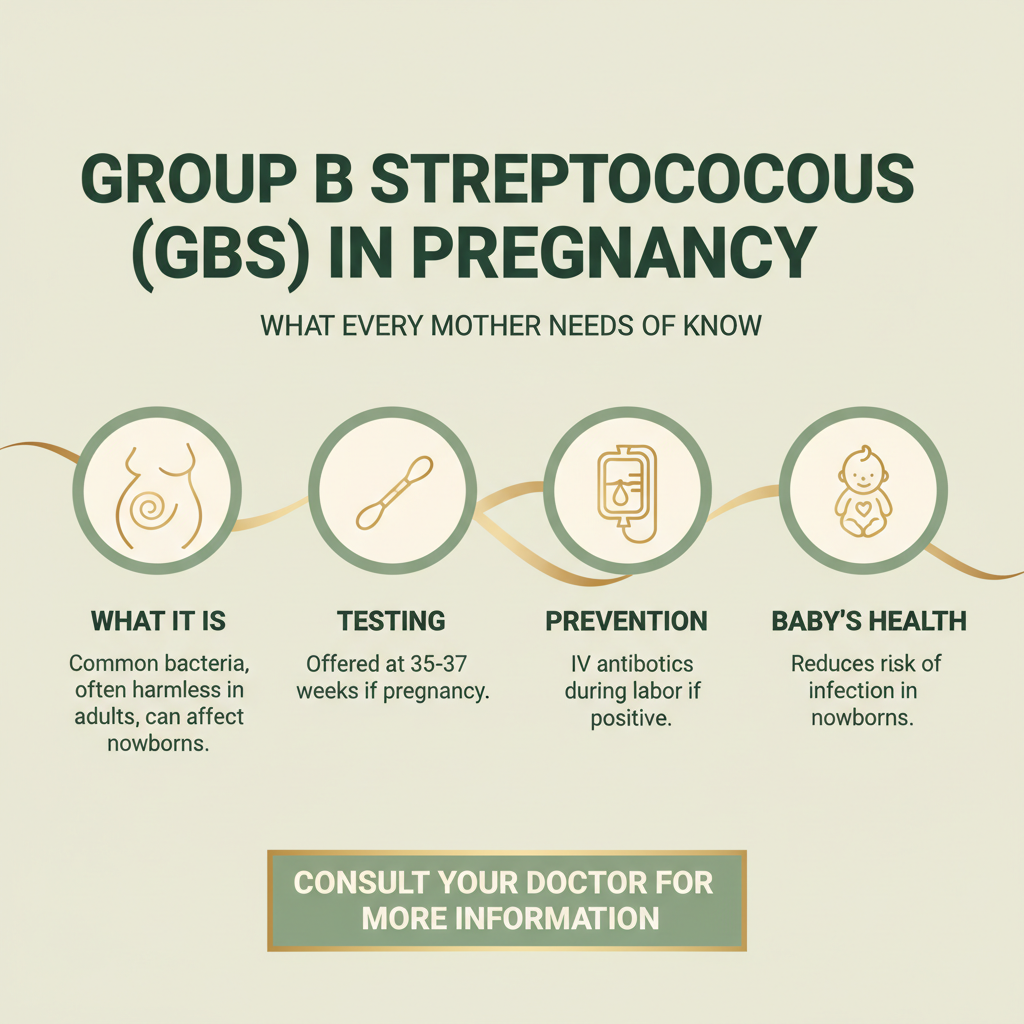
Group B Streptococcus — commonly called GBS — is a naturally occurring bacterium found in the digestive and reproductive tracts of approximately 10–30% of pregnant women worldwide. In most healthy adults, it causes no symptoms and lives peacefully as part of the normal gut and vaginal microbiome. But in pregnancy, particularly during labour and delivery, GBS can pose a serious risk to newborns, making it the leading cause of life-threatening neonatal infection in many high-income countries, including the UK, US, and Australia.
The good news? GBS pregnancy risk is manageable. With the right knowledge, timely screening, and proactive support for your microbiome, you can navigate this with confidence.
In this article, I'll walk you through everything you need to know about GBS in pregnancy: what it is, how it's detected, what the risks actually mean for you and your baby, and — most importantly — what you can do to support your body from the inside out. We'll also explore the emerging science behind probiotics for GBS and how our GBS Shield protocol was designed to support mothers like you.
Let's begin with the science.
The Biology of Group B Streptococcus: What's Actually Happening in Your Body
What Is GBS?
Streptococcus agalactiae — better known as Group B Streptococcus — is a gram-positive bacterium that colonises the gastrointestinal and genitourinary tracts of healthy adults without causing disease. In pregnancy, however, the immune adaptations that protect your growing baby also make you and your newborn more vulnerable to the effects of GBS colonisation.
GBS colonisation during pregnancy is considered transient and intermittent, meaning a woman can test negative at one point and positive weeks later — or vice versa. This is part of why understanding your microbiome environment matters just as much as a single swab result.
How Does GBS Affect Newborns?
The primary concern with GBS is vertical transmission — the passage of the bacterium from mother to baby during labour and birth, most commonly through the birth canal. When a baby passes through a GBS-colonised vaginal environment, they can aspirate or ingest the bacterium, potentially leading to:
- Early-onset GBS disease (EOGBS): Occurs within the first 7 days of life. Symptoms include breathing difficulties, fever, and sepsis.
- Late-onset GBS disease (LOGBS): Occurs between 7 days and 3 months of life. Often associated with meningitis and carries a higher risk of long-term neurological complications.
According to the UK Health Security Agency, approximately 1 in 1,750 babies in the UK develops GBS infection, with around 50 deaths per year and a further 40–50 babies left with long-term disabilities as a result. These numbers, while relatively small in absolute terms, represent preventable tragedies — and that is what drives our work at PregBiotics.
Risk Factors for GBS Transmission
Not all GBS-positive mothers will transmit the bacteria to their babies. However, certain clinical factors are known to increase risk significantly:
- Preterm labour (before 37 weeks): Premature babies have immature immune systems less equipped to handle bacterial exposure.
- Prolonged rupture of membranes (more than 18 hours before delivery): Increases the window for bacterial ascent into the amniotic cavity.
- Intrapartum fever (38°C or above): Often signals infection and increases transmission risk.
- Previous baby with GBS disease: Considered a high-risk indicator in all major clinical guidelines.
- GBS bacteriuria (GBS detected in urine) during pregnancy: Indicates heavy colonisation and carries a higher transmission risk.
Understanding these factors helps your healthcare team tailor the right prevention plan for your specific situation.
What GBS Means For You: Making the Science Practical
Reading about neonatal sepsis and meningitis as a pregnant mother can feel terrifying. I want to be very clear: a positive GBS result is not a crisis. It is information — and information is power.
Here is what a GBS-positive result practically means for your pregnancy journey:
- It does not mean your baby will be infected. The majority of babies born to GBS-positive mothers do not develop GBS disease, particularly when appropriate precautions are taken.
- It does not mean you have an STI or have done anything wrong. GBS colonisation is a normal microbiological occurrence. It reflects the composition of your gut and vaginal microbiome, not your hygiene or health choices.
- It does not automatically require a caesarean section. Vaginal birth remains safe for most GBS-positive mothers with appropriate intrapartum management.
Understanding GBS Screening in Pregnancy
GBS screening in pregnancy varies significantly by country, which causes a great deal of confusion among mothers:
- In the United States, universal GBS screening is recommended between 35–37 weeks of pregnancy via a combined vaginal-rectal swab, with intrapartum antibiotic prophylaxis (IAP) offered to positive carriers.
- In the United Kingdom, universal screening is not currently standard NHS practice. Instead, a risk-based approach is used — antibiotics are offered to women with identified risk factors at the time of labour. However, private GBS testing (using enrichment culture methods) is available and widely recommended by organisations like Group B Strep Support.
- In Australia, universal screening at 35–37 weeks is recommended following guidelines from the Australian Government Department of Health.
If you are unsure about your country's guidelines or haven't been offered a swab, I strongly encourage you to raise it with your midwife or obstetrician. You can also explore our GBS Shield resource, which includes a personalised screening guide based on your location and gestational age.
What Happens If You Test Positive?
If your GBS swab returns positive, the standard medical recommendation is intrapartum antibiotic prophylaxis (IAP) — typically intravenous penicillin administered during active labour. This has been shown to reduce early-onset GBS disease by approximately 80%, according to data published in The Lancet.
However, IAP does not come without considerations. Antibiotics affect not only GBS but the entire microbial ecosystem of your birth canal and your baby's developing gut microbiome. This is an area of growing scientific attention — and where nutritional and probiotic support becomes especially meaningful.
The Role of Nutrition and Supplementation in Supporting GBS Prevention
While antibiotics remain the standard of care for GBS-positive mothers in labour, there is a compelling and growing body of evidence suggesting that supporting the gut and vaginal microbiome throughout pregnancy may help reduce GBS colonisation rates and mitigate the downstream effects of antibiotic exposure on your baby's microbiome.
This is the foundation upon which I developed the GBS Shield Protocol.
The Microbiome Connection
The vaginal microbiome — dominated in healthy pregnancy by Lactobacillus species — plays a protective role against pathogenic bacterial overgrowth, including GBS. Research published in Frontiers in Cellular and Infection Microbiology has demonstrated that a Lactobacillus-dominant vaginal microbiome is associated with significantly lower rates of GBS colonisation. When Lactobacillus populations decline — as can happen through dietary changes, antibiotic use, stress, or normal hormonal shifts in pregnancy — opportunistic bacteria like GBS can proliferate.
This means that actively cultivating a healthy microbial environment from early pregnancy is not just beneficial for your gut health — it may directly influence your GBS status at term.
Key Nutrients and Strains in the GBS Shield Protocol
Our GBS Shield Protocol is a targeted, trimester-specific supplement programme designed to:
- Strengthen the gut and vaginal microbiome
- Reduce the likelihood of GBS colonisation or re-colonisation
- Support your baby's gut microbiome seeding — particularly important if intrapartum antibiotics are used
The protocol incorporates the following evidence-based components:
- Lactobacillus rhamnosus GR-1® and Lactobacillus reuteri RC-14®: The most clinically studied strains for vaginal microbiome restoration. Multiple trials have shown these strains colonise the vaginal epithelium and reduce pathogenic bacterial load.
- Lactobacillus crispatus: A dominant species in healthy vaginal flora, associated with low GBS colonisation rates.
- Lactobacillus acidophilus: Supports intestinal barrier integrity and reduces gut-to-vaginal bacterial translocation.
- Vitamin D3 (2000 IU): Low vitamin D levels in pregnancy are associated with increased susceptibility to GBS colonisation and neonatal GBS disease. Adequate D3 supports innate immune function.
- Vitamin C (500mg): Supports mucosal immune defence and cervical integrity.
- Zinc: Essential for immune cell development and epithelial barrier function.
- Prebiotic Inulin (FOS): Feeds beneficial Lactobacillus strains and supports a healthy gut pH environment unfavourable to GBS.
The GBS Shield Protocol is designed to be started from 28 weeks of pregnancy for maximum impact, though earlier initiation from the second trimester is supported for women with previous GBS-positive pregnancies or other risk factors. You can find the full protocol, including trimester-specific dosing guidance, at the GBS Shield page.
Expert Tips and Actionable Advice: What You Can Do Starting Today
As both a physician and someone deeply invested in empowering mothers, I want to leave you with practical, achievable steps — not a list of things to fear. Here is what I recommend to every pregnant patient I work with:
-
Ask about GBS screening at every prenatal appointment. Don't wait for your provider to bring it up. Between 35–37 weeks (or earlier if you have risk factors), request a vaginal-rectal swab using an enrichment culture method — this is more sensitive than routine culture alone.
-
Start supporting your vaginal and gut microbiome now. Whether you're 10 weeks or 34 weeks pregnant, it is never too early or too late to introduce a quality probiotic formulated for pregnancy. Look for strains with documented evidence in vaginal and maternal health — not just generic digestive probiotics.
-
Prioritise a fibre-rich, diverse diet. Aim for 25–35g of dietary fibre per day from vegetables, legumes, whole grains, and fruits. A fibre-rich diet feeds your beneficial gut bacteria, supports regular bowel movements (reducing rectal-to-vaginal bacterial transfer), and sustains lower gut pH levels less hospitable to GBS.
-
Avoid unnecessary antibiotics during pregnancy where possible. Antibiotic disruption of your microbiome — even for unrelated infections — can create an environment more susceptible to GBS colonisation. Always discuss the necessity and alternatives with your prescribing provider.
-
Reduce vaginal microbiome disruptors. Avoid scented soaps, douching, and synthetic underwear. Opt for cotton breathable fabrics and unscented personal hygiene products to support a healthy vaginal pH.
-
If you test positive, advocate for optimal antibiotic timing. Penicillin given at least 4 hours before delivery offers the greatest protection. If you are planning a home birth or have a history of rapid labour, discuss this timeline with your midwife or obstetrician in advance.
-
After birth, consider probiotic support for your baby. If you received intrapartum antibiotics, infant probiotics — particularly Lactobacillus rhamnosus and Bifidobacterium longum infantis — may help support your newborn's microbiome seeding and reduce the risk of dysbiosis-related conditions like colic, eczema, and immune dysregulation.
-
Breastfeed if you are able. Human breast milk contains Lactobacillus and Bifidobacterium species, as well as human milk oligosaccharides (HMOs) that actively seed and nourish your baby's gut microbiome — a powerful natural counterbalance to antibiotic exposure.
When to Seek Immediate Medical Advice
While this article is written to educate and empower, I want to be unequivocal: there are situations where you must contact your healthcare provider without delay.
Seek immediate medical attention if you are pregnant and experience any of the following:
- Signs of preterm labour (regular contractions before 37 weeks)
- Rupture of membranes (your waters breaking) at any gestation
- Fever above 38°C during pregnancy or labour
- Unusual vaginal discharge with odour, colour change, or itching
- Reduced fetal movement
After birth, contact your midwife, health visitor, or A&E immediately if your newborn shows any of the following symptoms — particularly in the first weeks of life:
- Abnormal breathing, grunting, or blue/pale skin colour
- Persistent high-pitched crying or unusual drowsiness
- Refusing to feed, vomiting, or abdominal bloating
- High or unusually low temperature
- A bulging fontanelle (soft spot on the head)
GBS disease in newborns can progress rapidly. When in doubt, always seek medical evaluation. No supplement protocol, including the GBS Shield, replaces medical care — it is designed to work alongside your clinical team, not instead of them.
Conclusion: Knowledge Is the Best Protection You Can Give Your Baby
Group B Streptococcus is one of the most common yet under-discussed aspects of late pregnancy care. Too many mothers arrive at their 36-week appointment hearing about GBS for the first time, with no framework for understanding what it means or how to respond.
My hope is that this article changes that — for you, and for every mother you share it with.
Here is what I want you to carry forward:
- GBS colonisation is common, manageable, and not your fault
- GBS screening in pregnancy is a straightforward step that can be life-saving — ask for it
- Intrapartum antibiotics remain highly effective when needed, and your birth plan can accommodate them
- Your microbiome is an active participant in your and your baby's health — nurture it deliberately
- Probiotics for GBS prevention represent a promising, science-backed complement to standard care
- The GBS Shield Protocol was designed specifically to give mothers a proactive, evidence-informed tool throughout pregnancy
You are not powerless in this. You are informed, capable, and supported.
For more evidence-based guidance on maternal gut health, microbiome science, and pregnancy nutrition, explore the full library at The PregBiotics Journal — written by clinicians, for mothers.
Dr. Chomba Chuma is a medical doctor, gut health specialist, and the founder of PregBiotics. She is passionate about translating microbiome science into practical, accessible care for pregnant and postpartum women. The information in this article is educational and does not constitute personalised medical advice. Always consult your healthcare provider regarding your individual care.
Get the PregBiotics Journal in your inbox
Gut-smart guidance for conception, pregnancy and breastfeeding — twice a week, plus member-only offers. Unsubscribe anytime.
You deserve to feel beautifully supported.
Join thousands of mothers on the PregBiotics journey. Receive your free Pregnancy Prep Guide and gentle, science-backed wisdom — tailored to where you are right now.