Group B Streptococcus in Pregnancy: What Every Mother Needs to Know About GBS Screening, Prevention & Gut Health
Imagine sitting in your midwife's office at 36 weeks pregnant, feeling healthy and excited, when she mentions a routine swab test you've never heard of. She calls it the GBS test. You nod along, trying not to look alarmed, but inside a quiet anxiety begins to stir.
Dr. Chomba Chuma, MD & Founder
MD & Founder, PregBiotics

Group B Streptococcus in Pregnancy: What Every Mother Needs to Know About GBS Screening, Prevention & Gut Health
By Dr. Chomba Chuma, MD & Founder | PregBiotics Journal
Introduction
Imagine sitting in your midwife's office at 36 weeks pregnant, feeling healthy and excited, when she mentions a routine swab test you've never heard of. She calls it the GBS test. You nod along, trying not to look alarmed, but inside a quiet anxiety begins to stir. What is Group B Strep? Could it harm my baby? What can I actually do about it?
If this sounds familiar, you are far from alone.
Group B Streptococcus — known simply as GBS — is the most common cause of life-threatening infections in newborns worldwide, including meningitis, sepsis, and pneumonia. Yet despite its prevalence, many mothers arrive at their third trimester having never heard of it. According to the Centers for Disease Control and Prevention (CDC), approximately 1 in 4 pregnant women carry GBS bacteria in their body at any given time — most without any symptoms whatsoever.
The good news? Knowledge truly is power here. GBS in pregnancy is well-understood, routinely screened for, and — crucially — there are proactive, evidence-based steps you can take to support your body throughout your pregnancy journey.
In this article, I want to walk you through everything you need to know about GBS pregnancy: what it is, why it matters, how GBS screening in pregnancy works, and the emerging science on how gut and vaginal microbiome health — including the strategic use of probiotics for GBS — may play a meaningful supportive role. We will also explore the GBS Shield Protocol, our science-led approach to maternal microbiome optimisation during pregnancy.
Let's start with the biology.
Understanding Group B Streptococcus: The Science Behind the Bacteria
What Exactly Is GBS?
Streptococcus agalactiae, the bacterium we call Group B Strep, is a gram-positive bacterium that naturally inhabits the gastrointestinal tract and, in many women, the vaginal microbiome. It is a commensal organism — meaning it can live in the body without causing any direct harm to the carrier. This is why most women who test positive during GBS screening in pregnancy feel perfectly well and show no signs of infection.
What makes GBS significant in the context of pregnancy is the risk of transmission to the newborn during labour and delivery. As a baby passes through the birth canal, they can be exposed to GBS bacteria. In the vast majority of cases, nothing happens. But in a small percentage — approximately 1–2% of babies born to GBS-positive mothers who do not receive preventive treatment — the bacterium can cause early-onset neonatal GBS disease, which can be severe and rapidly progressing.
How Does GBS Cause Harm?
GBS produces a range of virulence factors — biological tools the bacterium uses to evade the immune system, adhere to tissues, and invade the body. These include:
- Polysaccharide capsules that help the bacteria evade immune recognition
- Sialic acid surface molecules that mimic host cell structures
- Beta-haemolysin/cytolysin, a toxin that damages cell membranes
In neonates, whose immune systems are immature, these mechanisms can allow the bacteria to cause rapid systemic infection, crossing into the bloodstream and, in the most serious cases, the brain.
Early-Onset vs. Late-Onset GBS Disease
There are two windows of concern:
- Early-onset GBS disease (EOGBS) occurs within the first 7 days of life, most commonly within 24–48 hours of birth. This is the form most directly linked to maternal GBS colonisation at delivery.
- Late-onset GBS disease (LOGBS) develops between 7 days and 3 months of age and is less directly tied to maternal colonisation — it may result from environmental exposure, community transmission, or breastfeeding in some cases.
The Maternal Microbiome Connection
Here is something that does not get discussed nearly enough in antenatal appointments: the composition of your gut and vaginal microbiome profoundly influences your GBS colonisation status. Research published in the American Journal of Obstetrics and Gynecology has found that women with a Lactobacillus-dominant vaginal microbiome are significantly less likely to be colonised with GBS compared to women with dysbiotic (disrupted) microbiomes.
This is not a coincidence. Lactobacillus species — the beneficial bacteria that naturally populate a healthy vaginal environment — produce lactic acid and hydrogen peroxide, creating an acidic, antimicrobial environment that is inhospitable to pathogens like GBS. When this bacterial ecosystem is disrupted — by antibiotic use, diet, stress, or other factors common in pregnancy — the door opens wider for opportunistic bacteria to flourish.
Understanding this connection is central to why microbiome-focused approaches to Group B Strep prevention are gaining momentum in the scientific community.
What GBS Means for You: Navigating Screening and Risk
Understanding the science is one thing. But what does a GBS diagnosis actually mean for your pregnancy? Let me translate the biology into practical reality.
GBS Screening in Pregnancy: What to Expect
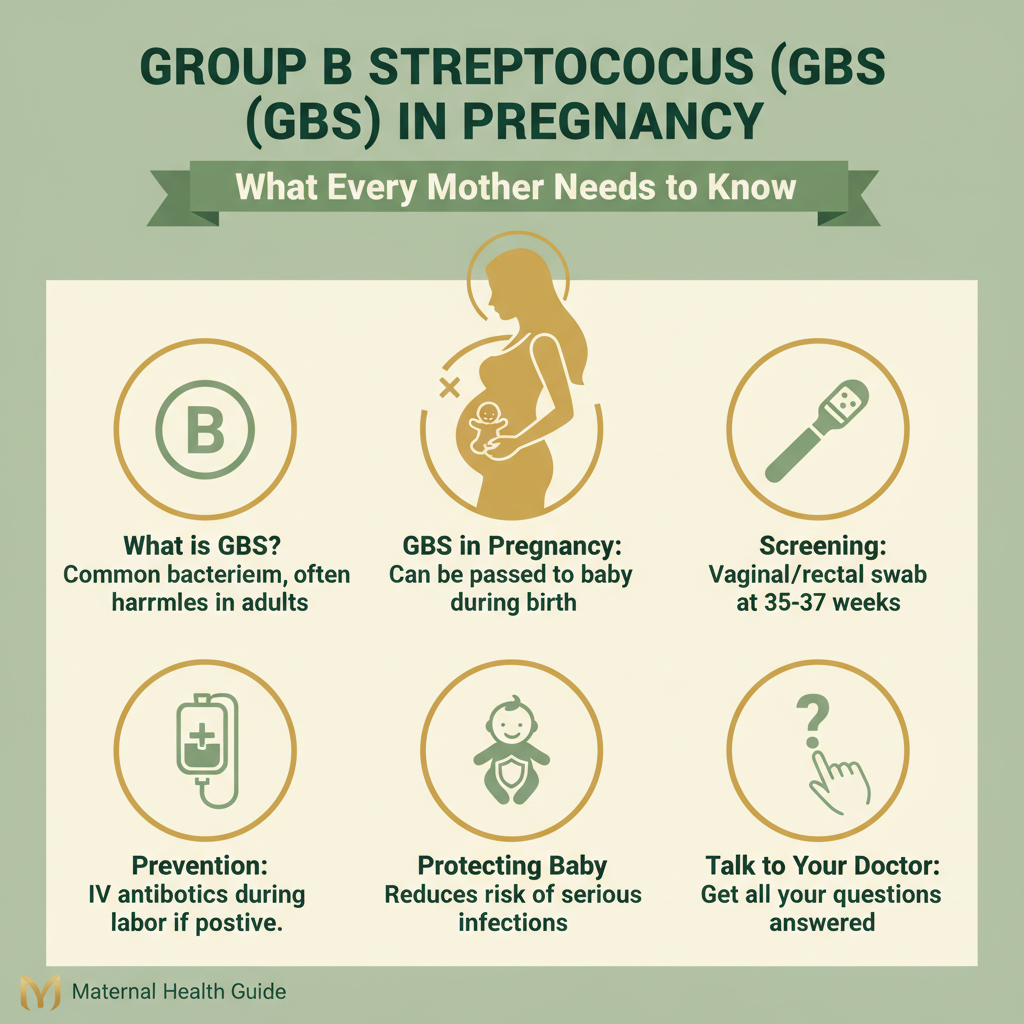
In most countries, GBS screening in pregnancy is offered as a routine, low-risk procedure typically performed between 35 and 37 weeks of gestation. Your midwife or doctor will take a simple swab from the vagina and rectum, which is then sent to a laboratory for culture analysis. Results usually take 24–48 hours.
It is important to understand a few nuances:
- GBS colonisation is transient. A woman can test negative early in pregnancy and positive later — or vice versa. This is why screening happens in the third trimester, close to delivery.
- A positive result does not mean infection. Being GBS-positive simply means the bacterium is present in your body. It says nothing about your health or your baby's inevitable outcome.
- Testing negative does not eliminate all risk. A small percentage of GBS-negative women still transmit the bacteria to their newborns, because colonisation can fluctuate.
Risk Factors That Elevate Concern
Your healthcare team will assess your individual risk profile. Factors that increase the likelihood of neonatal GBS disease include:
- Labour before 37 weeks (preterm labour significantly raises risk)
- Prolonged rupture of membranes (waters breaking more than 18 hours before delivery)
- Fever during labour (temperature above 38°C / 100.4°F)
- A previous baby affected by GBS disease
- GBS detected in urine during current pregnancy (urinary tract colonisation indicates heavy GBS load)
The Standard of Care: Intrapartum Antibiotic Prophylaxis (IAP)
For women who test GBS-positive or who have one or more significant risk factors, the current standard of care is Intrapartum Antibiotic Prophylaxis (IAP) — an intravenous antibiotic (typically penicillin) administered during labour. This intervention has been remarkably effective, reducing early-onset GBS disease by approximately 70–80% according to NHS guidance.
However, IAP is not without its considerations:
- It only addresses the delivery window — it does not reduce maternal colonisation beforehand
- Repeated or cumulative antibiotic exposure can disrupt the maternal and neonatal microbiome
- It is not universally available in all birth settings
This is precisely why the conversation around proactive, microbiome-supportive strategies during pregnancy matters so much — not to replace standard medical care, but to complement it thoughtfully.
The Role of Nutrition, Supplementation & the GBS Shield Protocol
This is the section I am most passionate about — because this is where you move from passive recipient of care to active participant in your own health.
Emerging research consistently points to the gut and vaginal microbiome as central players in GBS colonisation. This means the foods you eat, the supplements you take, and the bacterial ecosystem you nurture throughout pregnancy all have a role to play in Group B Strep prevention. None of this replaces medical screening or treatment — but it forms a powerful, evidence-informed foundation.
Nutrition Principles That Support a GBS-Resilient Microbiome
- Eat a fibre-rich, diverse diet. Prebiotic fibres (found in garlic, onions, asparagus, oats, and legumes) feed beneficial Lactobacillus and Bifidobacterium strains in your gut and, by extension, support a healthier vaginal microbiome.
- Limit refined sugars and ultra-processed foods. High-sugar diets promote the growth of pathogenic bacteria and yeasts, disrupting microbial balance.
- Fermented foods are your friends. Natural yoghurt, kefir, sauerkraut, and kimchi introduce and reinforce beneficial bacteria. Choose unsweetened, live-culture varieties.
- Stay well-hydrated. Adequate hydration supports mucosal lining integrity — a key physical defence against pathogen colonisation.
The GBS Shield Protocol: A Science-Led Supplement Approach
At PregBiotics, we developed the GBS Shield Protocol specifically to address the gap between what the science tells us about microbiome-mediated GBS colonisation and what pregnant women are actually offered in practice.
The protocol centres on targeted probiotic and nutrient support — chosen based on the strongest available clinical evidence for probiotics GBS research and maternal microbiome restoration.
Key strains and nutrients in the GBS Shield Protocol include:
- Lactobacillus rhamnosus GR-1® and Lactobacillus reuteri RC-14® — the most extensively studied strains for vaginal microbiome restoration, with documented ability to colonise the vaginal tract and competitively inhibit pathogens including GBS
- Lactobacillus acidophilus NCFM® — supports gut barrier integrity and systemic immune regulation
- Lactobacillus crispatus — a dominant species in a Lactobacillus-protective vaginal environment, associated with lower GBS colonisation rates in observational studies
- Vitamin D3 (2000 IU) — immune modulation and emerging evidence for reduced GBS colonisation at higher maternal vitamin D levels
- Lactoferrin — a naturally occurring antimicrobial glycoprotein with direct inhibitory action against GBS biofilm formation
- Fructooligosaccharides (FOS) — a prebiotic fibre to feed and sustain probiotic colonies in the gut
A systematic review published in NCBI found that probiotic supplementation during pregnancy was associated with measurable shifts in vaginal microbiome composition, supporting the biological plausibility of a probiotic-GBS connection.
The GBS Shield Protocol is designed to be started ideally by 20 weeks of pregnancy and continued through delivery — giving the microbiome sufficient time to shift meaningfully before the third-trimester GBS screening window.
Expert Tips & Actionable Advice for Every Pregnant Mother
Whether you are newly pregnant, approaching your third trimester, or planning a future pregnancy, here are my most important practical recommendations:
-
Know that GBS screening exists — and ask for it. In some countries and healthcare settings, GBS testing is not automatically offered. Know your options, understand your local guidelines, and advocate for yourself. Ask your midwife or OB directly: "Will I be tested for GBS?"
-
Start supporting your microbiome early. Do not wait until 35 weeks. The gut-vaginal microbiome axis responds best to consistent, sustained intervention. If you are in the first or second trimester, now is the ideal time to start a targeted probiotic protocol.
-
Take your prenatal nutrition seriously. A high-quality prenatal vitamin, a diverse whole-food diet, and adequate prebiotic fibre are the backbone of everything. Supplementation enhances — it does not replace — good nutritional foundations.
-
Have an honest conversation about antibiotic history. If you have taken multiple courses of antibiotics in recent years — for urinary tract infections, dental work, other infections — your microbiome may need more intensive restoration. Discuss this with your healthcare provider and consider seeking microbiome-informed support.
-
Understand your risk factors before labour begins. Talk to your care team before your due date about what would happen if your waters break early, if you go into preterm labour, or if you develop fever during labour. Having a plan in place reduces panic and supports better decision-making.
-
Do not fear a positive GBS result. A positive swab is not a crisis. It is information — valuable, actionable information that allows your medical team to protect your baby effectively during delivery.
-
If you receive IAP, follow up with probiotic support postpartum. Intravenous antibiotics during labour will impact both your microbiome and your baby's emerging gut flora. A postnatal probiotic protocol — for you and potentially your newborn, with paediatric guidance — can support recovery and healthy microbiome establishment. Explore more in our Pregnancy Gut Guide.
-
Breastfeeding supports your baby's microbiome. If you are able and choose to breastfeed, human milk contains Lactobacillus and Bifidobacterium species, human milk oligosaccharides (prebiotics), and secretory IgA — all of which support your baby's developing immune and microbial defences.
When to Seek Medical Advice
While proactive microbiome support is empowering and evidence-informed, there are situations that always require prompt medical attention. Please do not rely on supplements or dietary changes in lieu of professional care in the following circumstances:
- You experience signs of preterm labour before 37 weeks — including regular contractions, pelvic pressure, low backache, or change in vaginal discharge
- Your waters break at any gestation — contact your maternity unit immediately, as prolonged membrane rupture significantly increases GBS transmission risk
- You develop a fever during pregnancy or labour — this may indicate infection requiring urgent assessment
- You have a history of a previous baby affected by GBS disease — this requires enhanced monitoring and an individualised care plan
- You have GBS detected in your urine during pregnancy — this warrants antibiotic treatment in pregnancy and automatic IAP during labour, regardless of your swab result
Always work with your registered midwife, obstetrician, or GP as your primary guide through pregnancy. The information in this article is educational and supportive — it is not a substitute for individualised medical advice. If you are unsure about anything related to your GBS status or pregnancy, please contact your healthcare provider directly.
Conclusion: Knowledge, Action & a Healthier Start for You and Your Baby
Group B Streptococcus is one of those topics that can feel alarming when you first hear about it — and yet, with the right knowledge and the right support, it is entirely navigable.
Here is what I want you to take away from everything we have covered today:
GBS is common, it is usually asymptomatic, and it is routinely screened for. GBS screening in pregnancy exists precisely because we can do something meaningful about it. Intrapartum antibiotics have saved thousands of newborn lives, and they remain the cornerstone of neonatal GBS disease prevention.
Your microbiome is not a passive bystander. The emerging science on the gut-vaginal microbiome axis, the Lactobacillus connection to GBS colonisation, and the growing body of research on probiotics for GBS all point to a meaningful role for microbiome-supportive strategies in your overall pregnancy health plan. The GBS Shield Protocol was designed to translate that science into something practical and accessible for mothers.
You are not powerless. From the foods on your plate to the supplements you take thoughtfully, from the conversations you initiate with your midwife to the birth plan you put in place — every informed decision you make contributes to a healthier outcome for you and your baby.
If you found this article helpful, I invite you to explore more evidence-based maternal health content at The PregBiotics Journal, where we cover everything from gut health in the first trimester to postnatal microbiome recovery.
You deserve to feel informed, supported, and confident throughout every stage of this journey.
With care, Dr. Chomba Chuma, MD Founder, PregBiotics
This article is for educational purposes only and does not constitute medical advice. Always consult your healthcare provider regarding decisions specific to your pregnancy and health.
Get the PregBiotics Journal in your inbox
Gut-smart guidance for conception, pregnancy and breastfeeding — twice a week, plus member-only offers. Unsubscribe anytime.
You deserve to feel beautifully supported.
Join thousands of mothers on the PregBiotics journey. Receive your free Pregnancy Prep Guide and gentle, science-backed wisdom — tailored to where you are right now.