Group B Streptococcus in Pregnancy: What Every Mother Needs to Know About GBS Screening, Prevention, and Protecting Your Baby
Imagine you're 36 weeks pregnant, sitting in your midwife's office, and she mentions a routine swab test you haven't heard much about. She explains it screens for something called Group B Streptococcus — and that if the result comes back positive, it will change how your labour is managed. For many
Dr. Chomba Chuma, MD & Founder
MD & Founder, PregBiotics

Group B Streptococcus in Pregnancy: What Every Mother Needs to Know About GBS Screening, Prevention, and Protecting Your Baby
By Dr. Chomba Chuma, MD & Founder | PregBiotics Journal
Introduction
Imagine you're 36 weeks pregnant, sitting in your midwife's office, and she mentions a routine swab test you haven't heard much about. She explains it screens for something called Group B Streptococcus — and that if the result comes back positive, it will change how your labour is managed. For many mothers, this is the first time GBS even enters their radar. And yet, it's one of the most common bacterial colonisations in pregnancy, affecting approximately 1 in 4 pregnant women in the UK and US.
Group B Streptococcus (GBS) is not a fringe concern. It is the leading cause of life-threatening infections in newborns globally, including meningitis, sepsis, and pneumonia. And yet, despite its significance, public awareness remains surprisingly low. Most women learn about it only when they're handed a leaflet in their third trimester — which, in my view, is far too late to make fully informed decisions.
This article is here to change that.
In the pages that follow, I'll walk you through exactly what GBS is, why it matters during pregnancy, how GBS screening in pregnancy works, what the science says about prevention, and how targeted nutrition and supplementation — including our GBS Shield Protocol — can be a meaningful part of your proactive care plan. My goal is not to alarm you. It is to empower you with knowledge that puts you in the driver's seat of your own maternal health journey.
Understanding Group B Streptococcus: The Science Behind the Bacteria
What Is GBS?
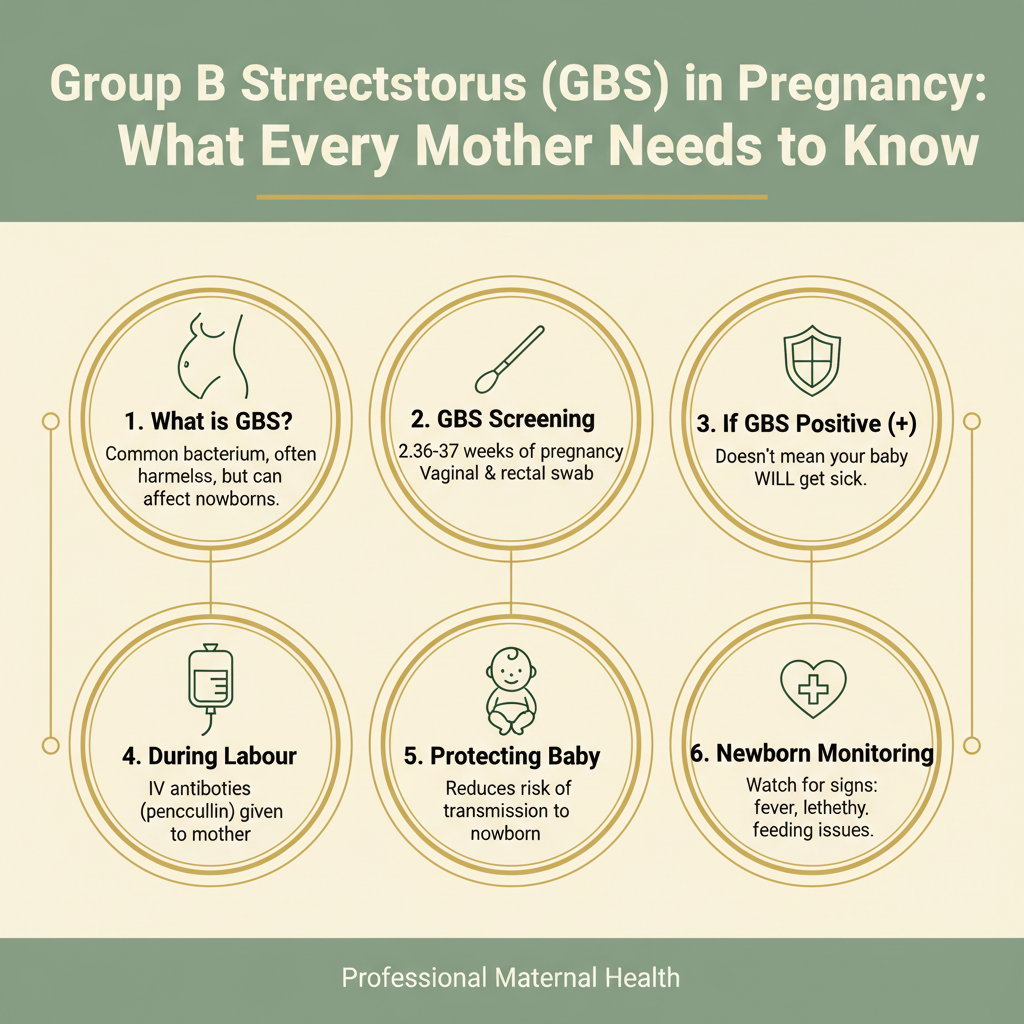
Streptococcus agalactiae, commonly known as Group B Streptococcus (GBS), is a gram-positive bacterium that naturally colonises the gastrointestinal and urogenital tracts of adults. Crucially, in most healthy adults, GBS colonisation causes no symptoms whatsoever. You can carry it without ever knowing — which is precisely what makes it so important to screen for during pregnancy.
According to a landmark review published in The Lancet Infectious Diseases, GBS colonisation is detected in approximately 18% of pregnant women globally, though rates vary significantly by region and population. In the UK, the NHS estimates that roughly 2–4 babies in every 10,000 births develop early-onset GBS disease — a figure that, while seemingly small, represents devastating outcomes for those affected families.
How Does GBS Affect Pregnancy and Newborns?
The primary concern with GBS in pregnancy is vertical transmission — the passing of the bacterium from mother to baby. This most commonly occurs during labour and delivery, when the baby passes through the birth canal and is exposed to maternal vaginal secretions. In most cases, exposure does not result in infection. However, in a subset of newborns — particularly those born prematurely, or those exposed to the bacteria for prolonged periods — the immune system is unable to contain the colonisation, and infection takes hold rapidly.
Early-onset GBS disease (occurring within the first 7 days of life) is the most serious and time-sensitive form. Symptoms in newborns include:
- Difficulty breathing or grunting
- Abnormal temperature (too high or too low)
- Poor feeding or lethargy
- Seizures in severe cases
Late-onset GBS disease (occurring between 7 days and 3 months) is less common but equally serious, with meningitis being a particularly devastating outcome.
Why the Gut Microbiome Matters Here
What many conventional resources fail to explain is the deep connection between the maternal gut microbiome and GBS colonisation levels. GBS primarily resides in the gastrointestinal tract before migrating to the rectovaginal area. Research published in PLOS ONE has highlighted that the composition of the gut microbiota influences not only pathogen colonisation rates, but also the immune readiness of the host. A diverse, well-balanced gut ecosystem populated by beneficial Lactobacillus and Bifidobacterium strains creates a more hostile environment for pathogenic bacteria like GBS.
This is not merely theoretical. Studies have found that Lactobacillus-dominant vaginal microbiomes — often reflective of a healthy gut-vaginal axis — are associated with significantly lower rates of GBS colonisation. This is the scientific foundation upon which evidence-based supplementation strategies for GBS pregnancy care are built.
What GBS Means For You: Screening, Risk, and Real-World Implications
Understanding the science is one thing. Understanding what it actually means for your pregnancy is another. Let me break this down practically.
GBS Screening in Pregnancy: What to Expect
In most countries, GBS screening in pregnancy takes the form of a swab test — typically a combined low vaginal and rectal swab — performed between 35 and 37 weeks of gestation. The swab is sent for culture, and results are usually available within 24–48 hours.
It's important to understand that a positive GBS test result does not mean you have an infection, nor does it mean your baby will be harmed. It means GBS has been detected in your system at that moment in time. GBS colonisation can be transient — meaning a woman who tests positive at 36 weeks may not be colonised during labour, and vice versa.
If you test GBS positive, your care team will likely recommend:
- Intravenous antibiotics during labour (typically penicillin) to reduce the risk of transmission to your baby
- Continuous electronic fetal monitoring during labour
- A clinical discussion about delivery plans, particularly if you are considering a home birth or water birth
You may be offered prophylactic antibiotics without screening if you have certain risk factors, including:
- A previous baby affected by GBS disease
- GBS detected in your urine during this pregnancy
- Preterm labour (before 37 weeks)
- Prolonged rupture of membranes (more than 18 hours)
- Fever during labour
Questions Worth Asking Your Healthcare Provider
- Will I be offered GBS screening, and at what gestation?
- What are my options if I test positive and plan a home birth?
- What are the risks and benefits of intrapartum antibiotic prophylaxis for me and my baby's microbiome?
- What signs of GBS disease should I watch for in my newborn?
This last point deserves special emphasis. Intrapartum antibiotics — while effective at reducing neonatal GBS infection rates — also significantly disrupt the newborn gut microbiome, with emerging evidence suggesting downstream effects on immune development and allergy risk. It is a reasonable clinical trade-off in high-risk situations, but one worth discussing thoughtfully with your care team.
The Role of Nutrition and Supplementation in GBS Prevention
This is where I want to speak to you not just as a doctor, but as someone who has dedicated years to understanding the interplay between maternal gut health and pregnancy outcomes. Supplementation is not a substitute for medical care. But used wisely — and backed by science — it is a genuinely powerful tool.
The Gut-Vaginal Microbiome Axis
As discussed earlier, the gut microbiome exerts considerable influence over the vaginal microbiome. When the gut lacks diversity or is depleted in beneficial bacteria, pathogenic organisms like GBS are less likely to be kept in check. This is why a gut-first approach to GBS prevention makes biological sense.
Research from the National Institutes of Health has demonstrated that probiotic supplementation — particularly with specific Lactobacillus strains — can reduce GBS colonisation rates in pregnant women. While the evidence base is still growing, the mechanistic rationale is well-established: beneficial bacteria compete with GBS for adhesion sites, produce bacteriocins and lactic acid that lower local pH, and stimulate mucosal immune defences.
Key Strains and Nutrients in GBS Prevention
Our GBS Shield Protocol has been formulated specifically with this evidence base in mind. It combines clinically relevant probiotic strains with complementary nutrients to support the gut-vaginal microbiome during pregnancy:
- Lactobacillus rhamnosus GR-1 — one of the most studied strains for vaginal health, shown to adhere to vaginal epithelial cells and inhibit GBS adherence
- Lactobacillus reuteri RC-14 — works synergistically with GR-1 to produce reuterin, a broad-spectrum antimicrobial compound
- Lactobacillus acidophilus — supports gut barrier integrity and reduces systemic inflammatory load
- Bifidobacterium longum — key for intestinal colonisation resistance against pathogens; also benefits the microbiome transferred to baby at birth
- Vitamin C (Ascorbic Acid) — supports mucosal immune defences and connective tissue integrity of amniotic membranes
- Zinc — essential for immune function and wound healing; low levels associated with increased susceptibility to infection during pregnancy
- Prebiotic FOS (Fructooligosaccharides) — selectively feeds beneficial bacteria, supporting microbiome diversity
Starting probiotic GBS support ideally from the second trimester — or earlier — gives beneficial strains the time needed to achieve meaningful colonisation and exert their protective effects before the critical screening window at 35–37 weeks.
Expert Tips and Actionable Advice for GBS in Pregnancy
Here is my evidence-based, practical guidance for managing GBS risk throughout your pregnancy:
-
Start gut health support early. Don't wait until your third trimester. The microbiome shifts dramatically during pregnancy, and building a robust gut ecosystem takes time. Ideally begin targeted probiotic support by 12–16 weeks.
-
Eat a diverse, fibre-rich diet. Gut microbiome diversity is one of the strongest predictors of colonisation resistance against pathogens. Prioritise colourful vegetables, legumes, fermented foods (yoghurt, kefir, sauerkraut), and whole grains. These provide the fuel that beneficial bacteria need to thrive.
-
Avoid unnecessary antibiotic use during pregnancy. While antibiotics are sometimes essential and life-saving, each course significantly disrupts the gut microbiome. If you are prescribed antibiotics during pregnancy, always follow up with a targeted probiotic protocol.
-
Ask specifically for GBS screening. In some healthcare systems, GBS screening is not universally offered. Be proactive — ask your midwife or OB whether it is included in your antenatal care plan.
-
Know your birth preferences and risk profile. If you test GBS positive, have an informed discussion with your care team about intrapartum antibiotic prophylaxis. Understand the benefits (reduced neonatal GBS risk), the trade-offs (microbiome disruption), and what post-birth probiotic support for your baby might look like.
-
Support your vaginal microbiome directly. In addition to gut-targeted probiotics, consider vaginal application of Lactobacillus-containing preparations in consultation with your healthcare provider. Some studies have explored direct vaginal probiotic use in the third trimester as a complementary strategy.
-
Prioritise sleep and stress reduction. Psychological stress and sleep deprivation have measurable negative effects on the gut microbiome. This isn't a luxury recommendation — it's physiologically grounded. Cortisol-driven gut dysbiosis is a real and underappreciated pathway through which stress compromises maternal immune defence.
-
Consider your baby's microbiome from birth. Skin-to-skin contact, breastfeeding, and limiting unnecessary interventions in the newborn period all support healthy microbial colonisation in your baby — laying the foundation for their immune system.
For a deeper dive into supporting your gut through every stage of pregnancy, visit our Pregnancy Gut Guide.
When to Seek Medical Advice
While this article is designed to empower and inform, nothing in it replaces personalised medical care. Please seek prompt medical advice in the following situations:
During pregnancy:
- If GBS is detected in your urine at any point during pregnancy (this indicates active infection, not just colonisation, and requires treatment)
- If you experience preterm labour symptoms before 37 weeks
- If your membranes rupture and labour does not begin within a few hours
After birth:
- If your newborn shows any signs of illness in the first weeks of life — including unusual breathing, temperature instability, poor feeding, or excessive sleepiness — seek emergency care immediately. Early-onset GBS disease progresses rapidly, and early treatment is the single most important factor in outcomes.
Always discuss supplementation with your healthcare provider before starting, particularly if you have any underlying health conditions, are immunocompromised, or are taking other medications. The GBS Shield Protocol is designed to complement, not replace, evidence-based antenatal care.
For trusted, peer-reviewed guidance on GBS in pregnancy, the UK Group B Strep Support charity (GBSS) and the World Health Organization are excellent resources.
Conclusion: Knowledge Is Your Most Powerful Prenatal Supplement
Group B Streptococcus is one of those topics in maternal health that too many women encounter too late — and that is something I am committed to changing at PregBiotics. Because here is the truth: you cannot prevent what you don't know about, and you cannot optimise what you haven't understood.
The good news — and I want you to hear this clearly — is that GBS is manageable. With appropriate screening, informed birth planning, and a proactive approach to gut and microbiome health, the vast majority of mothers who carry GBS go on to have healthy, uncomplicated deliveries and healthy babies. Knowledge and preparation are the pillars of good outcomes.
My hope is that this article has given you:
- A clear understanding of what GBS in pregnancy actually means
- Confidence to ask the right questions at your antenatal appointments
- A science-backed framework for using nutrition and supplementation — including the GBS Shield Protocol — as part of a holistic, gut-first approach to maternal wellness
- Reassurance that a positive GBS test is not a sentence; it is simply information to act on wisely
If you found this article helpful, I invite you to explore more evidence-based maternal health content at The PregBiotics Journal — a resource I created for exactly this purpose: to give mothers the science-backed, compassionate information they deserve.
You are not just growing a baby. You are building their very first ecosystem. That is extraordinary — and you have everything you need to do it well.
Dr. Chomba Chuma, MD, is a maternal health physician and the founder of PregBiotics, a science-led supplement brand dedicated to optimising gut health throughout pregnancy, birth, and beyond. The information in this article is intended for educational purposes and does not constitute medical advice. Always consult your healthcare provider before beginning any new supplement regimen during pregnancy.
Get the PregBiotics Journal in your inbox
Gut-smart guidance for conception, pregnancy and breastfeeding — twice a week, plus member-only offers. Unsubscribe anytime.
You deserve to feel beautifully supported.
Join thousands of mothers on the PregBiotics journey. Receive your free Pregnancy Prep Guide and gentle, science-backed wisdom — tailored to where you are right now.