Group B Streptococcus in Pregnancy: What Every Mother Needs to Know About GBS Screening, Prevention, and Protection
Imagine you are 36 weeks pregnant, finally feeling like you have everything under control — the nursery is ready, the hospital bag is packed, and your birth plan is written. Then at your routine prenatal appointment, your midwife mentions a swab test for something called Group B Streptococcus. You n
Dr. Chomba Chuma, MD & Founder
MD & Founder, PregBiotics

Group B Streptococcus in Pregnancy: What Every Mother Needs to Know About GBS Screening, Prevention, and Protection
By Dr. Chomba Chuma, MD & Founder | PregBiotics Journal
Introduction
Imagine you are 36 weeks pregnant, finally feeling like you have everything under control — the nursery is ready, the hospital bag is packed, and your birth plan is written. Then at your routine prenatal appointment, your midwife mentions a swab test for something called Group B Streptococcus. You nod along, but leave the clinic with more questions than answers. What is GBS? Is it dangerous? What can you actually do about it?
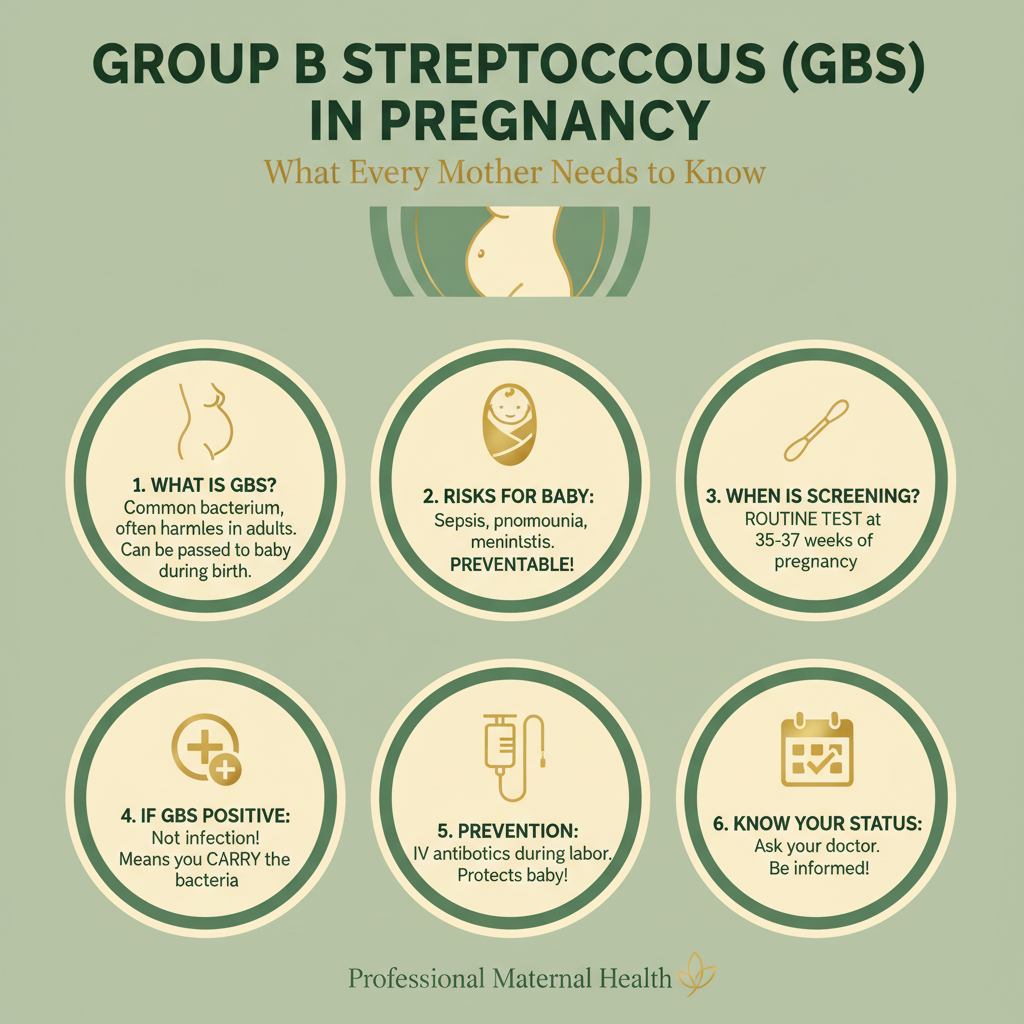
You are far from alone. Group B Strep (GBS) affects approximately 1 in 4 pregnant women in the United States, making it one of the most common — yet least talked about — bacterial colonisations in pregnancy. According to the Centers for Disease Control and Prevention (CDC), GBS is the leading cause of serious neonatal infections in newborns, including sepsis, pneumonia, and meningitis. Despite these statistics, many mothers tell me they first heard about GBS only when the swab was already in their hand.
This article is here to change that. As both a physician and a mother-focused gut health researcher, I want to walk you through everything you need to understand about GBS in pregnancy — the science behind it, what a positive result actually means, how your gut microbiome plays a central role in the picture, and the evidence-backed steps you can take to support your body from the inside out.
Knowledge is not fear — it is power. And you deserve both the facts and the tools.
Understanding Group B Streptococcus: The Science Behind the Bacteria
What Exactly Is GBS?
Streptococcus agalactiae, commonly known as Group B Streptococcus or GBS, is a gram-positive bacterium that naturally colonises the gastrointestinal and genitourinary tracts of healthy adults. It is important to understand that GBS is not a sexually transmitted infection, nor is it a sign of poor hygiene. In most healthy, non-pregnant adults, it causes no symptoms whatsoever and requires no treatment.
The challenge arises during pregnancy and childbirth. When a baby passes through the birth canal, there is a risk of vertical transmission — meaning the bacteria can be transferred from mother to newborn. Because a newborn's immune system is still immature, GBS that poses no threat to the mother can become life-threatening for the baby.
Two Types of GBS Disease in Newborns
Neonatal GBS disease is classified into two categories based on timing:
- Early-Onset GBS (EOGBS): Occurring within the first 7 days of life, most commonly within the first 24 hours. This is primarily acquired during labour and delivery and is the form most directly associated with maternal colonisation.
- Late-Onset GBS (LOGBS): Occurring between 7 days and 3 months of age. This form is less directly linked to maternal colonisation and may have environmental sources, including breast milk in some rare cases.
Early-onset GBS disease has been dramatically reduced through intrapartum antibiotic prophylaxis (IAP) programmes — from approximately 1.7 cases per 1,000 live births in the early 1990s to around 0.23 per 1,000 live births today, according to recent CDC surveillance data. This is a remarkable public health achievement. However, late-onset disease rates have remained relatively unchanged, which is why broader preventive strategies — including maternal microbiome support — are gaining significant research attention.
The Gut-Vaginal Microbiome Connection
Here is where the science becomes particularly fascinating for those of us working in maternal gut health. Research increasingly demonstrates that the gastrointestinal tract is the primary reservoir from which GBS colonises the vagina. Bacteria travel from the rectum to the vagina — a concept known as the gut-vaginal axis — meaning that the composition of your gut microbiome directly influences your vaginal microbiome, and by extension, your GBS colonisation status.
Studies published in journals such as Frontiers in Microbiology have shown that women with a Lactobacillus-dominant vaginal microbiome are significantly less likely to be colonised with GBS. Lactobacillus species — particularly L. crispatus, L. rhamnosus, and L. reuteri — produce lactic acid and bacteriocins that create an inhospitable environment for pathogenic bacteria, including GBS. In contrast, a disrupted or dysbiotic microbiome creates conditions where GBS can proliferate more readily.
This is not just theoretical. It fundamentally reframes our approach to GBS prevention — from a purely reactive, antibiotic-based model to one that also proactively supports the maternal microbiome ecosystem throughout pregnancy.
What GBS Means for You: Making the Science Practical
GBS Screening in Pregnancy: What to Expect
GBS screening in pregnancy is a standard part of prenatal care in the United States, United Kingdom, Australia, Canada, and many other countries. The timing and approach can vary slightly by country:
- In the US, universal screening is recommended between 35–37 weeks of gestation via a combined vaginal-rectal swab
- In the UK, the NHS does not currently offer universal GBS screening, though targeted testing based on risk factors is offered. Organisations like Group B Strep Support (GBSS) advocate for universal testing and provide excellent resources for UK mothers
- In Canada and Australia, universal screening at 35–37 weeks is recommended and widely practised
The swab is quick, painless, and can often be self-administered. Results typically return within 24–48 hours.
What a Positive GBS Result Actually Means
If your GBS screening comes back positive, I want to reassure you clearly: a positive result does not mean your baby will be harmed. It means you carry GBS as part of your normal bacterial flora at that point in time — and that your care team will take specific precautions during labour.
The standard protocol for GBS-positive mothers involves:
- Intrapartum antibiotic prophylaxis (IAP): Usually intravenous penicillin or ampicillin administered during active labour, at least 4 hours before delivery where possible
- Continuous monitoring of the baby for signs of infection in the hours and days following birth
- Planned caesarean section does not require IAP if your waters have not broken, as the baby does not pass through the birth canal
Key Risk Factors That May Increase Concern
Even without a formal positive swab result, your care team may recommend IAP if you have any of the following risk factors:
- GBS detected in urine during any point in pregnancy (GBS bacteriuria)
- Previous baby affected by GBS disease
- Preterm labour (before 37 weeks)
- Prolonged rupture of membranes (waters broken for 18+ hours)
- Fever during labour (temperature ≥38°C / 100.4°F)
- Unknown GBS status at the time of labour
Understanding these risk factors helps you have a more informed, empowered conversation with your midwife or obstetrician.
The Role of Nutrition and Supplementation in Supporting GBS Prevention
I want to be very clear here: supplementation is not a replacement for medical screening, intrapartum antibiotics, or clinical care. However, the evidence for proactive microbiome support as a complementary strategy — both before and alongside conventional care — is compelling and growing.
Why the Gut Microbiome Matters So Much
As I explained in the science section, the gut is the main reservoir for GBS. A robust, Lactobacillus-rich gut and vaginal microbiome creates a biologically hostile environment for GBS colonisation. This means that supporting your microbiome throughout pregnancy is not just good for digestion — it may actively influence your GBS status and your baby's microbial inheritance.
Your baby's first microbiome seeds come from you. During vaginal birth, your baby is inoculated with your vaginal and gut flora. This is one of the most critical biological handoffs in human development, influencing immune programming, allergy risk, metabolic health, and even neurological development. The work of supporting your microbiome during pregnancy is therefore work done for two.
Introducing the GBS Shield Protocol
This is precisely why we developed the GBS Shield Protocol at PregBiotics — a science-led, trimester-aware supplementation framework specifically designed to support maternal microbiome health in the context of GBS risk, screening, and recovery.
The GBS Shield Protocol centres on targeted probiotic strains, prebiotic fibres, and key micronutrients with evidence-based relevance to GBS colonisation, vaginal microbiome health, and perinatal immunity. Here is what the protocol includes and why each component matters:
- Lactobacillus rhamnosus GR-1® — One of the most studied vaginal probiotic strains globally, shown in clinical trials to colonise the vaginal tract, reduce pathogenic bacteria including GBS, and support mucosal immunity
- Lactobacillus reuteri RC-14® — Works synergistically with GR-1 to produce hydrogen peroxide and biosurfactants that inhibit GBS adhesion to vaginal epithelial cells
- Lactobacillus crispatus — The dominant Lactobacillus species in a healthy, GBS-resistant vaginal microbiome
- Bifidobacterium longum — Supports intestinal barrier integrity, reducing translocation of harmful bacteria from the gut
- Vitamin D3 (2000 IU) — Deficiency in vitamin D is independently associated with increased GBS colonisation risk; optimal levels support both mucosal and innate immune defence
- Zinc — Essential for immune cell function and epithelial barrier integrity
- Prebiotic FOS/GOS blend — Selectively feeds beneficial Lactobacillus and Bifidobacterium species, amplifying probiotic effectiveness
- Folate (methylfolate form) — Supports DNA integrity and immune competence throughout pregnancy
The GBS Shield Protocol is designed to begin ideally in the second trimester and continue through to the postpartum period, offering the microbiome the time and nutritional scaffolding it needs to establish resilience.
Expert Tips and Actionable Advice for GBS Pregnancy Management
Here are my evidence-informed recommendations for every pregnant mother navigating GBS:
-
Start microbiome support early — do not wait for screening. The 35–37 week swab reflects your bacterial status at a single point in time. Building a Lactobacillus-dominant microbiome takes weeks, not days. If you start probiotic support in the second trimester, you give your body the best possible environment going into your third trimester screen.
-
Eat a fibre-rich, diverse, anti-inflammatory diet. A diet rich in vegetables, legumes, whole grains, fermented foods (yoghurt, kefir, sauerkraut, kimchi), and prebiotic foods (garlic, onions, asparagus, bananas) directly feeds beneficial gut bacteria and suppresses pathogenic species.
-
Avoid unnecessary antibiotics during pregnancy. Broad-spectrum antibiotics significantly disrupt the microbiome. While intrapartum antibiotics for GBS-positive mothers are clinically indicated and important, avoid unnecessary antibiotic courses for minor issues during pregnancy where your care provider agrees it is safe to do so.
-
Understand your screening options. In countries where universal GBS screening is not offered (such as the UK), you can request or privately access testing. Organisations like Group B Strep Support provide guidance on accessing the ECM (Enriched Culture Medium) test, which is more sensitive than standard swabs.
-
Discuss your birth plan with GBS in mind. If GBS-positive, talk to your care team about when to come to the hospital (earlier to allow 4+ hours for antibiotic administration), and what monitoring your baby will receive postpartum.
-
If you receive intrapartum antibiotics, prioritise postpartum microbiome restoration. Antibiotics during labour will affect both your gut microbiome and your baby's. Continuing probiotic supplementation postpartum — and discussing infant probiotic drops with your paediatrician — can support microbiome recovery for both of you.
-
Ask questions and advocate for yourself. If you are unsure of your GBS status, your care team's protocol, or what signs of GBS in a newborn to watch for, ask clearly and repeatedly. You are your baby's first advocate.
-
Stress management is microbiome management. Chronic psychological stress significantly alters gut microbiome composition, reducing Lactobacillus populations. Mindfulness, gentle prenatal yoga, adequate sleep, and social support are not luxuries — they are microbiome medicine.
When to Seek Medical Advice
While this article aims to educate and empower, I want to emphasise clearly and warmly: nothing replaces your individual clinical care team.
Please contact your midwife, obstetrician, or healthcare provider immediately if:
- You go into labour or your waters break before your GBS result is confirmed
- You have a fever during labour or in the early postpartum period
- Your newborn shows signs of possible GBS infection, including: unusual irritability or lethargy, poor feeding, rapid or difficult breathing, abnormal temperature (too high or too low), or an unusual skin colour
After birth, GBS symptoms in newborns can develop rapidly. Early recognition and treatment are critical. If you have any concern about your baby's behaviour or wellbeing in the days and weeks following birth, seek medical assessment without delay — it is always better to be seen and reassured than to wait.
All supplementation, including the GBS Shield Protocol, should be discussed with your healthcare provider before starting. PregBiotics products are designed to complement — never replace — evidence-based obstetric care.
Conclusion
Group B Streptococcus is one of those topics in pregnancy that can feel alarming when you first hear it — but with the right understanding, it becomes something you can approach with clarity and confidence. Here is what I hope you take away from this article:
GBS is common, it is manageable, and there are meaningful steps you can take — both within the medical system and through proactive microbiome support — to reduce your risk and protect your baby.
Your gut health is not a side note in your pregnancy. It is a central chapter. The bacteria living in your gut and your vaginal tract are not passive passengers — they are active participants in your pregnancy, your birth, and your baby's earliest immune programming. Investing in your microbiome from early in pregnancy is one of the most powerful and evidence-aligned choices you can make.
If you are looking for a place to start, explore the GBS Shield Protocol and our wider Pregnancy Gut Guide — both designed with the same mission I bring to every article and every patient interaction: making maternal gut health science accessible, practical, and genuinely useful for real mothers.
For more research-backed guidance on gut health throughout your pregnancy journey, visit The PregBiotics Journal, where we publish new articles regularly — written for you, always grounded in the science, always with warmth.
You are doing something extraordinary. Let us help you do it with every advantage available.
Dr. Chomba Chuma, MD is a physician and the Founder of PregBiotics. She specialises in maternal microbiome health and evidence-based supplementation during pregnancy and the postpartum period.
This article is for informational and educational purposes only and does not constitute medical advice. Always consult your qualified healthcare provider regarding your individual pregnancy care.
Get the PregBiotics Journal in your inbox
Gut-smart guidance for conception, pregnancy and breastfeeding — twice a week, plus member-only offers. Unsubscribe anytime.
You deserve to feel beautifully supported.
Join thousands of mothers on the PregBiotics journey. Receive your free Pregnancy Prep Guide and gentle, science-backed wisdom — tailored to where you are right now.