Group B Streptococcus (GBS) in Pregnancy: What Every Mother Needs to Know
Imagine you're 36 weeks pregnant, glowing and counting down the days until you meet your baby, when your midwife mentions a routine swab test — Group B Strep screening. You've heard the term before, perhaps in a parenting forum or a whispered conversation in the antenatal waiting room, but nobody ha
Dr. Chomba Chuma, MD & Founder
MD & Founder, PregBiotics

Group B Streptococcus (GBS) in Pregnancy: What Every Mother Needs to Know
By Dr. Chomba Chuma, MD & Founder | PregBiotics Journal
Introduction
Imagine you're 36 weeks pregnant, glowing and counting down the days until you meet your baby, when your midwife mentions a routine swab test — Group B Strep screening. You've heard the term before, perhaps in a parenting forum or a whispered conversation in the antenatal waiting room, but nobody has ever really sat down and explained what it means for you and your baby.
You're not alone. Group B Streptococcus (GBS) is one of the most common — yet least discussed — bacterial concerns in pregnancy, affecting approximately 1 in 4 pregnant women in the United States alone. And yet, many mothers arrive at their third trimester having never received a clear, empowering conversation about what GBS actually is, why it matters, and — critically — what they can proactively do about it.
Here's the reassuring truth: knowledge is power. Understanding GBS in pregnancy does not have to be a source of anxiety. With the right information and a science-led approach to your gut and vaginal microbiome, you can approach this topic with confidence.
In this article, I'm going to walk you through everything you need to know: the biology behind Group B Strep, what GBS screening in pregnancy involves, how your microbiome plays a pivotal role in colonisation, and how targeted nutritional strategies — including our GBS Shield protocol at PregBiotics — can support your body's natural defences. Let's start from the beginning.
Understanding Group B Streptococcus: The Science Behind the Bacteria
What Is GBS?
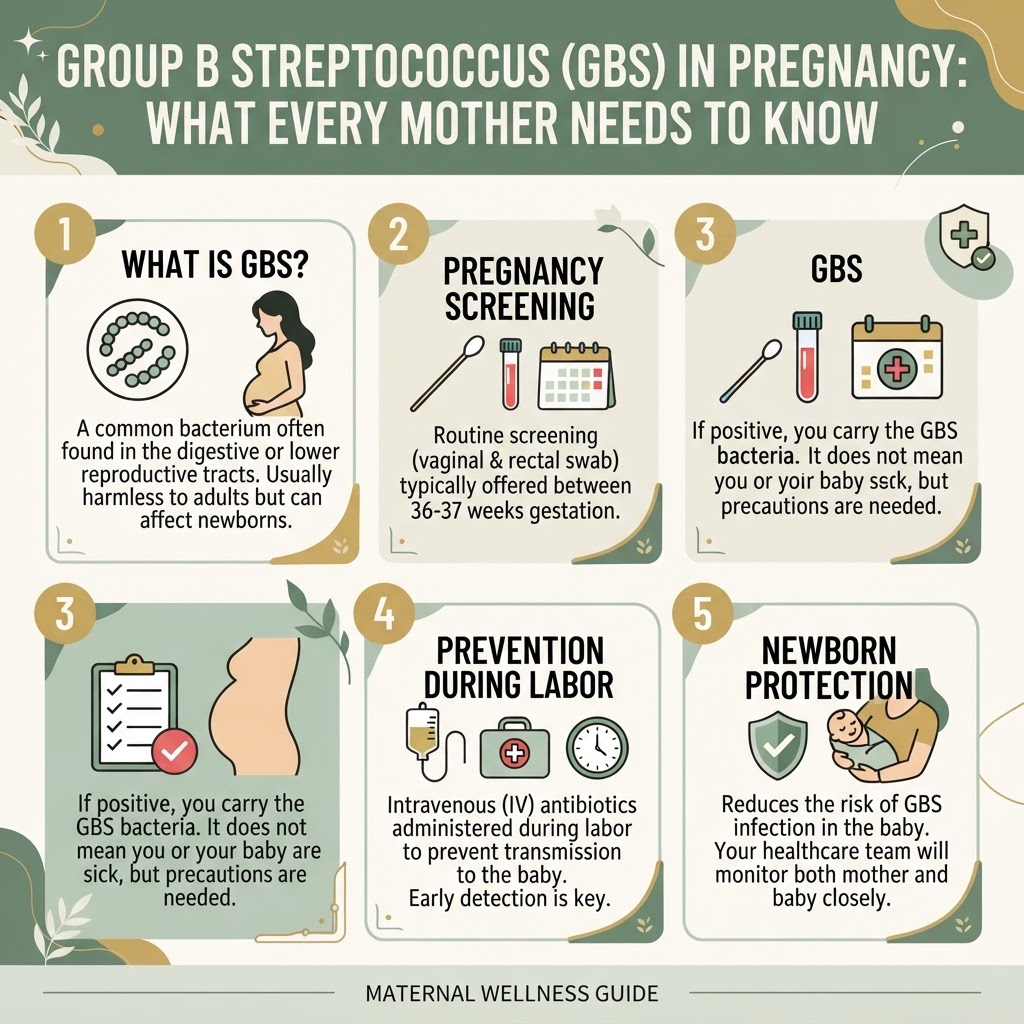
Group B Streptococcus (Streptococcus agalactiae) is a gram-positive bacterium that naturally colonises the gastrointestinal and genitourinary tracts of healthy adults. In most cases, GBS carriage is entirely asymptomatic — you won't feel it, see it, or even know it's there. It is not a sexually transmitted infection, and its presence does not reflect poor hygiene or ill health. It is simply part of the complex bacterial landscape of the human body.
However, in the context of pregnancy, this otherwise harmless commensal organism takes on a new level of clinical significance. If a mother carries GBS in her vaginal or rectal tract at the time of labour and delivery, there is a risk of transmitting the bacteria to her newborn as the baby passes through the birth canal.
Why Does It Matter for Newborns?
Newborns have immature immune systems that are not yet equipped to fight off bacterial infections independently. When GBS is transmitted during birth, it can — in a minority of cases — lead to serious neonatal infections, including:
- Early-onset GBS disease (within the first 7 days of life): manifesting as sepsis, pneumonia, or meningitis
- Late-onset GBS disease (between 7 days and 3 months): less common but potentially associated with meningitis and long-term neurological complications
According to the Centers for Disease Control and Prevention (CDC), GBS remains a leading cause of serious neonatal infection in high-income countries, even with current prevention measures in place.
The Microbiome Connection
This is where the science becomes particularly fascinating — and empowering. Research increasingly shows that the vaginal and gut microbiome play a significant role in whether GBS colonises, persists, or is displaced from the body.
A microbiome dominated by Lactobacillus species — particularly Lactobacillus crispatus and Lactobacillus rhamnosus — is associated with a lower risk of GBS colonisation. These beneficial bacteria produce lactic acid and hydrogen peroxide, creating an acidic vaginal environment that is inherently hostile to pathogens like GBS. Conversely, a disrupted microbiome — characterised by lower Lactobacillus abundance and greater bacterial diversity (a state sometimes described as dysbiosis) — is associated with higher GBS colonisation rates.
A 2020 study published in PLOS ONE demonstrated a significant inverse relationship between vaginal Lactobacillus dominance and GBS colonisation, providing compelling biological plausibility for microbiome-targeted interventions.
This connection between gut and vaginal ecology, immune function, and GBS colonisation is central to everything we do at PregBiotics — and it is the scientific foundation upon which the GBS Shield Protocol was built.
What GBS Pregnancy Status Means For You: Practical Realities
Understanding the science is one thing; knowing how to apply it to your own pregnancy journey is another. Let me break down the most practically relevant aspects of GBS in pregnancy so you can have more informed conversations with your healthcare team.
GBS Screening in Pregnancy: What to Expect
In most high-income countries, routine GBS screening in pregnancy is offered between 35 and 37 weeks of gestation. The test involves a simple swab of the lower vagina and rectum, which is sent to a laboratory to check for GBS colonisation.
Here is what the results mean:
- GBS positive: You are currently colonised with GBS. This does not mean your baby will become infected — it means there is a risk that needs to be managed. In most cases, this is done by offering intrapartum antibiotic prophylaxis (IAP) — an IV antibiotic (typically penicillin) administered during labour.
- GBS negative: No GBS was detected at the time of testing. It's worth noting that colonisation can change over time, so a negative result at 36 weeks does not entirely eliminate risk, particularly in prolonged labours.
- Unknown GBS status: In some situations (e.g., preterm labour before the screening window), the status may not be known. Risk-based protocols are then used to guide antibiotic decisions.
Risk Factors That Matter
Not all GBS-positive mothers face equal risk. Factors associated with higher likelihood of neonatal GBS transmission include:
- Preterm labour (before 37 weeks)
- Prolonged rupture of membranes (waters breaking more than 18 hours before birth)
- Fever during labour
- GBS bacteriuria (GBS detected in a urine sample during pregnancy — always treated regardless of screening results)
- A previous baby affected by GBS disease
Understanding your individual risk profile allows you to have a more targeted, nuanced conversation with your obstetrician or midwife.
The Emotional Weight — Let's Acknowledge It
It would be remiss of me not to name the anxiety that a GBS-positive result can bring. In my clinical experience, many mothers feel frightened, guilty, or confused when they receive this news. I want to be direct: a GBS-positive result is not your fault, and it does not mean something has gone wrong. It is a common finding that your healthcare team is well-equipped to manage. Your role is to attend your antenatal appointments, complete your screening, and work collaboratively with your care providers.
The Role of Nutrition and Supplementation in GBS Prevention
This is perhaps the area I am most passionate about — because it represents a frontier of maternal health where science and proactive self-care genuinely intersect.
While intrapartum antibiotics remain the gold-standard clinical intervention for GBS-positive mothers during labour, the question of what we can do before the screening window — to influence colonisation status and support immune resilience — is increasingly supported by emerging evidence.
Probiotics and GBS: What Does the Research Show?
The role of probiotics in GBS prevention is one of the most exciting areas of maternal microbiome research. Several key Lactobacillus strains have been studied for their ability to:
- Competitively exclude GBS from vaginal epithelial cells
- Lower vaginal pH through lactic acid production, creating an inhospitable environment for GBS
- Modulate local immune responses to reduce inflammatory susceptibility
- Support gut barrier integrity, reducing translocation of pathogens
A systematic review published in Frontiers in Microbiology (2021) highlighted promising evidence for Lactobacillus rhamnosus and Lactobacillus reuteri in reducing vaginal pathogen colonisation during pregnancy, with GBS among the organisms studied.
Introducing the GBS Shield Protocol
At PregBiotics, we developed the GBS Shield Protocol specifically in response to this emerging body of evidence. It is a targeted, trimester-aware nutritional strategy designed to support vaginal and gut microbiome health throughout pregnancy, with particular focus on the critical third trimester window ahead of GBS screening.
The GBS Shield Protocol incorporates the following evidence-informed components:
- Lactobacillus rhamnosus GR-1® — one of the most clinically studied strains for vaginal health, shown to restore Lactobacillus dominance
- Lactobacillus reuteri RC-14® — works synergistically with GR-1® to colonise the vaginal tract when taken orally
- Lactobacillus crispatus — naturally dominant in a healthy vaginal microbiome; supports acidic pH maintenance
- Vitamin C (ascorbic acid) — supports immune function and has been shown to reduce vaginal dysbiosis in pregnancy
- Zinc — essential for mucosal immune integrity and innate defence against bacterial pathogens
- Folate (methylated) — supports immune signalling and maternal cellular health throughout gestation
- Prebiotic fibre (FOS/Inulin) — feeds beneficial bacteria in the gut to reinforce the gut-vaginal microbiome axis
For a deeper dive into how these ingredients interact with your gut and vaginal microbiome throughout pregnancy, visit our comprehensive Pregnancy Gut Guide.
Expert Tips and Actionable Advice for GBS-Positive and GBS-Aware Mothers
Whether you've just received a GBS-positive result or you're proactively preparing in your second trimester, here are my top evidence-informed recommendations:
-
Start microbiome support early. Ideally, begin a targeted probiotic protocol by the second trimester — not just in the final weeks. The vaginal microbiome takes time to respond to supplementation, and earlier intervention allows for a more established shift before the screening window.
-
Limit unnecessary antibiotic use during pregnancy. If antibiotics are necessary (e.g., for a UTI), follow your prescribed course completely — but discuss probiotic co-supplementation with your healthcare provider to help protect your microbiome during and after treatment.
-
Prioritise a diverse, fibre-rich diet. A gut microbiome that is fed well supports a resilient vaginal ecosystem. Focus on whole grains, legumes, fruits, vegetables, and fermented foods such as natural yoghurt, kefir, and sauerkraut.
-
Avoid vaginal douching and scented products. These disrupt the natural pH and microbial balance of the vaginal environment, potentially making it more hospitable to GBS and other pathogens.
-
Stay well-hydrated. Adequate hydration supports mucosal immunity and overall immune function.
-
Attend all scheduled antenatal appointments. GBS screening at 35–37 weeks is a key opportunity to understand your status and plan your intrapartum care accordingly.
-
If GBS positive, discuss your birth plan with your provider. Understand when and how intrapartum antibiotics will be administered. Know the signs of GBS infection in newborns (poor feeding, high or low temperature, rapid breathing, unusual limpness or irritability) so you can act quickly if needed.
-
Consider vaginal seeding discussions carefully. While some families explore vaginal microbiome seeding for caesarean-born babies, this practice should be discussed thoroughly with your obstetrician given the theoretical risks in GBS-positive mothers.
-
Don't self-diagnose or stop prescribed treatments. Probiotics and nutritional support are complementary strategies — they are not replacements for standard obstetric care.
-
Support your stress response. Chronic stress has measurable effects on the gut and vaginal microbiome through the gut-brain-microbiome axis. Mindfulness, adequate sleep, and gentle prenatal exercise all support microbiome health indirectly.
When to Seek Medical Advice
While proactive nutritional and microbiome support plays a meaningful role in your overall maternal health, there are clear situations where prompt medical advice is essential:
Contact your midwife, obstetrician, or maternity unit immediately if:
- You have signs of a urinary tract infection during pregnancy (burning urination, cloudy urine, pelvic pain), which may indicate GBS bacteriuria
- Your waters break before 37 weeks or more than 18 hours before labour begins
- You develop a fever during labour
- Your newborn shows any signs of illness in the days following birth — including unusual lethargy, poor feeding, rapid breathing, temperature instability, or a high-pitched cry
Always discuss any supplements — including probiotics — with your midwife, GP, or obstetrician before starting them during pregnancy. While the strains included in the GBS Shield Protocol have well-established safety profiles in pregnancy, individual medical circumstances vary, and personalised guidance from your healthcare provider is always the most appropriate starting point.
For further reading on GBS guidance during pregnancy, the NHS provides clear clinical information for families that is worth bookmarking.
Conclusion: You Are More Empowered Than You Know
Group B Strep in pregnancy is one of those topics that too often lives in the grey zone between "not serious enough to discuss properly" and "too scary to bring up." I hope this article has helped illuminate the middle ground — where honest science, practical understanding, and proactive self-care come together.
Here is what I want you to take away:
GBS is common. It is manageable. And your microbiome matters more than you think. The choices you make every day — the foods you eat, the supplements you take, the way you nourish your gut — are not trivial. They are building the biological environment in which your baby will enter the world.
The GBS Shield Protocol was created because I believe every mother deserves access to evidence-informed, science-led support that goes beyond the minimum standard of care. It's not about replacing your medical team — it's about walking into every antenatal appointment and every labour ward feeling as prepared and supported as possible.
If you're in your second or third trimester and want to take a proactive step toward supporting your microbiome ahead of GBS screening, I encourage you to explore the GBS Shield Protocol and speak with your healthcare provider about whether it's right for you.
And for more evidence-based maternal health content written with warmth, clarity, and deep respect for the journey you're on, I invite you to explore The PregBiotics Journal — our growing library of resources for mothers who want science without the overwhelm.
You are not just managing a pregnancy. You are growing a life. Let's make sure you have everything you need to do it confidently.
Dr. Chomba Chuma, MD is the Founder of PregBiotics and a practising physician with a specialist interest in maternal gut health, the microbiome, and evidence-based perinatal nutrition. The content in this article is for informational purposes only and does not constitute personalised medical advice. Always consult a qualified healthcare professional for guidance specific to your pregnancy.
Get the PregBiotics Journal in your inbox
Gut-smart guidance for conception, pregnancy and breastfeeding — twice a week, plus member-only offers. Unsubscribe anytime.
You deserve to feel beautifully supported.
Join thousands of mothers on the PregBiotics journey. Receive your free Pregnancy Prep Guide and gentle, science-backed wisdom — tailored to where you are right now.