Group B Streptococcus (GBS) in Pregnancy: What Every Mother Needs to Know
Imagine reaching 36 weeks of pregnancy — you've navigated morning sickness, watched your body transform beautifully, and you're almost at the finish line. Then your midwife mentions a routine swab test for something called Group B Streptococcus. Perhaps you've never heard of it. Perhaps the name alo
Dr. Chomba Chuma, MD & Founder
MD & Founder, PregBiotics

Group B Streptococcus (GBS) in Pregnancy: What Every Mother Needs to Know
By Dr. Chomba Chuma, MD & Founder | PregBiotics Journal
Introduction
Imagine reaching 36 weeks of pregnancy — you've navigated morning sickness, watched your body transform beautifully, and you're almost at the finish line. Then your midwife mentions a routine swab test for something called Group B Streptococcus. Perhaps you've never heard of it. Perhaps the name alone sounds alarming. You're not alone.
Here's a statistic that often surprises expectant mothers: approximately 1 in 4 pregnant women in the UK and US carry Group B Streptococcus (GBS) bacteria in their vagina or rectum at any given time — and the vast majority have absolutely no idea, because it causes no symptoms whatsoever. For most mothers, GBS carriage is completely harmless. But in a small percentage of cases, it can be passed to a newborn during labour, potentially causing serious neonatal illness.
The good news? With the right knowledge, proactive screening, and a science-backed approach to maternal health, the risks associated with GBS pregnancy can be significantly managed and, in many cases, reduced.
In this article, I want to walk you through everything you need to understand about GBS in pregnancy — what it is, how it works, what current screening protocols look like, and crucially, what you can do right now to support your body and your baby. We'll also look at emerging evidence on the microbiome, probiotics for GBS, and how the GBS Shield protocol has been designed to complement your clinical care.
Knowledge is not fear. Knowledge is power. Let's begin.
Understanding Group B Streptococcus: The Biology Behind the Bacterium
What Exactly Is GBS?
Group B Streptococcus, formally known as Streptococcus agalactiae, is a gram-positive bacterium that naturally colonises the gastrointestinal and urogenital tracts of healthy adults. It is what we call a commensal organism — meaning it typically coexists with its host without causing disease. In fact, GBS has been found in the gut microbiome of up to 30% of healthy adults worldwide, according to data published by the Centers for Disease Control and Prevention (CDC).
The issue during pregnancy is not merely the presence of GBS, but the potential for vertical transmission — the passing of the bacterium from mother to baby during labour and delivery.
How Does GBS Affect a Newborn?
Neonatal GBS infection falls into two categories:
- Early-onset disease (EOD): Occurs within the first 7 days of life, typically within 24–48 hours of birth. This is most commonly associated with transmission during labour.
- Late-onset disease (LOD): Develops between 7 days and 3 months of age. The source here is less clear and may involve postnatal transmission through breast milk, caregivers, or community exposure.
Early-onset neonatal GBS can manifest as sepsis, pneumonia, or meningitis, all of which carry significant morbidity and mortality risk if not promptly treated. In the UK, GBS is the most common cause of severe bacterial infection in newborns, according to Group B Strep Support UK.
Why Do Some Women Carry GBS?
GBS colonisation is not a reflection of hygiene, sexual behaviour, or personal health choices. It is largely determined by the composition of your vaginal and gut microbiome — the complex ecosystem of bacteria that inhabits your body. Women with a less diverse vaginal microbiome, or those with reduced populations of protective Lactobacillus species, appear more susceptible to GBS colonisation.
Importantly, GBS colonisation is also dynamic — it can fluctuate over time, meaning a woman who tests negative at 20 weeks may test positive at 36 weeks, and vice versa. This is precisely why timing of GBS screening pregnancy protocols matters so much.
Risk Factors for GBS Transmission to Newborns
Even among GBS-positive mothers, transmission is not inevitable. Clinical risk factors that increase the likelihood of neonatal infection include:
- Labour or membrane rupture before 37 weeks
- Prolonged rupture of membranes (more than 18 hours)
- Intrapartum fever (temperature above 38°C)
- A previous baby affected by GBS disease
- GBS detected in urine during the current pregnancy
Understanding these risk factors allows you and your healthcare team to have an informed, personalised conversation — not a frightened one.
What GBS in Pregnancy Means for You, Practically Speaking
Now that we've covered the science, let's bring this into your everyday reality as an expectant mother. Here is what GBS pregnancy considerations look like in practical terms.
Understanding GBS Screening in Pregnancy
Currently, GBS screening pregnancy practices differ significantly between countries:
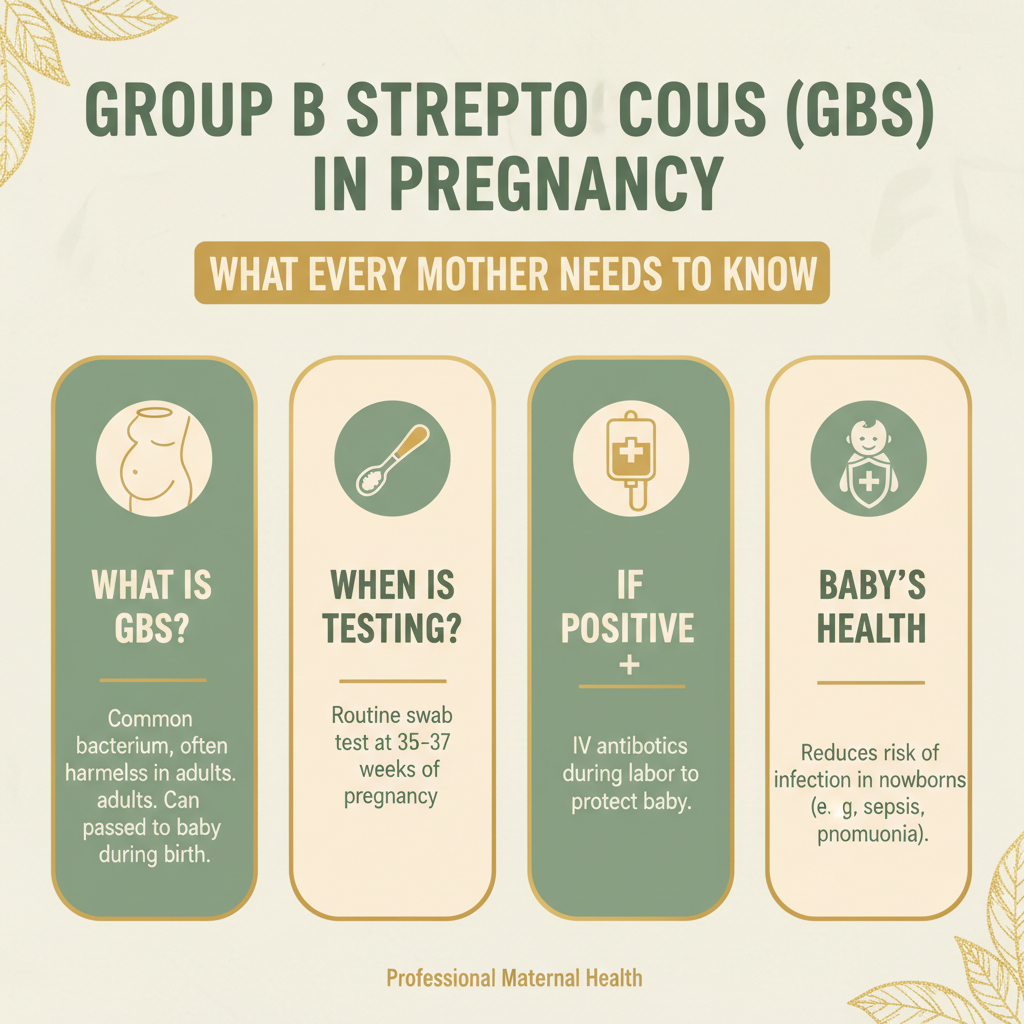
- United States: Universal screening is recommended between 35–37 weeks of pregnancy using a vaginal-rectal swab. This has been standard practice since 2002.
- United Kingdom: Routine universal screening is NOT currently offered on the NHS. Instead, a risk-based approach is used, meaning antibiotics are offered during labour to women with identified risk factors.
- Australia: Similar to the UK, risk-based management is standard, though private screening options exist.
If you are in the UK and wish to be tested, you can request a private GBS swab test, ideally between 35–37 weeks of pregnancy, which is considered the optimal window for accuracy. Organisations like Group B Strep Support provide postal testing kits.
What Happens If You Test GBS Positive?
A positive GBS result does not mean your pregnancy is high-risk by default. Here is what typically happens:
- You will be offered intrapartum antibiotic prophylaxis (IAP) — usually intravenous penicillin administered during labour
- IAP has been shown to reduce early-onset neonatal GBS disease by approximately 80%
- Your birth team will be informed so they can monitor your newborn closely after delivery
Key Practical Points to Discuss With Your Midwife or OB
- Ask about your local screening policy — don't assume testing is automatic
- Request documentation of your GBS status so it can follow you through your birth plan
- Discuss your birth preferences in context of GBS — for example, home birth with GBS positivity requires specific planning
- Understand the signs of neonatal GBS so you can act quickly if needed post-delivery: these include poor feeding, high or low temperature, grunting, or lethargy in your newborn
Being proactive, asking questions, and staying informed are among the most powerful things you can do.
The Role of Nutrition, the Microbiome & Supplementation in GBS Prevention
This is where the science becomes genuinely exciting — and where I believe maternal medicine has an enormous, largely untapped opportunity.
The Microbiome Connection
Emerging research strongly suggests that the composition of your vaginal and gut microbiome plays a central role in whether GBS colonisation takes hold and persists. A healthy vaginal microbiome is typically dominated by Lactobacillus crispatus and Lactobacillus iners, species that produce lactic acid and hydrogen peroxide — creating an environment inhospitable to GBS.
A landmark study published in Frontiers in Cellular and Infection Microbiology found that women with Lactobacillus-dominant vaginal microbiomes had significantly lower rates of GBS colonisation. Conversely, microbiome dysbiosis — an imbalance in microbial communities — was associated with higher GBS carriage rates.
This is not just theoretical. It points to a genuine, modifiable pathway through which probiotics GBS interventions may help reduce colonisation risk.
Probiotics and GBS: What the Research Shows
The evidence for using probiotics as part of a Group B Strep prevention strategy is still emerging, but it is promising. Studies have explored the use of Lactobacillus rhamnosus and Lactobacillus reuteri — two well-studied strains — and their ability to compete against GBS in the vaginal environment, reduce colonisation, and support immune regulation during pregnancy.
A 2020 clinical review published in the Journal of Perinatal Medicine noted that probiotic supplementation during pregnancy may contribute to a favourable shift in vaginal microbial ecology, potentially reducing the window of opportunity for GBS to establish colonisation.
It's important to be clear: probiotics are not a replacement for medical GBS screening or intrapartum antibiotics where clinically indicated. But as a complementary, science-backed tool, they represent an intelligent and proactive layer of support.
Introducing the GBS Shield Protocol
This is exactly why I developed the GBS Shield Protocol here at PregBiotics — a targeted, evidence-informed supplementation programme designed to support your vaginal and gut microbiome from the second trimester onward, and reduce the biological conditions that allow GBS colonisation to flourish.
The GBS Shield Protocol includes a carefully selected combination of:
- Lactobacillus rhamnosus GR-1 — extensively researched for vaginal microbiome restoration and competitive exclusion of pathogenic bacteria
- Lactobacillus reuteri RC-14 — works synergistically with GR-1 to reduce vaginal dysbiosis and lower colonisation risk
- Lactobacillus crispatus — the dominant species in a healthy, protective vaginal microbiome
- Vitamin D3 (2000 IU) — deficiency has been associated with increased GBS colonisation; Vitamin D modulates innate immune defences in the vaginal epithelium
- Folate (methylated L-5-MTHF) — supports cellular repair, immune function, and foetal neural development
- Prebiotics (Inulin-FOS blend) — fuel for beneficial bacteria, supporting both gut and vaginal microbiome integrity
- N-Acetyl Cysteine (NAC) — shown in preliminary studies to disrupt GBS biofilm formation
You can explore the full protocol and learn how to incorporate it into your care plan through our dedicated GBS Shield programme.
Expert Tips & Actionable Advice for GBS Pregnancy Management
As both a physician and a mother who has walked through pregnancy, I know that what you need alongside clinical information is practical guidance you can act on today. Here are my top recommendations:
-
Get screened — proactively. If you are in the UK, do not wait to be offered universal screening. Request a private vaginal-rectal swab between 35–37 weeks. Knowledge of your GBS status empowers your birth plan.
-
Start supporting your microbiome early. The second trimester is an ideal time to begin a targeted probiotic regimen. Don't wait until 36 weeks. A well-established microbiome takes weeks to cultivate.
-
Optimise your Vitamin D levels. Ask your midwife or GP to test your Vitamin D at your booking appointment. Deficiency is extremely common in the UK, particularly in winter months, and has a direct bearing on immune competence and GBS colonisation risk.
-
Reduce unnecessary antibiotic use during pregnancy. Antibiotics disrupt the microbiome. If antibiotics are genuinely needed (e.g., for a UTI), always follow them with a high-quality probiotic supplement to support microbial recovery.
-
Eat for your microbiome. A diverse, fibre-rich diet feeds your beneficial bacteria. Prioritise fermented foods (live yoghurt, kefir, sauerkraut), colourful vegetables, legumes, and whole grains. Limit refined sugars, which can fuel pathogenic bacteria.
-
Avoid vaginal douching or scented products. These disrupt the natural pH of the vagina and disturb the Lactobacillus populations that protect against colonisation.
-
Include your partner in the conversation. GBS can be carried by partners and, while evidence on sexual transmission is not conclusive, maintaining overall sexual health hygiene is a sensible precaution.
-
Create a birth plan that includes your GBS status. Whether positive, negative, or unknown, document your status and ensure your birth team is fully briefed — whether you're delivering in hospital, at a birthing centre, or at home.
-
Know the signs of neonatal GBS. After delivery, observe your baby closely for the first 12–48 hours: reluctance to feed, high-pitched crying, temperature instability, laboured breathing, or unusual pallor warrant immediate medical attention.
-
Speak with a specialist if you've had a GBS-affected baby previously. A previous neonatal GBS infection significantly raises your risk classification in subsequent pregnancies and requires individualised care planning.
When to Seek Medical Advice
While knowledge and proactive supplementation can meaningfully reduce certain risks, it is essential that I am unambiguous on this point: nothing in this article is a substitute for personalised medical advice from your qualified healthcare provider.
Please seek prompt medical attention if:
- You develop a urinary tract infection during pregnancy (GBS is sometimes detected in urine and automatically classifies you as high risk)
- You experience preterm labour or premature rupture of membranes before 37 weeks
- You develop a fever during labour or in the immediate postpartum period
- Your newborn shows any signs of illness within the first 3 months of life, including poor feeding, unusual temperature, or lethargy
If you have already had a baby affected by neonatal GBS disease, please ensure your current healthcare provider is aware from your very first antenatal appointment.
The NHS GBS guidance provides reliable, up-to-date clinical information on management during labour and postnatal monitoring. Always work in partnership with your care team — that collaboration is the foundation of a safe pregnancy.
Conclusion
Group B Streptococcus is one of those topics in pregnancy that can feel frightening at first glance — but the more informed you are, the less power it holds over you. The truth is that with appropriate GBS screening pregnancy practices, clear communication with your healthcare team, and proactive support of your body's own protective microbiome, the vast majority of mothers who carry GBS go on to have healthy, safe births and perfectly well newborns.
What I hope you take away from this article is this: you are not passive in this process. You have meaningful tools available to you. You can choose to know your GBS status. You can choose to nourish your microbiome. You can choose to prepare your birth team. And you can choose to act early.
The GBS Shield Protocol was born out of my own commitment to giving mothers exactly the kind of targeted, evidence-based support that bridges the gap between clinical care and everyday wellness. It is not a cure, and it does not replace your midwife or obstetrician. It is a partner — a science-led companion on your journey.
If you found this article helpful, I warmly invite you to explore more resources at The PregBiotics Journal, where we publish regular, physician-authored content on maternal gut health, microbiome science, and evidence-based supplementation throughout every stage of pregnancy.
You are informed. You are capable. You are ready.
Dr. Chomba Chuma, MD, is a physician and the founder of PregBiotics, a science-led maternal gut health brand dedicated to supporting mothers through evidence-based supplementation and education. The content in this article is for informational purposes only and does not constitute medical advice. Always consult your qualified healthcare provider regarding your individual pregnancy care.
Get the PregBiotics Journal in your inbox
Gut-smart guidance for conception, pregnancy and breastfeeding — twice a week, plus member-only offers. Unsubscribe anytime.
You deserve to feel beautifully supported.
Join thousands of mothers on the PregBiotics journey. Receive your free Pregnancy Prep Guide and gentle, science-backed wisdom — tailored to where you are right now.