DHA and Omega-3 in Pregnancy: The Science Behind Your Baby's Brain Development
Imagine holding your newborn for the first time and knowing that the choices you made during pregnancy — the foods you ate, the supplements you took, the care you gave your body — are already woven into the very architecture of their brain. It's a profound thought, and one that speaks to the extraor
Dr. Chomba Chuma, MD & Founder
MD & Founder, PregBiotics

DHA and Omega-3 in Pregnancy: The Science Behind Your Baby's Brain Development
By Dr. Chomba Chuma, MD & Founder | PregBiotics Journal
Introduction
Imagine holding your newborn for the first time and knowing that the choices you made during pregnancy — the foods you ate, the supplements you took, the care you gave your body — are already woven into the very architecture of their brain. It's a profound thought, and one that speaks to the extraordinary responsibility and opportunity that pregnancy represents.
Here is a statistic that I find both remarkable and motivating: the human brain grows faster in the last trimester of pregnancy than at any other point in a person's life. During this period alone, your baby's brain weight nearly triples. The fuel driving much of this extraordinary growth? A fatty acid called DHA — docosahexaenoic acid — the most abundant omega-3 fat in the human brain.
And yet, research consistently shows that most pregnant women in the UK and worldwide do not consume enough DHA. A 2019 review published in Nutrients found that the majority of pregnant women fall significantly short of recommended omega-3 intake, particularly in populations that consume little oily fish.
This article is for every mother who wants to understand not just what to take during pregnancy, but why it matters and how it works. We'll explore the science of DHA and omega-3 in pregnancy, what it means for your baby's brain, eyes, and nervous system, and how thoughtful nutrition and supplementation — including a product I formulated specifically with pregnant mothers in mind — can help you bridge the gap. Because when it comes to your baby's brain development, the science is clear, and the window of opportunity is real.
The Neuroscience of DHA: Why Your Baby's Brain Needs Omega-3
What Are Omega-3 Fatty Acids?
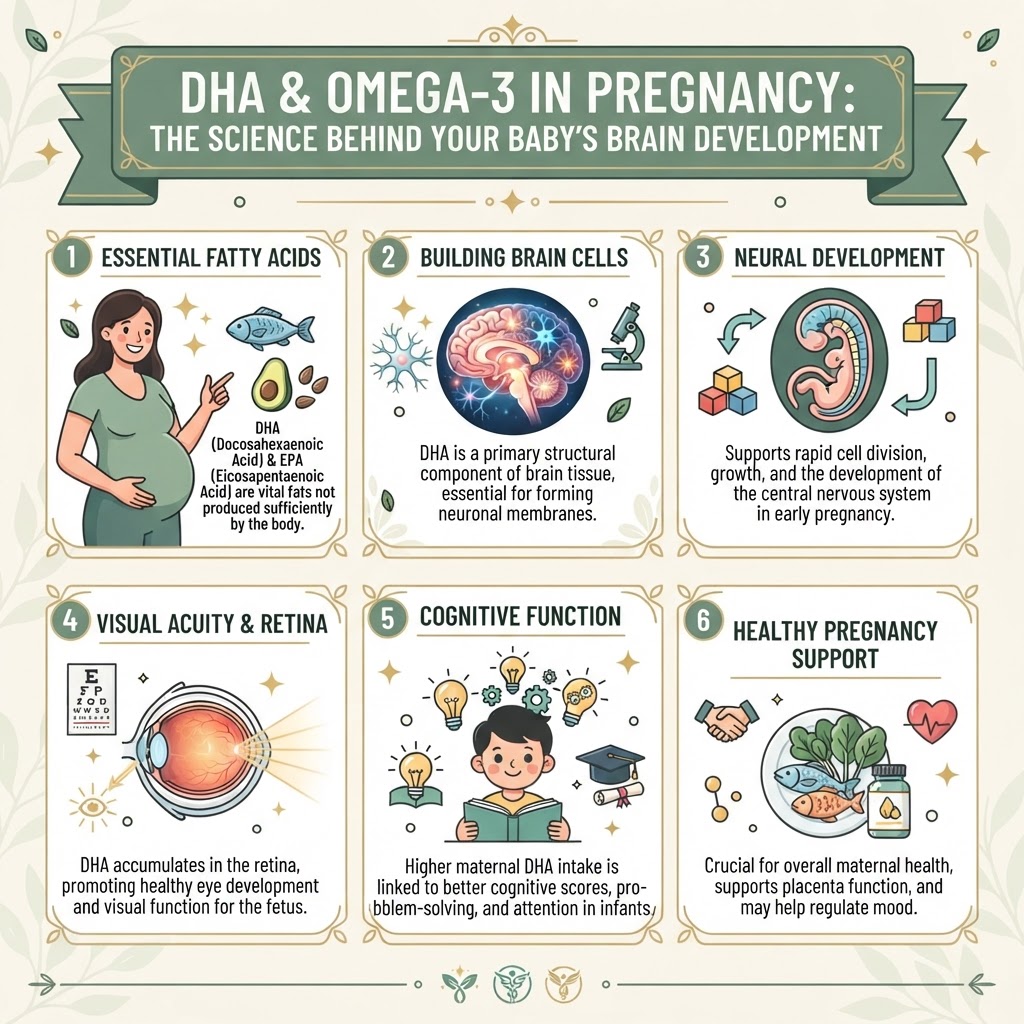
Omega-3 fatty acids are a family of polyunsaturated fats that the human body cannot synthesise in sufficient quantities on its own. This makes them essential — meaning we must obtain them through diet or supplementation. The three most biologically relevant omega-3s are:
- ALA (alpha-linolenic acid) — found in plant sources like flaxseed and walnuts
- EPA (eicosapentaenoic acid) — found primarily in oily fish and marine sources
- DHA (docosahexaenoic acid) — the dominant structural fat in the brain and retina
While ALA can theoretically be converted to EPA and DHA in the body, this conversion is notoriously inefficient — as low as 0.5–5% for DHA according to studies. This is why direct dietary sources of DHA, particularly from marine origin, are so critical during pregnancy.
DHA and the Developing Brain
DHA accounts for approximately 97% of the total omega-3 fatty acids in the brain and around 93% of the omega-3s in the retina. It is structurally incorporated into neuronal cell membranes, where it influences fluidity, receptor function, and the efficiency of signal transmission between neurons.
During pregnancy, the foetal brain undergoes rapid synaptogenesis — the formation of synaptic connections between nerve cells — particularly from the second trimester onwards and accelerating dramatically in the third trimester. DHA is actively transported across the placenta to support this process. Your baby cannot make adequate DHA themselves; they depend entirely on your supply.
What the Research Shows
The evidence supporting DHA in pregnancy is compelling:
A landmark study published in The Lancet demonstrated that children born to mothers with higher omega-3 intake during pregnancy scored significantly higher on tests of cognitive development, fine motor skills, and language acquisition at 18 months and 4 years of age.
A Cochrane systematic review analysing 70 randomised trials concluded that omega-3 supplementation during pregnancy was associated with reduced risk of preterm birth (before 37 weeks) and early preterm birth (before 34 weeks) — outcomes that themselves have profound impacts on brain development.
The World Health Organization recommends that pregnant women consume at least 200–300 mg of DHA per day, with some researchers and clinical bodies advocating for higher intakes of up to 600 mg daily, particularly in the third trimester.
Beyond the Brain: Eyes and Immune Development
DHA pregnancy benefits extend beyond neurology. The retina — the light-sensitive tissue at the back of the eye — is densely rich in DHA. Adequate maternal DHA intake supports the development of your baby's visual acuity and contrast sensitivity. EPA, meanwhile, has well-established anti-inflammatory properties and plays a role in immune system modulation, potentially influencing your baby's immune programming in early life.
What This Means For You: Practical Implications of the Research
Understanding the biology is one thing; knowing what it means for your daily life is another. Here is how the science of omega-3 pregnancy translates into practical reality for expectant mothers.
Your Body Prioritises Your Baby
One of the most important things to understand is that your body will redirect DHA to your growing baby even at the expense of your own stores. This is sometimes called the "maternal depletion" phenomenon — your brain and body become depleted of DHA during pregnancy if your intake isn't sufficient to meet both your needs and your baby's.
This may partly explain why some women experience "pregnancy brain" — that frustrating cognitive fog and forgetfulness that many mothers describe. While hormonal changes are certainly involved, declining maternal DHA levels likely play a role too.
- Third trimester matters most. The greatest foetal demand for DHA occurs in the final 10–12 weeks of pregnancy, when brain growth is most rapid. However, building your stores earlier gives your body more to draw from.
- Postpartum implications are real. Research suggests that DHA depletion continues during breastfeeding, as DHA-rich breast milk further draws on maternal stores. Starting supplementation early matters.
- Dietary sources alone may not be enough. The NHS recommends pregnant women eat 1–2 portions of oily fish per week, but also advises limiting intake due to mercury concerns. This creates a genuine dilemma that supplementation can help resolve.
Signs That You May Not Be Getting Enough
While there is no simple home test for DHA deficiency, these circumstances may increase your risk of insufficient intake:
- You follow a vegetarian or vegan diet
- You rarely eat oily fish (salmon, sardines, mackerel, herring)
- You are pregnant with twins or multiples (demand is higher)
- You have had a previous pregnancy recently (stores may not have replenished)
- You experience significant nausea that limits dietary variety
Omega-3 and Pregnancy Mood
Emerging research is exploring the relationship between omega-3 fatty acids and perinatal mood disorders. DHA is involved in serotonin and dopamine signalling pathways, and some studies suggest that adequate omega-3 intake may support emotional wellbeing during and after pregnancy. While this is not yet a confirmed therapeutic application, it is another compelling reason to prioritise these essential fats.
The Role of Nutrition and Supplementation in Meeting Your DHA Needs
Food First — Always
As a physician, my starting point is always food. The best dietary sources of DHA and EPA include:
- Oily fish: Salmon, sardines, mackerel, herring, anchovies — rich in both DHA and EPA
- Algae and algal oil: The original plant-based source of DHA (fish get their DHA by eating algae)
- Eggs enriched with omega-3: A modest but useful contributor
- Walnuts and flaxseed: Provide ALA, though conversion to DHA is limited
However, as we've discussed, dietary sources alone are often insufficient — particularly for women who don't regularly consume oily fish, or who limit fish intake due to mercury concerns, taste preferences, or nausea.
Why Supplementation Matters
This is precisely why I developed PregBiotics Essentials + Omega — a supplement designed not just to tick boxes, but to genuinely meet the nuanced needs of pregnant women based on current evidence.
What makes PregBiotics Essentials + Omega different is that it combines the critical omega-3 fatty acids your baby's brain needs with a carefully selected probiotic and prebiotic blend to support your gut microbiome — because, as I explore in our Pregnancy Gut Guide, your gut health during pregnancy has its own profound influence on your baby's immune and neurological development.
Key Nutrients in PregBiotics Essentials + Omega
- DHA (from sustainably sourced algal oil): Providing 300 mg per daily dose — meeting WHO recommendations without the mercury risk associated with fish oil
- EPA: Supporting anti-inflammatory pathways and complementing DHA's neurological benefits
- Folate (as methylfolate): The bioavailable form critical for neural tube development
- Vitamin D3: Essential for foetal bone development, immune function, and increasingly linked to neurodevelopmental outcomes
- Iron (bisglycinate form): Gentle on the stomach, critical for oxygen transport to your growing baby
- Iodine: Often overlooked but essential for thyroid hormone production, which directly regulates foetal brain development
- Choline: A nutrient that works synergistically with DHA for brain and neural tube development
- Lactobacillus rhamnosus & Bifidobacterium longum: Evidence-based probiotic strains supporting maternal gut health and immune balance
The use of algal oil rather than traditional fish oil pregnancy supplements is a deliberate, science-led choice. Algal DHA is the original source — fish accumulate DHA by consuming algae — and it provides the same bioavailable DHA without concerns about heavy metal contamination or sustainability. It is also suitable for vegetarian and vegan mothers.
Expert Tips and Actionable Advice
As both a physician and a mother, here is the practical guidance I give to the pregnant women in my care:
-
Start omega-3 supplementation before the third trimester. Ideally, begin in the first trimester or even preconceptionally. Building your DHA stores early means your body has more to offer your baby during the critical growth spurt of the final weeks.
-
Look for at least 200–300 mg DHA per daily dose. Many standard prenatal multivitamins contain little or no DHA. Check the label carefully. If your prenatal doesn't contain it, add a separate DHA supplement or choose a comprehensive formula like PregBiotics Essentials + Omega that includes it.
-
Choose algal DHA for purity and sustainability. Whether you eat fish or not, algal oil provides clean, bioavailable DHA without mercury risk. This is particularly important given that fish consumption during pregnancy is already limited to 1–2 portions per week by NHS guidelines.
-
Don't rely on ALA alone. If you are vegan or vegetarian, flaxseed and walnut consumption contributes ALA, but the conversion to DHA is insufficient to meet pregnancy needs. An algal DHA supplement is essential.
-
Take your omega-3 supplement with a meal containing fat. DHA is a fat-soluble nutrient. Taking it alongside a meal improves absorption significantly.
-
Continue supplementation postpartum if breastfeeding. Breast milk DHA content directly reflects maternal intake. Your baby's brain continues developing rapidly in the first two years of life, and breast milk is a primary source of DHA during this period.
-
Address nausea early. If morning sickness is making it hard to take supplements or eat well, speak to your midwife or GP. There are safe strategies — including certain probiotic strains — that may help.
-
Combine omega-3 with gut health support. Emerging research on the gut-brain axis suggests that your microbiome influences not only your own mood and cognition but may also shape your baby's neurological development through immune and inflammatory pathways. This is the integrative philosophy behind PregBiotics Essentials + Omega.
When to Seek Medical Advice
While omega-3 fatty acids and the nutrients in PregBiotics Essentials + Omega are generally well-tolerated and evidence-based, I always encourage every pregnant woman to discuss supplementation with her GP, obstetrician, or midwife before beginning any new supplement regimen.
This is particularly important if you:
- Are taking blood-thinning medications (omega-3 fatty acids have mild anticoagulant effects at high doses)
- Have a fish or seafood allergy (though algal DHA avoids this concern, always disclose)
- Are pregnant with multiples or have a high-risk pregnancy
- Have a known metabolic condition affecting fat absorption
- Are already taking a prescribed prenatal supplement and want to avoid duplication of certain nutrients
Dosage matters. While the doses in PregBiotics Essentials + Omega are carefully formulated within safe and evidence-based ranges, more is not always better when it comes to supplementation in pregnancy. Total DHA intake above 1,000 mg per day is not routinely recommended without medical supervision.
Your healthcare team is your most important resource. A good supplement should complement professional care — never replace it. For broader guidance on nutrition and gut health throughout pregnancy, the NHS offers excellent foundational advice.
Conclusion
Your baby's brain is one of the most complex structures in the known universe, and it begins its most extraordinary period of growth long before birth. The choices you make during pregnancy — the nutrients you prioritise, the gaps you fill — are quite literally building the foundation of your child's cognitive future.
DHA and omega-3 fatty acids are not optional extras. They are structural necessities. The science is clear, the research is compelling, and the good news is that meeting your needs is entirely achievable with the right knowledge and support.
As a physician and as someone who has walked the path of pregnancy, I created PregBiotics Essentials + Omega because I believed pregnant women deserved a supplement formulated around the evidence — one that addresses the brain-building power of DHA alongside the gut health that underpins so much of maternal and foetal wellbeing.
You are not just growing a baby. You are building a brain. And you have more power to influence that process than you may realise.
If you found this article helpful, I invite you to explore more evidence-based pregnancy nutrition content at The PregBiotics Journal, where my team and I publish regularly on the science of maternal health — because every mother deserves to be informed, supported, and empowered.
Dr. Chomba Chuma, MD, is a physician and the founder of PregBiotics, a science-led maternal gut health supplement brand. She is passionate about translating complex nutritional science into practical, empowering guidance for pregnant and postpartum women.
References: Cochrane Review — Omega-3 Fatty Acids in Pregnancy | NCBI: DHA and Neurodevelopment | NHS: Vitamins and Nutrition in Pregnancy
Get the PregBiotics Journal in your inbox
Gut-smart guidance for conception, pregnancy and breastfeeding — twice a week, plus member-only offers. Unsubscribe anytime.
You deserve to feel beautifully supported.
Join thousands of mothers on the PregBiotics journey. Receive your free Pregnancy Prep Guide and gentle, science-backed wisdom — tailored to where you are right now.