DHA and Omega-3 in Pregnancy: The Science Behind Your Baby's Brain Development
*By Dr. Chomba Chuma, MD & Founder | PregBiotics Journal* --- Picture this: it's your 20-week scan. The sonographer tilts the screen toward you, and there — unmistakably — is your baby's profile. A forehead. A nose. A tiny hand raised as if waving hello. What you cannot see on that screen, but what
Dr. Chomba Chuma, MD & Founder
MD & Founder, PregBiotics

DHA and Omega-3 in Pregnancy: The Science Behind Your Baby's Brain Development
By Dr. Chomba Chuma, MD & Founder | PregBiotics Journal
The Nutrient That Builds Your Baby's Brain Before They Even Take Their First Breath
Picture this: it's your 20-week scan. The sonographer tilts the screen toward you, and there — unmistakably — is your baby's profile. A forehead. A nose. A tiny hand raised as if waving hello. What you cannot see on that screen, but what is happening in extraordinary biological detail, is the furious, relentless construction of your baby's brain. At this stage, their neurons are forming at a rate of roughly 250,000 per minute. Every single one of those cells needs building materials — and one of the most critical of those materials is a fat you may have only vaguely heard of: DHA.
Docosahexaenoic acid, or DHA, is a long-chain omega-3 fatty acid that makes up approximately 97% of the omega-3 fats found in the brain and 93% of the omega-3 fats in the retina. It is, quite literally, a structural ingredient in your baby's developing nervous system. Yet studies consistently show that the majority of pregnant women in the UK and globally are not consuming anywhere near enough of it.
In this article, I want to walk you through the real science behind DHA and omega-3 in pregnancy — what these nutrients do, why they matter so profoundly for your baby's brain and eye development, what the research tells us about outcomes, and how you can make sure you and your baby are getting enough. Whether you are newly pregnant, planning a pregnancy, or already in your third trimester, this is information that could make a lasting difference.
The Biology of Brain Building: What DHA and Omega-3 Actually Do
Understanding the Omega-3 Family
Omega-3 fatty acids are a family of polyunsaturated fats that the human body cannot synthesise in sufficient quantities on its own — making them essential dietary nutrients. The three main types are:
- ALA (alpha-linolenic acid) — found in plant sources like flaxseed, chia seeds, and walnuts
- EPA (eicosapentaenoic acid) — found primarily in fatty fish and marine algae
- DHA (docosahexaenoic acid) — found in fatty fish, marine algae, and in small amounts in some animal products
While ALA can theoretically be converted into EPA and DHA in the body, this conversion is notoriously inefficient — studies suggest only around 5–10% of ALA becomes EPA, and less than 0.5% becomes DHA. This means that for pregnant women, relying solely on plant-based omega-3 sources is rarely sufficient.
DHA and the Developing Brain
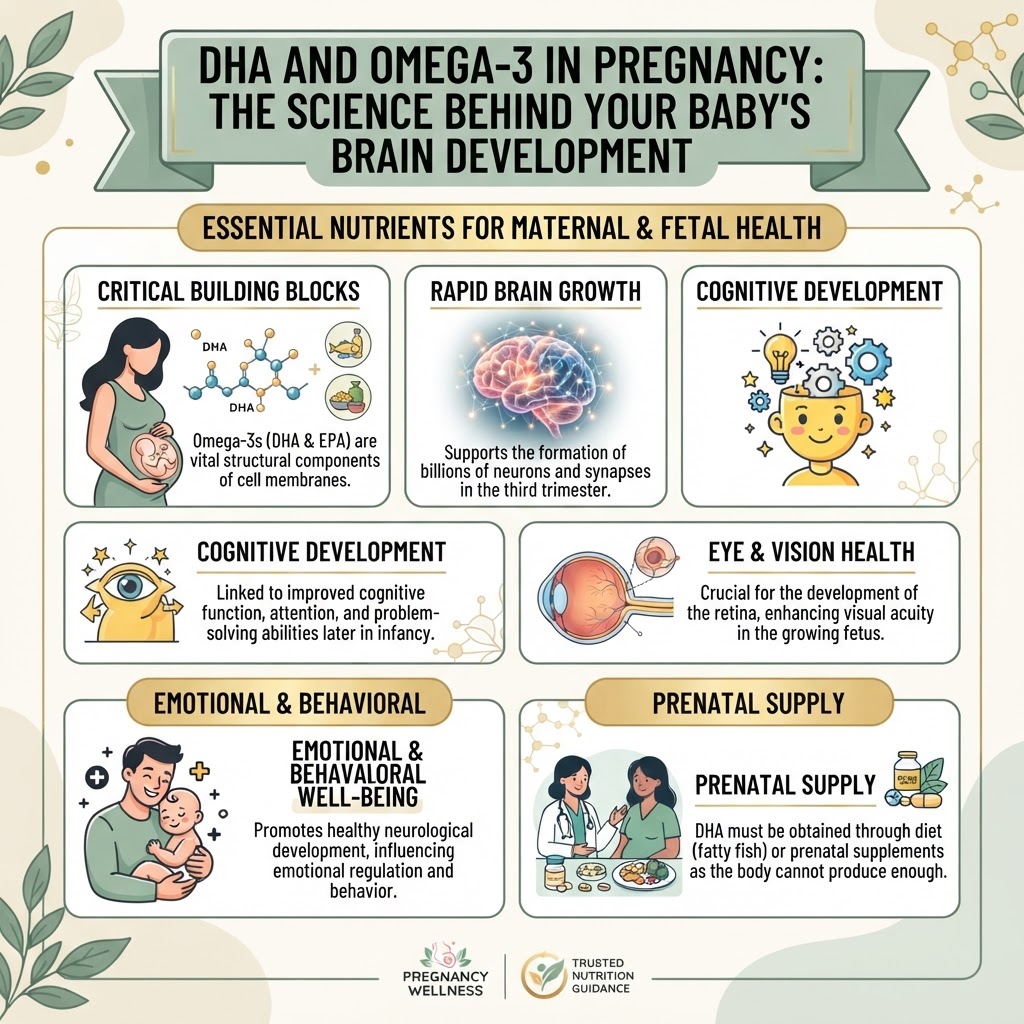
The human brain undergoes its most explosive growth during foetal development and the first two years of life — a period researchers call the "critical window" of neurodevelopment. During pregnancy, DHA accumulates rapidly in the foetal brain, particularly in the third trimester when brain growth accelerates most dramatically.
At a cellular level, DHA is incorporated into the phospholipid bilayers of neuronal cell membranes, where it influences membrane fluidity, signal transmission between neurons, and synaptic plasticity — the brain's ability to form and strengthen connections. In the retina, DHA is essential for the development of photoreceptors and visual acuity.
Research published in the American Journal of Clinical Nutrition has demonstrated that higher maternal DHA intake is associated with improved cognitive outcomes in children, including better attention, memory, and problem-solving skills in early childhood. A landmark Cochrane review examining omega-3 supplementation in pregnancy found it was associated with a reduced risk of preterm birth and early preterm birth — outcomes that have profound implications for infant brain health.
EPA's Supporting Role
While DHA takes centre stage in brain structure, EPA plays an equally important anti-inflammatory role. Chronic low-grade inflammation during pregnancy has been linked to complications including preeclampsia and preterm labour. EPA-derived compounds help regulate inflammatory pathways, supporting a healthier pregnancy environment for your growing baby.
The Placental Transfer Mechanism
One of the most remarkable aspects of DHA metabolism in pregnancy is selective placental transfer. The placenta actively prioritises transferring DHA to the foetus — sometimes at the expense of the mother's own DHA stores. This means that even when maternal intake is borderline adequate, the baby draws heavily on what's available, which can leave the mother depleted and at increased risk of perinatal mood disorders, including postnatal depression.
What the Research Tells Us: Why This Matters for Your Baby's Future
Understanding the biology is one thing — but what does the evidence actually say about outcomes for real babies and real mothers? The research here is genuinely compelling, and I want to share it with you not to create anxiety, but to empower you with knowledge.
Cognitive Development and IQ
Multiple prospective studies have examined the relationship between maternal omega-3 status and child cognitive outcomes. A study published in JAMA Pediatrics found that children born to mothers who supplemented with DHA during pregnancy scored significantly higher on measures of sustained attention at age 5 compared to those in the placebo group. Another study from the Avon Longitudinal Study of Parents and Children (ALSPAC) — one of the most comprehensive maternal-child health studies ever conducted — found positive associations between maternal oily fish consumption and verbal IQ in children at age 8.
Visual Acuity
The retina contains the highest concentration of DHA of any tissue in the body. Several randomised controlled trials have shown that infants born to mothers with higher DHA intake during pregnancy demonstrate superior visual acuity in the early months of life — a meaningful marker of retinal development.
Preterm Birth Risk
The WHO acknowledges that omega-3 supplementation during pregnancy may reduce the risk of preterm birth. Given that preterm birth is a leading cause of neonatal morbidity, this alone makes adequate omega-3 intake one of the most important nutritional priorities in pregnancy.
Postnatal Depression
Because the placenta preferentially transfers DHA to the foetus, maternal DHA levels frequently decline significantly during pregnancy — and this depletion has been linked to increased risk of postnatal depression. Research from the National Institutes of Health (NIH) suggests that women with lower omega-3 levels postpartum may be at higher risk of depressive symptoms. Replenishing DHA during pregnancy is therefore not only about your baby — it is profoundly about you.
What This Means Practically
- Don't assume your diet is sufficient. Even women who eat fish regularly may not reach the recommended 200–300mg of DHA per day recommended by international guidelines.
- Plant-based sources are not equivalent. If you are vegetarian or vegan, ALA from nuts and seeds will not meaningfully raise DHA levels without supplementation from algae-based sources.
- Third trimester is critical, but starting earlier is better. DHA accumulation in the foetal brain peaks in the third trimester, but building maternal stores from early pregnancy ensures consistent supply throughout.
- Your mental health matters too. Protecting your own DHA levels supports your emotional wellbeing postnatally — something that is too often overlooked in prenatal nutrition conversations.
- Quality of source matters enormously. Not all fish oil supplements are created equal — purity, form (triglyceride vs. ethyl ester), and third-party testing all affect how well DHA is absorbed and utilised.
Nutrition, Supplementation, and Getting Your Omega-3 Right in Pregnancy
Food First — But Food Alone Is Often Not Enough
Ideally, we would meet all our nutritional needs through a well-balanced, varied diet. For omega-3s, the best dietary sources include:
- Oily fish: salmon, sardines, mackerel, herring, trout
- Marine algae and algae oil: an excellent plant-based DHA source
- Walnuts, flaxseeds, chia seeds: good ALA sources (though conversion to DHA is limited)
- DHA-enriched eggs: contain modest amounts of preformed DHA
The NHS recommends pregnant women eat 1–2 portions of oily fish per week, while avoiding high-mercury species like shark, swordfish, and marlin. However, even two portions of salmon per week — which many pregnant women don't manage due to nausea, food aversions, or preference — may still fall short of optimal DHA levels, especially in the third trimester when demand is highest.
This is where thoughtful supplementation becomes not just helpful, but essential.
Why I Formulated PregBiotics Essentials + Omega
When I was designing PregBiotics Essentials, I was determined to create something that addressed the full complexity of maternal health — not just ticking boxes with a generic prenatal vitamin. I wanted a supplement that understood the gut-brain axis, the interplay between maternal microbiome health and nutrient absorption, and the specific, evidence-based needs of pregnancy.
PregBiotics Essentials + Omega is our most comprehensive formulation, combining our signature science-led prenatal blend with high-quality, purified omega-3 DHA and EPA. Here is what makes it different:
- High-dose DHA (300mg per serving): Meeting and exceeding international guidelines for DHA in pregnancy, in a form optimised for bioavailability
- EPA (150mg per serving): Supporting the anti-inflammatory environment your pregnancy depends on
- Algae-derived omega-3: Making it suitable for vegetarians and vegans, without the sustainability concerns of fish oil
- Folic acid (400mcg as methylfolate): In the bioavailable methylated form, essential for neural tube development
- Vitamin D3 (1000 IU): Widely deficient in UK pregnant women, critical for foetal bone development and immune programming
- Iron (ferrous bisglycinate): Gentle on the gut with superior absorption compared to standard ferrous sulphate
- Vitamin B12 (methylcobalamin): Essential for neurological development and red blood cell formation
- Clinically studied probiotics (Lactobacillus rhamnosus HN001 & Lactobacillus acidophilus LA-5): Supporting gut health, nutrient absorption, and immune balance — because a healthy gut is the foundation for absorbing all these nutrients effectively
You can also explore our Pregnancy Gut Guide for a deeper understanding of how gut health in pregnancy affects everything from nutrient absorption to immune development in your baby.
Expert Tips: How to Optimise Your Omega-3 Intake During Pregnancy
Having worked with hundreds of pregnant women and studied the evidence carefully, here are my most practical, evidence-based recommendations:
-
Start supplementing with DHA before the third trimester. Ideally from the first trimester — or even preconception. Building maternal DHA stores early ensures consistent placental transfer throughout pregnancy.
-
Choose algae-based DHA if you are vegetarian, vegan, or simply fish-averse. Algae is the original source from which fish accumulate DHA — cutting out the middleman while avoiding mercury concerns entirely.
-
Take your omega-3 supplement with your largest meal of the day. Fat-soluble nutrients including DHA are significantly better absorbed when taken with dietary fat. A meal containing avocado, eggs, or nuts is ideal.
-
Check your supplement's form. Look for omega-3 in triglyceride form, which is more bioavailable than ethyl ester form. Ask manufacturers directly if this is not clearly stated on the label.
-
Don't rely on a standard multivitamin alone. Most prenatal multivitamins contain little to no DHA. Check the label — and if DHA is absent, supplement separately or choose a combined formulation.
-
Pair omega-3 with a probiotic. Emerging research suggests that gut microbiome composition influences how well omega-3 fatty acids are metabolised. Women with a diverse, healthy gut microbiome may absorb and utilise DHA more efficiently — another reason why the combined approach in PregBiotics Essentials + Omega is so logical.
-
Monitor for symptoms of deficiency. Dry skin, low mood, difficulty concentrating, and visual changes can all be subtle signs of omega-3 insufficiency. If you notice these symptoms during pregnancy, discuss them with your midwife or GP.
-
Continue DHA supplementation postnatally. Particularly if breastfeeding — breast milk DHA content directly reflects maternal intake, and postnatal DHA supports your baby's continued brain development while also protecting your mental health.
-
Keep a food and supplement diary. Tracking your omega-3 intake for a week can be surprisingly revealing — and motivating.
-
Store your supplements correctly. Omega-3 fatty acids are prone to oxidation. Keep them refrigerated or in a cool, dark place, and check the expiry date. Rancid fish oil not only smells unpleasant but may have reduced efficacy.
When to Seek Medical Advice
While DHA and omega-3 supplementation is considered safe and beneficial for the vast majority of pregnant women, there are circumstances where professional guidance is especially important.
Please speak to your midwife, GP, or obstetrician before beginning any new supplement if:
- You are on anticoagulant medications (such as warfarin or aspirin therapy), as high-dose omega-3 may have mild blood-thinning effects
- You have a known fish or shellfish allergy (even with algae-based products, discuss your options)
- You have been diagnosed with a bleeding disorder
- You are carrying a multiple pregnancy and are under specialist care
- You have any liver or metabolic condition that affects fat metabolism
- You are unsure whether your current prenatal vitamin already contains omega-3, to avoid unintentional double-dosing
More broadly, I always encourage every pregnant woman to discuss her full supplement regimen with her healthcare provider at each trimester — not because supplementation is dangerous, but because pregnancy is a dynamic, individual journey, and your nutritional needs may evolve.
The information in this article is educational and evidence-based, but it is not a substitute for personalised medical advice. You and your healthcare team know your unique history and needs best.
Conclusion: Building the Foundation for a Brilliant Mind
The science is clear, the evidence is compelling, and the message is ultimately a hopeful one: by ensuring adequate DHA and omega-3 intake during pregnancy, you are doing something profoundly meaningful. You are providing the raw biological materials for your baby's developing brain, eyes, and nervous system. You are reducing the risk of preterm birth. You are protecting your own mental health. And you are setting the stage for a lifetime of cognitive potential.
This is not about perfection. It is not about guilt if you haven't been taking fish oil pregnancy supplements from day one. It is about knowledge — and what you choose to do with it from here.
The key takeaways are simple:
- DHA is a structural building block of the foetal brain — and most pregnant women don't get enough
- Omega-3 in pregnancy supports cognitive development, visual acuity, and a reduced risk of preterm birth
- Food sources are valuable but often insufficient — quality supplementation fills the gap
- Gut health underpins nutrient absorption — which is why a combined probiotic and omega-3 approach makes scientific sense
- Starting early and continuing postnatally gives both you and your baby the greatest benefit
If you are looking for a supplement designed with all of this in mind — formulated by a doctor who has spent years at the intersection of maternal medicine and nutritional science — I invite you to explore PregBiotics Essentials. It was made for exactly this moment in your life.
For more evidence-based articles on pregnancy nutrition, gut health, and maternal wellbeing, visit The PregBiotics Journal — your trusted companion throughout this extraordinary journey.
With warmth and science, Dr. Chomba Chuma, MD Founder, PregBiotics
This article is for informational and educational purposes only and does not constitute medical advice. Always consult your healthcare provider before making changes to your supplement regimen during pregnancy.
Get the PregBiotics Journal in your inbox
Gut-smart guidance for conception, pregnancy and breastfeeding — twice a week, plus member-only offers. Unsubscribe anytime.
You deserve to feel beautifully supported.
Join thousands of mothers on the PregBiotics journey. Receive your free Pregnancy Prep Guide and gentle, science-backed wisdom — tailored to where you are right now.