DHA and Omega-3 in Pregnancy: The Science Behind Your Baby's Brain Development
*By Dr. Chomba Chuma, MD & Founder | PregBiotics Journal* --- Picture this: it's 2 a.m., you're 26 weeks pregnant, and you're wide awake wondering whether you're doing enough. You've taken your prenatal vitamins, you're eating as well as pregnancy nausea allows, and you've read approximately four t
Dr. Chomba Chuma, MD & Founder
MD & Founder, PregBiotics

DHA and Omega-3 in Pregnancy: The Science Behind Your Baby's Brain Development
By Dr. Chomba Chuma, MD & Founder | PregBiotics Journal
Your Baby's Brain Is Being Built Right Now — Here's What It Needs
Picture this: it's 2 a.m., you're 26 weeks pregnant, and you're wide awake wondering whether you're doing enough. You've taken your prenatal vitamins, you're eating as well as pregnancy nausea allows, and you've read approximately four thousand conflicting articles about what you should and shouldn't be doing. Sound familiar?
Here's something that might shift your perspective — and perhaps even give you a little peace of mind. At this very moment, your baby's brain is undergoing one of the most extraordinary biological processes in all of human development. Neurons are forming, neural pathways are connecting, and the architecture of your child's future cognitive life is being laid down, brick by microscopic brick. And one nutrient, above almost all others, is central to that process: DHA — docosahexaenoic acid, a long-chain omega-3 fatty acid.
According to the World Health Organization, omega-3 fatty acids are essential during pregnancy, yet studies consistently show that a large proportion of pregnant women in the UK, US, and globally do not consume adequate amounts.
In this article, I want to walk you through the real science behind DHA in pregnancy — what it does, why it matters so profoundly for your baby's brain, how much you actually need, and how you can make sure you're getting it. This is not fearmongering; it is empowerment. Because when you understand the science, you can make confident, informed choices for yourself and your growing baby.
The Science of DHA and Your Baby's Developing Brain
What Is DHA — And Why Is It Different?
DHA (docosahexaenoic acid) is a long-chain polyunsaturated fatty acid belonging to the omega-3 family. You may have also heard of EPA (eicosapentaenoic acid) and ALA (alpha-linolenic acid) — these are the three primary omega-3 fatty acids, and while all play important roles, DHA is the one that deserves special attention during pregnancy.
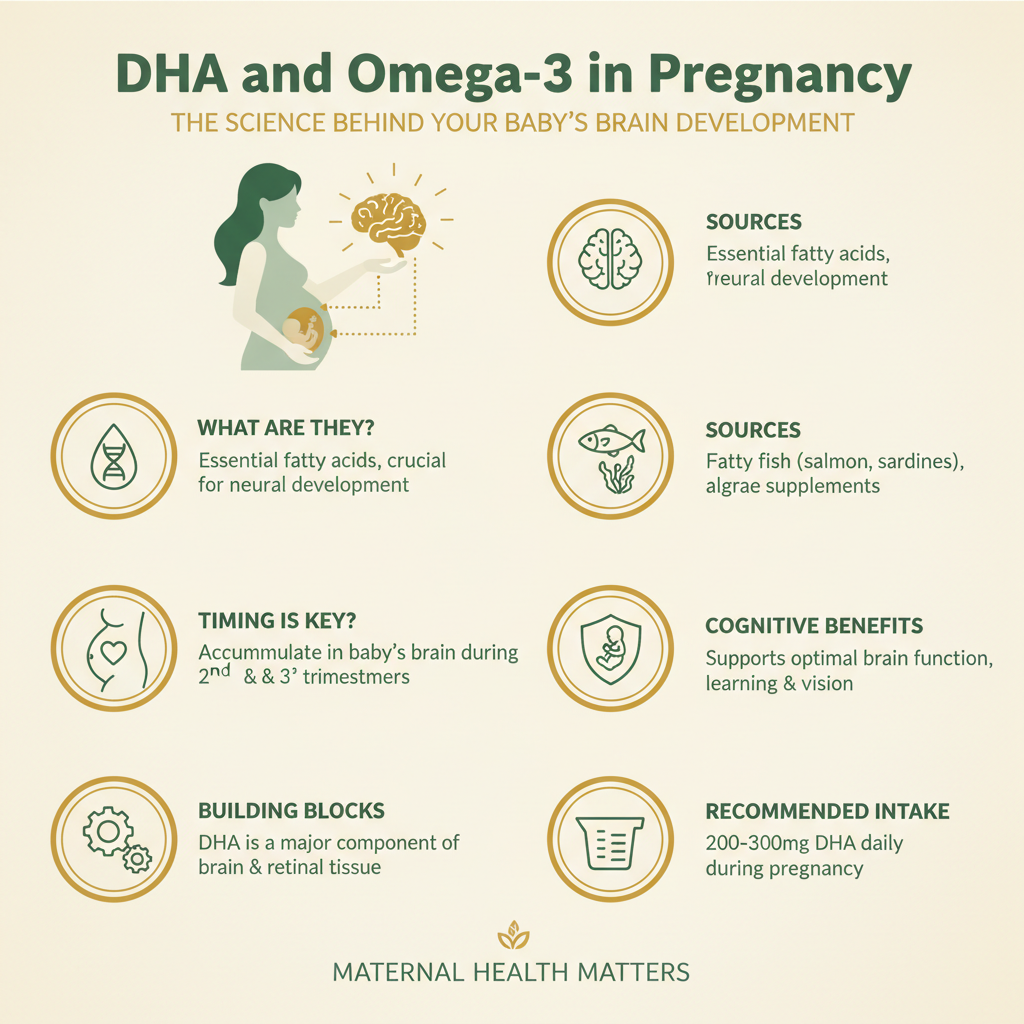
Why? Because DHA is, quite literally, a structural component of the brain. Approximately 60% of the human brain is fat, and DHA accounts for around 20–25% of the fatty acids found in the cerebral cortex — the region responsible for memory, attention, language, and conscious thought. It is also a critical component of the retina, where it supports visual development and acuity.
During pregnancy — particularly in the third trimester — your baby undergoes a process called the "brain growth spurt." This period of rapid neurological development sees the fetal brain nearly triple in size between weeks 28 and 40. DHA is preferentially transported across the placenta to the fetus during this time, meaning your baby will take what they need — but only if you have enough to give.
The Role of Omega-3 in Neural Development
A landmark review published in the Prostaglandins, Leukotrienes and Essential Fatty Acids journal demonstrated that DHA plays a critical role in:
- Neurogenesis — the formation of new neurons
- Synaptogenesis — the creation of synaptic connections between neurons
- Myelination — the development of the protective myelin sheath around nerve fibres, which speeds up neural transmission
- Neuroinflammation regulation — DHA has potent anti-inflammatory properties that protect developing neural tissue
DHA, EPA, and ALA — Understanding the Hierarchy
ALA, found in plant sources like flaxseed and walnuts, can theoretically be converted by the body into DHA. However, this conversion is notoriously inefficient — studies suggest that less than 5% of ALA is converted to EPA, and less than 0.5% makes it all the way to DHA. This is a critical point for plant-based and vegetarian mothers, and something we'll return to in the supplementation section.
EPA, while valuable for its cardiovascular and anti-inflammatory benefits, does not accumulate in brain tissue to the same degree as DHA. For brain development specifically, DHA is the priority.
What the Research Tells Us
Clinical studies have shown that children born to mothers with higher DHA levels during pregnancy demonstrate better cognitive outcomes, including improved problem-solving ability, language development, and attention scores. A 2013 Cochrane Review of omega-3 supplementation in pregnancy found associations with improved early neurodevelopment, as well as reduced risk of preterm birth.
The evidence is clear: DHA is not a "nice to have" during pregnancy. It is a nutritional imperative.
What This Means For You: Real Life, Real Implications
Understanding the science is one thing — but what does it mean for your daily life as a pregnant woman? Let me translate the research into something tangible.
Your Baby Cannot Make DHA on Their Own
The fetal brain cannot synthesise DHA in sufficient quantities. It is entirely dependent on maternal transfer — through the placenta during pregnancy, and through breast milk postpartum. This creates a direct and unavoidable link between your DHA intake and your baby's neurological development. Your nutrition is their nutrition.
Signs You May Not Be Getting Enough
While there's no simple blood test routinely offered in standard prenatal care to assess DHA status, there are risk factors that suggest many women are falling short:
- Low or no oily fish consumption — the richest dietary source of DHA
- Vegan or vegetarian diet without algae-based supplementation
- Following a low-fat diet during pregnancy
- Multiple pregnancy — twin or triplet pregnancies deplete maternal DHA stores more rapidly
- Short inter-pregnancy interval — previous pregnancy may not have allowed full replenishment of omega-3 stores
The Broader Benefits of Omega-3 in Pregnancy
Beyond brain development, maintaining adequate DHA and EPA levels during pregnancy is associated with:
- Reduced risk of preterm birth — emerging evidence suggests omega-3s may help extend gestational age
- Lower rates of postnatal depression — omega-3 deficiency has been linked to increased maternal depression risk
- Improved birth weight — DHA supports healthy placental function
- Better visual acuity in newborns — due to DHA's role in retinal development
- Reduced risk of preeclampsia — EPA's anti-inflammatory properties may offer protective cardiovascular effects
What About Dietary Sources?
In an ideal world, we would meet all our nutritional needs through food. And while a food-first approach is always my preference, the reality of pregnancy — with its food aversions, nausea, safety concerns around mercury in fish, and the sheer volume of DHA required — makes dietary sources alone insufficient for many women.
The best dietary sources of DHA and EPA include:
- Oily fish (salmon, mackerel, sardines, anchovies, trout) — the gold standard sources
- Algae — the original source of DHA in the marine food chain; excellent for plant-based mothers
- Fortified foods — some eggs, milks, and yogurts
- Walnuts, chia seeds, flaxseed — rich in ALA but poorly converted to DHA
The NHS and most national health bodies recommend pregnant women consume 1–2 portions of oily fish per week, while avoiding high-mercury species such as shark, swordfish, and marlin. Yet even with optimal dietary compliance, many women still fall short of the recommended 200–300mg of DHA per day during pregnancy.
The Role of Nutrition and Supplementation in Supporting Brain Development
This is where science meets practical maternal care — and where I want to talk to you honestly, as a doctor and as someone who has dedicated my career to maternal health nutrition.
Most standard prenatal vitamins contain very little — if any — DHA. And while folic acid, iron, and vitamin D rightly take centre stage in prenatal nutrition conversations, the relative silence around omega-3s has left a significant gap in how we support pregnant women.
That is precisely why I formulated PregBiotics Essentials + Omega.
What Makes PregBiotics Essentials + Omega Different?
I designed this supplement to bridge the gap that I was seeing in clinical practice — women who were doing everything right but whose prenatal vitamins simply weren't providing the full nutritional support that modern pregnancy science demands. PregBiotics Essentials + Omega was built around the evidence, not around what's cheapest or most conventional.
Key nutrients in PregBiotics Essentials + Omega include:
- DHA (200mg) — from high-quality, purified fish oil; meeting the internationally recommended daily intake for pregnancy
- EPA (EPA-rich omega-3 complex) — supporting maternal cardiovascular health, mood regulation, and anti-inflammatory pathways
- Folate (as methylfolate) — the bioavailable form, more effective than synthetic folic acid for women with MTHFR variants
- Vitamin D3 (2000 IU) — supporting immune function, calcium absorption, and fetal bone development
- Iodine — critical for thyroid function and fetal neurological development, yet frequently overlooked
- Iron (as iron bisglycinate) — gentle on the gut, supporting red blood cell formation and preventing anaemia
- Choline — a key nutrient for brain development that works synergistically with DHA
- Vitamin B12 — essential for nervous system function, particularly important for plant-based mothers
- Probiotic blend — because gut health is central to nutrient absorption and immune modulation (explore more in our Pregnancy Gut Guide)
What I'm particularly proud of is the inclusion of both DHA and choline in a single formulation. These two nutrients work in concert to support neural tube development and ongoing brain architecture — yet very few supplements include both at clinically meaningful doses.
A Note on Fish Oil Quality
Not all fish oil supplements are created equal. Oxidised or low-quality fish oil can actually be counterproductive — rancid oil contributes to oxidative stress rather than reducing it. When choosing a fish oil pregnancy supplement, look for:
- Third-party tested for purity and oxidation markers
- Free from heavy metals and environmental contaminants
- Produced using sustainable sourcing practices
- Sufficient DHA content (at least 200mg per daily dose)
PregBiotics Essentials + Omega meets all of these standards, and I would never recommend anything to my patients that I wouldn't take myself.
Expert Tips: Practical Ways to Optimise Your Omega-3 Intake in Pregnancy
Here are my top evidence-based recommendations for supporting your baby's brain development through optimal DHA and omega-3 nutrition:
-
Start supplementing early — ideally before conception. DHA is needed from the very earliest stages of neural tube formation, which occurs before many women even know they are pregnant. If you are planning a pregnancy, begin a quality omega-3 supplement now.
-
Take your omega-3 with your largest meal of the day. Fat-soluble nutrients like DHA are better absorbed in the presence of dietary fat. Taking your supplement with food also reduces the risk of fishy aftertaste or nausea.
-
If you are vegan or vegetarian, choose algae-based DHA. Algae is the original marine source of DHA — fish are rich in it because they eat algae. An algae-derived DHA supplement bypasses the inefficient ALA conversion pathway entirely and is completely suitable for plant-based mothers.
-
Don't rely solely on walnuts and flaxseed. While these are wonderful foods and valuable sources of ALA, please do not assume they are meeting your DHA needs. The conversion rate is simply too low. This is one of the most common nutritional misconceptions I see in clinical practice.
-
Pair DHA with choline. These two nutrients are synergistic in their support of fetal brain development. Egg yolks are an excellent dietary source of choline; supplementation is also advisable, as most women do not consume adequate choline through diet alone.
-
Continue omega-3 supplementation postpartum. DHA continues to transfer to your baby through breast milk, supporting ongoing brain development in the critical first year of life. Your own stores are also depleted during lactation, making postpartum supplementation important for your mental health and wellbeing too.
-
Reduce your intake of omega-6 heavy oils. The balance between omega-3 and omega-6 fatty acids matters. High intakes of vegetable oils (sunflower, corn, soybean) can competitively inhibit DHA utilisation. Opt for olive oil, avocado oil, and coconut oil where possible.
-
Store your supplements correctly. Omega-3 supplements are vulnerable to oxidation. Store in a cool, dark place — or in the refrigerator after opening — to preserve potency and freshness.
When to Seek Medical Advice
While omega-3 supplementation is generally considered safe and beneficial during pregnancy, there are situations in which you should speak with your midwife, GP, or obstetrician before starting a new supplement:
- If you are on anticoagulant medication (such as warfarin or heparin) — high-dose omega-3s have mild blood-thinning properties and may interact with these medications
- If you have a fish or shellfish allergy — discuss alternative algae-based options with your healthcare provider
- If you are expecting multiples — your requirements may differ from singleton pregnancy recommendations
- If you have a bleeding disorder or are approaching your due date — your provider may advise adjusting your omega-3 dose
- If you are unsure whether an existing supplement already contains DHA — avoid doubling up without professional guidance
This article is written to inform and empower, but it is not a substitute for personalised medical advice. Every pregnancy is unique, and your healthcare team is your most important partner in navigating your nutritional needs. Please share this information with your provider and ask questions — you deserve evidence-based answers.
Conclusion: Building Brilliant Beginnings, One Supplement at a Time
The science is unambiguous: DHA is one of the most important nutrients you can provide for your baby's developing brain. From the formation of the first neurons to the complex neural architecture that will underpin your child's thinking, learning, and emotional life, omega-3 fatty acids — and DHA in particular — are foundational.
You do not need to be a neuroscientist to act on this knowledge. You simply need to know that what you put into your body during these extraordinary months matters deeply, and that choosing the right support can make a genuine, measurable difference.
That is why I created PregBiotics Essentials + Omega — to give pregnant mothers a rigorously formulated, science-led supplement that addresses the real nutritional gaps that standard prenatal vitamins leave behind. One capsule should not have to do everything, but it should do what it promises, at doses that actually matter.
You are doing something remarkable. Growing a human is not a passive act — it is a biological, emotional, and nutritional endeavour of the highest order. Give your baby the best possible start, not out of anxiety, but out of knowledge and love.
For more evidence-based guidance on pregnancy nutrition, gut health, and maternal wellness, visit The PregBiotics Journal — where science meets the very real experience of being pregnant.
With warmth and science, Dr. Chomba Chuma, MD Founder, PregBiotics
References:
- Koletzko B et al. (2007). The roles of long-chain polyunsaturated fatty acids in pregnancy. Prostaglandins, Leukotrienes and Essential Fatty Acids. Read on NCBI
- Middleton P et al. (2018). Omega-3 fatty acid addition during pregnancy. Cochrane Database of Systematic Reviews. Read on NCBI
- World Health Organization. Healthy Diet Fact Sheet. Read on WHO
Get the PregBiotics Journal in your inbox
Gut-smart guidance for conception, pregnancy and breastfeeding — twice a week, plus member-only offers. Unsubscribe anytime.
You deserve to feel beautifully supported.
Join thousands of mothers on the PregBiotics journey. Receive your free Pregnancy Prep Guide and gentle, science-backed wisdom — tailored to where you are right now.